
文旅产业

Search documents
突破8090亿元的“大项目”,有你一份
Jing Ji Ri Bao· 2025-10-09 12:08
文化和旅游部 10月9日公布 2025年国庆中秋假期 文化和旅游市场情况 经测算 假日8天 全国国内出游8.88亿人次 较2024年国庆节假日7天 增加1.23亿人次 假期中 国内出游总花费8090.06亿元 较2024年国庆节假日7天 增加1081.89亿元 人们升国旗、唱红歌 赏秋景,庆团圆 传统文化焕发活力 国潮非遗出新出彩 景区"宠客"蔚然成风 文旅消费热力十足 人文经济共生共荣 10月6日,cdf海口国际免税城的过山车主题福袋市集吸引众多消费者。"双节"期间,海南各地推出丰富多彩的促消费活动,激发假日消费市场活力。苏弼 坤摄(中经视觉) 10月1日,云南省昆明斗南花卉市场人头攒动。郑益摄(中经视觉) 10月3日,湖南省吉首市矮寨大桥景区上演"56个民族风情盛会",演员与游客互动,现场十分热闹。 梁永鸿摄(中经视觉) 10月3日,在江苏省南通长江体育公园举办的2025南通文旅乐购嘉年华吸引了众多顾客。该活动汇集南通市精品文旅资源和100余家品牌商户,打造多元 素、多业态、多主题的文商旅体融合消费新场景。许丛军摄(中经视觉) 这个国庆中秋假期 你在哪里? 10月5日,内蒙古自治区鄂尔多斯市伊金霍洛旗鄂尔 ...

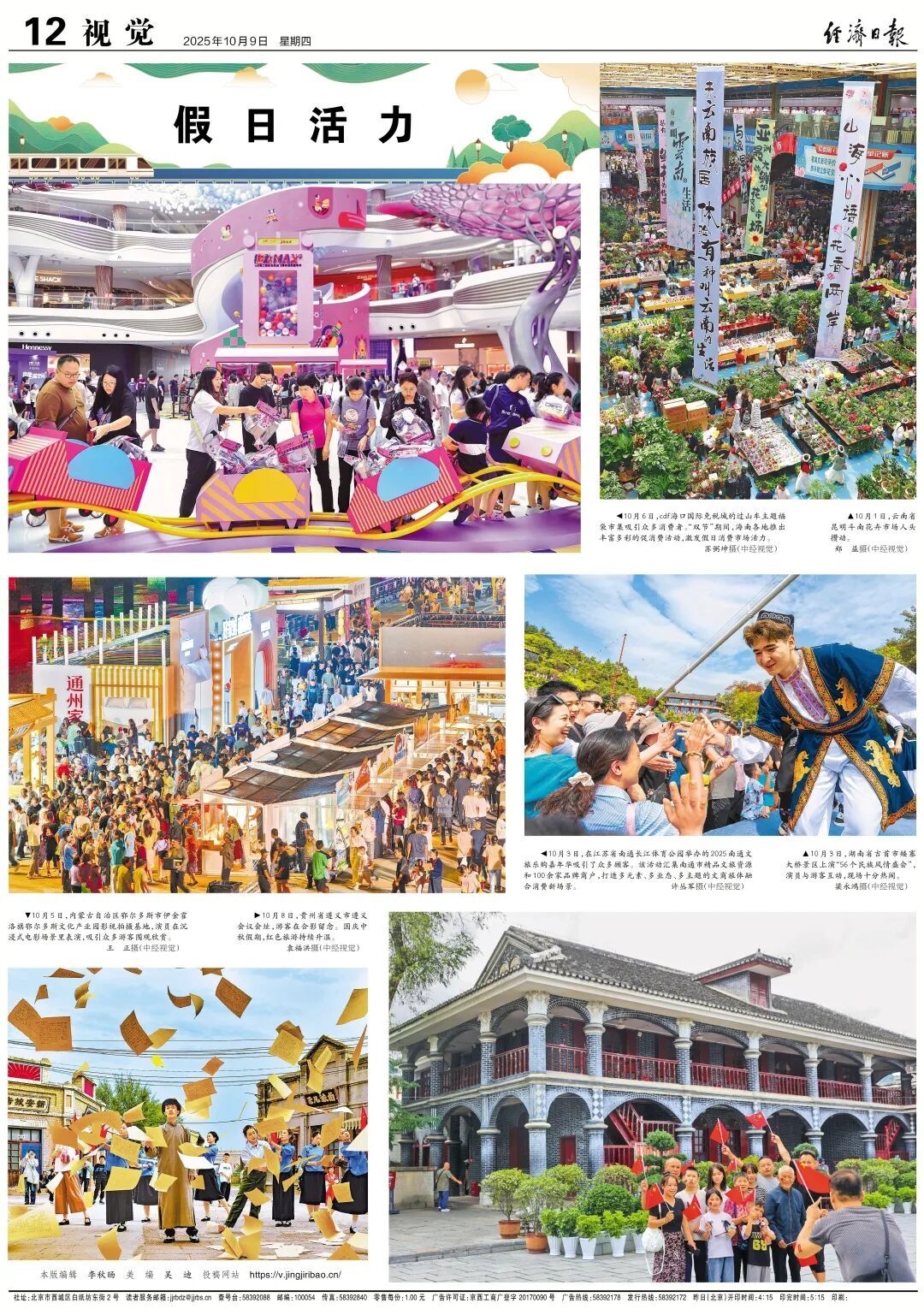
从“瓷、村、味”看江西文旅融合的创新实践
Zhong Guo Xin Wen Wang· 2025-10-09 07:26
Core Viewpoint - The article highlights the significant growth and development of Jiangxi's cultural and tourism sectors, particularly in Jingdezhen, known for its rich ceramic heritage, and the integration of cultural heritage with tourism to attract both domestic and international visitors [1][5][10]. Group 1: Tourism Growth - In 2024, Jiangxi is expected to see a nearly 14% increase in tourist numbers and tourism revenue, achieving double-digit growth [1]. - Jingdezhen is projected to receive over 60 million tourists in 2024, marking a 10.3% year-on-year increase, with tourism revenue reaching 753 billion yuan, a 6.3% increase [5]. - From January to August this year, Jingdezhen welcomed 11.08 million inbound tourists, a 38.72% increase compared to the previous year [5]. Group 2: Cultural Heritage and Innovation - Jingdezhen's ceramic culture, with a history of nearly 2000 years, continues to attract global attention, blending traditional craftsmanship with modern artistic expressions [2]. - The city has become a hub for international artists and local craftsmen, fostering a vibrant cultural exchange [2]. - The revitalization of cultural sites, such as the Yuzhang Academy, reflects Jiangxi's commitment to preserving and promoting its cultural heritage [10][12]. Group 3: Rural Tourism Development - Rural areas in Jiangxi, such as Wuyuan and Shimen Village, are leveraging their natural beauty and cultural heritage to boost tourism, with Wuyuan expected to receive 28.04 million tourists in 2024 [8]. - Shimen Village has transformed local homes into guesthouses, attracting visitors and generating significant income for residents [8]. - The integration of ecological conservation and tourism in Shimen Village highlights the potential for sustainable rural development [8]. Group 4: Non-Material Cultural Heritage - Jiangxi is actively promoting its intangible cultural heritage through initiatives that integrate these traditions into tourism, enhancing visitor experiences [12]. - The "Non-Heritage Lights Up Life" initiative aims to bring intangible cultural heritage into various community settings, increasing public engagement and awareness [12]. - The growing interest in non-material cultural heritage is evident in the increasing number of visitors to Jingdezhen, who seek to learn about traditional ceramic techniques [12].
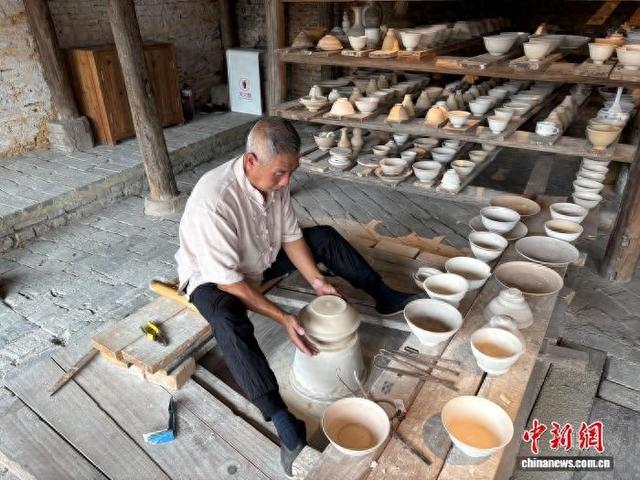
新网银行成为数字文旅金融创新联合实验室首批成员单位
Zhong Guo Jing Ji Wang· 2025-10-09 06:42
Group 1 - The conference titled "The First Digital Cultural Tourism Financial Innovation Ecological Development Closed-Door Seminar" was held in Beijing, focusing on the integration of digital finance and the cultural tourism industry [1][3] - The event featured representatives from various financial institutions, cultural tourism enterprises, and academic organizations, discussing innovative paths for deepening the integration of digital finance and cultural tourism [1][3] - A Digital Cultural Tourism Financial Innovation Joint Laboratory was established during the event, with Xinwang Bank becoming one of the first member units [1][6] Group 2 - Yang Hong, Deputy Director of the Credit Market Department of the People's Bank of China, emphasized policy measures supporting the high-quality development of the cultural tourism industry through digital finance [3] - Chen Jiachun, Vice Chairman of the China Internet Association, shared insights on the cutting-edge trends of technology integration with cultural tourism [3] - Du Haijiang, President of the China Architectural Culture Research Association, discussed the practical paths of digital innovation from the perspective of cultural heritage [3] Group 3 - Xinwang Bank creatively integrates the ancient Bashu civilization with modern financial concepts, establishing a unique brand communication approach [8] - The bank is rooted in Chengdu, a city rich in cultural resources, which provides continuous nourishment for its initiatives [8] - The "Guofeng Private School" short video series combines intangible cultural heritage, ancient poetry, traditional costumes, and historical figures, attracting significant audience attention [8]
文旅部:2025年国庆中秋假期国内出游8.88亿人次
智通财经网· 2025-10-09 05:40
Core Insights - The 2025 National Day and Mid-Autumn Festival holiday saw a total of 8.88 billion domestic trips, an increase of 1.23 billion trips compared to the 2024 holiday [1][2] - Domestic tourism spending reached 809 billion yuan, up by 108.19 billion yuan from the previous year [1][2] Group 1: Market Performance - The cultural and tourism market remained stable and orderly during the holiday period [2] - The combination of National Day and Mid-Autumn Festival led to increased market enthusiasm [2] Group 2: Tourism Trends - Popular destinations included red tourism sites such as Jinggangshan in Jiangxi and Yan'an in Shaanxi, attracting large crowds [2] - Themed activities like the "Harvest and Mid-Autumn" events were well-received, with notable attractions such as the "Sun-drying Culture Season" in Wuyuan, Jiangxi [2] Group 3: Cultural Integration - Innovative cultural experiences were highlighted, including non-heritage activities in cities like Nanjing and Luoyang [3] - Major cultural events and performances attracted significant audiences, showcasing traditional Chinese arts [3] Group 4: Consumer Engagement - Over 29,000 cultural and tourism activities were held nationwide, with more than 480 million yuan in consumer subsidies distributed [3] - Initiatives like the "Tourist Scenic Area Joint Ticket" in the Beijing-Tianjin-Hebei region promoted resource sharing [3] Group 5: Technological Advancements - New technologies were implemented to enhance visitor experiences, such as digital guides at Dunhuang Mogao Caves and smart reservation systems at various attractions [3]
南京居国内文旅消费目的地首位
Xin Hua Ri Bao· 2025-10-09 03:00
本报讯 (记者 董翔) 10月8日,美团旅行发布国庆中秋假期数据,南京位列国内文旅消费TOP10目的 地第一位。假日期间,南京推出超600场文旅活动,共接待游客2009.7万人次,旅游总收入279.4亿元, 同比分别增长30.2%和34.8%。其中,外地游客占比70.4%。 假期前7天,南京全市星级饭店和部分品牌酒店平均出租率达79.8%,同比上升5.7个百分点。银联商务 数据显示,南京异地文旅消费金额49.3亿元,同比上升28.4%,占全省21.4%,排名第一。 南京围绕"团圆、赏月"等节日主题,推出多项经典民俗与现代体验融合主题活动。在玄武湖公园,游客 乘画舫夜游湖面,欣赏3D沉浸式水幕电影《寻脉玄武湖》;南京城墙上,"花神"身着汉裳以舞为 媒,"古今穿越——花神巡游明城墙"活动将氛围拉满;中国科举博物馆里,"金榜题名时·古今游艺 会"带游客穿梭古今、热闹开玩;牛首山文化旅游区假日活动涵盖户外舞蹈、情景诗词会、行进式互动 巡游等多元形式,游客还可参与烧箔福画、螺钿发簪等非遗手作体验。 为了让游客"轻装上阵",南京在110个重点节点布设了2491组储物柜,覆盖主要景区、星级饭店、交通 枢纽与核心商圈,并免费 ...
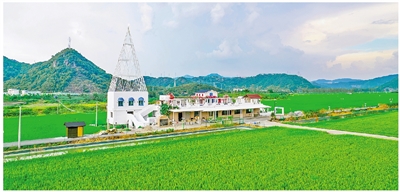
桐庐:稻田里长出“地中海风情”
Hang Zhou Ri Bao· 2025-10-09 02:30
日前,桐庐瑶琳镇大洲畈一处闲置的景观台,经过精心改造后焕发新生,吸引不少游客前来打卡。 两个风格迥异却又互补的IP空间在此落地,一边是地中海风情的建筑,一边是乡村记忆盛宴,这个"旧 空间新用法"的改造项目"望·蓝色假日",正悄然成为瑶琳文旅新名片。 "改造团队没有大刀阔斧地推翻原有结构,巧妙保留了建筑的空间优势,用蓝白主色调、原木元素 与绿植点缀,让原本沉寂的空间,变成了满是地中海风情的休闲地。"该项目创始人项恺在桐庐参与、 设计过很多文旅项目,在一次偶然途经大洲畈时,被这片稻田的景色所震撼,却也注意到田中一栋荒废 建筑与周遭自然风貌极不协调。作为一名设计师,他敏锐地捕捉到了这里的改造潜力:"我希望打造一 个既能完美融入稻田景观、又能深受游客喜爱的空间。"项恺介绍。 除了已经开放的二楼,这个改造项目的一楼也在紧锣密鼓地筹备中,未来将打造创新型的文旅餐饮 空间,通过乡村地道风味深化"田园+美食+体验"的复合场景,让每一位到来的人都能感受到乡村的烟 火气与人情味。 而当夜幕降临,在稻浪中的整座建筑仿佛一座灯塔,灵动变幻的光影,为夜色里的稻田晕染出几分 梦幻色彩。 瑶琳镇拥有多个集观赏性、参与性于一体的景区,譬如瑶 ...
临平:假日文旅“破圈”再升级
Hang Zhou Ri Bao· 2025-10-09 02:30
Group 1 - The article highlights the increased popularity of cultural and recreational activities in Linping during the holiday period, with various new experiences introduced [1] - Tangqi Ancient Town utilizes VR technology to create immersive experiences for visitors, allowing them to engage with historical figures and poetry, resulting in an average daily visitor count exceeding 20,000 [1] - The Linping Amusement Park has become a popular destination for families, with peak daily attendance nearing 20,000 during the holiday, and plans for more interactive activities in the future [1] Group 2 - The Linping District Cultural, Radio, Television, and Tourism Bureau aims to enhance cultural tourism experiences by creating engaging and participatory activities to meet diverse visitor needs and stimulate the local tourism market [2]
原力无限与时华控股集团达成2.6亿元战略合作,创全球具身智能单笔订单纪录
IPO早知道· 2025-10-09 02:05
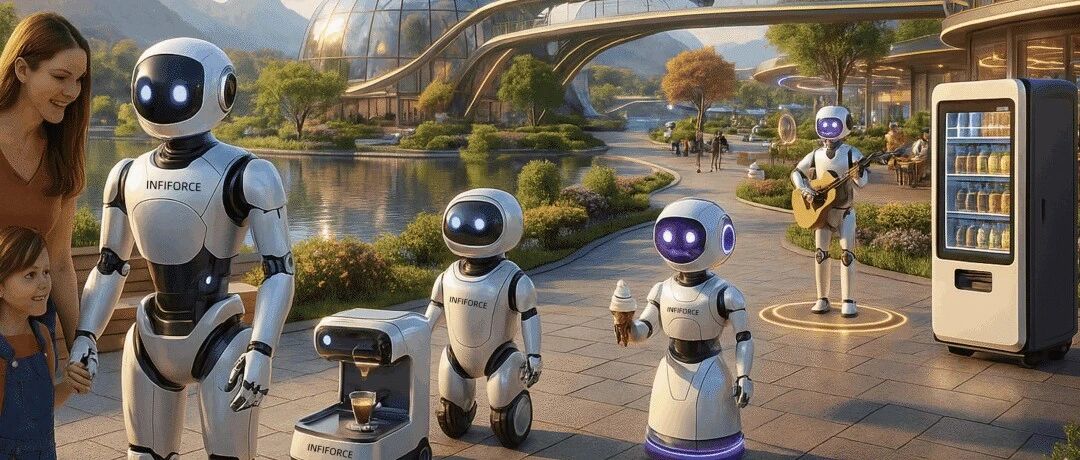
迄今为止全球具身智能单笔金额最大的商业订单。 本文为IPO早知道原创 作者| Stone Jin 微信公众号|ipozaozhidao 据 IPO早知道消息, 原力无限智能科技(杭州)有限公司与时华文旅控股集团 日前 在杭州正式签 署战略合作协议,项目金额高达 2.6亿元人民币,这是迄今为止全球具身智能单笔金额最大的商业订 单。 对于此次合作,时华控股集团表示, 文旅是最具体验性、情感性与社交性的产业之一 , AI与机器 人的融入,将重构"游客—场景—体验"的新连接 , 推动文旅从 "感官体验"走向"智能交互" ,让更 多人感受科技带来的温度与文化焕新的力量 —— 未来的文旅,不仅是文化与空间的叠加,更是智能 与情感的共生。 这一合作标志着具身智能从实验室走向现实应用的关键一步,也代表着中国 AI在全球商业化进程中 率先实现突破。 原力无限是 ELU科技集团 旗下专注于智能机器人与具身智能技术研发的核心品牌。公司基于自主研 发的 Hyper-VLA端到端多模态大模型 ,构建出 "一脑多身多场景"的战略体系,是国内少数具备从 算法到整机全栈能力的AI机器人企业,实现了视觉、语言与动作决策的深度融合,使机器人能够 ...
用人工智能打开文旅新空间
Ren Min Ri Bao· 2025-10-09 01:37
Core Insights - The integration of artificial intelligence (AI) in the cultural tourism industry is driving high-quality development by enhancing service efficiency, innovating product design, and enriching consumer experiences [1][3] Group 1: AI Empowerment in Cultural Tourism - AI is facilitating immersive and interactive experiences in cultural tourism, breaking traditional limitations and accelerating the shift towards smart, personalized, and immersive tourism [1][2] - Innovative products showcased at the 2025 China Cultural Tourism Industry Expo, such as 360-degree panoramic viewing and AR archaeological blind boxes, highlight the technological advancements in the sector [1] - Examples like the AI simulation at Hunan Hengyang Chanshan Academy and the VR experience at Nanchang Tengwang Pavilion illustrate how AI can create engaging historical interactions for visitors [1] Group 2: Digital Integration and Personalized Services - The blending of virtual and real experiences through digitalization is ushering in a "new sensory era" in cultural tourism, enhancing emotional engagement and cultural transmission [2] - AI-driven services, such as Hangzhou's "Hang Xiao Yi," utilize big data to provide personalized recommendations and route planning, resulting in increased visitor engagement and spending [2] - The introduction of digital guides in scenic areas has led to an average visitor stay of 5 hours and a 30% increase in secondary consumption, showcasing the effectiveness of AI in marketing and service enhancement [2] Group 3: AI as a Travel Concierge - AI is transforming the travel planning process by generating personalized itineraries based on user inputs like travel time, budget, and interests, appealing particularly to younger travelers [3] - The use of AI allows tourists to transition from passive observers to active participants in their travel experiences, fostering greater consumer engagement and loyalty [3] - The reliance on a "big model + big computing power + big data" framework enables the industry to analyze vast amounts of user data, providing insights for informed decision-making and improved operational efficiency [3] Group 4: Vision for the Future - The emphasis on AI in cultural tourism aligns with broader goals of enhancing quality of life, promoting economic development, and fostering cultural prosperity, as highlighted by national leadership [3]
用人工智能打开文旅新空间(人民时评)
Ren Min Ri Bao· 2025-10-08 22:11
Core Insights - The integration of artificial intelligence (AI) in the cultural tourism industry is driving high-quality development by enhancing service efficiency, innovating product design, and enriching consumer experiences [1][3] Group 1: AI Empowerment in Cultural Tourism - AI is facilitating immersive and interactive experiences in cultural tourism, breaking traditional limitations and accelerating the shift towards smart, personalized, and immersive tourism [1] - Innovative products showcased at the 2025 China Cultural Tourism Industry Expo, such as 360-degree panoramic viewing and AR archaeological blind boxes, highlight the industry's technological advancements [1] Group 2: Digital Integration and Consumer Engagement - The blending of virtual and real experiences through digitalization is creating a "new sensory era" in cultural tourism, offering unique emotional experiences and revitalizing cultural transmission [2] - AI-driven services, like Hangzhou's "Hang Xiao Yi," utilize big data to analyze visitor preferences, enabling personalized recommendations and enhancing visitor engagement, resulting in a 30% increase in secondary consumption [2] Group 3: Personalized Travel Planning - AI acts as a travel concierge, generating detailed travel plans based on user inputs such as time, budget, and interests, transforming tourists from passive observers to active participants [3] - The use of AI in analyzing vast amounts of user data allows for precise market demand forecasting and improved operational efficiency in the tourism industry [3] Group 4: Strategic Vision for Tourism Development - The emphasis on AI in tourism aligns with broader goals of enhancing quality of life, promoting economic growth, and fostering cultural prosperity, as highlighted by national leadership [3]