种植业

Search documents
【中国青年报】我国科学家破译水稻耐热密码
Zhong Guo Qing Nian Bao· 2025-12-08 02:47
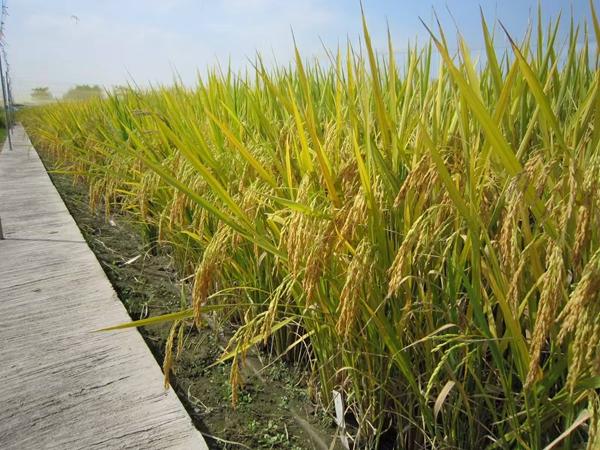
12月3日,中国科学院分子植物科学卓越创新中心林鸿宣院士团队与上海交通大学林尤舜研究员团 队等合作在国际学术期刊《细胞》(Cell)上发表研究论文。其中提到团队破解了水稻感知并响应高温 的双重密码锁,揭示了植物中的一个循序激活、协同串联的热信号感知机制,并通过对该机制的遗传改 良,成功培育出"具有梯度耐热性的水稻新株系"。 随后,作为信使的PA进入细胞内部,将"城外危情"(高温信号)精准传递并激活"中层指挥 官"MdPDE1,并协助其顺利进入"核心司令部"——细胞核,MdPDE1通过降解另一种信使分子cAMP (环核苷酸),维持耐热基因的表达程序,促使细胞合成热激蛋白、活性氧清除酶等"耐热武器",使细 胞从常态转入"高温应急状态",抵御高温胁迫,产生耐热表型。 基于上述研究,团队开展了遗传设计,在模拟高温的田间试验中取得喜人的结果:单基因改良的水 稻株系比对照株系增产50%至60%;而双基因改良株系比对照株系产量提升约一倍。 研究团队试栽的改良耐高温水稻 受访者供图 这意味着,科学家不仅能增强作物的耐热性,更能像调节音量一样精准设计"梯度耐热"品种,以适 应不同地区的气候需求,维持作物在高温环境下的产量稳定。 ...

"三农"成绩单传递中国稳定性和确定性
Ren Min Ri Bao· 2025-12-08 02:41
Core Viewpoint - The modernization of agriculture and rural areas is essential for China's overall modernization, emphasizing that a strong nation must first have a strong agricultural sector [1]. Group 1: Agricultural Modernization Goals - The "15th Five-Year Plan" emphasizes accelerating agricultural modernization and promoting comprehensive rural revitalization as a top priority for the Party [1][2]. - The plan aims to enhance agricultural production capacity and quality efficiency, focusing on improving the supply guarantee for important agricultural products [3]. Group 2: Enhancing Agricultural Production Capacity - Agricultural production capacity is defined as the stable output achievable under existing infrastructure, technology, and policy support, with a goal of achieving breakthroughs in grain production capacity during the "15th Five-Year Plan" [4]. - Over 1 billion acres of high-standard farmland have been established, with agricultural technology contributing 63.2% to production capacity [4]. Group 3: Addressing Shortcomings in Agriculture - The plan identifies the need to strengthen the agricultural foundation, improve infrastructure, and enhance resilience against natural disasters as critical areas for development [5]. - Strategies include implementing the "store grain in the land and technology" approach and accelerating self-reliance in high-level agricultural technology [5]. Group 4: Quality and Efficiency Improvement - The focus is on not only quantity but also quality, with initiatives to develop high-quality rice and wheat varieties, and to promote diversified food supply systems [7]. - The plan aims to integrate technology, green practices, quality agriculture, and branding to build a modern agricultural industry [7]. Group 5: Rural Living Environment Improvement - The modernization of agriculture is linked to the well-being of millions of farmers, with plans to create quality living spaces in rural areas [8]. - The approach emphasizes local conditions and orderly, categorized development to enhance rural living standards [11]. Group 6: Policy Effectiveness and Financial Support - The "15th Five-Year Plan" proposes enhancing the effectiveness of agricultural support policies to meet farmers' needs and ensure stable grain production [15][16]. - Financial commitments include increasing the proportion of land transfer income for agricultural use and ensuring that agricultural loans are prioritized [17]. Group 7: Precision in Policy Implementation - The plan stresses the importance of precise policy measures to prevent poverty and support low-income populations in rural areas [18]. - It aims to establish a regular mechanism to prevent the return to poverty, focusing on targeted assistance for vulnerable groups [18].
寒潮来袭,北方多地开启“速冻”模式,看辽宁如何应对
Xin Hua She· 2025-12-08 02:11
Group 1: Weather Impact - A significant cold wave has affected multiple regions in northern China, with temperature drops of 10 to 20 degrees Celsius reported in areas like Liaoning from late November to early December [2][4] - The cold wave is characterized by a large temperature drop and frequent fluctuations, attributed to the strengthening of the polar vortex, which has intensified the cold air system [2][3] Group 2: Agricultural Response - The cold temperatures pose challenges for agricultural production, particularly for winter wheat, which is currently in a critical growth stage [4] - Agricultural experts are providing technical guidance to farmers to enhance the cold resistance of winter wheat, including measures like covering crops and adjusting irrigation practices [4][5][7] Group 3: Vegetable Supply Concerns - The cold wave, although short-lived, has a significant impact on vegetable production, especially for temperature-sensitive crops like eggplants and melons, which may suffer from growth stagnation and frost damage [5][7] Group 4: Snow Sports Industry - The cold weather has boosted interest in snow sports, with ski resorts in Liaoning reporting a daily capacity of nearly 100,000 visitors [8] - Ski resorts are offering immersive packages to attract visitors, with expectations of a 20% increase in reception [8] Group 5: Safety in Snow Sports - While snow sports are popular, safety measures are emphasized, including the use of professional protective gear to prevent injuries [10] - Proper techniques for falling during skiing are advised to minimize the risk of injuries, highlighting the importance of safety in the growing snow sports industry [10]

澄迈:为智慧农业注入“芯”动力
Hai Nan Ri Bao· 2025-12-08 01:54
Core Viewpoint - The company "Old Dong Planting" is successfully integrating advanced agricultural technology with local resources in Hainan, showcasing its new tomato variety "Muxin" at the Winter Trade Fair, which has gained significant attention both offline and online [1][2]. Group 1: Product and Market Performance - The "Muxin" tomato variety has been well-received for its vigorous growth and sweet-sour taste, with over one million viewers in the live streaming session, making it the top-ranked in the regional leaderboard [2]. - The company plans to officially launch its 100-acre planting base in Chengmai County in February next year, marking a significant milestone in its operations [2]. Group 2: Agricultural Innovation and Strategy - The company combines large-scale planting experience from Shandong with Hainan's unique agricultural resources, promoting a modern, industrialized approach to agriculture [2][3]. - The company emphasizes the importance of agricultural product deep processing to enhance value-added benefits and address issues related to unsold products [4]. - Chengmai County is actively promoting smart agriculture by integrating modern technology and intelligent equipment to enhance agricultural productivity and facilitate the transition from traditional to modern agriculture [5].

奔向共同富裕的美好明天 ——加快农业农村现代化,扎实推进乡村全面振兴
Ren Min Ri Bao· 2025-12-08 00:33
Core Viewpoint - Agricultural modernization is essential for China's overall modernization, as emphasized by President Xi Jinping, linking national strength to agricultural strength [1]. Group 1: Agricultural Modernization Goals - The "14th Five-Year Plan" has strengthened the agricultural sector, ensuring food security for over 1.4 billion people and preventing large-scale poverty [1]. - The "15th Five-Year Plan" aims to accelerate agricultural modernization and promote comprehensive rural revitalization, highlighting the importance of addressing agricultural issues as a priority for the entire party [1][2]. Group 2: Enhancing Agricultural Production Capacity - The focus is on improving agricultural production capacity and quality, which is crucial for ensuring food supply and supporting domestic economic circulation [3]. - The goal is to achieve breakthroughs in grain production capacity during the "15th Five-Year Plan," with over 1 billion acres of high-standard farmland established and a 63.2% contribution rate from agricultural technology advancements [4]. Group 3: Addressing Agricultural Shortcomings - Key challenges include unstable industrial foundations, inadequate agricultural infrastructure, and insufficient resilience against natural disasters [5]. - Strategies include implementing the "store grain in the land and technology" approach and enhancing soil quality and farming practices [5]. Group 4: Quality and Efficiency in Agriculture - Innovative practices such as duck-rice co-cultivation and advanced planting techniques are being adopted to enhance product quality and market competitiveness [6]. - The "15th Five-Year Plan" emphasizes the integration of technology, green practices, and quality agriculture to build a modern agricultural industry [7]. Group 5: Rural Living Standards - Agricultural modernization directly impacts the well-being of millions of farmers, with plans to create quality living spaces in rural areas [8]. - The focus is on tailored approaches to rural development, ensuring that local characteristics and cultural heritage are preserved [10]. Group 6: Infrastructure and Environmental Improvements - Various regions are implementing plans to enhance rural infrastructure, including wastewater management and waste disposal systems [11]. - Collaborative development mechanisms among neighboring villages are being established to optimize resource allocation and improve living conditions [13]. Group 7: Strengthening Agricultural Policies - The "15th Five-Year Plan" aims to enhance the effectiveness of agricultural support policies, addressing farmers' needs and ensuring sustainable agricultural development [15][16]. - Financial support for agriculture has increased, with over 10% of land transfer income allocated to rural development and significant agricultural loans being provided [17]. Group 8: Precision in Policy Implementation - Targeted measures are being developed to prevent poverty and support low-income populations, ensuring that assistance reaches those in need [18]. - The transition from poverty alleviation to rural revitalization is a key focus, with an emphasis on maintaining stability and improving living standards for rural residents [18].
学习贯彻党的二十届四中全会精神·五年路上你我他——四中全会精神大家谈丨一头“智牛”耕出田野丰收景
He Nan Ri Bao· 2025-12-07 23:45
Core Viewpoint - The modernization of agriculture is fundamentally driven by technological advancement and innovation, with a focus on addressing the "three rural issues" as a priority for the party's work [2][10]. Group 1: Agricultural Modernization Efforts - The provincial government emphasizes the importance of agricultural modernization as a major industry, leveraging agricultural technology as a core support [2][10]. - Advanced technologies such as precision irrigation and intelligent monitoring are widely applied, enhancing agricultural productivity and efficiency [2][6]. Group 2: Technological Innovations - The city of Nanyang is focusing on agricultural technology as a key engine for ensuring stable food supply, with continuous improvements in agricultural technology innovation [5][6]. - The city has selected 55 new crop varieties during the 14th Five-Year Plan, maintaining a good seed coverage rate of over 98% [6]. Group 3: Smart Agriculture Development - The Denzhou Smart Agriculture Center is implementing a digital transformation from experience-based to data-driven farming, establishing a comprehensive monitoring system [7]. - Plans are in place to cover high-standard farmland with agricultural health monitoring devices within three years, aiming for a 60% coverage of intelligent operations for staple crops [7]. Group 4: New Farmers and Modern Techniques - New farmers, characterized by their knowledge and vitality, are increasingly utilizing modern technology to enhance agricultural practices, leading to reduced labor costs and increased yields [8]. - The integration of technology allows for more precise management of resources, resulting in higher net income per acre [8]. Group 5: Addressing Climate Challenges - The need for modern technology applications is emphasized to enhance agricultural resilience against extreme weather conditions, focusing on technological breakthroughs and industry integration [9]. Group 6: Future Agricultural Planning - The city plans to develop a modern agricultural industry by integrating technology, green practices, quality control, and branding, with a focus on high-quality rural industry development [10][11]. - Key initiatives include establishing green organic agricultural zones and promoting the development of six major industries and 19 industrial chains [11].
奔向共同富裕的美好明天
Ren Min Ri Bao· 2025-12-07 22:02
Core Viewpoint - Agricultural modernization is essential for China's overall modernization, emphasizing that a strong nation must first have a strong agricultural sector [1]. Group 1: Agricultural Modernization Goals - The "14th Five-Year Plan" has solidified the agricultural sector as a stabilizing force for the economy, ensuring food security for over 1.4 billion people and preventing large-scale poverty [1]. - The "15th Five-Year Plan" aims to accelerate agricultural modernization and promote comprehensive rural revitalization, highlighting the importance of addressing agricultural issues as a top priority for the Party [1][2]. Group 2: Enhancing Agricultural Production Capacity - The focus is on improving agricultural production capacity and quality, which is crucial for ensuring food supply security [3]. - The establishment of over 1 billion acres of high-standard farmland and a 63.2% contribution rate from agricultural technology advancements are key achievements that bolster production capacity [4]. Group 3: Addressing Agricultural Shortcomings - There are existing bottlenecks such as unstable industrial foundations and inadequate infrastructure that need to be addressed to enhance agricultural production [5]. - Strategies like "storing grain in the land and technology" will be implemented to strengthen agricultural technology and protect soil quality [5]. Group 4: Quality and Efficiency in Agriculture - Innovative practices such as duck-rice co-cultivation and the use of plastic film in rice planting are being adopted to enhance ecological farming and market competitiveness [6]. - The "15th Five-Year Plan" emphasizes the need for a diversified food supply system that includes high-quality agricultural products [7]. Group 5: Rural Living Standards and Infrastructure - Agricultural modernization directly impacts the quality of life for millions of farmers, with plans to create better living spaces in rural areas [8]. - Local governments are focusing on improving rural infrastructure, such as water supply and waste management, to enhance living conditions [11]. Group 6: Financial and Policy Support for Agriculture - The proportion of land transfer income allocated to agriculture has exceeded 10%, with significant financial support for agricultural and rural development [17]. - Policies are being refined to ensure that financial assistance and subsidies effectively support farmers and rural communities [18].
南宁财政精准发力,农民增收跑出“加速度”
Sou Hu Cai Jing· 2025-12-07 03:12
Core Insights - Nanning City has prioritized agricultural and rural development, optimizing fiscal expenditure structure to support stable growth in farmers' income, with rural residents' per capita disposable income reaching 16,280 yuan, a year-on-year increase of 6.1%, outpacing urban residents' income growth [1] Group 1: Fiscal Support for Agriculture - A total of 10.8 billion yuan has been allocated for water conservancy infrastructure construction and repairs, enhancing disaster defense and rural water supply [1] - 1.63 billion yuan has been invested in high-standard farmland construction and soil protection, with an additional 420.54 million yuan for land reclamation and protection [1] - 10.1 billion yuan has been coordinated to support the development of agricultural industries that connect farmers and enhance their income [1] Group 2: Income Stabilization Measures - 4.57 billion yuan has been distributed as subsidies for soil fertility protection, benefiting 978,100 grain farmers [2] - 1.65 billion yuan has been allocated for subsidies related to grain and oil production, effectively reducing farmers' production costs [2] - 5.24 billion yuan has been arranged for policy-based agricultural insurance premium subsidies, with nearly 1.39 million acres of rice insured, ensuring over 1.6 billion yuan in coverage [2] Group 3: Enhancing Farmers' Income Structure - 35.75 million yuan has been allocated to support production operations and labor skills training [3] - 203 million yuan has been distributed for rural public welfare job subsidies, benefiting 231,500 people [3] - 32.75 billion yuan has been the total transaction amount in the rural property rights transfer market, with 1,056 projects completed since the 14th Five-Year Plan [3]
特色产业壮大集体经济
Jing Ji Ri Bao· 2025-12-06 21:59
Core Viewpoint - Fuan Village in Yuanjiang City, Hunan Province, has transformed from a poverty-stricken area in 2017 to a model village for rural revitalization, focusing on collective economic development through agriculture [1][2]. Group 1: Background and Initial Challenges - In 2017, Fuan Village was designated as a provincial-level poverty-stricken village with weak collective economy and slow development [1]. - The village leadership was restructured under the guidance of the town party committee to enhance the role of the party organization in economic development [1]. Group 2: Development Strategies - The village decided to leverage its traditional advantages by developing ecological rice and vegetable industries, establishing the Fuan Village Agricultural Service Cooperative with an initial investment of 500,000 yuan in 2018 [1]. - Initial challenges included land concentration among large grain farmers, making land transfer difficult; however, some villagers volunteered to lease their land to the cooperative, which encouraged others to follow suit [1]. Group 3: Growth and Innovations - Following initial success, the village expanded its collective economic activities by inviting large grain farmers to join the cooperative, increasing land transfer to over 3,000 acres [2]. - The village implemented a "zone manager" responsibility system, dividing land into sections managed by experienced farmers, incentivizing production through a "base salary + performance" model [2]. Group 4: Economic Outcomes - By 2024, the collective economic income of Fuan Village is projected to reach 2.18 million yuan, with optimistic growth trends for the current year [2]. - The village has developed a comprehensive model for agricultural production, processing, and sales under the registered trademark "Xifuan," showcasing a successful path for collective economic growth and rural revitalization [2].
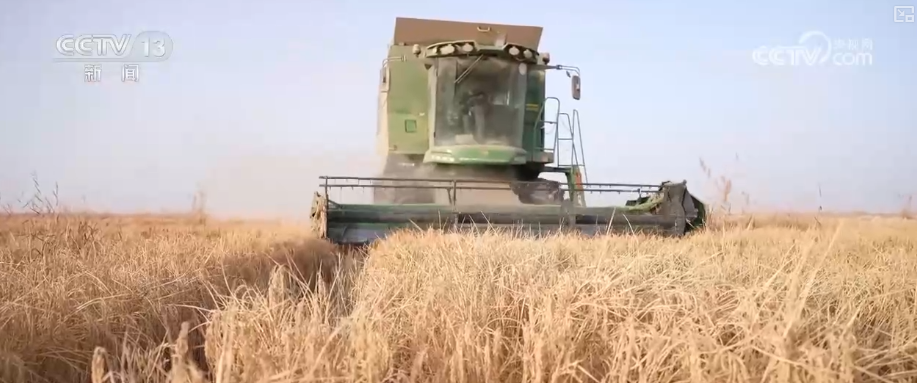
“量身定制”科学种田向沙漠要产量 “节水+排碱”助力荒废盐碱地喜迎丰收
Yang Shi Wang· 2025-12-06 13:44
Core Viewpoint - The agricultural transformation in Tumushuke City, Xinjiang, has led to a successful harvest of 4,000 acres of late-maturing desert rice, showcasing innovative farming techniques in challenging environments [1][3]. Group 1: Agricultural Practices - The rice is expected to be harvested by December 10, with the cultivation of drought-resistant and salt-tolerant rice varieties initiated since 2025 [3]. - The irrigation method employed is a "water-saving + salt drainage" intermittent irrigation system, allowing for flexible water management based on the rice growth stages [3]. - Local agricultural technicians utilize abundant sunlight for pest control through a "water control and sun drying" method, which reduces the need for chemical pesticides [6][8]. Group 2: Soil Improvement Techniques - Techniques such as local salt drainage and straw return are implemented to create a sustainable cycle of "using water to nourish rice, using rice to improve soil, and using soil to conserve water" [6]. - The process of washing away salt and alkalinity from the soil is crucial, with water needing to seep in locally to effectively remove salt [8]. - The decomposition of straw after harvesting significantly contributes to soil improvement by adding organic matter [8].