Smartphones

Search documents
机构:一季度中国智能手机市场同比增长5% 小米重回第一
news flash· 2025-04-27 06:10
机构:一季度中国智能手机市场同比增长5% 小米重回第一 智通财经4月27日电,Canalys最新数据显示,2025年第一季度,中国智能手机市场出货量达7090万部, 受到国家补贴政策提振及消费复苏推动,同比温和增长5%,延续了自2024年开启的复苏趋势。其中, 小米出货量达1330万部,同比增长40%,时隔十年重回第一,市场份额19%。华为紧随其后,依旧维持 双位数增长,出货1300万部,位列第二。OPPO、vivo分别以1060万部和1040万部的出货量位列第三和 第四。苹果在其传统旺季后出现下滑,出货920万部,同比下跌8%,排名第五。 ...


2025年第一季度,中国智能手机市场同比增长5%,小米时隔十年重夺第一
Canalys· 2025-04-27 04:40
C analys(现已并入Omdia)的全球智能手机分析服务为全球厂商总部及区域战略,产品,渠道策略的决 策者,提供领先于市场的全面、及时和高质量的出货量分析数据。我们将全球86个市场,40+厂商出货量 的追踪数据与Canalys独有的一级和二级渠道数据相结合,为客户全球策略的制定,提供深入的数据支 撑。我们全球多语言的分析师团队为客户提供专属分析沟通会,并高效协助决策者深入了解最关键的市场 趋势,以多层次的数据分析维度提供第三方分析洞见和可执行建议。 Canalys(现并入Omdia)最新数据显示,2025年第一季度,中国智能手机市场出货量达7090万部,受到国家 补贴政策提振及消费复苏推动,同比温和增长5%,延续了自2024年开启的复苏趋势。其中,小米出货量达 1330万部,同比增长40%,在国补刺激以及其人车家一体的战略协同下时隔十年重回第一,市场份额19%。华 为紧随其后,依旧维持双位数增长,出货1300万部,位列第二。OPPO、vivo分别以1060万部和1040万部的出 货量位列第三和第四。苹果在其传统旺季后出现下滑,出货920万部,同比下跌8%,排名第五。 Canalys (现并入Omdia)研 ...
红米高管称“友商自嗨”,性能小屏是伪需求?
Guan Cha Zhe Wang· 2025-04-26 05:14
Core Insights - The smartphone market is experiencing a surge in the release of "performance phones," with brands like Honor, OnePlus, and REDMI emphasizing performance and gaming capabilities as key selling points [1][3] - The competition is intensifying, particularly around screen size, with brands taking distinct stances on whether to focus on small or large screens to attract consumers [3][7] Group 1: Product Launches and Features - Honor GT Pro, OnePlus 13T, and REDMI Turbo 4 Pro have been launched, each highlighting their performance metrics, with OnePlus 13T achieving over 3 million on AnTuTu and REDMI Turbo 4 Pro exceeding 2.4 million [1][5] - Honor GT Pro features the Snapdragon 8 Gen 2, while OnePlus 13T and REDMI Turbo 4 Pro utilize Snapdragon 8 Gen 1 and Snapdragon 8s respectively, showcasing advancements in chip technology [2][5] - The battery capacities are notable, with Honor GT Pro at 7200mAh, OnePlus 13T at 6260mAh, and REDMI Turbo 4 Pro at 7550mAh, indicating a trend towards larger batteries in performance-oriented devices [2][5] Group 2: Market Dynamics and Competition - The smartphone industry is seeing a shift towards differentiation based on screen size, with REDMI advocating for larger screens for gaming and performance, while OnePlus promotes the benefits of smaller screens for portability [3][6] - Recent data from IDC indicates a 3.3% year-on-year increase in smartphone shipments in China, with Xiaomi leading the market with a 39.9% increase in shipments, highlighting a competitive landscape [9] - The ongoing rivalry between brands like REDMI and OnePlus reflects a broader trend of aggressive marketing and product differentiation strategies in the smartphone sector [6][7]


对话一加李杰:端测AI是大趋势,关税战对中国手机品牌影响有限
Bei Ke Cai Jing· 2025-04-25 13:29
Core Viewpoint - The development of edge AI models is a significant trend, with companies focusing on enhancing product capabilities and market competitiveness in the smartphone industry [1][10]. Group 1: Company Strategy and Market Position - OnePlus has experienced a sales increase due to the inclusion of consumer electronics in national subsidy policies, but the company believes that these subsidies will not be a core competitive advantage [1][8]. - The company plans to continue investing in research and development to optimize product layout and improve market competitiveness [2]. - OnePlus 13T aims to fill a gap in the market for small-screen performance devices, targeting a large untapped market segment [3][4]. Group 2: Product Features and Innovations - The OnePlus 13T combines small screen size with enhanced gaming experiences, featuring a self-developed gaming chip and upgraded battery capacity [4][6]. - The company is also set to release two large-screen gaming flagship devices next month, indicating a diverse product strategy [7]. Group 3: Market Trends and Competition - The smartphone market is witnessing a shift towards differentiated competition, with brands like Xiaomi and Vivo also entering the small-screen flagship segment [4]. - IDC forecasts a 1.5% year-on-year growth in global smartphone shipments in Q1 2025, driven by national subsidy policies, with Chinese brands performing particularly well [8][9]. Group 4: Future Outlook and Challenges - The national subsidy policy is expected to boost smartphone consumption in the short term, but it may not create new market demand [9]. - Companies must focus on product strength and market positioning rather than relying solely on subsidies for competitive advantage [9].
刚刚!华为第一!
国芯网· 2025-04-25 10:54
国芯网[原:中国半导体论坛] 振兴国产半导体产业! 不拘中国、 放眼世界 ! 关注 世界半导体论坛 ↓ ↓ ↓ 4月25日消息,据调查机构Counterpoint最新报告显示,2025年第一季度,在国家补贴政 策的 推动下,中国智能手机 市场销量同比增长2.5%。 其中 华为表现最亮眼, 增幅达28.5%, 位列第一! 华为以19.4%的市场份额拔得头筹,创下自2021年以来的最高纪录。华为的出色成绩得益于多款产品的强劲表现。 Nova 13系列凭借时尚外观、优秀性能,深受年轻群体喜爱,持续多周在国产手机销量榜中独占鳌头;旗舰Pura 70系 列则依靠卓越影像、顶级配置,巩固了华为在高端市场的地位。在补贴政策助力及部分热销机型降价的双重影响 下,华为在600-799美元的高端价格区间优势显著。 小米销售额同比增长16.5%,增速位居第二;市场份额达16.6%,位居第三。政府补贴政策覆盖小米大部分产品 线,小米同时进军电动车领域带来的品牌溢出效应和线下零售渠道扩张,助力其提升高端市场份额。 此外,vivo以17%的市场份额位列第二,OPPO和苹果分列第四、五位。 Counterpoint表示,一季度中国智能手机 ...
Apple Stock Is Down 23% From Its All-Time High. Here's Why I'm Still Not Buying Shares.
The Motley Fool· 2025-04-23 12:00
Apple (AAPL 3.43%), the world's largest company, fell alongside most other stocks during this month's market downturn. It's around 23% off its all-time high, which is likely causing many investors to question whether now is a good time to buy the stock. Although Apple is down significantly, I don't think today's prices are a buying opportunity. Apple is still rather expensive compared to some other big tech stocks, and it would need to tumble further before I'd consider taking a position. Apple's primary re ...

就连拥抱苹果这件事,现在都能卷了起来
Hu Xiu· 2025-04-22 13:35
Core Viewpoint - The article discusses the shift in strategy among Chinese smartphone manufacturers towards embracing Apple's ecosystem, highlighting the competitive landscape and the emergence of cross-platform functionalities [1][4][10]. Group 1: Embracing Apple's Ecosystem - Vivo has introduced a "dual-device flow" feature in its X200s model, allowing users to receive notifications from iPhones and even answer calls directly from the Vivo device [3][4]. - OPPO has launched the "0+ Interconnect" app, enabling file transfers between OPPO and iPhone devices, and supports editing Live Photos taken on OPPO devices using iPhones [4][7]. - Xiaomi has also developed a service that allows file sharing between its devices and Apple's products, including the ability to view Apple-specific document formats on Xiaomi devices [7][9]. Group 2: Market Dynamics - According to IDC, the top five smartphone manufacturers in China for 2024 are Vivo (17.2% market share, 10.3% YoY growth), Huawei (16.6% market share, 50.1% YoY growth), Apple (15.6% market share, 5.4% YoY decline), Honor (14.9% market share, 8.1% YoY decline), and OPPO (14.8% market share, 6.4% YoY decline) [11][17]. - The smartphone market in China has entered a phase of stock competition, making it difficult for manufacturers to capture a significant share of users' minds [12][13]. - A survey indicated that 18% of smartphone users in 2023 opted for dual-device ownership, suggesting a substantial market for manufacturers targeting users who own both Android and Apple devices [12][17]. Group 3: Strategic Implications - The integration of Apple ecosystem compatibility allows manufacturers to attract users who own both Android and Apple devices, potentially leading to a competitive advantage [9][10]. - Manufacturers are adopting a gradual approach to compatibility, starting with file transfers and progressively developing more complex cross-platform functionalities to reduce user resistance [15][16].
技术普惠时代,如何让大众人手一部「专业相机」?
36氪· 2025-04-22 10:28
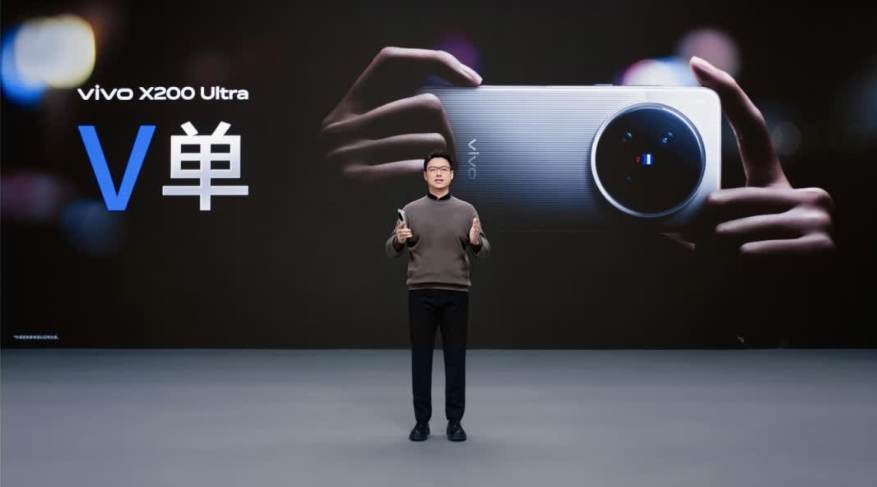
Core Viewpoint - The rise of social media has democratized content creation, allowing anyone to produce high-quality images comparable to professional photographers, driven by the accessibility of smartphones [1][22]. Group 1: Product Innovation - Vivo's X200 Ultra and X200s represent a significant evolution in mobile imaging, designed with a professional camera mindset, featuring a "full focal length, full main camera" approach [3][10]. - The X200 Ultra incorporates three Zeiss fixed-focus lenses, including a 14mm ultra-wide lens, a 35mm humanistic lens, and an 85mm APO super telephoto lens, breaking the traditional main and secondary camera distinction [5][10]. - The ultra-wide lens has a 1/1.28-inch sensor, increasing light intake by 181%, addressing previous issues with low-light performance [7][10]. Group 2: Technological Advancements - The X200 Ultra features a dual-chip architecture, including the VS1 pre-processing AI ISP chip and the V3+ post-processing chip, enhancing data processing capabilities for high-quality imaging [13][14]. - The introduction of a pressure-sensitive shutter button mimics traditional camera controls, enhancing user experience [14][20]. Group 3: Market Positioning - Vivo has established itself as a leader in the high-end smartphone market, with the X200 Pro series achieving a 189% increase in market share compared to its predecessor [24]. - The company aims to bridge the gap between mobile imaging and professional photography, promoting a user-friendly approach to high-quality image creation [22][23].
2025年开局遇冷,第一季度印度智能手机市场出货量下滑8%
Canalys· 2025-04-21 07:00
Canalys(现并入Omdia)数据显示,2025年第一季度,印度智能手机出货量同比下降8%,总计3240万部,主 要受持续疲软的需求和2024年末渠道库存偏高的影响。高库存水平扰乱了新品发布节奏,厂商被迫重新调整渠 道策略。vivo以700万部的出货量和22%的市场份额稳居榜首,进一步扩大领先优势。三星出货510万部,小米 则以400万部的出货量和12%的市场份额排名第三。OPPO(不含一加)出货390万部,realme则为350万部。 Chaurasia补充道:"2025年第一季度,vivo凭借均衡的产品组合和高效的渠道执行扩大了其领先优势。其V50系 列借助与蔡司的合作、婚礼季营销活动以及KOL主导的推广活动显著提升了品牌曝光度,而T系列和Y系列则 实现了线上线下的强协同。OPPO(不含一加)继续发挥其零售渠道优势,强调产品的耐用设计、防水功能和 长续航表现,帮助其实现稳步增长。realme在完成库存调整后重新获得增长动能,近20%的出货来自新推出的 14X 5G机型,线下渠道目前贡献了其58%的出货量。相比之下,小米虽然较早推出Note 14系列,但受限于高 库存和渠道情绪保守,市场反应平平。不过, ...
2025年开局遇冷,第一季度印度智能手机市场出货量下滑8%
Canalys· 2025-04-21 07:00
Core Insights - The Indian smartphone market experienced an 8% year-on-year decline in Q1 2025, with total shipments reaching 32.4 million units, primarily due to weak demand and high channel inventory from late 2024 [1][4] - Vivo maintained its leading position with a 22% market share, followed by Samsung at 16%, Xiaomi at 12%, OPPO at 12%, and realme at 11% [1][4] - The market is expected to be channel-driven in 2025, with manufacturers relying on retail and distribution networks to boost sales amid weak natural demand [1][3] Market Performance - Vivo's shipments increased by 13% year-on-year to 7 million units, benefiting from a balanced product portfolio and effective channel execution [1][4] - Samsung's shipments fell by 23% to 5.1 million units, despite a 5% year-on-year growth in the S25 series due to high-end positioning [1][4] - Xiaomi's shipments dropped by 38% to 4 million units, affected by high inventory and cautious channel sentiment, although the Redmi 14C 5G performed well in the entry-level market [1][4] Strategic Insights - OPPO leveraged its retail channel advantages, focusing on durable design and long battery life, resulting in a 5% increase in shipments to 3.9 million units [1][4] - Realme regained growth momentum after inventory adjustments, with nearly 20% of shipments coming from the newly launched 14X 5G model [1][4] - Apple achieved its strongest Q1 performance in India, driven by the popularity of the iPhone 16 series and promotional activities during Republic Day [1][3] Future Outlook - The Indian smartphone market is expected to see moderate growth in 2025, influenced by rising average selling prices (ASP) and a trend towards premiumization [3] - The market's highlights will likely concentrate in the price range of 20,000 to 30,000 INR (approximately 250 to 350 USD) as consumer spending remains sensitive to agricultural income in rural areas [3]