
农业科技

Search documents
新洋丰: 公司2025年第二次临时股东会决议公告
Zheng Quan Zhi Xing· 2025-07-29 16:21
Meeting Details - The meeting was held on July 29, 2025, at 14:00, with online voting available from 9:15 to 15:00 on the same day [1] - A total of 372 shareholders participated in the meeting, representing 699,575,894 shares, which is 55.7549% of the total voting shares [1] Voting Participation - 362 shareholders voted online, representing 172,957,658 shares, which is 13.7844% of the total voting shares [2] - Excluding directors, supervisors, senior management, and shareholders holding more than 5% of shares, 366 other shareholders participated in the voting [2] Agenda and Voting Results - The proposal to elect an independent director to the ninth board of directors was approved with 872,533,552 shares represented [2] - The voting results showed that 871,999,553 shares (99.9388%) voted in favor, 472,611 shares (0.0542%) voted against, and 61,388 shares (0.0070%) abstained [2] Legal Opinion - The meeting was witnessed by lawyers from Shanghai Jintiancheng Law Firm, confirming that the meeting's procedures and voting were in compliance with relevant laws and regulations [3] - The legal opinion concluded that the meeting's convening, attendance, and voting procedures were valid and effective [3] Documents for Reference - The resolutions from the second extraordinary general meeting of 2025 and the legal opinion from Shanghai Jintiancheng Law Firm are available for review [3]

当西瓜遇上“黑科技”—菏泽联通“智慧大棚”赋能西瓜产业升级
Qi Lu Wan Bao Wang· 2025-07-28 11:50
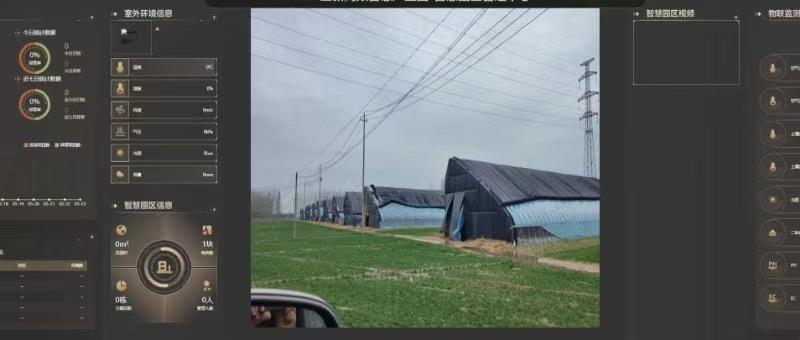
Group 1 - The core idea is the integration of 5G and AI technologies with SaaS to create a smart watermelon greenhouse, enhancing the watermelon industry in Dongming County and contributing to rural revitalization [1][2][6] Group 2 - The smart greenhouse utilizes 5G network advantages and SaaS management systems to establish a comprehensive and precise planting monitoring and control system, collecting real-time environmental data through various sensors [2][4] - AI algorithms dynamically adjust operational parameters for ventilation, irrigation, and lighting based on a specialized watermelon planting model, ensuring optimal growth conditions and reducing fruit deformity rates by over 20% [4] Group 3 - A full-chain traceability marketing system is built, allowing consumers to access the entire growth process of watermelons through a digital ID, enhancing consumer trust [5] - The AI algorithms analyze market consumption data to provide personalized farming and marketing plans, increasing the average revenue per watermelon by over 15% [5] Group 4 - The initiative promotes a three-tiered industrial collaboration network, facilitating remote guidance from agricultural experts and smart matching of agricultural supply and demand, involving over 30 administrative villages and training more than 200 professional farmers [5] - The company plans to continue promoting the "5G + AI + SaaS" model to provide replicable technological solutions for rural revitalization and support high-quality economic development in Dongming County [6]

粮食有增产 企业能增收 合作在深化——2025年国际粮食减损大会观察
Xin Hua Wang· 2025-07-27 08:56
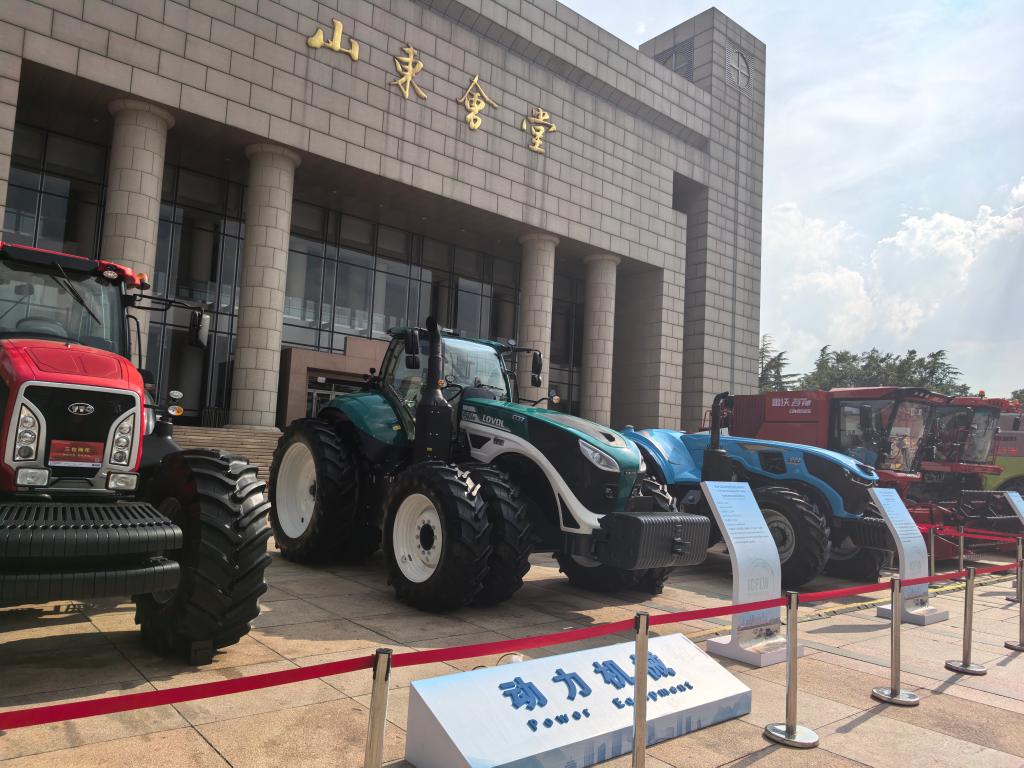
Core Insights - The 2025 International Food Loss Reduction Conference highlighted the importance of technological innovation in enhancing food security and reducing food loss, with around 300 participants from various sectors sharing experiences and strategies [1][8]. Group 1: Food Production and Loss Reduction - The Weifang Green Wild Agricultural Machinery Cooperative reported significant increases in crop yields, with wheat production rising from 6 tons to 9 tons per hectare and corn from 7.5 tons to 9.7 tons since its establishment in 2013 [2]. - The mechanization of harvesting is crucial for minimizing food loss, with advancements in intelligent control models and automated harvesting machinery being emphasized [2][4]. - In 2024, the loss rates for major grains during harvesting were reported at 0.93% for wheat, 1.76% for rice, and 2.06% for corn, reflecting a reduction of 1 to 2 percentage points compared to 2021, resulting in a total loss reduction of over 50 billion jin [4]. Group 2: Technological Contributions - The application of the "Sky-Ground Network" AI integration platform at the Zhongke Beidou Digital Agriculture Demonstration Base has led to a 5% reduction in annual corn planting losses through efficient decision-making and early warnings [4]. - The Beijing Huinong Engineering Technology Co., Ltd. showcased integrated grain collection and storage solutions, having established over 3,000 steel silo systems globally, enhancing the entire grain supply chain [5][6]. Group 3: Industry Innovations - Shandong Jinsheng Grain and Oil Food Co., Ltd. developed a new processing technique that increased the average price of peanut cake from approximately 3,000 yuan per ton to about 7,000 yuan per ton, demonstrating the economic benefits of food loss reduction [7]. - The conference emphasized the role of food loss reduction as a new productive force in agricultural governance, with companies actively participating in innovative technologies for social and economic benefits [7]. Group 4: International Cooperation - The conference's youth forum resulted in the "New Food Fashion" initiative, promoting the reshaping of food value perceptions and the innovation of loss reduction technologies among youth from various countries [8][11]. - The "South-South Cooperation Action Plan" was released, calling for collaborative actions in policy research, digital technology, and experience sharing in food loss reduction over the next three years [11].
AI赋能,惠南镇八村联动开启乡村振兴新篇章
Di Yi Cai Jing· 2025-07-27 01:22
Core Insights - The event showcased the integration of AI into rural revitalization, highlighting the "Eight Villages Linkage" initiative in Pudong Huinan Town, which aims to create a digital and intelligent rural landscape [1] Group 1: AI Applications in Agriculture - China Telecom's 5G+AI irrigation model significantly improved rice production on 1,134 acres in Far East Village, achieving over 15% yield increase while conserving water [2] - Charoen Pokphand Group's modern agricultural park implemented a "biogas-vegetable-fish" circular model, promoting a green and efficient agricultural ecosystem [2] Group 2: Collaborative Efforts for Rural Development - A signing ceremony took place where China Telecom and Huinan Town agreed on an AI-enabled urban-rural integration project to promote coordinated development [2] - Various companies, including Charoen Pokphand Group and Ant Group, signed agreements to create a "Healthy Centenarian Village," focusing on the life and health industry and digital governance [2] Group 3: National and International Collaboration - The "Rural Creation Alliance" segment featured ten exemplary villages advocating for AI as a new agricultural tool, data as new agricultural resources, and talent as new farmers, promoting a collaborative future for rural revitalization [3] - The African Doctor Alliance representatives explored new international cooperation paths by combining African agricultural experiences with Huinan's AI pilot projects [2]
高效推动农业高质量发展
Jing Ji Ri Bao· 2025-07-26 22:27
Group 1 - Anhui is a major agricultural province in China, accounting for 4.3% of the national arable land and producing 6% of the country's grain, positioning it as one of the 13 main grain-producing regions and 5 net grain-exporting provinces [1] - During the "14th Five-Year Plan" period, Anhui has prioritized agricultural technology innovation, achieving a contribution rate of 67% in agricultural technological progress and a 52% rate of agricultural production informatization, both ranking among the top in the country [1] - The "15th Five-Year Plan" period is crucial for advancing agricultural modernization, with a focus on technological innovation as the core driving force for high-quality agricultural development [1] Group 2 - The integration of education, technology, and talent is being explored, emphasizing deepening industry-education integration and collaborative training to cultivate innovative talents and grassroots agricultural technology promotion personnel [2] - Collaborative teams are being formed across regions, industries, and disciplines to enhance the yield and efficiency of staple crops like rice, wheat, corn, and soybeans, driven by technology and green initiatives [2] Group 3 - The goal is to enhance the green food industry chain by cultivating leading enterprises and establishing a high-level green agricultural product production and processing supply base in the Yangtze River Delta [3] - The use of artificial intelligence technology is being promoted for smart agricultural practices, including intelligent perception of crop life information, precision spraying with drones, AI pest and disease identification, and smart irrigation [3]
科技重塑江淮粮仓
Jing Ji Ri Bao· 2025-07-26 22:02
Group 1: Agricultural Production and Technology - In 2024, Anhui's total grain output reached 83.69 billion jin, a year-on-year increase of 0.8%, with oilseed production at 1.895 million tons, up 0.3%, and vegetable output exceeding 27.174 million tons, growing by 3.3% [1] - The contribution rate of agricultural technology progress in Anhui reached 67% in 2024, indicating a significant transformation in agriculture driven by technology [1] - The total power of agricultural machinery in Anhui is approximately 72.07 million kilowatts, with a comprehensive mechanization rate of 86% for crop farming [4] Group 2: Smart Agriculture Innovations - The Hefei Smart Agriculture Valley has developed a high-throughput soil composition detection robot capable of testing 42 soil nutrients and heavy metals, reducing the testing time from two weeks to three days [2] - The integration of various smart devices, such as pest monitoring lights and soil moisture sensors, allows for real-time data collection and management in smart farms [5][6] - Anhui has established 314 smart agricultural (including livestock and fishery) farms, with applications in 1,490 scenarios, achieving a cost reduction and efficiency increase of 10% to 20% [7] Group 3: Seed Industry Development - The Huanghuaihai (Suzhou) Seed Industry Technology Valley has initiated advanced research in soybean breeding, with 32 new high-yield and high-quality soybean varieties identified, showing over 9% increase in protein content and 10% increase in yield [8][9] - Anhui has built a comprehensive resource preservation and sharing system for seed and genetic resources, with 193 major crop varieties approved at the national level in 2024, ranking second in the country [10] - The province emphasizes the use of gene technology and innovative breeding methods to enhance food security and yield, while also supporting seed industry enterprises through financing and research collaboration [10]
闲置荒地“盐值”降了效益增了
Xin Hua Ri Bao· 2025-07-25 21:52
Core Viewpoint - The article highlights the innovative approach of utilizing saline-alkali land for large-scale cultivation of alfalfa, which has significant benefits for both local agriculture and the economy [1][2][3]. Group 1: Company Overview - Zhiyuan Baicao (Yancheng) Agricultural Technology Development Co., Ltd. is leading the initiative to cultivate alfalfa on saline-alkali land, which was previously underutilized [1][2]. - The company aims to reduce reliance on imported alfalfa by developing local cultivation methods, thereby enhancing the quality of livestock products [2][3]. Group 2: Agricultural Innovation - The project utilizes the salt-tolerant characteristics of alfalfa to improve saline-alkali land, which is a significant agricultural challenge in Yancheng [2][3]. - The company has developed a multi-species planting model for salt-tolerant forage through collaboration with agricultural research institutions, demonstrating effective agricultural innovation [3]. Group 3: Economic Impact - The project has achieved an impressive yield of 5 tons of forage per acre, generating over 10 million yuan in sales within the first half of the year [3]. - The expansion plan includes increasing the cultivation area from 5,000 acres to 8,000 acres, which is expected to boost local livestock income by over 100 million yuan annually [3].
科技赋能 盐碱地焕发新“丰”光
Qi Lu Wan Bao Wang· 2025-07-23 14:51
Group 1 - The core viewpoint emphasizes the integration of technology and systematic approaches in modern agriculture to ensure food security and enhance productivity in saline-alkali land [1][2][3] - The efficient operation of large agricultural machinery and the use of precision farming techniques, such as Beidou navigation, demonstrate the advancement in agricultural organization and specialization [1][2] - The strategic transformation from "improving land for cultivation" to "adapting crops to land" showcases the innovative efforts in saline-alkali land management, leading to high-yield crops without irrigation [2][3] Group 2 - The establishment of a "smart grain storage" system ensures the safe storage and management of harvested grains, incorporating technology throughout the entire storage process [2][3] - The integration of renewable energy solutions, such as photovoltaic roofs, and intelligent sensing networks enhances the efficiency and sustainability of grain storage [2] - The practices in Dongying provide valuable insights for the comprehensive utilization of saline-alkali land in the Yellow River basin, contributing significantly to national food security [3]
华大万物CEO刘欢:2030年中国农业微生物市场或达900亿
2 1 Shi Ji Jing Ji Bao Dao· 2025-07-23 11:01
Core Viewpoint - Microorganisms are essential catalysts for sustainable agricultural development, with significant potential to enhance soil health and food safety, as highlighted by Liu Huan, CEO of Shenzhen BGI Genomics Co., Ltd [1][4]. Industry Insights - The Chinese government has implemented policies aimed at reducing the use of chemical fertilizers and pesticides while increasing their efficiency, which aligns with the growing application of microorganisms in agriculture [1]. - The market for microbial agents in China is currently thriving, with substantial consumer potential. It is projected that by 2030, the application of microorganisms in crop production will reach approximately 15%, and the total market size for agricultural microorganisms could reach 90 billion yuan [1][7]. Technological Advancements - BGI has leveraged its expertise in genomic technology to develop high-throughput sequencing instruments that allow for the extraction and analysis of microbial DNA from various environments, facilitating a deeper understanding of microbial diversity in soil and crops [3]. - The company has been involved in agricultural microbial research since 2009, with significant advancements leading to the development of microbial agents that enhance crop yield and soil health [8]. Application and Benefits - Microbial agents can reduce the use of chemical fertilizers by 30% to 50%, improve soil health, and enhance the efficiency of nutrient utilization in crops, thereby contributing to the production of high-quality, safe food [5]. - The use of microbial agents can also mitigate disease occurrence in crops, providing a sustainable alternative to traditional agricultural practices [5]. Future Outlook - The microbial agent market is expected to continue its robust growth, with leading agricultural technology companies actively investing in this sector. By 2030, the proportion of microbial agents in agricultural fertilizers is anticipated to reach around 15% [6][7].
壹佳科技果蔬保鲜技术获突破 以绿色包装创新助力农业现代化
Zhong Guo Chan Ye Jing Ji Xin Xi Wang· 2025-07-23 03:24
Core Viewpoint - The company has made significant progress in developing antibacterial coating preservation technology and eco-friendly stone-plastic packaging, addressing the issues of "white pollution" and fruit and vegetable loss in agricultural circulation [1][2]. Group 1: Technology Development - The company has developed a green low-carbon stone-plastic packaging product based on natural inorganic powders and polymer composite materials, which is non-toxic and supports 100% physical recycling [1][2]. - The antibacterial coating technology integrated into the packaging provides three innovative functions: it releases plant-based antibacterial components to inhibit microbial growth and fruit ripening, optimizes internal temperature and humidity to delay metabolism, and enhances barrier performance to maintain the freshness of fruits and vegetables [2]. Group 2: Environmental and Agricultural Impact - The stone-plastic packaging's low-carbon characteristics throughout the entire lifecycle contribute to the packaging industry's achievement of "dual carbon" goals, providing a practical path for low-carbon transformation [2]. - The breakthrough in preservation technology directly enhances the commercialization rate and added value of agricultural products, effectively addressing post-harvest processing and terminal preservation challenges, thereby reducing logistics costs while ensuring supply quality [2]. Group 3: Future Directions - The company is collaborating with research institutions, large agricultural bases, fresh e-commerce platforms, and logistics companies to promote technological iteration and standardized application [3]. - The company aims to position itself as an "integrated service provider of green packaging and smart preservation," continuously exploring the integration of eco-friendly materials and preservation technologies to serve broader agricultural regions and consumer markets [3].