信托

Search documents
政策护航 多元聚力 慈善信托2025年度报告发布
Jing Ji Guan Cha Wang· 2026-02-11 07:19
Core Insights - The report indicates that China's charitable trust sector is gaining significant momentum, with a total registered scale surpassing 10.23 billion yuan by the end of 2025, marking a notable growth in the sector [3][4]. Group 1: Charitable Trust Growth - In 2025, China added 1.694 billion yuan in new charitable trust registrations, with 508 new cases amounting to 926 million yuan and 151 existing trusts increasing by 768 million yuan [3]. - By the end of 2025, the cumulative number of charitable trusts reached 2,757, with a total registered scale of 10.231 billion yuan, indicating a robust development in the charitable trust landscape [3][4]. Group 2: Focus Areas of Charitable Trusts - The report highlights that the most popular areas for charitable trusts in 2025 were poverty alleviation and education, with 319 and 312 new registrations respectively, accounting for 62.8% and 61.42% of the total new cases [4]. - Cumulatively from 2016 to 2025, poverty alleviation and education trusts accounted for 65.43% and 56.58% of total registrations, respectively [4]. Group 3: Trends in Trust Duration - The trend towards longer-term charitable trusts is evident, with 35.24% of new cases having a duration of five years or less, and 44.29% having no fixed duration [4]. - From 2016 to 2025, trusts with no fixed duration or perpetual terms accounted for 73.96% of the total registered scale, indicating a preference for long-term commitments [4]. Group 4: Policy and Innovation - The charitable trust sector is experiencing an optimized policy environment, with clearer development positioning and improved management systems, supported by local policies [5][6]. - Innovations in charitable trusts are being driven by diverse asset inclusion, such as the incorporation of data rights into trust assets, exemplified by the "Hangzhou Gongxin·Hailiang Smart Charity Trust" project [6]. Group 5: Collaborative Ecosystem - The participation in charitable trusts has expanded beyond traditional entities like trust companies and charities to include enterprises, financial institutions, and social organizations, fostering a collaborative ecosystem [7].


潮水退去,信托业靠什么留在牌桌?
Xin Lang Cai Jing· 2026-02-11 03:36
Core Viewpoint - The trust industry is undergoing a transformation where the institutional advantages must be converted into deep service capabilities for future development, particularly by 2026 [1][12]. Industry Consensus: Why Financial Institutions are Shifting to Service Competition - The comprehensive implementation of asset management regulations has fundamentally changed the wealth management landscape, shifting client decision-making from "promised returns" to "trust relationships" [1][13]. - Financial institutions, including banks, brokerages, funds, and trusts, must build competitive advantages through deep service and professional accompaniment [1][13]. - The growth of resident wealth and diversified financial needs is driving the industry from a "product-centered" to a "customer-centered" approach, with trust companies needing to explore high-net-worth clients' diverse needs beyond traditional wealth management [2][14]. - As of June 2025, the scale of trust assets reached 32.43 trillion yuan, a year-on-year increase of 20.11%, with the structure driven by asset management trusts and asset service trusts [2][14]. Differentiated Advantages of Trust: Institutional Endowment Defines Service Boundaries - Trust companies possess unique institutional advantages that allow them to provide services in deeper scenarios and broader areas, such as risk isolation and asset independence [3][15]. - Trust structures can offer certainty in complex situations like corporate bankruptcy restructuring and prepaid fund management, ensuring asset safety [3][15]. - Trust services extend beyond traditional finance into social governance areas, addressing comprehensive needs such as family wealth inheritance and corporate incentive mechanisms [3][15]. Building Future-Oriented Service Capabilities: From Function Realization to Trust Establishment - Trust companies need to systematically build five core capabilities to transition from "function realizers" to "trust builders" [4][16]. 1. **Architectural Design and Institutional Application Ability**: Essential for complex scenarios like corporate restructuring and family inheritance [5][17]. 2. **Asset Management Professional Capability**: Necessary for value appreciation through professional asset allocation and investment management [7][19]. 3. **Long-term Management and Multi-Goal Balancing Ability**: Critical for maintaining balance among various interests over decades [8][20]. 4. **Ecosystem Resource Integration Ability**: Required to provide comprehensive solutions through a strong external expert network [9][21]. 5. **Digital Empowerment and Transparent Communication Ability**: Important for real-time monitoring and reducing information asymmetry [10][21]. 2026 Outlook: Accelerating Formation of Differentiated Competitive Landscape - As the industry transforms, trust companies are positioning themselves in differentiated tracks based on their resource endowments, focusing on deep service and professional asset management capabilities [11][22]. - The market will increasingly prioritize indicators such as asset safety and the durability of client relationships, marking a shift in value assessment standards [11][22]. - The development of service-oriented trust businesses is typically accompanied by increased industry concentration, leading to a competitive elimination phase centered on professional service capabilities by 2026 [11][22].
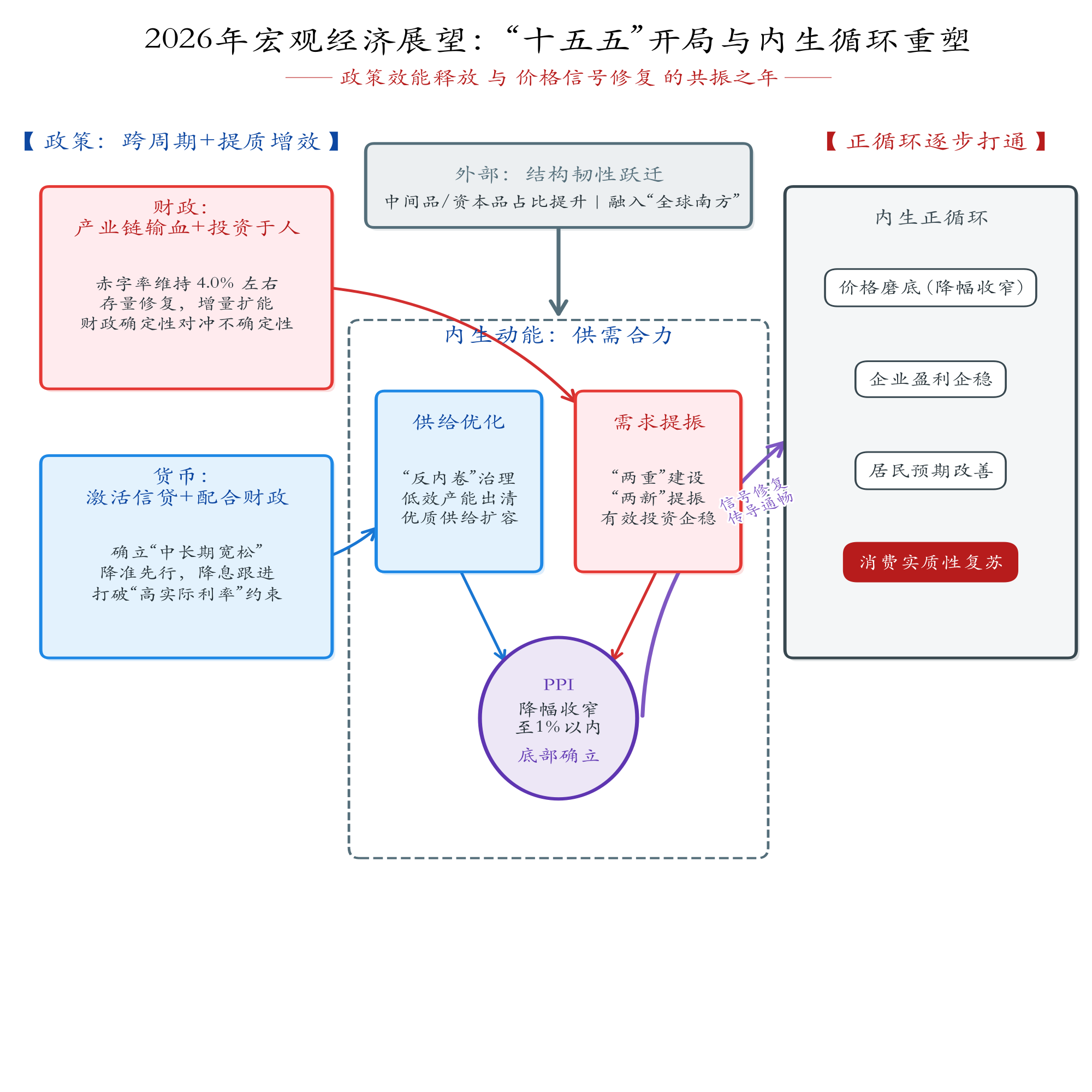
五矿信托:2026年宏观经济与大类资产配置展望
Jin Rong Jie· 2026-02-11 02:43
Core Viewpoint - The macroeconomic outlook for 2026 indicates a significant restructuring of macroeconomic policies, focusing on long-term stability and structural adjustments rather than merely smoothing short-term fluctuations. The year marks a transition towards quality-driven growth and a proactive transformation of the economy [1][4]. Group 1: Macroeconomic Policy - Fiscal policy will maintain a high intensity, with a deficit rate expected to remain between 4.0% and 4.2%, translating to approximately 5.9 trillion yuan in deficit. This aims to boost effective demand and facilitate the transition between old and new growth drivers [6][7]. - Monetary policy is set to shift towards "moderate easing," with expectations of a reserve requirement ratio cut in the first quarter and interest rate reductions in the second quarter, aimed at stimulating credit demand and supporting fiscal efforts [10][12]. Group 2: Investment Dynamics - Fixed asset investment is projected to recover, with growth rates expected to rise to 3.0%-3.5%. Infrastructure investment will be the main driver, anticipated to grow by around 5.5%, supported by fiscal measures [13][15]. - Manufacturing investment is expected to remain resilient, with a growth rate of about 5.0%, as companies shift focus from expansion to upgrading capabilities, aided by a structural shift towards high-value intermediate and capital goods [15]. Group 3: Consumption Trends - Consumer spending is expected to transition from stimulus-driven growth to normalized growth, with retail sales growth projected at 4.0%-4.5%. Durable goods consumption will stabilize, while service consumption is anticipated to become the largest incremental growth area, driven by policy support [17]. Group 4: External Trade and Balance - China's export structure is evolving from "end-product manufacturing" to "industrial base," enhancing export resilience. The export growth rate is expected to remain around 5.5%, supported by a shift towards high-value products [21][24]. - The focus on deepening cooperation with emerging markets will facilitate a transition from simple product exports to a model of "technology + capacity," which is expected to provide a solid foundation for maintaining export growth [24].
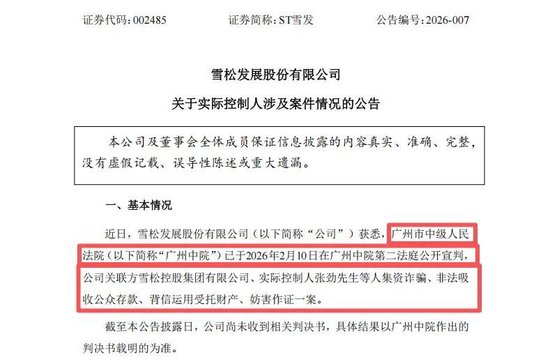
收割了6800个百万富豪200亿,“雪松案”宣判
Xin Lang Cai Jing· 2026-02-11 00:40
Core Viewpoint - The court has publicly announced the verdict regarding the case of fundraising fraud and illegal public deposit absorption involving Xuesong Holdings Group and its actual controller Zhang Jin, marking a significant legal development for the company [1][8]. Legal Proceedings - On February 10, 2026, the Guangzhou Intermediate People's Court announced the verdict in the case against Xuesong Holdings and Zhang Jin, with sentences ranging from life imprisonment to 14 years for various individuals involved [2][10]. - The company has not yet received the official judgment document, and the specific details will be based on the court's written ruling [2][10]. Company Background - Xuesong Holdings was once the largest private enterprise in Guangzhou after Evergrande and was listed among the Fortune Global 500 for four consecutive years [2][10]. - In 2021, Xuesong Holdings reported a revenue of 233.4 billion yuan, ranking 359th [2][10]. - The company faced significant issues in early 2022 when it was revealed that many of its financial products were overdue, involving approximately 20 billion yuan and around 6,800 investors, with an average investment of 2.94 million yuan per person [2][10]. Financial Misconduct - Investigations revealed that Xuesong Holdings had fabricated underlying assets for its financial products, leading to accusations of self-financing without real asset support [4][12]. - The company was accused of transferring approximately 100 million yuan overseas through underground banks and maintaining a "small treasury" of 8.4 billion yuan for personal luxury purchases [4][12]. Business Model Concerns - Xuesong Holdings acquired Zhongjiang Trust in 2019, rebranding it as Xuesong Trust, and launched various financial products promising high annual returns of 8% to 12% to attract small and medium investors [5][13]. - From January 2020, the company issued 1,490 financial products, raising 59.6 billion yuan, with 20 billion yuan unable to be repaid, indicating a closed-loop self-financing scheme [5][13]. Revenue Integrity Issues - Industry analysis has raised concerns about the legitimacy of Xuesong's revenue figures, noting a net profit of only 4.96 million dollars in 2020, with a net profit margin of 0.15%, indicating weak self-sustaining capabilities [6][14]. - Following the financial scandals, Xuesong Holdings, along with other companies like Evergrande, has fallen off the Fortune Global 500 list [6][14].
百大集团股份有限公司关于对上海证券交易所业绩预告相关事项监管工作函回复的公告
Shang Hai Zheng Quan Bao· 2026-02-10 18:12
Core Viewpoint - The company has received a regulatory letter from the Shanghai Stock Exchange regarding its performance forecast and has provided detailed responses concerning its investment in Hangzhou Industrial Trust (杭工信) and the associated fair value losses [1][4]. Group 1: Investment in Hangzhou Industrial Trust - The company reported a significant fair value loss of approximately 94.4 million yuan related to its investment in Hangzhou Industrial Trust, with the investment amounting to 306 million yuan and a book value of 220 million yuan as of mid-2025 [1][4]. - The fair value losses for the years 2023 and 2024 were 11.32 million yuan and 37.43 million yuan, respectively [1]. - The company is required to disclose the financial and operational data of Hangzhou Industrial Trust for the past three years, including total assets, liabilities, net assets, operating income, and net profit [1]. Group 2: Fair Value Measurement and Losses - The company classifies its equity investment in Hangzhou Industrial Trust as a financial asset measured at fair value, with changes recognized in profit or loss [2][3]. - The fair value measurement methodology includes using market prices when available, or estimating based on the financial performance of the underlying assets when market prices are not available [3][14]. - The company confirmed that the significant fair value losses were due to substantial changes in Hangzhou Industrial Trust's financial condition, leading to continuous net losses and a decrease in net assets over the past three years [4][17]. Group 3: Financial Assets and Performance - As of the end of 2023, 2024, and mid-2025, the company's financial assets measured at fair value were valued at 1.526 billion yuan, 1.692 billion yuan, and 1.697 billion yuan, respectively, with corresponding fair value losses of -171 million yuan, 23.568 million yuan, and -3.8297 million yuan [5][17]. - The company has also reported its trading financial assets, non-current assets due within one year, and other non-current financial assets, with respective values of 1.229 billion yuan, 110 million yuan, and 358 million yuan as of mid-2025 [5]. Group 4: Long-term Equity Investments - The company's long-term equity investments were valued at 580 million yuan, 579 million yuan, and 584 million yuan at the end of 2023, 2024, and mid-2025, respectively [17][18]. - The company uses the equity method for accounting its long-term equity investments, reflecting its significant influence over the invested companies [18][22]. - The company has confirmed that there are no significant impairment risks associated with its long-term equity investments, as the underlying companies have shown stable operational performance [24][25].

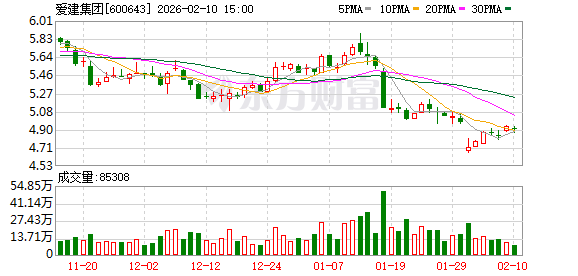
爱建集团:2025年,公司子公司爱建信托首单不动产特殊需要服务信托成功设立
Zheng Quan Ri Bao· 2026-02-10 12:37
Core Viewpoint - Aijian Group's subsidiary, Aijian Trust, successfully established its first real estate special needs service trust, marking a significant breakthrough in the pilot registration of real estate trusts in Shanghai by 2025 [2] Group 1 - The company aims to actively explore multi-dimensional service-oriented products [2] - Continuous innovation in wealth management tools is a priority for the company [2] - The trust system is intended to better serve the needs of elderly care and inject momentum into the silver economy [2]

慈善信托备案规模突破百亿,哪些信托公司在发力?
Di Yi Cai Jing· 2026-02-10 11:49
参与设立慈善信托的委托人中,自然人和民营企业依然是主要参与主体。 由中国信托业协会、中国慈善联合会联合发布的《2025年度中国慈善信托发展报告》(下称《报告》) 显示,截至2025年末,我国慈善信托累计备案规模已突破百亿元。 作为三分类新规下监管鼓励探索发展的业务,慈善信托也是近年来信托公司转型发展的重要探索方向, 多数信托公司已经作为受托机构参与其中。但从信托数量和规模来看,机构间分化依然明显。第一财经 记者在《报告》发布会现场了解到,2025年,新增慈善信托备案规模排在前十位的受托机构中,规模最 高为4.81亿元、最低为0.66亿元,首尾差距超过4亿元。 参与设立慈善信托的委托人中,自然人和民营企业依然是主要参与主体。在业内人士看来,随着慈善信 托的效果持续释放,其功能优势也受到越来越多的机构和个人关注、认可。接下来,随着今年4月慈善 信托信披新规落地实施,备案数量和规模更新速度还将加快。 以信托公司作为单一受托人仍是最主要的慈善信托模式,尤其随着信托转型深入推进,越来越多的信托 公司将其作为重要的创新方向。以2025年为例,当年作为受托人受托管理慈善信托的114家机构中,有 54家信托公司,占到八成以上 ...
十五五期间税务改革的方向及其对财富管理的影响|财富与资管
清华金融评论· 2026-02-10 09:03
文/ 建信信托有限责任公司财富管理业务部 周萱 "完善地方税、直接税体系,健全经营所得、资本所得、财产所得税收政 策,规范税收优惠政策,保持合理的宏观税负水平。坚决破除阻碍全国统 一大市场建设卡点堵点,完善有利于统一大市场建设的统计、财税、考核 制度,优化企业总部和分支机构、生产地和消费地利益分享。坚持扩大内 需,支持高新技术企业和科技型中小企业发展。"同时围绕统一的全国大 市场建设、科技创新、民生保障、绿色转型、促进消费等战略部署,配套 实施针对性税收调控措施。这表明,税务改革已成为衔接国家战略、市场 运行、个人生活的重要纽带,其根本导向是兼顾公平与效率,既服务于中 国式现代化大局,也深刻影响着微观主体的经营决策与财富布局。 十五五期间税务改革的方向 十五五规划勾勒出未来 5年我国税务改革的方向,将会在以下方面有重大的变化。 以统一大市场为导向,清理区域化的税收政策 。为破除全国统一大市场建设阻碍,将全面清理税收洼地、区域性税收补贴、违规税收返还、核定征收等 地方性税务减免措施。 2025年4月发布的《税收征管法(征求意见稿)》也反映了上述趋势。 "任何机关、单位和个人不得违反法律、行政法规和国务院 的规定 ...
华宝信托“水信托”2.0落地 跨省市交易激活水资源“自由流动”
Zheng Quan Ri Bao Wang· 2026-02-10 09:01
本报讯 (记者方凌晨)记者从业内获悉,华宝信托以"水善流®"取水权行政管理服务信托(以下简称"'水信托'")为支 点,近日完成长三角生态绿色一体化发展示范区(以下简称"示范区")首单"取水权跨省市+'水信托'"交易,以金融"活水"推动 水资源集约节约利用和跨区域有序流动。 据悉,此次交易的受让方(中铁十局)与转让方(通过"水信托"整合的上海节水企业)分属不同省份,中铁十局下属项目 单位通过华宝信托第二期"水信托",成功购买6万立方米取水权指标,用于示范区内水乡旅游线城际铁路(浙江段)施工,突 破了传统取水权交易的地域限制。 此次交易的核心载体是华宝信托第二期"水信托"。"水信托"作为全国首个"取水权行政管理服务信托",于2025年4月份在上 海环交所落地,其创新之处在于将信托制度与水资源管理相结合,通过"指标集约、交易规范、结算安全、开票便捷"四大机 制,实现节水指标的规模化、标准化交易。 在业内人士看来,此次跨省市交易不仅是"水信托"模式的成功延伸,更为长三角生态绿色一体化发展提供了"水资源协同 治理"的样本。从宏观层面看,跨省市取水权交易实现了水资源在区域内的优化配置,推动了长三角基础设施互联互通。从微 ...
百亿里程碑!2025 中国慈善信托累计规模突破 102 亿元
Xin Lang Cai Jing· 2026-02-10 08:42
图 《报告》发布会现场 中慈联慈善信托工作委员会主任、信托业协会新闻发言人蔡概还与信托业协会慈善信托专业委员会主任 委员、五矿国际信托有限公司党委书记、董事长刘国威联合发布《报告》,中信信托有限责任公司直销 财富部总经理陈巧作慈善信托发展情况分享。 《报告》显示(以2026年1月15日为统计截止日),2025年我国共新增慈善信托备案规模16.94亿元。其 中,共有508单慈善信托新设备案,新设备案规模为9.26亿元;共有151单存续慈善信托变更备案,增加 备案规模7.68亿元。截至2025年末,我国慈善信托累计备案数量为2757单,累计备案规模102.31亿元, 突破"百亿大关",慈善信托正成为我国慈善事业中不可忽视的发展力量。 《报告》指出,2025年我国慈善信托事业稳步前行,呈现出政策环境不断优化、创新持续深化、慈善效 果持续释放、多方协同构建共善生态圈、各界积极推动慈善信托宣传普及等特征。 责任编辑:朱赫楠 为全面展现2025年度中国慈善信托运行情况,中国信托业协会(以下简称信托业协会)慈善信托专业委 员会、中国慈善联合会(以下简称中慈联)慈善信托工作委员会于2026年2月10日在北京第5次联合召开 发 ...