
出租车

Search documents
出行平台作桥梁 Robotaxi供需两端如何被撬动
Zhong Guo Qi Che Bao Wang· 2025-08-06 01:44
Core Insights - The Robotaxi industry is rapidly moving towards large-scale commercialization, driven by technological advancements and strategic partnerships among various players in the mobility sector [2][6][7] Group 1: Industry Developments - Companies like Didi Chuxing and GAC Aion are collaborating to develop L4 autonomous vehicles, with plans to deploy 1,000 Robotaxis by the end of 2025 in major cities such as Beijing, Shanghai, and Guangzhou [3][4] - The establishment of Shanghai Zhaofu Intelligent Technology Co., a joint venture by Hello Chuxing, Ant Group, and CATL, aims to focus on L4 autonomous technology development and commercialization [4][6] - As of July 2023, companies like Didi and Zhaofu are actively signing partnerships to enhance their Robotaxi fleets and operational networks, with significant investments planned to support these initiatives [5][6] Group 2: Market Potential - Goldman Sachs has raised its long-term forecast for China's Robotaxi market, predicting it will reach $14 billion by 2030, with a fleet size of approximately 535,000 vehicles [7] - The global Robotaxi market is expected to grow significantly, with a projected compound annual growth rate (CAGR) of 239% from 2024 to 2030, reaching a total market size of 834.9 billion yuan [7][8] - The increasing urbanization and demand for efficient transportation solutions are driving the need for Robotaxi services, positioning them as a key growth area for mobility platforms [12][14] Group 3: Technological Advancements - The maturity of L4 autonomous driving technology, supported by advancements in AI, sensors, and communication, is facilitating the transition to commercial Robotaxi operations [8][9] - Companies are forming strategic partnerships to enhance their technological capabilities, such as the collaboration between CATL and T3 Mobility to optimize Robotaxi operations [8][9] Group 4: Regulatory Support - Recent policy changes in cities like Beijing and Wuhan are providing a supportive framework for the testing and deployment of autonomous vehicles, which is crucial for the commercialization of Robotaxi services [9][10] - The Shanghai government has introduced initiatives aimed at promoting high-level autonomous driving, further encouraging the growth of the Robotaxi sector [9][10] Group 5: Competitive Landscape - The Robotaxi market is witnessing a diversification of business models, with major players like Didi adopting a platform-led approach, while others like Tesla focus on vertical integration [13][14] - The competition is intensifying as companies strive to achieve scalable commercial operations, with the ability to efficiently manage fleets becoming a critical success factor [14][15]


上海落地首批全无人驾驶出租车 自动驾驶技术商业化应用再提速
Zheng Quan Shi Bao· 2025-08-04 19:00
Core Insights - Shanghai has issued a new batch of demonstration operation licenses for intelligent connected vehicles, marking a new phase of normalization and scaling in the local market [1] - Pony.ai has launched fully autonomous Robotaxi services in Shanghai, operating in designated areas with specific hours, representing the first instance of fully driverless taxis in the city [1][2] - The Robotaxi utilizes advanced autonomous driving technology, including a fifth-generation system with multiple sensors, ensuring safety and reliability during operation [2][3] Company Developments - Pony.ai's Robotaxi service operates with a Lexus RX vehicle equipped with a comprehensive sensor suite, providing a 200-meter field of view for enhanced safety [2][3] - The company has accumulated over 500,000 hours of fully autonomous operation and 50 million kilometers of road testing, demonstrating the robustness of its technology [3] - The fare for a recent Robotaxi trip was 11.4 yuan after discounts, indicating a competitive pricing strategy for the service [3] Industry Trends - The global market for Robotaxi services is expected to experience explosive growth, with projections indicating a rise from $54 million in 2025 to $47 billion by 2035, reflecting a compound annual growth rate of over 60% [4] - The issuance of over 16,000 testing licenses and the opening of 32,000 kilometers of testing roads in China are critical to supporting the commercial rollout of Robotaxi services [4] - Industry experts suggest that the next 5-10 years will see significant advancements in autonomous driving and smart logistics, potentially disrupting traditional automotive and transportation sectors [5]
完全无人驾驶出租车开进了上海市区!记者实探
Zheng Quan Shi Bao Wang· 2025-08-04 13:01
Core Viewpoint - Shanghai has initiated a new phase of normalized and scaled operation for intelligent connected vehicles, marked by the launch of fully autonomous Robotaxi services in urban areas [1][15]. Group 1: Company Developments - Pony.ai has partnered with Jinjiang Taxi to launch fully autonomous Robotaxi services in Shanghai's Pudong New District, operating from 7:30 AM to 9:30 PM on weekdays [3][13]. - The Robotaxi service utilizes a Lexus RX equipped with Pony.ai's fifth-generation autonomous driving system, featuring 7 cameras, 4 LiDARs, and 4 millimeter-wave radars for a 200-meter safety perimeter [11]. - The service has already accumulated over 50,000 hours of fully autonomous operation across various scenarios, demonstrating a safety performance exceeding human drivers by tenfold [11]. Group 2: Market Potential - The Chinese Robotaxi market is projected to grow from $54 million in 2025 to $47 billion by 2035, with a compound annual growth rate exceeding 60% [17]. - The recent issuance of over 16,000 testing licenses and the opening of 32,000 kilometers of testing roads are critical for the commercial rollout of Robotaxi services [17]. - Shanghai aims to establish itself as a leading area for high-level autonomous driving, with plans to achieve 600 million passenger trips by 2027 and open over 5,000 kilometers of roads for autonomous vehicles [18]. Group 3: Industry Trends - The launch of fully autonomous Robotaxi services signifies a significant step towards the large-scale commercialization of Level 4 autonomous driving technology in China [17]. - Industry experts predict that autonomous driving and intelligent logistics will enter a large-scale implementation phase within the next 5 to 10 years, potentially disrupting the industry [17]. - The Shanghai government is actively expanding its regulatory framework to support the development of autonomous driving, aiming to create a favorable environment for innovation and growth in this sector [18].
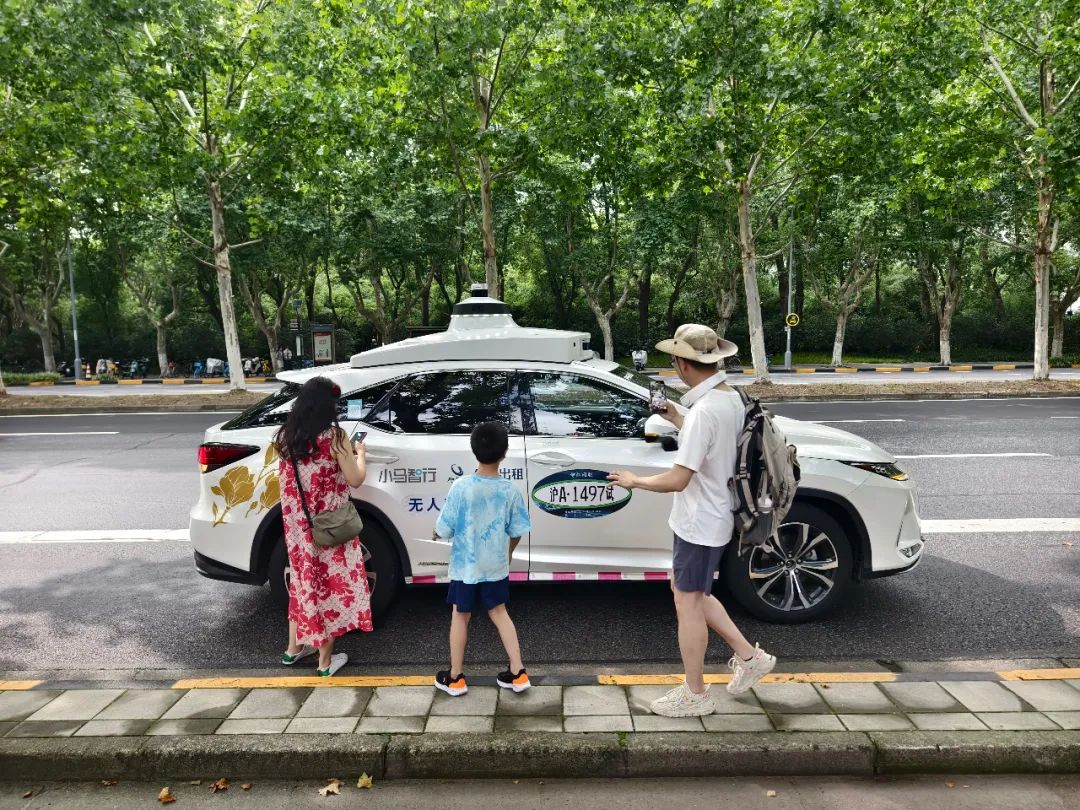
16.8元!在上海打到无人驾驶出租车了
Shang Hai Zheng Quan Bao· 2025-08-02 00:54
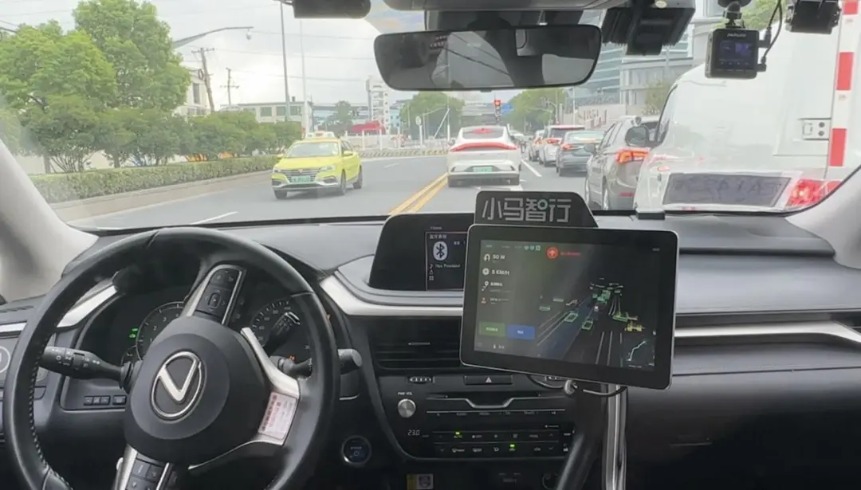
Core Insights - The article highlights the launch of autonomous taxi services by Pony.ai in Shanghai's Pudong area, marking a significant step towards the commercialization of self-driving vehicles [1][9][12] - The Shanghai government has issued new licenses for intelligent connected vehicles, allowing companies to operate autonomous driving services publicly and charge for them [1][9] - The autonomous taxi service is currently operational in specific areas, with plans for gradual expansion to more regions in Shanghai [1][9][12] Company Operations - Pony.ai's autonomous taxi service is accessible through its app, with operational hours from 7:30 AM to 9:30 PM, Monday to Friday [3][4] - The service has a starting fare of 14 yuan for the first 3 kilometers, with an additional charge of 2.7 yuan per kilometer thereafter [5] - The company has over 250 autonomous taxis and more than 190 autonomous trucks, accumulating over 50 million kilometers in global testing, with over 8 million kilometers in fully autonomous driving [9][10] Industry Trends - The autonomous taxi market is projected to grow significantly, with Goldman Sachs estimating a market size of $540 million by 2025 and $47 billion by 2035 in China [12] - Companies like Luojia and others are rapidly expanding their autonomous taxi operations, with significant investments planned to cover major cities [12][13] - The revenue from autonomous taxi services is becoming increasingly important for companies, with notable growth reported by various firms in their quarterly earnings [13] Safety and Technology - The autonomous vehicles are equipped with multiple sensors, including 4 LiDARs and 7 cameras, enabling them to monitor the environment and respond to dynamic conditions [10] - The transition from having a safety driver to fully autonomous operation has been carefully phased, with strict safety standards in place [9][10] - The operational efficiency and cost management of autonomous vehicles are critical for achieving profitability, with a target of reaching a break-even point with 1,000 vehicles in major cities [13]
上海无人驾驶出租车上线 公众可体验
news flash· 2025-08-01 04:02
据上观新闻消息,上海正式发放智能网联汽车示范运营证,8家企业获准在试点区域运营无人驾驶出租 车。浦东新区将全域开放自动驾驶,并推动奉贤、闵行等区域开放。无人驾驶出租车起租价为14元每3 公里,超过3公里部分每公里2.7元,运营时间为周一至周五早7:30至晚9:30。小马智行公关负责人表 示,旗下无人驾驶出租车已于8月1日面向公众开放运营,初期车辆有限,可能出现较长等待时间。目 前,小马智行的运营范围以金桥和花木为起点,具体是在申江路、锦绣东路、黑松路和杨高中路进行运 营,后续会逐步拓展到浦东开放的整个范围。 ...
接入全市出租车,还可定制服务,深圳上线首个出租车智慧平台
Nan Fang Du Shi Bao· 2025-07-24 13:08
Core Insights - Shenzhen is advancing high-quality development in transportation under the national strategy, launching the first smart taxi platform "SZ坐出租" to enhance service efficiency and citizen satisfaction [1][2] - The platform integrates big data, cloud computing, and AI technologies to transform the traditional taxi service ecosystem, addressing pain points such as order tracking and feedback [1][2] Company Overview - Shenzhen Urban Transportation Planning and Design Research Center Co., Ltd. (深城交) is leading the initiative in collaboration with other enterprises like Xihu and Bus Group [1] - The platform will connect 22,000 taxis in the city, focusing on "online + cruising + scenario-based" service innovation [1][2] Technological Integration - Key features include "Driver-Passenger Display," "Lost and Found," and "Service Evaluation," enhancing trip transparency and efficiency in lost item recovery [2] - The platform aims to create a smart scheduling system by analyzing passenger flow data in real-time, improving operational efficiency [2] Future Developments - The platform plans to deepen "smart + scenario" collaboration, offering real-time traffic conditions and passenger flow predictions to enhance operational efficiency [2] - It will introduce specialized services like "Party Car Pioneer" and "Love Assistance for the Elderly" to meet specific needs and respond flexibly to temporary scenarios [2] Industry Impact - "SZ坐出租" aims to empower the traditional taxi industry through technology, addressing service efficiency and supply-demand matching issues [2] - The initiative is expected to accelerate the transformation of urban transportation services towards refinement, intelligence, and quality [2]

上海将发放智能网联汽车示范运营牌照
财联社· 2025-07-24 12:49
Core Viewpoint - Shanghai is set to issue demonstration operation licenses for intelligent connected vehicles during the 2025 World Artificial Intelligence Conference (WAIC2025), following the initial release of demonstration application licenses in 2024, marking a significant step in the integration of traditional taxi services with autonomous driving technology [1] Group 1 - The issuance of demonstration application licenses in 2024 allows Robotaxis to conduct road tests but prohibits fare collection [1] - The upcoming demonstration operation licenses will enable the public to hail Robotaxis within designated service areas [1] - Traditional taxi companies will collaborate with technology firms to operate these services, showcasing an innovative management approach that leverages the operational experience of traditional taxi firms alongside the autonomous driving capabilities of tech companies [1]

上海将发放智能网联汽车示范运营牌照
news flash· 2025-07-24 12:11
Core Viewpoint - Shanghai is set to issue demonstration operation licenses for intelligent connected vehicles during the 2025 World Artificial Intelligence Conference (WAIC2025), following the initial release of demonstration application licenses in 2024, which allowed Robotaxis to conduct road tests but not charge fares [1] Group 1 - The issuance of demonstration operation licenses signifies that the public will be able to hail Robotaxis within designated service areas [1] - Traditional taxi companies will collaborate with technology firms to operate these Robotaxis, representing an innovative management approach that combines the operational experience of traditional taxi services with the autonomous driving technology of tech companies [1]
风险预警:市场已饱和 入行需谨慎!惠州网约车超1.7万辆日均订单不足10单
Nan Fang Du Shi Bao· 2025-07-24 05:19
Core Insights - The taxi market in Huizhou has reached saturation, leading to a significant decline in order volume and revenue due to supply-demand imbalance, resulting in increased industry risks [1][9] Market Overview - As of June 2025, there are 10 taxi companies operating in Huizhou with a total of 911 vehicles, a decrease of 77 vehicles compared to the end of the previous year. The number of taxi drivers has increased by 136 to 6,574 [4] - In contrast, the ride-hailing market has seen rapid growth, with 33,106 compliant ride-hailing vehicles, an increase of 1,970 in the past six months. The number of qualified drivers has risen by 5,246 to 72,188 [4] Operational Status - The operational data for Huizhou's taxi market is concerning, with traditional taxis averaging only 11 passengers per day and generating daily revenue of 312 yuan. Ride-hailing vehicles have an average of 16 orders per day, but over 17,037 ride-hailing vehicles have fewer than 10 orders daily, accounting for over 51% [5] - The revenue and business volume for both traditional taxis and ride-hailing services have shown a downward trend compared to the second half of 2024 [5] Compliance and Complaints - In the first half of 2025, Huizhou's transportation enforcement authorities handled 255 illegal operation cases and 130 operational violation cases. The top three taxi companies with the most operational violations are Huizhou Xinhui Transportation Group, Huizhou Automobile Transportation Group, and Huizhou Yunxing Small Passenger Car Company [6] - Among the 1,471 valid passenger complaints, the top three taxi companies with the highest complaint rates are Huizhou Baotong Transportation, Huizhou Daya Bay Shenhong Three-Dimensional Transportation, and Huizhou Jintong Taxi Transportation [8] Market Risks - The report highlights that the supply of ride-hailing services significantly exceeds demand, with drivers working longer hours but earning less, indicating severe challenges for the industry [9] - The Huizhou Transportation Bureau has issued multiple risk warnings to potential operators, emphasizing the high insurance costs for ride-hailing vehicles, strict vehicle scrapping conditions, and the volatility of income due to market dynamics [9] - The report also warns about potential contractual traps for new entrants, urging them to carefully review leasing contracts and platform agreements [9]
广州的士司机最新收入公布,出租汽车市场供给趋于饱和
Nan Fang Du Shi Bao· 2025-07-23 11:27
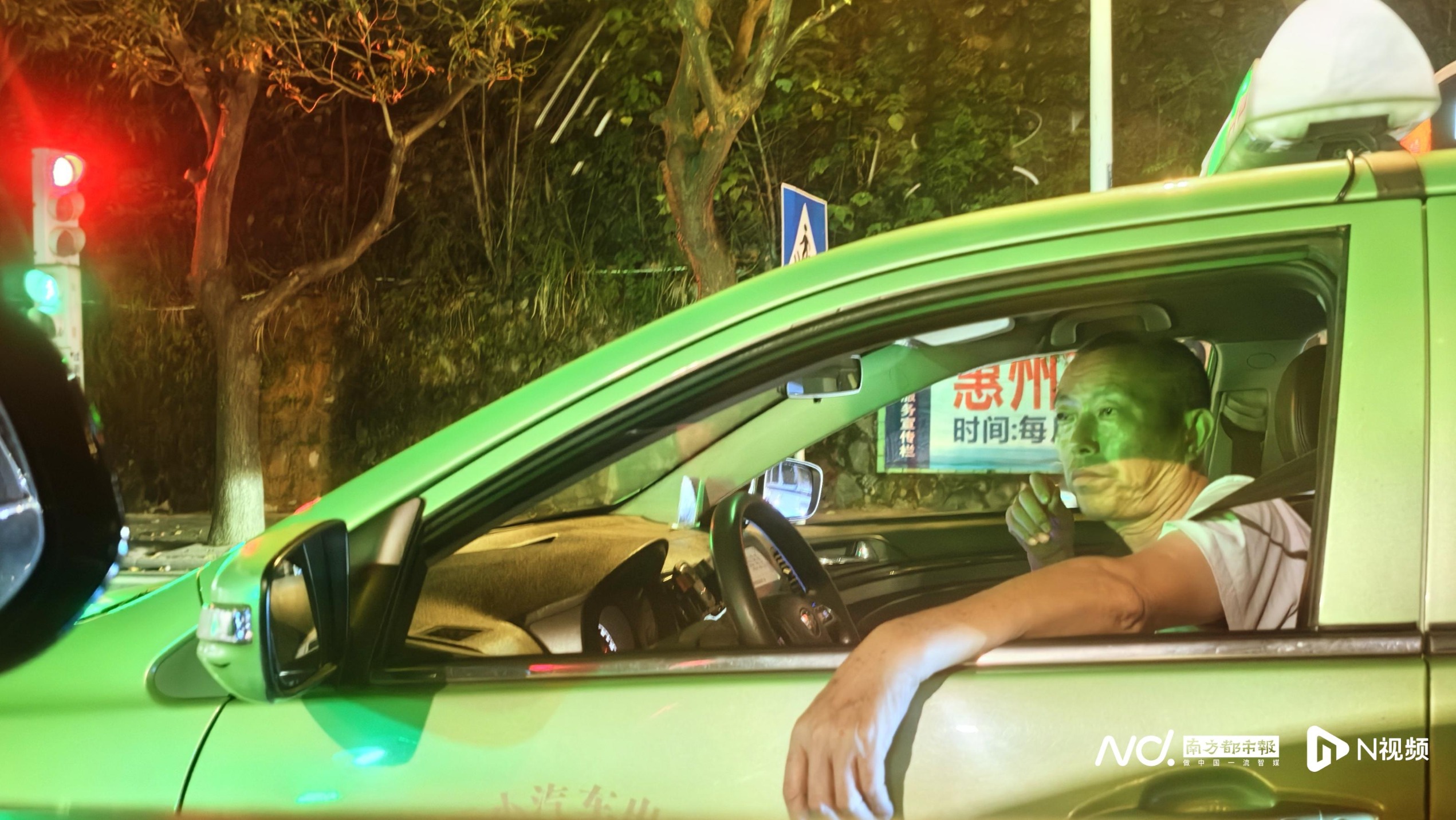
Core Insights - The report from Guangzhou's Transportation Bureau indicates a decline in the number of traditional taxis and drivers, while the number of ride-hailing vehicles and drivers continues to increase [1][2] Group 1: Traditional Taxi Industry - As of June 2025, Guangzhou has 14,252 traditional taxis and 27,841 active drivers, a decrease of 1,655 vehicles compared to December 2024 [2] - The number of traditional taxis and drivers has decreased by over 30% and 15% respectively compared to the same period three years ago [2] - The average daily revenue per traditional taxi is approximately 607.40 yuan, which is a decrease of 23.24 yuan compared to the second half of 2024 [3] Group 2: Ride-Hailing Industry - By June 2025, there are 120 licensed ride-hailing companies in Guangzhou, with 209,607 ride-hailing transport permits issued, an increase of 10,957 since December 2024 [2] - The number of ride-hailing driver permits issued reached 343,091, an increase of 19,515 since December 2024 [2] - The average daily order volume for ride-hailing vehicles is approximately 13.23 orders [3] Group 3: Regulatory and Market Conditions - In the first half of 2025, Guangzhou's transportation enforcement authorities handled 639 illegal operation cases and 2,284 operational violation cases related to traditional taxis [4] - The market for traditional taxis is approaching saturation, leading to increased operational pressure [5]