小马智行Robotaxi

Search documents
出行经济的全球大航海时代悄然开始
3 6 Ke· 2026-02-13 04:20
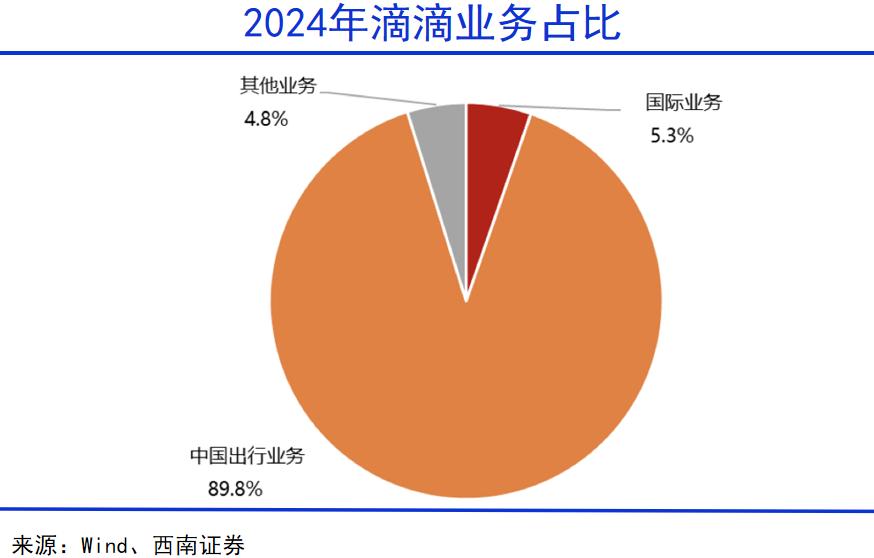
Core Insights - The article discusses the evolution and globalization of the Chinese mobility industry, highlighting key players like Didi and Cao Cao Mobility, and their strategies for international expansion [1][2][5][10]. Group 1: Didi's International Expansion - Didi began its international journey in 2015 by investing in various global ride-hailing platforms, including Grab and Lyft, and later focused on deeper market penetration in Latin America, particularly Brazil [2][5]. - By 2023, Didi had 55 million active users and 1.5 million drivers in Brazil, covering over 3,300 towns, marking a significant achievement in its international strategy [2]. - Didi's international business saw over 20% growth in Q3 2025, with a total order volume of 1.162 billion, indicating its status as a benchmark for Chinese mobility companies going global [8]. Group 2: Cao Cao Mobility's Strategy - Cao Cao Mobility, backed by Geely, achieved a Gross Transaction Value (GTV) of 17 billion yuan in 2024, making it the second-largest ride-hailing platform in China with a market share of 5.4% [9]. - The acquisition of Yao Mobility and Geely Business Travel expanded Cao Cao's service network to 12 international cities, enhancing its global footprint [9]. - Cao Cao's integration with Geely's ecosystem allows for localized operations and shared vehicle development capabilities, positioning it favorably against competitors [9][10]. Group 3: Autonomous Driving Expansion - The autonomous driving sector is a critical extension of the mobility industry, with companies like WeRide and Pony.ai aggressively pursuing global markets [11][16]. - WeRide received approval to operate a fully autonomous Robotaxi service in Abu Dhabi, marking a significant milestone in global autonomous driving commercialization [14][17]. - The competition in the autonomous driving space is intensifying, with companies like Waymo and Tesla also making significant advancements and investments [20][21]. Group 4: New Entrants and Market Dynamics - New players like Hello Mobility are expanding their business models to include two-wheeled and four-wheeled services, supported by Ant Group [21][23]. - The mobility industry in China is projected to reach 8 trillion yuan in 2024, with expectations to grow to 10 trillion yuan by 2029, indicating a robust market potential [21][25]. - The shift towards international markets is also seen in the mapping and location services sector, as companies adapt to new technological trends and consumer demands [24][25]. Group 5: Future Outlook - China's automotive exports reached 7.098 million units in 2025, solidifying its position as the world's largest automotive exporter for the third consecutive year [25]. - The article emphasizes the need for mobility companies to adapt their business models and technologies for international markets, particularly in autonomous driving and ecosystem development [25][26]. - The future of the global mobility economy is expected to be dynamic, with numerous companies vying for market share in an increasingly competitive landscape [26].

直线拉升,中概股盘前利好来袭
Zheng Quan Shi Bao· 2025-11-25 13:36
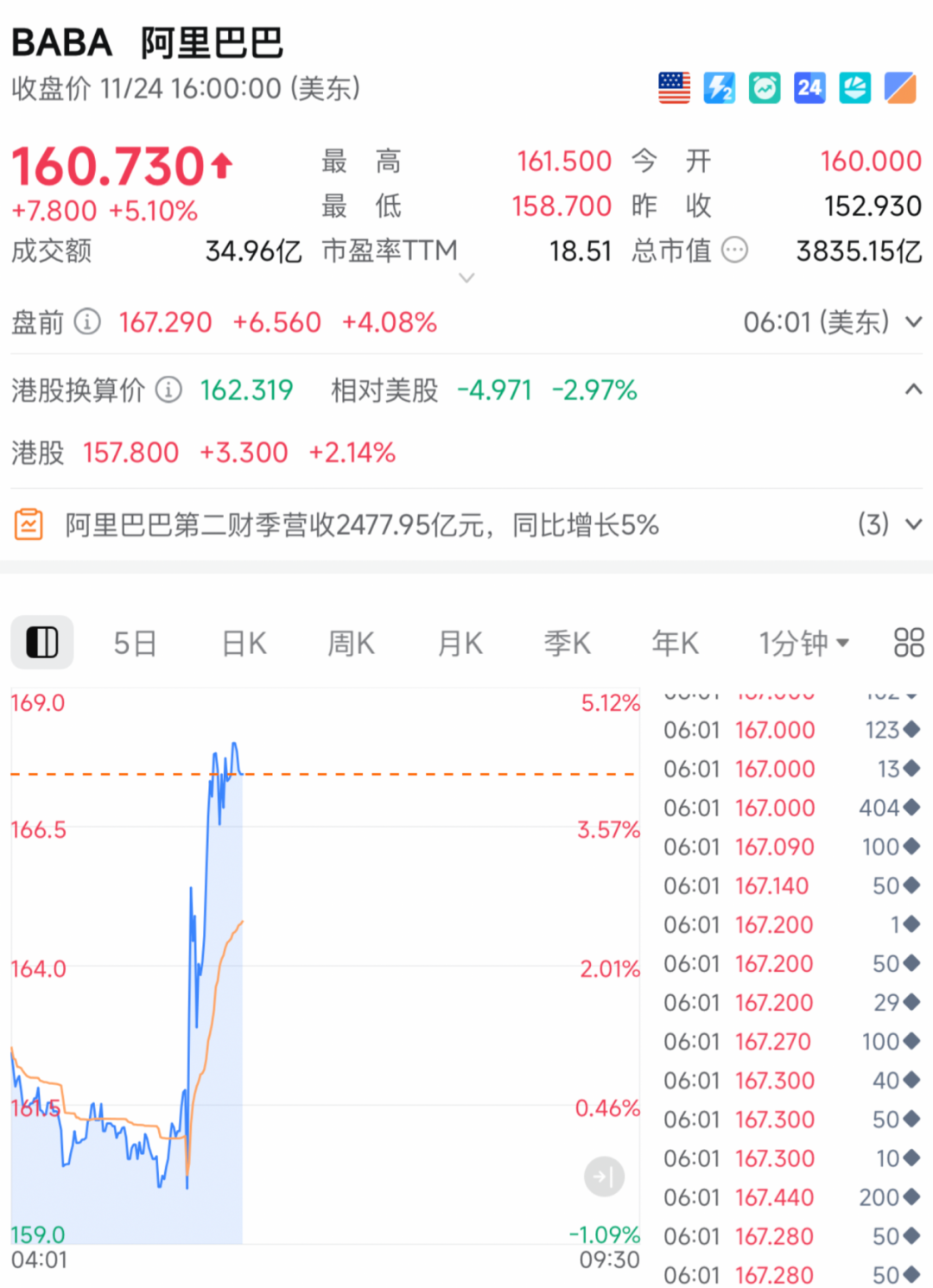
Core Insights - Multiple Chinese concept stocks surged in pre-market trading in the US due to positive earnings reports, with Alibaba rising nearly 5%, NIO over 9%, and Pony.ai exceeding 11% [1][4]. Alibaba - Alibaba's latest earnings report for the second fiscal quarter of 2026 (July-September 2025) showed revenue of 247.8 billion yuan, a 4.8% year-on-year increase, surpassing market expectations of 245.2 billion yuan [3]. - The Cloud Intelligence Group was a highlight, contributing 39.82 billion yuan in revenue, a 34% year-on-year increase, exceeding the market forecast of 37.99 billion yuan [3][6]. - Adjusted net profit was 10.35 billion yuan, below the market estimate of 16.8 billion yuan, while adjusted EBITDA was 17.26 billion yuan, also below the expected 19.3 billion yuan [3]. - The Chinese e-commerce business group remains the largest revenue source, contributing 132.58 billion yuan, a 16% year-on-year increase, exceeding the market estimate of 128.53 billion yuan [3]. - AI-related product revenue has seen triple-digit year-on-year growth for nine consecutive quarters, with Alibaba Cloud holding a 35.8% market share in China's AI cloud market [6][7]. - Alibaba's capital expenditure on AI and cloud infrastructure over the past four quarters was approximately 120 billion yuan [6]. NIO - NIO reported third-quarter revenue of 21.79 billion yuan, a 16.7% year-on-year increase and a 14.7% quarter-on-quarter increase, with vehicle deliveries reaching 87,071 units, a 40.8% year-on-year increase [9][12]. - Gross profit reached 3.02 billion yuan, a 50.7% year-on-year increase, with a gross margin of 13.9%, up from 10.7% in the same period last year [9][13]. - As of the end of the third quarter, NIO's total cash and equivalents amounted to 36.7 billion yuan, a significant increase of nearly 10 billion yuan quarter-on-quarter [9]. Pony.ai - Pony.ai reported third-quarter revenue of 181 million yuan, a substantial year-on-year increase of 72%, with Robotaxi business revenue reaching 47.7 million yuan, up 89.5% year-on-year [15]. - The company provided optimistic guidance for 2026, expecting to exceed 1,000 vehicles in its fleet by the end of the year and aiming to triple that number by the end of 2026 [15]. - Pony.ai's seventh-generation Robotaxi began commercial operations in major cities, achieving profitability on a per-vehicle basis in Guangzhou, with an average of 23 orders per vehicle per day [18][19].


小马智行正式登陆港交所,总市值超513亿元
Ju Chao Zi Xun· 2025-11-06 05:54
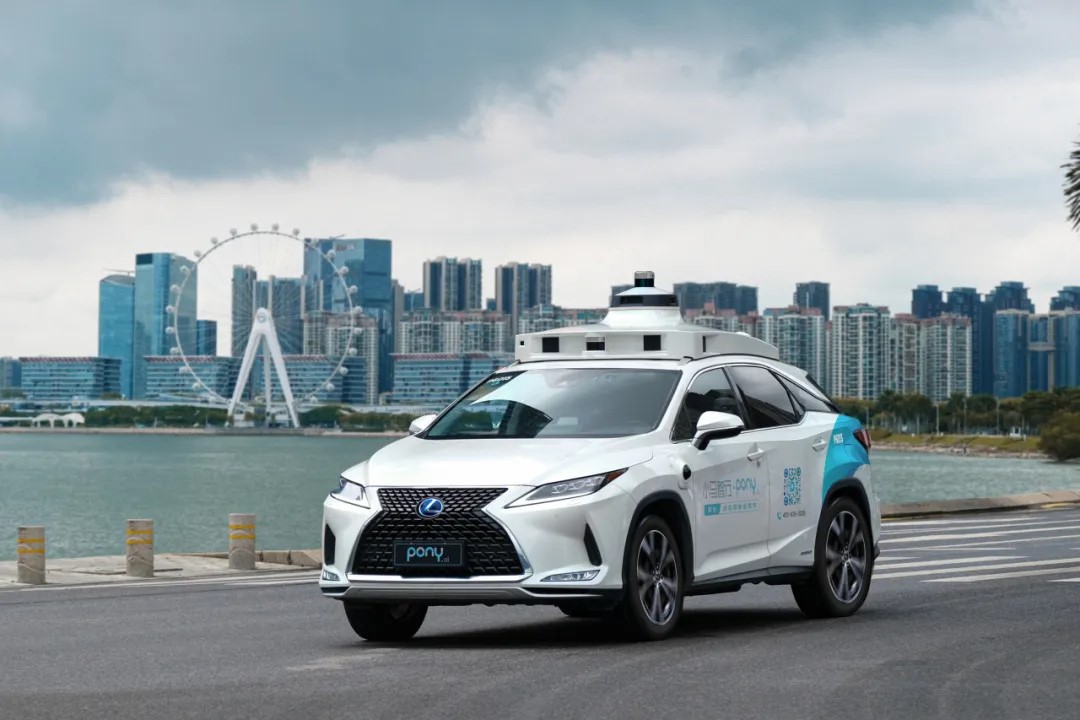
Group 1 - Pony.ai officially listed on the Hong Kong Stock Exchange on November 6, with a real-time stock price of HKD 120.2 per share, reflecting a decline of 13.53% from the IPO price of HKD 139, resulting in a total market capitalization of HKD 51.355 billion [2] - Founded in 2016, Pony.ai aims to provide safe, advanced, and reliable full-stack autonomous driving technology, with a vision of "Autonomous Mobility Everywhere" [5] - The company launched 24/7 autonomous driving public road tests in Beijing, Guangzhou, and Shenzhen on July 25, and introduced its Robotaxi service in Shanghai on August 1, with a starting fare of RMB 14 for a 3-kilometer trip, and RMB 2.7 per kilometer thereafter, aligning pricing with traditional taxis [5] Group 2 - On November 5, Pony.ai announced the official operation of its seventh-generation Robotaxi in Guangzhou and Shenzhen, allowing users to hail vehicles via the Pony.ai app or mini-program [6] - The new Robotaxi model is based on the Arcfox Alpha T5 and Aion S models, utilizing 100% automotive-grade components, with a design lifespan of 600,000 kilometers [6] - On October 14, the China Securities Regulatory Commission issued a notice approving Pony.ai's overseas IPO application, allowing the company to issue up to 102,146,500 ordinary shares for listing on the Hong Kong Stock Exchange [5]
上海落地首批全无人驾驶出租车 自动驾驶技术商业化应用再提速
Zheng Quan Shi Bao· 2025-08-04 19:00
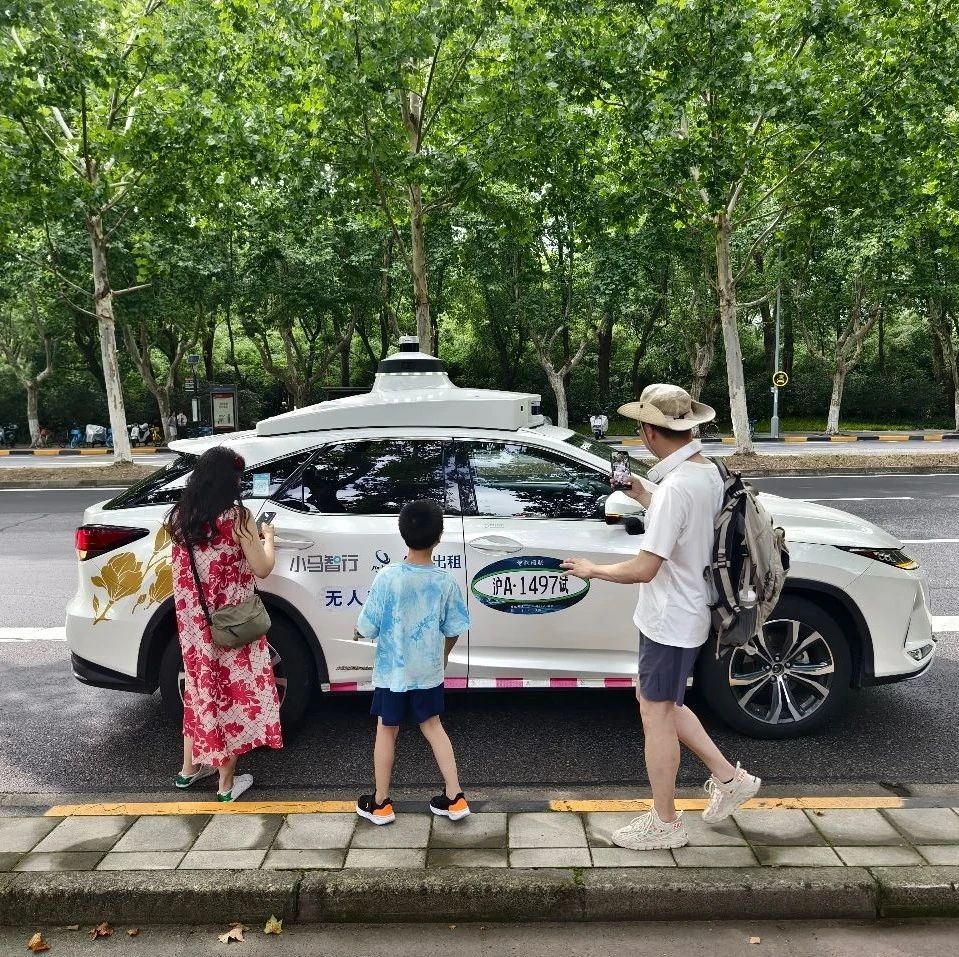
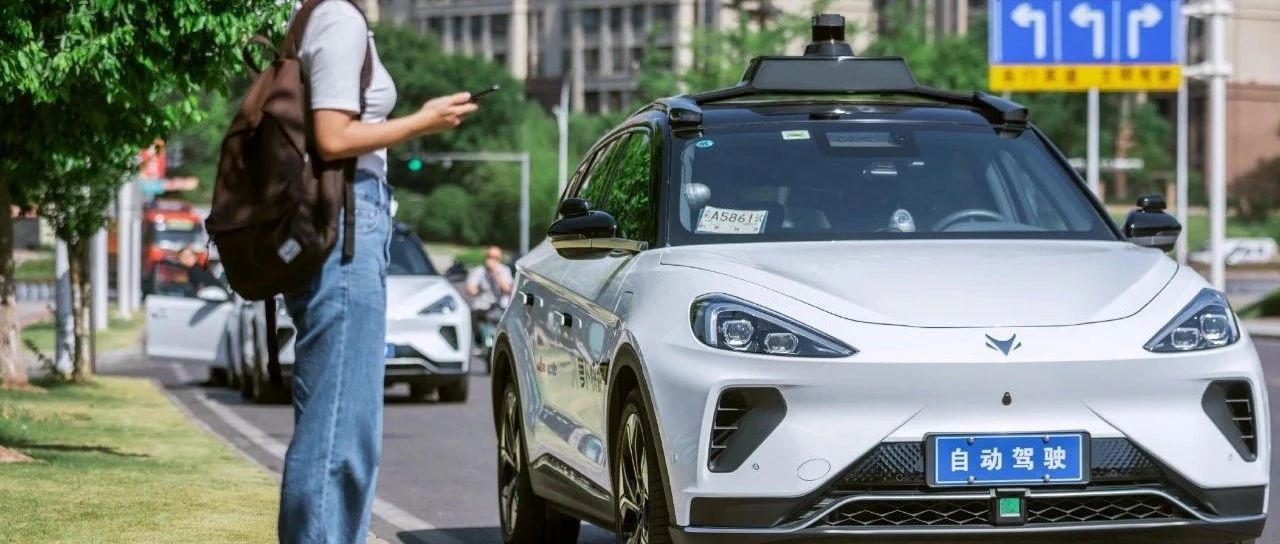
Core Insights - Shanghai has issued a new batch of demonstration operation licenses for intelligent connected vehicles, marking a new phase of normalization and scaling in the local market [1] - Pony.ai has launched fully autonomous Robotaxi services in Shanghai, operating in designated areas with specific hours, representing the first instance of fully driverless taxis in the city [1][2] - The Robotaxi utilizes advanced autonomous driving technology, including a fifth-generation system with multiple sensors, ensuring safety and reliability during operation [2][3] Company Developments - Pony.ai's Robotaxi service operates with a Lexus RX vehicle equipped with a comprehensive sensor suite, providing a 200-meter field of view for enhanced safety [2][3] - The company has accumulated over 500,000 hours of fully autonomous operation and 50 million kilometers of road testing, demonstrating the robustness of its technology [3] - The fare for a recent Robotaxi trip was 11.4 yuan after discounts, indicating a competitive pricing strategy for the service [3] Industry Trends - The global market for Robotaxi services is expected to experience explosive growth, with projections indicating a rise from $54 million in 2025 to $47 billion by 2035, reflecting a compound annual growth rate of over 60% [4] - The issuance of over 16,000 testing licenses and the opening of 32,000 kilometers of testing roads in China are critical to supporting the commercial rollout of Robotaxi services [4] - Industry experts suggest that the next 5-10 years will see significant advancements in autonomous driving and smart logistics, potentially disrupting traditional automotive and transportation sectors [5]
完全无人驾驶出租车开进了上海市区!记者实探
证券时报· 2025-08-04 12:55
Core Viewpoint - Shanghai has entered a new phase of normalized and scaled operation for intelligent connected vehicles, marked by the launch of fully autonomous Robotaxi services in urban areas [1][20]. Group 1: Robotaxi Launch and Operation - In late July, Shanghai issued a new batch of demonstration operation licenses for intelligent connected vehicles, allowing for the first fully autonomous Robotaxi services to operate in urban areas [1][20]. - Starting August 1, Pony.ai partnered with Jinjiang Taxi to launch fully autonomous Robotaxi services in two districts of Shanghai, with operational hours from 7:30 AM to 9:30 PM on weekdays [5][18]. - The first passenger ride was completed within 12 minutes of service launch, indicating high demand for the service [18]. Group 2: Technology and Safety Features - The Robotaxi is equipped with Pony.ai's fifth-generation autonomous driving system, which includes 7 cameras, 4 LiDARs, and 4 millimeter-wave radars, providing a 200-meter field of view for safety [13]. - The system has accumulated over 50,000 hours of fully autonomous operation across various scenarios, demonstrating its reliability and safety [13]. - The vehicle's performance includes smooth acceleration and deceleration, with the ability to react quickly to changing road conditions [11][14]. Group 3: Market Potential and Future Plans - The market for Robotaxi services in China is projected to grow from $5.4 million in 2025 to $47 billion by 2035, with a compound annual growth rate exceeding 60% [20]. - Pony.ai plans to scale up to 1,000 vehicles by the end of the year, expanding operations to major cities like Beijing, Shanghai, Guangzhou, and Shenzhen [20]. - Shanghai aims to establish itself as a leading area for high-level autonomous driving, with plans to achieve significant passenger numbers and open extensive road networks by 2027 [22].
印裔1号位删 Karpathy 团队90%代码、算力暴涨 50 倍!马斯克 Robotaxi 10年终上线,30 元乘车体验刷屏
AI前线· 2025-06-23 07:09
Core Viewpoint - Tesla has officially launched its Robotaxi pilot service in Austin, Texas, with a fixed fare of $4.20 for passengers, marking a significant step in its autonomous driving ambitions [1][2]. Group 1: Robotaxi Launch and Operations - The Robotaxi service operates daily from 6 AM to midnight, primarily in the southern part of Austin, avoiding complex intersections for safety [2]. - Each Robotaxi is equipped with a safety driver, despite lacking a steering wheel or brake pedal, who can take control in emergencies [2]. - The service is currently limited to invited users, including Tesla employees and Powerwall users, who can book rides through a dedicated app [2][28]. Group 2: Technical Aspects and Team - The Robotaxi vehicles are modified Model Y models, featuring Tesla's proprietary vision perception system and Full Self-Driving (FSD) software [2]. - Tesla's approach to autonomous driving relies on camera-based solutions rather than expensive radar systems, aiming for cost-effectiveness and scalability [6]. - The AI and software team behind Robotaxi has been built from scratch within Tesla, with key figures like Ashok Elluswamy leading the project [12][17]. Group 3: Competitive Landscape - Tesla faces significant competition from Waymo, which has already achieved commercial operations in multiple cities and reached a milestone of 10 million paid rides [5]. - The current limited deployment of Tesla's Robotaxi, with only 10 to 20 vehicles, contrasts sharply with the more extensive operations of competitors in the market [28][36]. Group 4: Future Developments and Technology - The upcoming FSD 14.0 version is expected to significantly enhance the system's capabilities, with a parameter increase from 1 billion to 4.5 billion, akin to the leap from ChatGPT 3.5 to 4.0 [19]. - Tesla's strategy includes optimizing models for local conditions, which raises questions about managing numerous regional versions of the software [20][22]. - The company has streamlined its codebase by nearly 90%, moving from heuristic-based logic to a more efficient neural network approach [23]. Group 5: User Experience and Feedback - Initial user feedback indicates a smooth riding experience, with the Robotaxi interface providing entertainment options during rides [30][31]. - Tesla has humorously integrated a feature that rejects tips, indicating a unique approach to customer interaction [32]. Group 6: Comparison with Domestic Players - In contrast to Tesla's fixed pricing model, domestic competitors in China have adopted a more traditional fare structure, combining base fares with distance and time charges [36]. - Companies like Baidu and Xiaoma Zhixing have established extensive Robotaxi services across multiple cities in China, highlighting the competitive landscape Tesla is entering [35].


萝卜快跑新消息!百度正筹建瑞士公司
21世纪经济报道· 2025-05-14 06:12
Core Insights - Baidu is actively exploring the expansion of its autonomous driving service "Luo Bo Kua Pao" to Switzerland and Turkey, with plans to establish a physical company in Switzerland within the next few months [1] - The autonomous taxi market has accelerated significantly, with RoboTaxi companies increasing their vehicle deployment, indicating a shift from market education to market capture [2] - Luo Bo Kua Pao has deployed approximately 2,000 vehicles nationwide, with plans to scale up to 20,000 vehicles in two years, covering 65 cities [2] - The cost of L4 autonomous vehicles is expected to decrease significantly, with the sixth generation vehicle's cost dropping by 60% compared to the fifth generation, priced at approximately 204,600 yuan [2] - Predictions suggest that the cost of autonomous vehicles could drop to around 50,000 yuan through mass production of software and hardware [2] - Luo Bo Kua Pao has provided over 9 million rides to the public, with expectations of achieving breakeven in Wuhan by the end of last year [3] - Other companies in the sector, such as Xiao Ma Zhi Xing, are also on track to turn their single-vehicle operating profits positive this year [3]

早报|商务部:中方决定同意与美方接触;默茨当选德国总理;斯凯奇宣布退市;墨迹天气tv版等15款APP被通报
虎嗅APP· 2025-05-07 00:13
Group 1 - 15 apps, including Moji Weather TV version, were reported for issues related to personal information collection and usage [2][3] - Specific problems include failure to provide personal information collection rules and not responding to user complaints in a timely manner [3][4] Group 2 - Shanghai Hongqiao Airport and Beijing Capital Airport launched a trial voluntary transfer service for flights between the two airports [5] - The service is available for specific flights operated by China Eastern Airlines and Air China, allowing passengers to change flights under certain conditions [5] Group 3 - During the May Day holiday, the Yangtze River Delta railway sent over 20 million passengers, with a daily average exceeding 4 million, marking a year-on-year increase of over 10% [6] - On May 1, a record 4.268 million passengers were sent in a single day [6] Group 4 - Google announced plans to appeal against a court ruling in the U.S. Department of Justice's advertising technology case [15][16] - The company disagrees with the court's decision regarding its Google Ad Manager tool [16] Group 5 - Skechers is set to be privatized in a deal worth approximately $9.4 billion, with shareholders given options for cash or a combination of cash and equity [21] - The transaction is expected to be completed in the third quarter of this year [21] Group 6 - Li Ning has officially signed a partnership with the Chinese Olympic Committee to provide sportswear for the 2025-2028 period [19] - The partnership includes support for multiple international sporting events, including the 2028 Los Angeles Olympics [19] Group 7 - A new logistics supply chain project in Xuchang, Henan, is expected to generate an annual output value of approximately 2.5 billion yuan [22][23] - The project is a collaboration between Pang Donglai and JD Logistics, with a total investment of 1.25 billion yuan [22]