
卫星通信

Search documents
超百G实验成功 中国星地激光通信业务化应用迈上新台阶
Zhong Guo Xin Wen Wang· 2026-01-30 06:15
Core Insights - The China Academy of Space Technology has successfully conducted a business application experiment for space-ground laser communication, achieving a communication rate of 120Gbps, marking a significant advancement in China's capabilities in this field [1][4]. Group 1: Experiment Achievements - The experiment utilized a self-developed 500mm aperture laser communication system and the AIRSAT-02 satellite, enhancing the satellite's communication capacity from 60Gbps to 120Gbps without hardware changes [2][5]. - The experiment set a new record for space-ground laser communication transmission rates and addressed challenges related to establishing stable and efficient communication links [4][5]. - During the experiment, a successful link was established in seconds with a success rate exceeding 93%, achieving a maximum continuous communication duration of 108 seconds and transferring 12.656Tb of data [4][5]. Group 2: Technical Challenges and Solutions - The project faced several challenges, including satellite platform micro-vibrations and atmospheric turbulence, which affected the application efficiency of laser communication technology [5]. - The project team implemented key technological breakthroughs and optimizations to enhance signal stability and communication availability, ensuring the success of the 120Gbps experiment [5]. Group 3: Future Implications - The tower county laser ground station, as China's first operational space-ground laser communication station, has been undertaking various operational tasks since its establishment in September 2024, with continuous improvements in communication speed and efficiency [6][7]. - The demand for high-speed data transmission is increasing, and the limitations of microwave communication spectrum resources highlight the necessity for developing space-ground laser communication technology [8]. - With ongoing operational validation, space-ground laser communication is expected to become a backbone hub connecting space-based information networks and terrestrial fiber optic networks, contributing to an integrated space information network system [8].

120吉比特每秒!我国超高速星地激光通信实现业务化突破
Ke Ji Ri Bao· 2026-01-30 01:36
Core Insights - China has successfully conducted a business application experiment for space-ground laser communication, achieving a stable high-speed transmission rate of 120 Gbps, setting a new record in the field [1][3] - This advancement marks a new phase in the business application of space-ground laser communication, laying a critical technological foundation to meet future demands for massive space-based data transmission [1] Group 1: Experiment Details - The experiment was conducted at the Xinjiang Tak County laser ground station, utilizing the AIRSAT-02 satellite developed by China Aerospace Science and Technology Corporation [3] - The laser link established a rapid capture and connection within seconds, with a success rate exceeding 93%, and the longest continuous stable communication lasting 108 seconds [3] - The research team achieved this enhancement without modifying the satellite hardware, instead employing "on-orbit software reconfiguration" to double the original transmission capacity from 60 Gbps to 120 Gbps [3][5] Group 2: Technical Challenges and Solutions - Space-ground laser communication utilizes laser as a medium for high-speed information transfer, offering advantages such as large bandwidth, strong anti-interference capability, and good confidentiality [3] - The team overcame three core technical challenges: optimizing real-time correction algorithms to stabilize light beam disturbances caused by atmospheric turbulence, applying advanced compensation techniques to reduce data error rates, and improving adaptive transmission strategies to maximize channel capacity [5] - The successful operation of space-ground laser communication demonstrates its capability to support future massive space data transmission, with potential to become a key hub connecting space-based information networks and ground fiber networks [5]

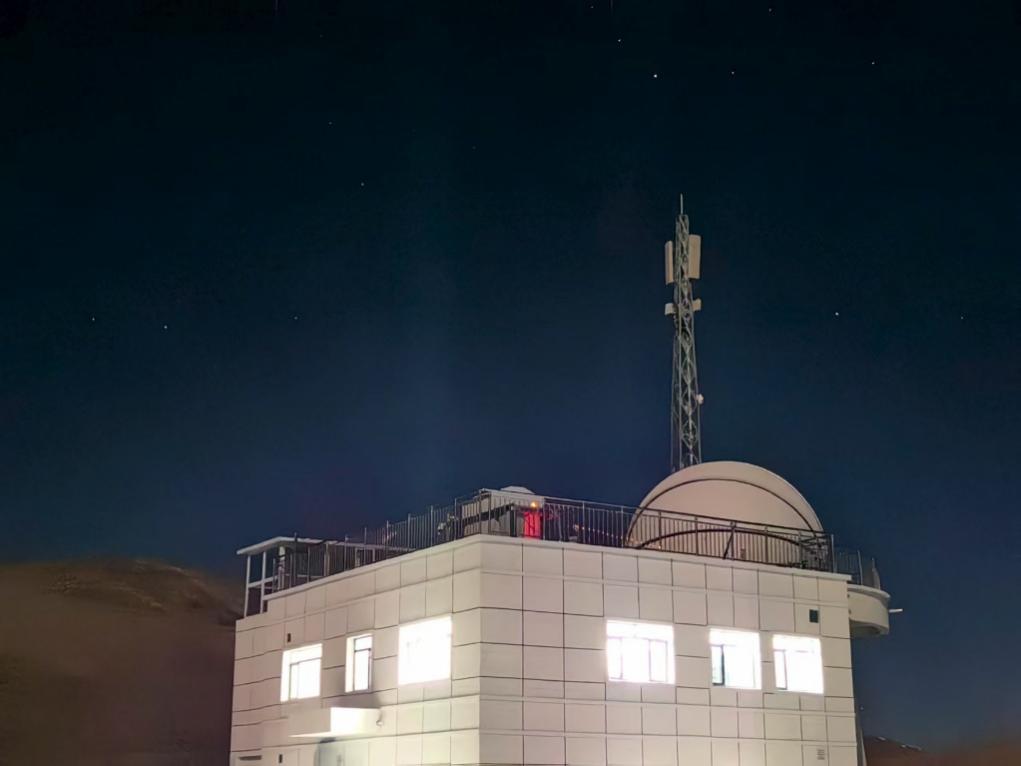
速率超百G!我国星地激光通信业务化应用实验取得新进展
Yang Shi Xin Wen· 2026-01-30 01:23
Core Insights - The Chinese Academy of Sciences' Aerospace Information Innovation Research Institute has successfully conducted a business application experiment for over 100G space-ground laser communication, achieving a communication rate of 120Gbps, marking a significant advancement in China's capabilities in this field [1][4]. Group 1: Experiment Details - The experiment utilized a 500mm aperture space-ground laser communication system developed by the Aerospace Institute and the AIRSAT-02 satellite, enhancing the satellite's communication capacity from 60Gbps to 120Gbps without hardware changes [2]. - The experiment achieved a successful link establishment rate of over 93%, with a maximum continuous communication duration of 108 seconds and a data volume of 12.656Tb, demonstrating high-quality remote sensing image processing [2][4]. Group 2: Technical Challenges and Solutions - The experiment addressed several key challenges in high-speed space-ground laser communication, including the need for rapid link establishment, long-term stability, and efficient data transmission [2]. - The research team overcame technical bottlenecks by optimizing algorithms for real-time optical distortion correction, applying signal damage compensation techniques, and improving adaptive transmission control strategies for non-stationary atmospheric channels [3][4]. Group 3: Future Implications - Space-ground laser communication is positioned as the optimal solution for high-speed data transmission, with ongoing validation indicating that it meets the core technical requirements for handling massive space data downlink [8]. - As the network of laser communication ground stations expands and technical specifications improve, space-ground laser communication is expected to break through existing speed limitations, becoming a crucial link between space-based information networks and terrestrial fiber networks [8].
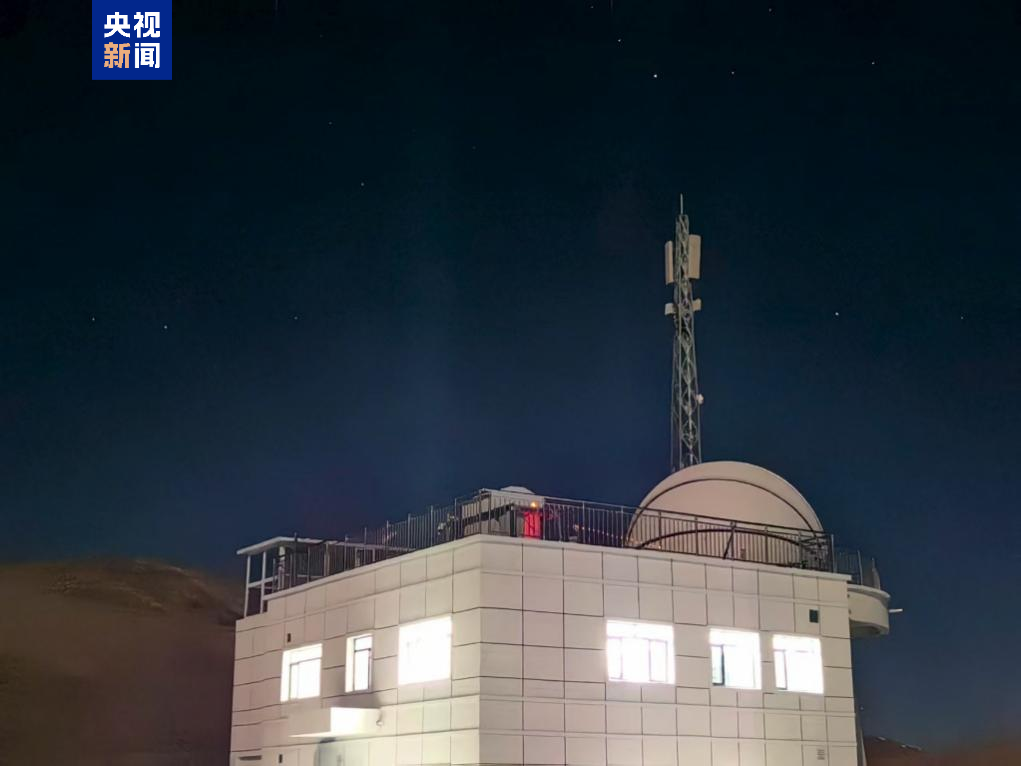
速率超百G!我国星地激光通信业务化应用能力迈上新台阶
Xin Lang Cai Jing· 2026-01-30 01:04
Core Insights - The successful implementation of over 100G satellite-ground laser communication has been recently reported, achieving a communication rate of 120 Gbps [1] - This experiment demonstrates stable communication links and high-quality data transmission, marking a significant advancement in China's satellite-ground laser communication capabilities [1] Summary by Categories Technology Advancement - The recent experiment represents a breakthrough following previous achievements of 10 Gbps in 2023 and 60 Gbps in 2025, indicating a progressive enhancement in communication speed [1] Application and Impact - The results of the experiment suggest that the business application of satellite-ground laser communication in China has reached a new level, enhancing the country's capabilities in this field [1]
我国新成果,人造卫星寿命有望由3年延长到30年
Mei Ri Jing Ji Xin Wen· 2026-01-29 22:57
每经AI快讯,据科技日报,近期,复旦大学周鹏、马顺利团队成功研发"青鸟"原子层半导体抗辐射射频 通信系统(以下简称"青鸟"系统),依托"复旦一号"卫星平台进入太空,在国际上首次实现了二维电子 器件与系统的"超长寿命""超低功耗"实地在轨验证。"青鸟"系统不仅将卫星通信系统的理论在轨寿命延 长到271年,也把能耗降低到传统方案的五分之一,重量更是"瘦身"到原来的十分之一左右,并有望将 人造卫星的使用年限由3年左右提升至20—30年。北京时间1月29日凌晨,《自然》在线发表了该成果。 ...
三维通信:海卫通已形成东南亚、中东及欧美市场协同发展的格局
2 1 Shi Ji Jing Ji Bao Dao· 2026-01-29 08:22
Group 1 - The core viewpoint of the article highlights that Sanwei Communication is solidifying its position in the domestic satellite communication market for merchant ships while accelerating its international expansion [1] - The company is deepening strategic partnerships with globally recognized satellite operators to enhance its satellite network resources worldwide [1] - Sanwei Communication has established a collaborative development pattern across Southeast Asia, the Middle East, and Europe and the United States, which is contributing to the continuous growth of services for ocean-going merchant ships [1]

罗博特科(300757.SZ):国际某星链及太空技术的前沿科技公司也是ficonTEC的客户之一
Ge Long Hui A P P· 2026-01-29 07:29
格隆汇1月29日丨罗博特科(300757.SZ)在投资者互动平台表示,在星链通信领域,由于星链设备之间的 距离远,对传输延迟、抗干扰的要求高,传统射频通信难以满足要求,而激光通信链路的传输速率可达 到数十甚至数百Gbps,可以有效实现长距离的信号传输,但激光通信链路方案面临的挑战是光束对 准、大气衰减等困难,需要采用更加先进的技术和设备来解决,低轨卫星轻量化的方向要求,使得通信 方式的技术方向必然需要朝更加高集成、小体积、低重量的方式发展,同时也需要不断提升其带宽,这 个趋势还是比较明确的,因此无论是国内还是国外都在朝着这个方向发展。ficonTEC的设备非常好地匹 配了上述方向要求,在未来卫星通信应用领域需求快速崛起之时将积极抓住机遇,为公司业绩贡献增长 点。ficonTEC的耦合设备可以为客户提供高精度的激光校准功能,提高星链传输精度。ficonTEC的客户 Tesat-Spacecom GmbH系Airbus(空客)的子公司,其在卫星激光通信领域拥有丰富的经验和先进的技 术,产品主要应用于通信卫星、航空器的数据传输。此外,国际某星链及太空技术的前沿科技公司也是 ficonTEC的客户之一,已签订相关订单 ...

毛里塔尼亚启动卫星通信许可证招标
Shang Wu Bu Wang Zhan· 2026-01-29 02:14
Core Viewpoint - Mauritania has announced the launch of a satellite communication license bidding process aimed at expanding nationwide internet access and improving digital infrastructure [1] Group 1: License Types - The bidding covers two types of licenses: one for geostationary orbit (GEO) satellite operators to provide direct services to consumers, and another for companies to sell satellite capacity to various operators and public/private entities without direct consumer engagement [1] Group 2: Digital Access Improvement - This initiative is a significant step towards narrowing the digital divide and enhancing internet access in remote areas of Mauritania [1] - Despite a mobile phone network coverage rate nearing 97%, the internet usage rate in Mauritania was only about 37% in 2023, highlighting a pronounced issue of uneven digital access [1] Group 3: Market Participation - The bidding process is expected to attract participation from low Earth orbit (LEO) satellite operators, such as Starlink, with the goal of officially launching satellite communication services by 2026 [1]
国务院国资委:去年央企资产总额突破95万亿元
Qi Huo Ri Bao Wang· 2026-01-28 18:44
Core Viewpoint - The State-owned Assets Supervision and Administration Commission (SASAC) outlines ambitious targets for central enterprises by 2025, including total assets exceeding 95 trillion yuan and profit reaching 2.5 trillion yuan, emphasizing the role of these enterprises in supporting national economic goals [1][2]. Group 1: Financial Performance and Investment - By the end of 2025, central enterprises are expected to achieve total assets of over 95 trillion yuan and profits of 2.5 trillion yuan, with fixed asset investments of 5.1 trillion yuan and tax contributions of 2.5 trillion yuan [1]. - During the "14th Five-Year Plan" period, central enterprises' total assets increased from 70 trillion yuan to 90 trillion yuan, with an average annual growth rate of 6.9% [1]. - The total profit of central enterprises reached 12.7 trillion yuan, marking a 56.2% increase compared to the previous five-year period [1]. Group 2: Research and Development - Central enterprises' R&D investment is projected to reach 1.1 trillion yuan in 2025, maintaining over 1 trillion yuan for four consecutive years, with 23 innovation alliances involving over 100 entities [1]. - Cumulatively, R&D investment during the "14th Five-Year Plan" exceeded 5 trillion yuan, with an increase in R&D intensity by 0.27 percentage points and a nearly 50% rise in the number of technology talents [2]. Group 3: Strategic Initiatives and Reforms - SASAC plans to focus on the "three concentrations" of state capital, emphasizing restructuring and integration to optimize the layout and structure of state-owned enterprises [2]. - Future initiatives include promoting high-quality mergers and acquisitions to acquire core resources and enhance technological capabilities, while reducing industry competition [2]. - The central enterprises' 2026 work plan emphasizes five key areas: improving quality and efficiency, enhancing technological innovation, optimizing layout, advancing reforms, and strengthening risk prevention [3].
影响市场重大事件:德国企业巨头要为德军打造本土版“星链”;三星电子中国研究院计划投入脑机接口领域研究并进行技术储备;“上海市智算产业高质量发展倡议”启动
Mei Ri Jing Ji Xin Wen· 2026-01-28 10:10
Group 1 - German companies Rheinmetall and Bremen-based OHB are planning to jointly bid to provide a satellite internet service similar to the US Starlink for the German military, with a contract value potentially reaching several billion euros [1] - The initiative aims to create a secure military-grade satellite communication network in low Earth orbit for the German armed forces [1] Group 2 - The China Academy of Information and Communications Technology has released a report indicating that the data intelligence service industry is entering a phase of deep integration, driven by technological advancements and industry demand [2] - The report emphasizes that data intelligence service capabilities are crucial for advancing the "AI+" initiative [2] Group 3 - Samsung Electronics' China Research Institute plans to invest in brain-computer interface research and technology reserves, expressing confidence in the commercialization prospects of this technology [3] - The institute focuses on cutting-edge technologies such as artificial intelligence and next-generation communication [3] Group 4 - The "High-Quality Development Initiative for Shanghai's Intelligent Computing Industry" was launched to promote the construction of new intelligent computing centers and establish a high-level intelligent cloud service system [4] - The initiative aims to create a self-controlled industrial ecosystem and position the intelligent computing industry as a new engine for Shanghai's economic development [4] Group 5 - The National Energy Administration of China has approved the establishment of seven standardization technical organizations related to power safety governance and greenhouse gas emissions management in the energy sector [5] Group 6 - The "Implementation Plan for Strengthening Disease Prevention and Control" aims to establish a modern disease control system by 2027, with improved infrastructure and enhanced public health service capabilities [6] Group 7 - Shanghai is actively implementing the "AI+" initiative to lead the digital transformation of manufacturing, with the city's intelligent computing scale surpassing 120,000 PFLOPS [7][8] - The city plans to construct a batch of intelligent computing infrastructure ahead of demand [8] Group 8 - A report by Yole indicates that global DRAM memory demand is expected to grow by 23% in 2026, with over half of this growth coming from the data center sector, which is projected to increase by 28% [9] - The current DRAM market trend is expected to continue at least until 2027 due to the time required for new capacity to come online [9] Group 9 - The Chinese sports industry is projected to exceed 5 trillion yuan by 2025, with the sports goods market reaching 2.49 trillion yuan, driven by a surge in domestic consumption and innovation [10]