
对外贸易

Search documents
持续提升长三角外贸韧性活力
Jing Ji Ri Bao· 2025-09-25 22:07
Group 1: Trade Performance - The Yangtze River Delta region achieved a total import and export value of 9.59 trillion yuan in the first seven months of this year, representing a year-on-year growth of 5.4% and accounting for 37.3% of the national total, an increase of 0.7 percentage points compared to the same period last year [1] - The region, which occupies less than 4% of the national land area, contributes over one-third of the country's foreign trade, highlighting its critical role in stabilizing national foreign trade [1] - The export structure is shifting from quantity expansion to quality improvement, with high-tech and high-value-added products becoming new growth points [1] Group 2: Role of Private Enterprises - Private enterprises in the Yangtze River Delta region played a significant role in foreign trade, with an import and export value of 5.35 trillion yuan in the first seven months, marking a year-on-year increase of 9.5% and accounting for 55.8% of the total [1] Group 3: Challenges and Strategies - The region faces challenges such as rising international protectionism and unilateralism, which hinder enterprises' expansion into international markets [1] - To promote new development in foreign trade, the region needs to encourage enterprises to explore diversified markets and strengthen cooperation with countries along the Belt and Road Initiative and RCEP member states [2] Group 4: Market System and Services - There is a need to build a unified and open market system by eliminating unreasonable restrictions and promoting reforms such as "one license, multiple addresses" [2] - A comprehensive service platform combining online and offline resources should be established to provide efficient, one-stop services for enterprises [2] Group 5: Financial Support - A multi-tiered support system is necessary, encouraging cooperation between policy banks and commercial banks to support enterprises in foreign trade [3] - Financial institutions should innovate foreign trade financing products and enhance support for private and small enterprises in the Yangtze River Delta region [3]
焦点访谈丨产业兴、动能新、活力旺 新画卷正在新疆徐徐展开
Yang Shi Xin Wen Ke Hu Duan· 2025-09-25 01:44
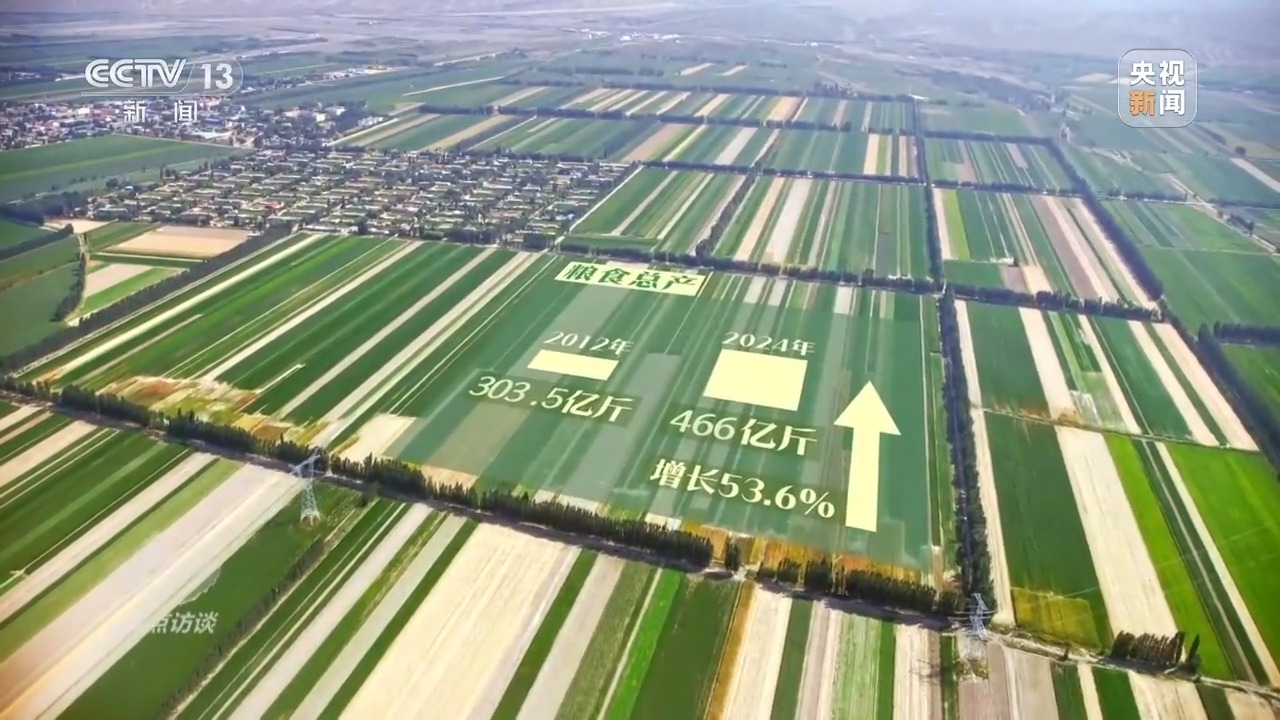
Core Viewpoint - The white paper titled "Successful Practices of the New Era Party's Strategy for Governing Xinjiang" highlights significant achievements in social stability, economic development, ethnic unity, and improvement of people's livelihoods in Xinjiang over the past 70 years, particularly since the 18th National Congress of the Communist Party of China [1][5][20]. Economic Development - In 2024, Xinjiang's grain yield per mu is projected to reach 1049.7 jin, ranking first in the country, with total grain production increasing from 30.35 billion jin in 2012 to 46.6 billion jin in 2024, a growth of 53.6% [1]. - Xinjiang's GDP is expected to exceed 2 trillion yuan for the first time in 2024, with an average annual growth rate of 7% since 2012 [5][36]. - The total import and export volume of Xinjiang increased from 158.96 billion yuan in 2012 to 434.16 billion yuan in 2024, reflecting a strong embrace of new opportunities for openness [36]. Infrastructure and Connectivity - Xinjiang's transportation network has expanded significantly, with over 230,000 kilometers of roads and 9,202 kilometers of railway lines, enhancing connectivity across the region [10]. - The completion of the Tianshan Victory Tunnel in 2024 marks a historic connection between northern and southern Xinjiang [10]. Social Welfare and Livelihood Improvement - Over 70% of Xinjiang's annual general public budget is allocated to guarantee and improve people's livelihoods, with 89.2% of aid funds directed towards social welfare projects during the 14th Five-Year Plan period [12]. - Employment in Xinjiang increased from 12.46 million in 2012 to 13.91 million in 2024, a growth of 11.64% [18]. - The average life expectancy in Xinjiang has risen from 30 years in 1949 to 77 years today, with a complete coverage of undergraduate education in southern Xinjiang [18]. Cultural Integration and Ethnic Unity - Xinjiang has established 101 national ethnic unity demonstration units and 14 national ethnic unity education bases, showcasing the flourishing of ethnic unity [26]. - The region promotes cultural diversity and integration, with various cultural practices enhancing the vibrancy of local traditions [25][31]. Future Outlook - The new era strategy for governing Xinjiang is expected to continue driving economic and social development, with a focus on modernizing the region and enhancing its role as a strategic point in China's development framework [37].

郑州航空港外贸企业突破1000家
He Nan Ri Bao· 2025-09-22 09:41
Group 1 - The Zhengzhou Airport Economic Comprehensive Experimental Zone has officially surpassed 1,000 registered foreign trade enterprises, with a year-on-year increase in enterprise activity of 44.12% [1] - In 2023, Zhengzhou Airport added 152 registered foreign trade enterprises, representing a year-on-year growth of 39.45% [1] - From January to July, the total import and export volume of Zhengzhou Airport reached 229.68 billion yuan, marking a year-on-year increase of 40.2% [1] Group 2 - Zhengzhou Airport is enhancing its service efficiency through the "High Efficiency in Completing One Matter" reform, which includes the launch of a foreign trade "one-stop" service system [2] - Since its trial operation in November 2024, the new system has provided assistance and business processing for enterprises over 280 times, streamlining 14 high-frequency matters into a single window [2] - The continuous optimization of a market-oriented, legal, and international first-class business environment is making enterprise development more convenient and secure [2]
为何日本硬刚美国,拒绝对华加税?对中国依赖高,无法承受加关税
Sou Hu Cai Jing· 2025-09-17 10:38
根据中国海关发布的数据显示,2025年前8个月,中日双边贸易总额高达2064亿美元,其中中国自日进口1034亿美元,对日出口1030亿美元。中国现为日本 第五大贸易伙伴、第五大进口来源国及第四大出口市场,两国经济已形成深度绑定格局。 美国近期在对外经贸策略上展现出典型的"两面派"作风。 一方面,派出财政部长贝森特率团赴西班牙与中国就经贸问题展开谈判;另一方面,却在G7线上会议上鼓动盟友对购买俄罗斯石油的中国、印度征收100% 惩罚性关税。 然而,这种试图孤立中印的"小算盘"并未得到广泛响应,至今未有任何盟友听命于美国,均选择沉默应对,其中日本更以罕见强硬姿态直接回绝。 日本财务大臣加藤胜信于9月16日明确表态,称"将关税提高至50%以上对日本而言不可行,是难以做到的",这番直指美国施压的回应引发关注。 深究日本此次"硬气"背后的逻辑,实则是基于现实经济利益的理性抉择。作为外贸依赖型经济体,日本与各主要贸易伙伴维持良好关系是其经济命脉所在。 要求盟友冲锋在前,自身却置身事外,这种"小弟当炮灰"的策略彻底暴露了美国的自私本质。日本政客虽对华态度复杂,但在经济利益面前选择"装傻"而 非"犯傻"——毕竟牺牲本国企业利 ...

商务部:将进一步加大对外贸企业支持力度
Yang Shi Xin Wen· 2025-08-28 08:17
Group 1 - The Ministry of Commerce will increase support for foreign trade enterprises in terms of finance and employment [1] - The Ministry aims to ensure the effective implementation of existing policies and enhance service guarantees for foreign trade enterprises [1] - The Ministry will utilize the foreign trade enterprise roundtable mechanism to collect and address the issues and demands of enterprises [1] Group 2 - There will be a focus on helping enterprises maintain orders and expand markets [1] - The Ministry encourages enterprises to leverage various exhibition resources and successfully organize the 138th Canton Fair [1] - Trade promotion activities will be actively organized, and support for credit insurance will be increased to better meet the short-term credit insurance needs of export enterprises [1] Group 3 - The Ministry will continue to release foreign trade promotion information and country-specific trade guidelines to help enterprises gain more confidence in overseas markets [1]
7月份全国贸促系统累计签发各类证书同比增长10.82%
Zheng Quan Ri Bao Wang· 2025-08-28 01:45
Core Insights - The issuance of certificates of origin is a key indicator of foreign trade, with a significant increase in the number of certificates issued in July 2025, reflecting a strong recovery in China's foreign trade [1][2] Group 1: Certificate Issuance Data - In July 2025, the total number of various certificates issued by the national trade promotion system reached 741,700, a year-on-year increase of 10.82% [1] - The non-preferential certificates of origin had a total value of $30.953 billion, with 398,100 certificates issued, marking a 5.13% increase year-on-year [1] - The preferential certificates of origin saw a total value of $8.756 billion, with 276,300 certificates issued, reflecting a substantial year-on-year growth of 39.66% in value and 49.42% in quantity [1] Group 2: Factors Driving Growth - The rapid growth in the issuance of preferential certificates is attributed to companies' efforts to control costs and expand markets, seeking tariff reductions to enhance competitiveness [2] - The favorable policy environment, including the expansion of free trade zones and reduced tariffs with various countries, has also contributed to the increase in the use of preferential certificates [2] - The digitalization and convenience of the online certificate issuance process have further encouraged companies to apply for these certificates [2] Group 3: RCEP Impact - In July, the issuance of RCEP certificates of origin amounted to $747 million, with a year-on-year increase of 26.90%, and the number of certificates issued was 27,065, up 29.73% [3] - The growth in RCEP certificate issuance indicates that trade benefits from RCEP are being realized, providing tangible advantages to foreign trade enterprises [3] - Companies are encouraged to enhance cooperation within the RCEP region, participate in training, and adapt strategies to leverage RCEP policy benefits [3]
印证外贸增速创年内新高 全国贸促系统7月签发各类证书74.17万份
Zhong Guo Xin Wen Wang· 2025-08-27 06:30
Core Insights - The China Council for the Promotion of International Trade reported that in July 2023, the national trade promotion system issued a total of 741,700 various certificates, marking a year-on-year increase of 10.82%, indicating a strong performance in foreign trade growth for the year [1] Group 1: Certificate Issuance Data - The total value of non-preferential certificates issued amounted to $30.953 billion, with 398,100 certificates issued, reflecting a year-on-year growth of 5.13% in terms of volume [1] - The preferential certificates issued had a total value of $8.756 billion, showing a significant year-on-year increase of 39.66%, with 276,300 certificates issued, which is a 49.42% increase [1] - The RCEP (Regional Comprehensive Economic Partnership) certificates issued totaled $747 million, with 27,065 certificates issued, representing a year-on-year growth of 26.90% in value and 29.73% in volume [1] Group 2: Implications for Foreign Trade - The substantial growth in the issuance of preferential certificates highlights the resilience and vitality of China's foreign trade sector [1] - The increasing proficiency of foreign trade enterprises in utilizing preferential policies, including those from RCEP, indicates a proactive approach to market expansion and adaptation [1]
商务部召开例行新闻发布会(2025年8月21日)
Shang Wu Bu Wang Zhan· 2025-08-21 07:43
Group 1: Rural E-commerce Development - The event "E-commerce Empowerment Linking Villages" highlighted the importance of innovative business models in rural e-commerce as a key measure for building a modern rural circulation system and increasing farmers' income [1] - The Ministry of Commerce has implemented policies to support rural e-commerce development, including notifications and implementation opinions aimed at enhancing local capabilities and promoting best practices [1][2] - As of July 2025, the number of rural online businesses exceeded 19.5 million, reflecting a year-on-year growth of 6.4% [2] Group 2: Agricultural Product Sales and Income Growth - From January to July 2025, the online retail sales of agricultural products increased by 7.4%, while the per capita disposable income of rural residents grew by 6.2% in the first half of the year [2] - The rural consumption market is thriving, with rural online retail sales rising by 6.4% during the same period [2] Group 3: Logistics and Infrastructure Improvements - Since 2022, 1,285 county-level logistics centers and 1,457 township express logistics stations have been established, enhancing the rural logistics system [2] - The coverage rate of express delivery services in administrative villages has reached 95%, indicating significant improvements in rural logistics networks [2] Group 4: Foreign Trade Performance - In the first seven months of the year, China's total goods trade import and export value reached 25.7 trillion yuan, a year-on-year increase of 3.5% [4] - Exports amounted to 15.3 trillion yuan, reflecting a growth of 7.3% [4] Group 5: Supportive Policies for Foreign Trade - The Ministry of Commerce has implemented multiple rounds of policies to stabilize foreign trade, focusing on nurturing new trade dynamics and enhancing public services [5] - In the first seven months, the short-term insurance coverage by China Export & Credit Insurance Corporation reached 573.5 billion USD, a 14.7% increase [5] Group 6: Trade Partnerships and Market Expansion - Trade with emerging markets grew by 5% in the first seven months, accounting for 65.5% of total trade, with significant increases in trade with ASEAN and Africa [5] - The export of mechanical and electrical products rose by 9.3%, making up 60% of total exports, indicating a shift towards high-tech and high-value products [5]
西安市前7月外贸总值创新高
Zhong Guo Jing Ji Wang· 2025-08-19 15:01
Group 1 - The foreign trade scale of Xi'an has expanded significantly this year, with a total import and export value of 272.17 billion yuan in the first seven months, a year-on-year increase of 14.4%, surpassing the national growth rate of 10.9% [1] - Exports from Xi'an reached 189.45 billion yuan, showing a year-on-year growth of 19% [1] - Xi'an accounts for 94% of the province's total foreign trade, contributing 13.2 percentage points to the province's foreign trade growth [1] Group 2 - The city has implemented several policies to support foreign trade development, including the establishment of four trade gathering areas and three cross-border e-commerce industrial parks [2] - The Xi'an Municipal Bureau of Commerce is focusing on over 200 enterprises for tailored support, planning to organize around 200 companies to participate in international exhibitions [2] - Tax policies have been enhanced to expedite export tax refunds, including measures for cross-border e-commerce and general taxpayer qualifications [2] Group 3 - The Guanzhong Customs has launched a smart customs logistics supervision system to improve the efficiency of the China-Europe Railway Express (Xi'an), which operated 3,055 trains in the first half of the year, accounting for 18.3% of the national total [3] - Xi'an Xianyang International Airport saw a significant increase in inbound and outbound aircraft and passengers, with growth rates of 68.8% and 64.6% respectively [3] - A total of 9,744 certificates of origin were issued in the first half of the year, resulting in a tax reduction of 250 million yuan for foreign companies [3]
毛里塔尼亚发布2025年二季度对外贸易报告
Shang Wu Bu Wang Zhan· 2025-08-15 14:28
Core Insights - The report indicates that Mauritania's foreign trade in Q2 2025 reached 944.91 billion Ouguiya (approximately 2.369 billion USD), showing a year-on-year increase of 8.4% and a quarter-on-quarter increase of 9.4% [1] - Imports amounted to 506.51 billion Ouguiya (approximately 1.27 billion USD) while exports were 438.4 billion Ouguiya (approximately 1.099 billion USD), resulting in a trade deficit of 68.11 billion Ouguiya (approximately 1.7 million USD) [1] - Major trading partners include China, UAE, Spain, Canada, and Switzerland, which collectively account for a significant portion of Mauritania's foreign trade [1] Trade Overview - By region, Europe, Asia, Africa, and the Americas accounted for 36.7%, 26.8%, 14.4%, and 12.7% of Mauritania's foreign trade, respectively [2] - Key European partners include Spain, Switzerland, Belgium, and France, which together represent 71% of trade with Europe [2] - In Asia, China and Japan dominate, with China alone accounting for 62.3% of trade [2] - Canada, the US, and Brazil are the top partners in the Americas, with Canada making up 57.3% of trade [2] - Algeria, South Africa, and Morocco are the leading African partners, representing 24.5%, 19.4%, and 13.9% of trade, respectively [2] Export Analysis - Mauritania's exports in Q2 saw a year-on-year decline of 4% but a quarter-on-quarter increase of 5.6% [3] - Key export commodities include gold, silver, platinum, iron ore, and copper, with iron ore making up 37.3% of total exports [3] - Major export destinations are China, Canada, Switzerland, Algeria, and Spain [3] - Specific export figures include 4.1 million tons of iron ore, 2.5 thousand tons of copper, and 4 tons of precious metals, with notable year-on-year changes in quantities and values [3] Import Analysis - Imports increased by 8.4% year-on-year and 9.4% quarter-on-quarter, driven by rising demand for transportation equipment, food, and construction materials [4] - The composition of imports includes oil and derivatives (28.8%), food (26%), and machinery (13.7%) [4] - Major sources of imports are Europe, Asia, the Middle East, the Americas, and Africa, with Spain, UAE, Algeria, China, and France being the top suppliers [4] - Notable import figures include 131.81 billion Ouguiya for food, 146.08 billion Ouguiya for oil products, and 69.41 billion Ouguiya for machinery [4] Market Influences - Mauritania's trade is significantly affected by international commodity price fluctuations, particularly for minerals and food [5] - In Q2, iron ore prices averaged 95.5 USD per ton, reflecting a year-on-year decrease of 6% and a quarter-on-quarter decrease of 15.5% [5] - Conversely, gold futures prices increased by 15% year-on-year, while copper prices rose by 1.7%, providing some positive influence on trade [5]