数据服务

Search documents
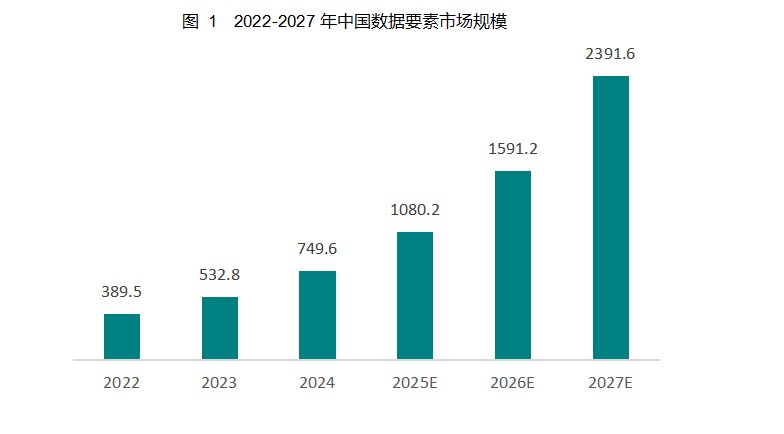
赛迪顾问报告:2025年中国数据要素市场规模突破1000亿元
Zhong Guo Jin Rong Xin Xi Wang· 2026-01-20 14:16
Core Insights - The Chinese data factor market is experiencing robust growth, with projections indicating that the market size will exceed 100 billion yuan by 2025 [1] Group 1: Market Drivers - Recent policies and regulations in China have been introduced to support the market-oriented allocation and high-quality development of data factors, providing a solid institutional guarantee for the market's evolution towards standardization and scaling [1] - Local governments are actively piloting public data authorization operations and accelerating the cultivation of data trading service institutions, which provide replicable and promotable practical cases for the supply and circulation of data factors [1] Group 2: Application and Innovation - The accelerated digital transformation across various industries is generating vast amounts of data, which enriches the resources available for data product development [1] - The emergence of data businesses that actively integrate into the innovative development of data factors is crucial for unlocking the potential of data elements by offering diverse data services and solutions [1]

海天瑞声:数据标注行业作为AI产业链的重要基础环节,市场需求持续增长
Zheng Quan Ri Bao· 2026-01-20 12:13
Core Viewpoint - The data labeling industry is experiencing sustained growth in market demand as a crucial component of the AI industry chain, despite a decline in gross margin and net profit due to increased customization services and strategic investments for future competitiveness [2]. Group 1: Industry Insights - The data labeling industry is identified as a key foundational segment of the AI industry chain, with continuous growth in market demand [2]. - The industry is currently in a rapid development phase, characterized by fast-paced market demand and technological iteration [2]. Group 2: Company Performance - The company's gross margin declined year-on-year in the third quarter, primarily due to a significant increase in the proportion of customized service projects [2]. - The company's net profit is under temporary pressure, influenced by the need for forward-looking investments in data set research and platform technology upgrades [2]. - To expand into the government sector (G-end market), the company has increased its investments in market promotion and sales network development, which has impacted short-term net profit but is expected to support sustainable growth in the future [2].

海天瑞声:公司主要为欧盟客户提供高质量训练数据产品及服务
Zheng Quan Ri Bao· 2026-01-20 11:16
Core Viewpoint - The company, Hai Tian Rui Sheng, is actively expanding its export and sales operations in the European Union, focusing on providing high-quality training data products and services to EU clients [2]. Group 1: Business Expansion - The company has established stable customer collaborations in the EU while deepening its core market presence in the United States [2]. - The company is increasing its investment and efforts in the European market to enhance its business operations [2]. Group 2: Sales Model - The sales model for the EU market involves direct exports from domestic entities to EU clients, which allows the company to respond more efficiently to customer needs and ensure service quality [2].
2026年数据要素价值释放年:从量变到质变,千亿级蓝海初现雏形
证券时报· 2026-01-19 09:21
Core Viewpoint - The data factor market is characterized by both "policy system improvement" and "local practice implementation" as it enters 2026, which is designated as the "year of data factor value release" [1] Group 1: Policy and Market Developments - Multiple policy documents focusing on the value extraction of data factors have been issued this year, with local practices advancing simultaneously, such as Shanxi's implementation plan for digital economy development and Jiangsu's completion of the first national "embodied intelligent data set" transaction [1] - The public data products, such as meteorological and statistical analysis data, are expected to mature quickly due to compliance advantages, while financial and healthcare data products will also rapidly form under market incentives [1][4] Group 2: Value Realization of Data Factors - The realization of data factor value relies on both public and enterprise data, with significant potential for value release entering an accelerated phase, supported by the gradual implementation of data infrastructure in 2025 [3] - In 2025, the National Data Bureau published 100 key public data demonstration scenarios covering various industries, leading to effective applications in areas like healthcare and logistics [3] Group 3: Challenges in Data Value Release - The market faces multiple collaborative obstacles that hinder the full release of data value, stemming from a lack of coordinated governance and clear responsibilities among various departments [7] - Issues such as unclear data rights and profit distribution responsibilities in cross-regional data circulation, as well as inconsistent safety standards between industries, impede data sharing [7] Group 4: Future Directions and Recommendations - To facilitate the smooth release of data factor value, addressing collaborative obstacles is crucial, focusing on unifying rules and responsibilities [10] - The establishment of a unified national data market with standardized trading rules and registration systems is essential for transforming data into marketable products [11] - The integration of data infrastructure with artificial intelligence is expected to provide technical solutions for embedding data into business processes effectively [12]

数据驱动的管理
3 6 Ke· 2026-01-19 03:29
Core Insights - Data has become an indispensable strategic resource for enterprises, often referred to as the "new oil" of business development. Efficient data collection, scientific analysis, and effective utilization are essential for driving decision-making, optimizing operations, and unlocking innovation [1] Group 1: Necessity of Data-Driven Management - The rapid development of IoT, big data, and AI is driving a comprehensive digital transformation in the global economy, resulting in massive data generation across all operational aspects of businesses [2] - Traditional management models relying on experience and intuition are becoming inadequate in the face of explosive data growth and rapidly changing market conditions, leading to slower responses and inaccurate judgments [2] Group 2: Core Elements of Data-Driven Management - **Data Resource Optimization**: Companies are shifting focus from merely pursuing advanced models to deeply optimizing their unique internal data resources, which are crucial for AI application and differentiated innovation [3] - **Technological Empowerment**: Advanced technologies like AI, machine learning, and big data analytics serve as the engine for data-driven management, enabling precise market trend predictions and operational insights [4] - **Talent Development**: There is a growing need for composite talents who understand both business and data, with positions like data scientists experiencing significant growth in demand [6] Group 3: Practical Pathways for Data-Driven Management - **Precision Decision-Making**: Companies should establish data-based decision-making mechanisms, integrating data analysis into strategic planning, market expansion, and product iteration [7] - **Process Optimization**: Businesses should utilize data to identify and eliminate redundant processes, enhancing efficiency in production, supply chain management, and financial operations [8] - **Risk Prevention**: A data risk warning system should be established to capture potential market, credit, and operational risks in real-time [9] - **Value Creation**: Companies need to leverage data as a core driver for innovation in business models and services, enhancing customer engagement and operational efficiency [10] Group 4: Challenges and Responses in Data-Driven Management - **Data Security and Privacy**: Companies must strengthen data security measures to prevent breaches and ensure compliance with legal regulations [11] - **Data Quality and Governance**: Establishing stringent data quality standards and governance frameworks is essential to avoid misleading decisions due to low-quality data [12] - **Technological Iteration and Talent Shortage**: Companies should invest in R&D and collaborate with educational institutions to keep pace with rapid technological advancements and address talent shortages [13] Group 5: Future Outlook for Data-Driven Management - The latest accounting standards require companies to recognize data resources as assets, marking a significant step towards data assetization. Several companies have begun to disclose the monetary value of their data resources [14] - The emergence of financialization cases for data assets indicates new financing channels for businesses, driven by technological advancements and regulatory frameworks [15] - Embracing a data culture and building core competitive capabilities will be crucial for companies to navigate the challenges and opportunities in the digital economy [16]
北京:公共数据从“沉睡资源”变“黄金要素”
Xin Lang Cai Jing· 2026-01-19 00:39
Core Viewpoint - The Shuzhi Beijing Innovation Center introduces a "first innovate, then authorize" model for public data usage, allowing companies to test data applications at low or no cost before seeking authorization, thus enhancing innovation and reducing trial costs [2][4]. Group 1: Innovation Center Overview - The Shuzhi Beijing Innovation Center is located in the core area of Beijing's urban sub-center and has attracted 35 companies since its operation began over two months ago [1]. - The center transforms public data from a "sleeping resource" into a "golden element" driving urban development, showcasing rapid progress in data market reform and smart city construction [1][2]. Group 2: Mechanism and Benefits - The center's "first innovate, then authorize" approach allows companies to explore data value without upfront investment, thus fostering a proactive exploration of innovation [2][3]. - Companies like Ant Mi-Suan have successfully utilized this model to analyze healthcare costs, providing valuable insights for resource optimization in medical institutions [2][3]. Group 3: Data Resource Integration - The center has opened various public data resources across key livelihood areas such as transportation, healthcare, and social security, facilitating deep integration of public and social data [3][4]. - The center's five business systems create a comprehensive support framework for enterprises, enabling them to connect market demands with innovative solutions [4][5]. Group 4: Impact on Society - The outcomes from the Shuzhi Beijing Innovation Center are expected to benefit businesses, government, and citizens alike, enhancing urban governance and improving public services [5][6]. - Innovations from the center will lead to tangible improvements in daily life, such as higher public transport punctuality and more efficient healthcare services [5][6]. Group 5: Future Development - The center aims to continue fostering innovation and attracting leading and innovative enterprises, contributing to the high-quality development of the city and enhancing the quality of life for residents [6].
2025年中国城市可信数据空间行业研究报告
艾瑞咨询· 2026-01-19 00:06
Core Viewpoint - The urban trusted data space is a key infrastructure led by the government to promote the development and utilization of urban data resources, serving as a bridge between data supply and application [1][2]. Development Drivers Policy - The establishment of urban trusted data spaces is encouraged through a series of top-level designs and strategic plans aimed at market-oriented data element reforms, with the first batch of 13 pilot cities announced [4][5]. Technology - Privacy computing and blockchain technology are pivotal in addressing the challenges of trusted data circulation, enabling data sharing while ensuring compliance and security [5][6]. Demand - With China's data production expected to exceed 40ZB by 2024, the urban trusted data space is essential for enhancing urban governance efficiency by integrating and utilizing public data resources [8]. Value of Urban Trusted Data Space - The urban trusted data space aims to resolve issues such as the lack of trust mechanisms and inefficient circulation in urban governance, thereby enhancing the efficiency of public data utilization and supporting modern urban governance [11]. Overall Framework - The urban trusted data space is built on a governance cloud infrastructure, allowing secure data access and supporting various applications through a collaborative ecosystem [13]. Core Capabilities - The core capabilities of the urban trusted data space include trusted control, resource interaction, and value co-creation, which are essential for establishing a reliable data circulation infrastructure [16]. Industry Chain and Players - The urban trusted data space involves five main entities: operators, data providers, data users, data service providers, and regulatory bodies, each playing a crucial role in the ecosystem [21]. Competitive Analysis - In the technical service sector, comprehensive and specialized firms compete, with ICT background cloud service providers leading in capabilities [24]. Application Scenarios Government Services - The urban trusted data space facilitates inter-departmental data sharing, enhancing government services and decision-making through improved data accessibility [27]. Inclusive Finance - By integrating government and financial data, the urban trusted data space supports the development of dynamic risk assessment models, promoting inclusive financial services [30]. Case Studies Zhangjiakou Trusted Data Space - The Zhangjiakou trusted data space employs a "one space, four platforms, one system" architecture to support secure data circulation and enhance public data value [33][35]. Shanghai Trusted Data Space - Shanghai's urban trusted data space, leveraging blockchain technology, aims to meet the complex data needs of a megacity, facilitating secure and efficient data utilization [37][39]. Technology Trends - AI is becoming a key driver in enhancing data governance efficiency, transitioning from manual to automated and intelligent governance strategies [42]. Application Trends - The urban trusted data space is evolving from single pilot projects to collaborative ecosystems, attracting industry and enterprise participation to explore vertical applications [44][45].

市场化转型升级 地方征信机构并入数据集团成趋势
Xin Lang Cai Jing· 2026-01-16 20:09
Core Viewpoint - The integration of local enterprise credit institutions into data groups is becoming a trend, aiming to enhance the efficiency of data resource allocation and create market-oriented credit products in the context of the 2026 "Year of Data Element Value Release" [1][4]. Group 1: Integration of Credit Institutions - The newly established Guangxi Data Group completed 100% control of Guangxi Credit Company by the end of December 2025, marking a significant step in integrating local credit institutions into data groups [1][2]. - The model of "one group, one exchange, one credit platform" is expected to emerge as a new trend in local data market development, facilitating the precise matching of data resources and application scenarios [1][3]. Group 2: Financial Resource Mobilization - Guangxi Data Group's shareholders include various financial-related companies, which will help mobilize financial resources across the region and enhance the data resources of the integrated credit institutions [2][3]. - The integration allows for better utilization of public data resources, breaking down data silos and enhancing the efficiency of data element release [4][5]. Group 3: Policy Support and Market Transformation - The central government has emphasized the establishment of a public data authorization operation mechanism, which supports the integration of credit institutions into data groups for better performance in financial application scenarios [3][5]. - The People's Bank of China is promoting the market-oriented transformation of local credit platforms, encouraging institutions with data, technology, and market capabilities to enter the enterprise credit market [5][6]. Group 4: Data Utilization and Application - Local credit institutions are focusing on gathering and processing credit information, with examples like Wuxi Enterprise Credit having collected around 2 billion data entries, which will be further utilized through public data authorization [3][6]. - The development of credit databases and the application of AI technology are being prioritized to address issues such as financing difficulties for small and medium-sized enterprises [6][7].
聚焦北京各区两会|“十五五”时期朝阳区将推动建设AI全域数字之城
Bei Jing Shang Bao· 2026-01-16 13:09
Group 1 - The core focus of Chaoyang District is to establish the first national Data Business District (DBD) as part of the "14th Five-Year Plan," aiming to enhance the national data industry cluster and improve the digital asset service ecosystem [1] - Chaoyang District will support the Beijing International Big Data Exchange to enhance its capabilities and build leading data element circulation infrastructure, promoting orderly data circulation and maximizing data value [1] - The district aims to deepen data empowerment for industrial upgrades, creating benchmark scenarios and solutions for digital transformation in key sectors such as business, finance, culture, and consumption [1] Group 2 - Chaoyang District plans to optimize network infrastructure by advancing high-capacity and high-quality development of 5G and 5G-A networks, as well as orderly deployment of 10G broadband access capabilities [2] - The district will enhance the service capacity of Beijing's digital economy computing power center, providing inclusive computing power services for government, state-owned enterprises, and AI companies [2] - The goal is to transform Chaoyang District into a modern governance model for a super-large urban center, characterized by coordinated mechanisms, released data value, intelligent infrastructure, and improved public services [2]
南宁4家单位上榜 数量居全区首位
Xin Lang Cai Jing· 2026-01-15 23:34
Group 1 - The seventh Guangxi Zhuang Autonomous Region Chairman Quality Award has been announced, with four units from Nanning recognized, highlighting the city's strong commitment to quality development [1] - Runjian Co., Ltd. received the Chairman Quality Award, while Guangxi Railway Investment Group Co., Ltd., Guangxi Machinery Industry Research Institute Co., Ltd., and Nanning Minzhu Road Primary School received nomination awards [1] - The award aims to recognize organizations and enterprises that lead in quality management, innovation capability, and economic and social benefits, with 234 units participating in this year's selection [1] Group 2 - The awarded units utilize AI technology for data services, establish standardized quality control systems, and innovate management standards to enhance traditional industries [2] - Nanning has a total of 9 units that have received the Chairman Quality Award and 10 units that have received nomination awards to date [2] - The city plans to continue enhancing its quality-driven development, optimizing the business environment, and increasing policy support to encourage more enterprises to pursue quality brand recognition [2]