海洋科研

Search documents
共绘人海和谐同心圆——2025 年世界海洋日暨全国海洋宣传日主题宣传活动掠影
Zhong Guo Zi Ran Zi Yuan Bao· 2025-06-11 01:14
Core Viewpoint - The articles highlight various activities and initiatives across China to promote ocean conservation and awareness, coinciding with World Oceans Day and National Ocean Awareness Day, emphasizing the importance of healthy oceans for sustainable development [1][2][3]. Group 1: Ocean Conservation Initiatives - A series of programs titled "Towards the Sea" was launched on June 8, showcasing China's innovations in marine energy development, deep-sea technology, modern marine ranching, ecological protection, and international cooperation [2]. - The third New Era Marine Literature Academic Conference was held, releasing the annual list of marine literature, featuring 43 works [2]. - A marine-themed photo exhibition opened in Hainan, displaying various marine-related creative works and achievements [2]. Group 2: Public Engagement and Education - A special topic on "World Oceans Day" was launched on the "Learning Power" platform, achieving a total readership of 45.5 million by June 9 [3]. - Various educational activities were organized, including public open days on marine monitoring vessels and marine science lectures in universities, aimed at raising awareness among students and the public [9][10]. Group 3: Economic Development and Innovation - Jiangsu Province launched a "Blue Finance Service Platform" to provide comprehensive financial services for marine enterprises, promoting high-quality development of the marine economy [5]. - The first Guangzhou Marine Technology Innovation Industry Development Conference introduced a platform integrating resources for marine economic innovation [5]. - In Fujian, strategic cooperation agreements were signed to promote high-end transformation of the marine industry, showcasing over 100 recent research achievements [6]. Group 4: Community and Volunteer Activities - A nationwide beach cleanup event collected approximately 1,260 kilograms of waste, emphasizing community involvement in ocean protection [10]. - Various local governments organized activities to educate the public about marine ecosystems and the importance of protecting marine resources [12].
新思想引领新征程丨向海洋要生产力、求新增长点,加快建设海洋强国
Yang Guang Wang· 2025-06-10 05:44
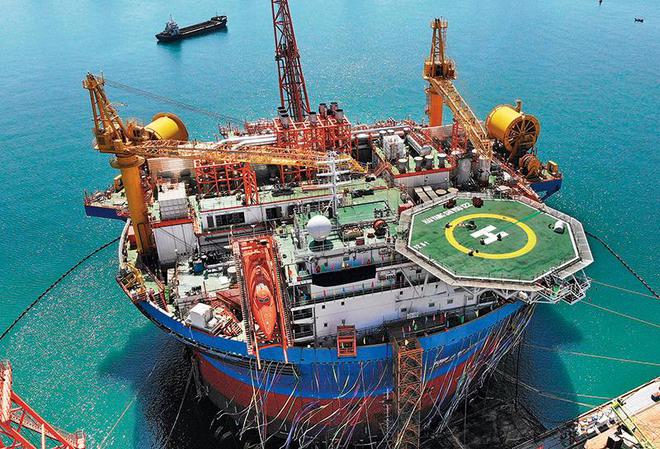
Group 1 - China's marine economy surpassed 10 trillion yuan for the first time last year, indicating significant growth in marine resource development capabilities [1] - The development strategy in Fujian focuses on "optimizing near-sea, expanding deep-sea, stabilizing distant ocean, and strengthening supply chains" to enhance modern fishery development [1] - The marine new industries in China, including offshore wind power and marine biotechnology, are showing positive growth, with Guangdong's marine production value expected to exceed 2 trillion yuan in 2024, contributing 27% to regional economic growth [2] Group 2 - The "Dream" drilling vessel, designed and built independently by China, marks a significant advancement in deep-sea exploration and development, enhancing the country's capabilities in high-end marine equipment [2] - Education and talent development in marine sciences are being emphasized, with initiatives to cultivate skilled professionals capable of addressing complex engineering challenges [3] - The focus on marine economic high-quality development aims to strengthen marine resource protection and enhance participation in global marine governance [3]
强化海洋科技创新 支撑海洋强省建设|世界海洋日暨全国海洋宣传日主场活动五省经验交流摘登之山东篇
Zhong Guo Zi Ran Zi Yuan Bao· 2025-06-10 02:21
Group 1 - Shandong Province is leveraging its marine technology advantages to strengthen marine scientific innovation, supporting the construction of a strong marine province [1] - The province has established a comprehensive marine technology innovation plan for the 14th Five-Year Plan, focusing on building major scientific innovation platforms and enhancing the innovation ecosystem [3] - The establishment of the Laoshan National Laboratory and the creation of 50 national marine research institutions highlight the province's commitment to high-level innovation platforms [3] Group 2 - An expert committee consisting of 11 academicians and 14 marine experts has been formed to guide marine development strategies in Shandong [5] - The province has selected 49 leading blue talents and trained 224 high-level marine professionals, with a total funding of 4.65 billion yuan allocated for talent development [5] - The establishment of the China Marine International Talent Port and the Marine Talent Development Fund aims to foster a robust marine talent ecosystem [5] Group 3 - Over 100 major scientific innovation projects have been implemented, including significant plans like "Transparent Ocean" and "Blue Pharmacy" [7] - A strategic cooperation agreement has been signed to provide 260 billion yuan in credit support for marine industry development [7] - The province aims to achieve over 120 technology transfer projects and a transaction volume exceeding 800 million yuan in technology contracts by 2024 [7] Group 4 - A marine standardization mechanism has been established, leading to the development of a strong marine standard system in Shandong [9] - The province has participated in the formulation of 224 national standards, 386 industry standards, and 278 local standards, providing essential technical support for marine ecological restoration and disaster prevention [9] - The approval of the global first marine carbon neutrality international standard reflects Shandong's leadership in marine environmental governance [9] Group 5 - Shandong has created over 82 marine awareness education bases and more than 100 marine specialty schools to enhance public marine science literacy [11] - The province has trained a large number of marine science communicators, engaging over 3 million participants in various marine science activities [11]
国家海洋综合试验场(深海)在琼启动运行
Hai Nan Ri Bao· 2025-06-09 00:45
Group 1 - The launch of the "South China Sea Regional Tsunami Warning Center (Hainan)" and the "National Ocean Comprehensive Test Field (Deep Sea)" marks a significant breakthrough in China's marine warning and deep-sea research fields [2][3] - The National Ocean Comprehensive Test Field (Deep Sea) is a key component of the national marine comprehensive test field system, which includes "North, East, South, Shallow Sea + Deep and Distant Sea" [2] - The test field will support deep-sea scientific research, technological innovation, and the construction of a national marine monitoring and assessment system [2] Group 2 - The South China Sea Regional Tsunami Warning Center aims to enhance tsunami and multi-disaster warning service capabilities, providing accurate and timely marine disaster public service products to surrounding countries [3] - The center will also establish an influential international marine forecasting and warning communication platform, hosting international training sessions on tsunami warning technology and standards [3] - The launch of these projects injects new momentum into marine safety and technological innovation, contributing to the construction of a marine power [3]
黄海之滨启新程 深蓝之上谱华章
Zhong Guo Zi Ran Zi Yuan Bao· 2025-05-19 06:06
Core Viewpoint - The 30th anniversary of the China-Korea Marine Science Cooperation Center marks a significant milestone in marine scientific collaboration between China and South Korea, highlighting past achievements and future directions for sustainable marine governance and development [6][21]. Group 1: Historical Context and Achievements - The China-Korea Marine Science Cooperation Center was established on May 12, 1995, symbolizing a historic step in marine scientific collaboration between the two countries [8]. - Over the years, the center has facilitated numerous research projects, including the Yellow Sea circulation dynamics and sediment dynamics studies, laying a solid foundation for marine scientific exchanges [8][9]. - The center has evolved its functions, focusing on international cooperation, marine policy dissemination, and promoting joint research projects, with the first Yellow Sea Marine Forum held in 2009 [9][10]. Group 2: Recent Developments and Future Plans - The center released a medium- to long-term development plan (2025-2034) during the 30th-anniversary seminar, outlining four major goals and twelve key tasks aimed at enhancing its role as a leading marine science cooperation platform in East Asia [10][21]. - A memorandum of understanding was signed between the First Institute of Oceanography and the Korea Institute of Ocean Science and Technology, further solidifying collaborative efforts [10]. Group 3: Key Research Areas and Collaborative Efforts - Experts discussed various critical issues at the sixth Yellow Sea Marine Forum, including climate change impacts on the Yellow Sea ecosystem and the need for enhanced monitoring and predictive capabilities [12][13]. - Research on the distribution changes of the small yellow croaker, a shared fishery resource, was presented, emphasizing the importance of collaborative management strategies in response to climate change [15]. - The forum also addressed the challenges of microplastic pollution in marine environments, with ongoing efforts to establish monitoring systems and share data for global governance [18]. Group 4: Regional and Global Implications - The close cooperation between China and South Korea in marine science serves as a model for marine governance and sustainable development in the East Asian region, promoting collaborative efforts among neighboring countries [21][22]. - The center's contributions to international marine affairs and its role in global marine governance reflect a commitment to addressing global marine challenges through shared knowledge and strategies [21][22].

群星闪耀!深圳发力基础研究 已有市级以上重点实验室492家
Shen Zhen Shang Bao· 2025-05-15 16:58
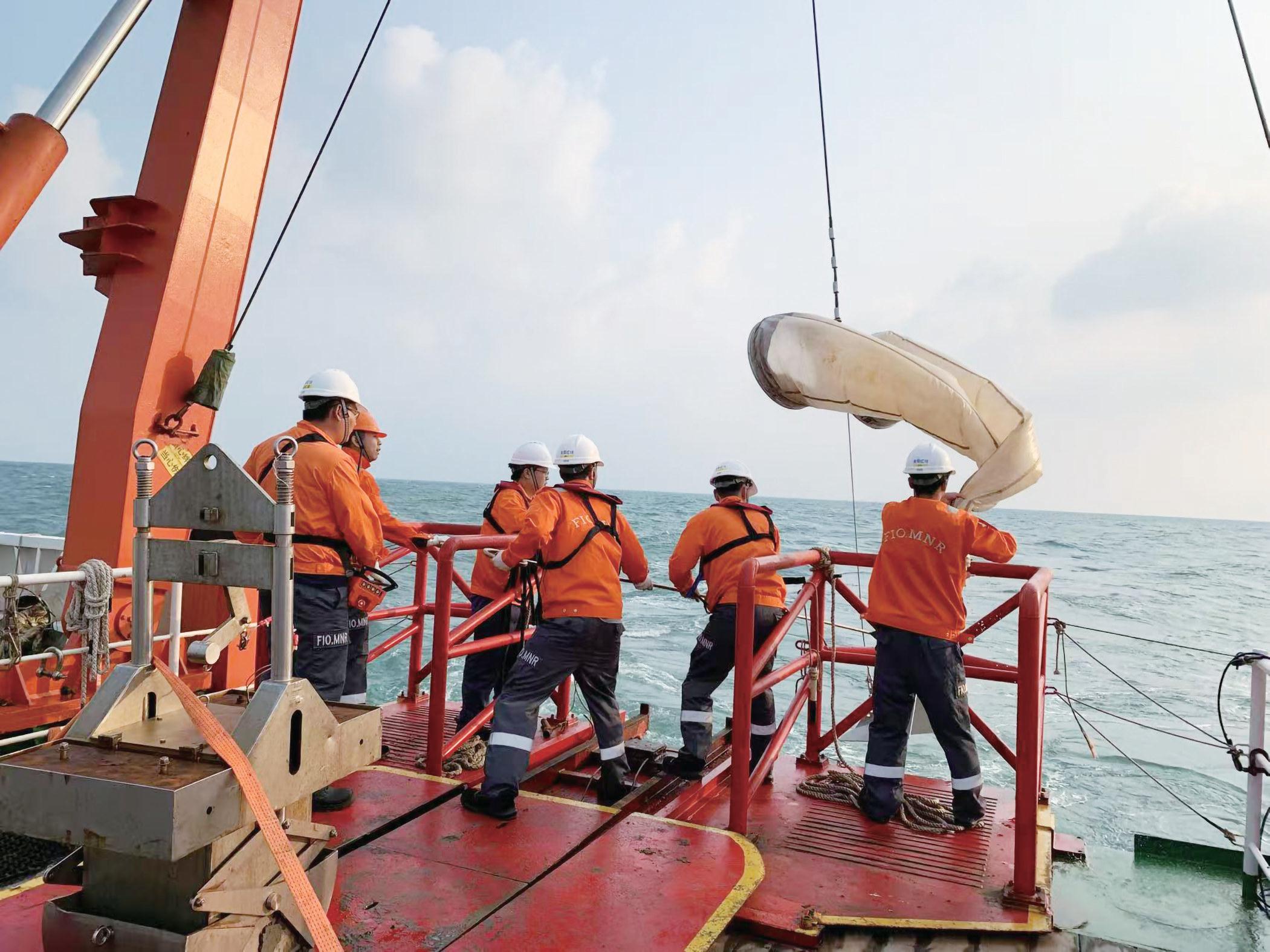
"我们使用自研的'清深'号深海智能原位实验观测平台与多序列微生物原位富集固定装置完成了联合 国'海洋十年'西太平洋黄昏带生态系统研究计划项目的首航任务。"5月15日,深圳市海洋生态前沿技术 重点实验室主任王勇告诉记者,此次科考活动从深圳启航,顺利完成了对南海北缘大陆架四个站位的调 查,采集了大量海洋沉积物、水样、微生物样品和现场图像。 依托各类重点实验室,深圳在基础研究和技术攻关上持续发力,推动创新驱动发展战略向纵深发展。 ■ 在"科研海洋"里深化国际科技合作 王勇的另一重身份是清华大学深圳国际研究生院海洋工程研究院副院长,长期从事深海环境微生物基因 组学研究和原位生态监测设备研发,担任"海洋十年"行动计划海洋黄昏带联合调查大科学计划下西太平 洋海洋黄昏带生态系统研究计划(简称TOWER)的负责人。 "黄昏带"覆盖海水深度200-1000米的范围,是海洋生产力最活跃、最重要的区域带,具有丰富的生物多 样性。多国科学家于2021年初开始实施"国际海洋黄昏带大科学计划"。作为该计划下设的35个项目之 一,TOWER计划以"西太平洋海洋黄昏带原位立体生态观测和生命过程研究"为主题,其研究成果有利 于增进中国和世界各 ...
海洋二所“5号楼课堂”开讲
Zhong Guo Zi Ran Zi Yuan Bao· 2025-05-15 06:03
Core Insights - The establishment of the "Building 5 Classroom" aims to enhance the knowledge level and overall quality of staff in marine technology at the Second Institute of Oceanography, promoting collaboration and a unified approach to advancing research and business development [2] Group 1: Research and Development - Researcher Li Xiaohu presented on the mysteries of deep-sea polymetallic nodules, discussing their discovery, significance, and the dynamic balance mechanisms involving microorganisms, bottom currents, and biological disturbances [1] - Li Xiaohu also introduced the phenomenon of dark oxygen in deep-sea nodules and its formation mechanisms, highlighting the future balance between deep-sea resources, environment, and human civilization [1] Group 2: Industry Insights - Researcher Wang Yejian focused on the future industrial opportunities in deep-sea mineral development, outlining the value of deep-sea exploration for industrial upgrades and its impact on high-end equipment and marine economy clusters [1] - Wang Yejian provided a systematic analysis of the structure and development trends of the deep-sea technology industry chain, illustrating the industrial blueprint for deep-sea mineral development with data and case studies [1] Group 3: Training and Collaboration - Since its inception on March 30, 2023, the "Building 5 Classroom" has successfully held 9 sessions, featuring experts sharing the latest research findings and practical experiences across various fields [2] - Over 900 staff members have participated in the training, gaining valuable knowledge in their professional fields and showing significant improvement in teamwork and inter-departmental communication [2]
瞭望 | 青岛:破解海洋科创堵点
Xin Hua She· 2025-04-29 01:57
Core Insights - Qingdao is enhancing its marine industry through a robust laboratory system and technology transfer platforms, aiming for high-quality development in marine sectors [1][9][10] Group 1: Marine Research and Development - Qingdao has established a comprehensive marine laboratory system, including 1 national laboratory, 5 national key laboratories, 18 provincial key laboratories, and 64 municipal key laboratories [1] - The city is focusing on basic research and has made significant progress in marine aquaculture breeding and sustainable production, with over 20 marine animal genome maps developed [2] - The annual growth rates for SCI and EI papers from marine research institutions in Qingdao are 14.8% and 20.4%, respectively, indicating a strengthening of marine research capabilities [3] Group 2: Technological Advancements - The world's first autonomous container ship, "Zhifei," has successfully completed over 48,000 nautical miles, showcasing advancements in smart navigation technology [4] - Qingdao is implementing the "Sea Innovation Plan 2.0," focusing on six key industries to enhance marine technology innovation and enterprise development [5] Group 3: Talent Development - Qingdao has initiated talent cultivation programs, employing top scientists and expanding its marine workforce to approximately 1.03 million, with nearly 400,000 in marine-related fields [7][8] - The city is enhancing its educational framework through institutions like Ocean University of China, which offers comprehensive marine science programs [8] Group 4: Technology Transfer and Industrialization - The National Marine Technology Transfer Center in Qingdao is facilitating the conversion of research outcomes into practical applications, with a focus on integrating academic and industrial resources [10][11] - In 2024, Qingdao's marine production value reached 551.32 billion yuan, accounting for 5.2% of the national marine production value and 30.6% of Shandong's, reflecting strong economic contributions from the marine sector [11][12]