
电梯制造

Search documents
森赫股份:截至2026年1月9日公司股东人数为9031户
Zheng Quan Ri Bao Wang· 2026-01-13 12:45
Group 1 - The core point of the article is that Senhe Co., Ltd. (stock code: 301056) reported a total of 9,031 shareholders as of January 9, 2026 [1]
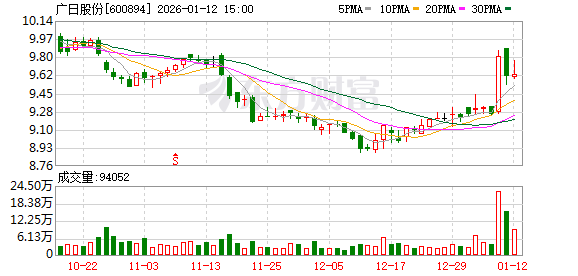
广日股份:2025年前三季度,海外业务同比增长约50%
Zheng Quan Ri Bao· 2026-01-12 13:43
Core Insights - The company aims to enhance operational efficiency as its primary goal, focusing on market expansion, digital transformation, and international development [2] Group 1: Business Performance - The elevator manufacturing business has achieved growth despite market challenges, with overseas business increasing by approximately 50% year-on-year [2] - The company has secured nearly 400 million yuan in digital industry contracts [2] - Management expenses have decreased by about 15% year-on-year due to the implementation of excellence performance management [2]


快意电梯跌5.08%,龙虎榜上机构买入1276.74万元,卖出255.35万元
Zheng Quan Shi Bao Wang· 2026-01-12 09:24
Group 1 - The stock of Kuaiji Elevator experienced a decline of 5.08% with a turnover rate of 26.16% and a trading volume of 1.021 billion yuan, showing a volatility of 22.21% [2][2][2] - Institutional investors net bought 10.21 million yuan, while brokerage seats collectively net sold 118 million yuan [2][2][2] - The stock was listed on the Shenzhen Stock Exchange due to a daily volatility of 22.21% and a daily decline deviation of -7.13% [2][2][2] Group 2 - The top five trading departments accounted for a total transaction of 247 million yuan, with a buying amount of 70.06 million yuan and a selling amount of 177 million yuan, resulting in a net sell of 107 million yuan [2][2][2] - Among the trading departments, one institutional seat was present, net buying 10.21 million yuan with a buying amount of 12.77 million yuan and a selling amount of 2.55 million yuan [2][2][2] - The stock saw a net outflow of 57.97 million yuan in main funds today, with large orders experiencing a net outflow of 6.59 million yuan and big orders a net outflow of 51.39 million yuan [2][2][2]
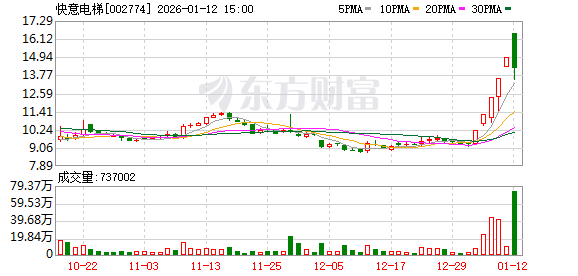
旧改政策+智能制造概念联动6连板!快意电梯9:25再度涨停,背后逻辑揭晓
Sou Hu Cai Jing· 2026-01-12 01:41
Group 1 - The core viewpoint of the article highlights that Kuaiji Elevator has achieved a six-day consecutive limit-up in trading, indicating strong market interest and performance [1] - The stock reached a trading limit at 9:25 AM with a transaction volume of 0.22 billion yuan and a turnover rate of 0.47% [1] - The acceleration of the renovation of old residential communities in China is driving demand for the replacement and installation of old elevators, with over 2 million old elevators nationwide awaiting updates, presenting a significant market opportunity [1] Group 2 - Kuaiji Elevator is actively engaged in the old elevator renovation and installation sector and has won bids for central state-owned enterprise procurement projects [1] - The company is pursuing a business transformation by establishing a 5 billion yuan industrial merger and acquisition fund to invest in the smart manufacturing sector, collaborating with professional investment institutions to explore new growth points [1] - The company's headquarters is located in the Guangdong-Hong Kong-Macao Greater Bay Area, allowing it to leverage regional advantages for participation in infrastructure construction; its products are exported to multiple countries along the Belt and Road Initiative, benefiting from related policy incentives [1]
山东宁津:电梯特色产业转型“智造”攀新高
Xin Hua Wang· 2026-01-12 00:27
Core Insights - The elevator industry in Ningjin County, Shandong, has become a significant sector, with a market share exceeding 60% in the domestic market and an annual output value surpassing 7 billion yuan [1][2] - The county is focusing on smart transformation and upgrading of traditional manufacturing, aiming for the elevator equipment manufacturing cluster to be recognized as a distinctive industrial cluster in Shandong Province by 2025 [1] - The local power supply company has enhanced the electricity infrastructure to support industrial growth, including the operation of two 110 kV substations and the installation of over 280 kilometers of high and low voltage lines [1] Industry Development - Ningjin County has established a 1,000-acre elevator industrial park and a shared processing center for steel, producing over 3,000 varieties of elevator components [1] - The transition from component production to an industrial cluster and from manufacturing to intelligent manufacturing has been a key focus for the elevator industry [1] - The local power supply company offers value-added services such as energy consulting and comprehensive energy efficiency analysis, resulting in an average reduction of over 30% in overall energy consumption [1] Urban Integration - The county is promoting a "renovation + elevator" model, integrating elevator industry development with urban renewal [2] - The local power supply company has streamlined the electricity application process, reducing the time from application to connection to within three working days [2] - A significant portion of the Oriental Garden community has installed elevators, improving residents' quality of life by providing direct access to their homes [2]
协议达成!地方国企用房抵债,002689开年“回血”:坏账变资产
Mei Ri Jing Ji Xin Wen· 2026-01-10 05:14
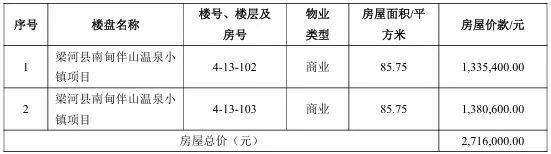
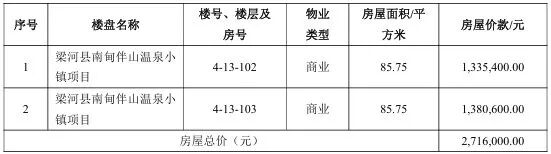
Core Viewpoint - The article discusses ST Yuan Zhi's (SZ002689) strategy of using real estate to offset debts, specifically a recent agreement to settle a debt of 2.716 million yuan with Yunnan Urban Construction Investment Co., which is expected to positively impact the company's financial statements and potentially increase pre-tax profits for 2026 by approximately 230.6 thousand yuan [1][2][3]. Group 1: Debt Settlement Agreement - ST Yuan Zhi has entered into a debt settlement agreement involving multiple parties, including Yunnan Urban Construction Investment Co. and Lianghe Banshan Specialty Town Real Estate Co., to resolve a debt of 2.716 million yuan through real estate [3]. - The agreement is structured as a debt restructuring rather than a simple debt repayment, with the funds flowing directly to purchase property from Lianghe Banshan [3][4]. - The properties involved are located in the "Nandian Banshan Hot Spring Town" project in Yunnan, and their fair value is deemed sufficient to cover the debt amount [4]. Group 2: Financial Impact - If the debt settlement is successfully executed, it is projected to increase ST Yuan Zhi's pre-tax profits for 2026 by approximately 230.6 thousand yuan, effectively converting a potential loss into a profit [5]. - The transaction is expected to reduce the uncertainty associated with the company's accounts receivable and accelerate the collection of outstanding debts [4][5]. Group 3: Broader Financial Context - Despite the positive implications of this transaction, ST Yuan Zhi faces a significant challenge with total accounts receivable exceeding 400 million yuan, indicating that this settlement is only a small part of a larger issue [6][7]. - As of June 2025, the company's accounts receivable stood at 416 million yuan, accounting for 22.15% of total assets, highlighting the ongoing struggle with cash flow and receivables management [7][9]. - The company acknowledges that the performance of its accounts receivable is closely tied to the financial health of its real estate clients, and it plans to enhance risk assessment mechanisms to manage this risk [9]. Group 4: Asset Liquidity Concerns - There are concerns regarding the liquidity of the real estate assets acquired through this debt settlement, as properties in third and fourth-tier cities may face challenges in being quickly monetized [6][9]. - The potential inability to convert these fixed assets back into cash could mean that the company is merely swapping one illiquid asset for another, which may not significantly improve its financial position [6][9].

协议达成!地方国企用房抵债,002689开年“回血”:坏账变资产,预计增加利润230余万元!仍有超4亿元应收账款
Mei Ri Jing Ji Xin Wen· 2026-01-10 03:44
Core Viewpoint - The article discusses ST Yuan Zhi's (002689) strategy of using real estate to offset debts as a means to improve its financial situation amidst significant accounts receivable challenges, highlighting a specific agreement with Yunnan Urban Construction Investment Co., Ltd. for a debt settlement of 2.716 million yuan [1][3]. Group 1: Debt Settlement Agreement - ST Yuan Zhi has entered into a debt settlement agreement with Yunnan Urban Construction Investment Co., Ltd. to offset a debt of 2.716 million yuan through real estate [1][3]. - The agreement involves multiple parties, including the debtor, the creditor, and the property holding company, indicating a complex debt restructuring process [3]. - If the debt settlement is successfully implemented, it is expected to increase the company's pre-tax profit by approximately 230.6 thousand yuan for the year 2026 [2][5]. Group 2: Financial Implications - The transaction is anticipated to have a significant positive impact on ST Yuan Zhi's financial statements, reducing uncertainty related to accounts receivable and accelerating the collection process [4][6]. - The company had previously made provisions for bad debts related to this receivable, meaning that the successful resolution of this debt will directly release profits [4][5]. - Despite the potential profit increase, the company still faces a substantial total accounts receivable of over 400 million yuan, indicating that this settlement is only a small part of a larger issue [6][7]. Group 3: Challenges and Market Context - The real estate assets involved in the debt settlement are located in Lianghe County, Yunnan, and their liquidity may be a concern, especially compared to properties in first and second-tier cities [6][9]. - The company has acknowledged that the performance of its accounts receivable is closely tied to the financial health of its real estate clients, which poses ongoing risks [9]. - The management has indicated plans to enhance customer risk assessment mechanisms and may resort to legal measures to manage accounts receivable risks [9].
老旧小区加装电梯纳入国补, 项目“启动难”痛点迎刃而解
Mei Ri Jing Ji Xin Wen· 2026-01-09 06:05
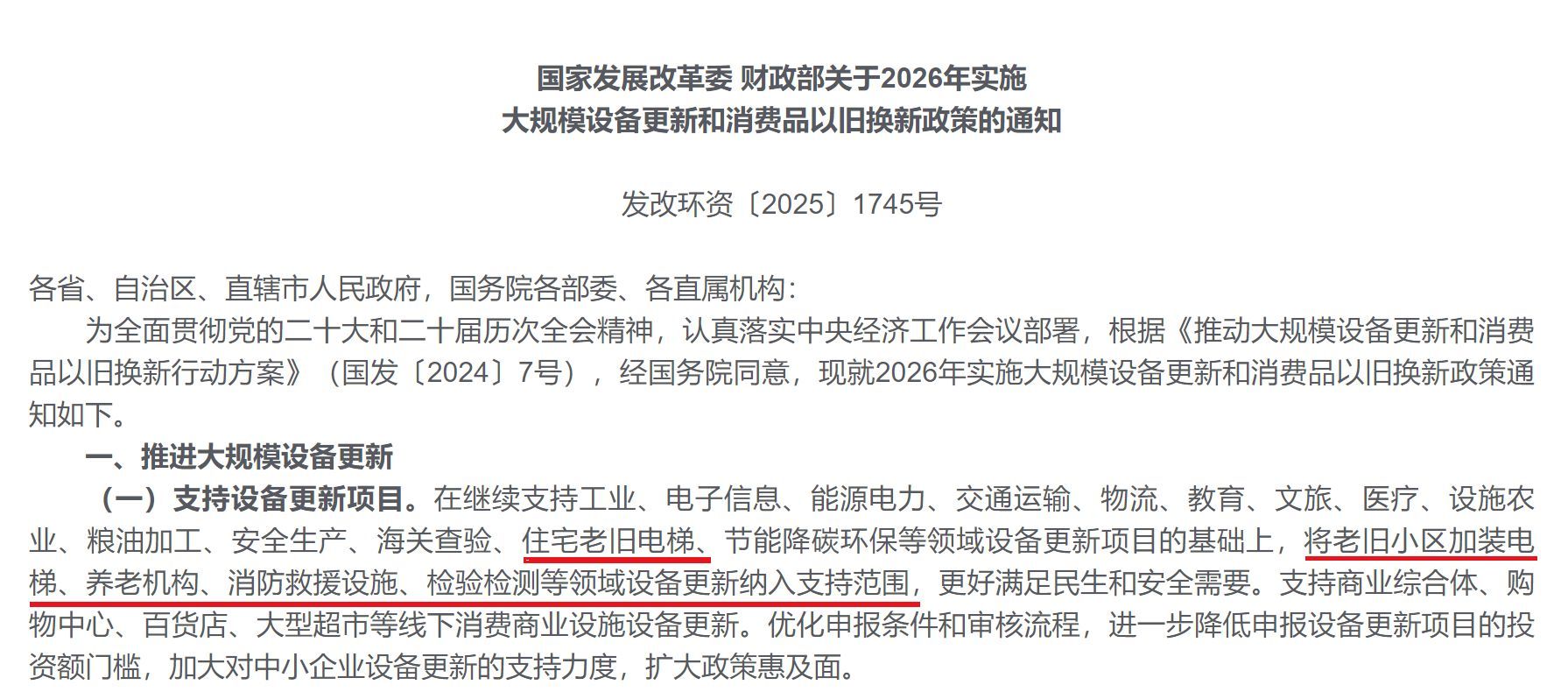
Core Viewpoint - The recent policy by the National Development and Reform Commission and the Ministry of Finance includes subsidies for the installation of elevators in old residential communities, addressing the challenges of project initiation and enhancing competition in the industry [1][4]. Group 1: Policy Changes and Impacts - The 2026 "Two New" policy introduces subsidies for the installation of elevators in old residential communities, marking a significant step in improving living conditions and stimulating domestic demand [4]. - The subsidy standards have been refined to provide differentiated support based on the number of elevator stops, moving away from a flat-rate subsidy [1][4]. - The policy aims to accelerate previously slow projects due to funding issues, positively impacting the entire elevator manufacturing, installation, and service industry [4][5]. Group 2: Current Status and Statistics - Since the beginning of the 14th Five-Year Plan, Beijing has installed 3,391 elevators, benefiting approximately 35,000 households [5]. - In 2025, Beijing plans to complete the installation of 6,073 elevators in old residential buildings, with significant progress already reported [5][6]. - The highest number of elevator installations in Beijing is in Haidian District, with 1,375 units installed [7]. Group 3: Installation Models and Challenges - There are three main models for elevator installation: self-funded by residents, funded by property units or collectives, and a leasing model encouraging private investment [8]. - The new policy alleviates cash flow pressures for companies and activates more projects, but government subsidies may not fully cover costs, serving primarily as a catalyst for additional funding from residents and private sectors [10][21]. - Concerns remain among residents regarding the long-term maintenance costs and potential impacts on property values, complicating consensus on installation [11][14]. Group 4: Market Dynamics and Future Considerations - The new policy is expected to reshape market demand and competition, benefiting manufacturers, installation companies, and maintenance service providers [20]. - Increased participation from small and medium-sized enterprises in bidding for government projects is anticipated, leading to heightened competition in the industry [20]. - Companies may need to explore integrated construction and maintenance models to gain competitive advantages in this evolving market landscape [20][21].
人工智能+旧改+一带一路概念联动5连板!快意电梯9:30再度涨停,背后逻辑揭晓
Sou Hu Cai Jing· 2026-01-09 01:57
Core Viewpoint - Kuaiji Elevator has achieved a five-day consecutive limit-up, indicating strong market interest and potential growth in the smart elevator sector, particularly in the context of AI integration and infrastructure upgrades [1] Group 1: Stock Performance - Kuaiji Elevator's stock has been on a five-day limit-up streak, with a trading volume of 1.24 billion yuan and a turnover rate of 3.02% [1] Group 2: Business Strategy - The company is focusing on the development of smart elevator systems in the artificial intelligence sector, targeting the renovation of old elevators and the installation of elevators in existing buildings [1] - Kuaiji Elevator is also expanding its overseas market presence, leveraging the Belt and Road Initiative to support its growth strategy [1]
老旧小区加装电梯纳入国补, 项目“启动难”痛点迎刃而解 业内
Mei Ri Jing Ji Xin Wen· 2026-01-09 01:13
Core Viewpoint - The inclusion of elevator installation in old residential areas under national subsidies is a significant move to enhance public welfare and stimulate domestic demand, addressing the previous funding challenges that hindered project initiation [1][4]. Group 1: Policy Changes and Impacts - The National Development and Reform Commission and the Ministry of Finance have announced a new policy for 2026 that includes subsidies for installing elevators in old residential areas, optimizing support mechanisms and subsidy standards [1][4]. - The adjustment in subsidy standards from fixed amounts to tiered subsidies based on the number of floors will provide more targeted financial support for elevator installations [1][4]. - The policy aims to accelerate the installation of elevators, which has been slow due to funding issues, positively impacting the entire elevator manufacturing, installation, and service industry [4][5]. Group 2: Current Status and Statistics - As of the latest data, Beijing has completed the installation of 3,391 elevators since the start of the 14th Five-Year Plan, benefiting approximately 35,000 households [5][6]. - In 2025, Beijing plans to complete the installation of 6,073 elevators as part of its urban renewal efforts [5]. - The highest number of elevator installations in Beijing is in Haidian District, with 1,375 units, followed by Chaoyang District with 1,056 units [6]. Group 3: Installation Models and Challenges - There are three main models for elevator installation in old residential areas: owner-funded self-construction, collective funding by property units, and a leasing model encouraging private investment [8]. - The new policy is expected to alleviate cash flow pressures for companies and activate more projects, addressing the "difficult start" issue previously faced by residents [10][12]. - However, concerns remain regarding the long-term maintenance costs and the potential impact on property values, which may complicate consensus among residents [12][13]. Group 4: Market Dynamics and Future Considerations - The new policy is likely to reshape market demand and competition within the elevator installation industry, prompting companies to explore integrated construction and maintenance service models [18][19]. - Companies may need to adjust pricing strategies to reflect the differences in installation costs based on building structures and local conditions, ensuring fairness in government subsidies [19]. - The increased participation of small and medium-sized enterprises in bidding for government projects could enhance industry competitiveness [19].