资本市场

Search documents
2025全年GDP增长5.0%;国常会:研究加快培育服务消费新增长点等促消费举措|每周金融评论(2026.1.12-2026.1.18)
清华金融评论· 2026-01-19 10:33
Key Points - The core viewpoint of the article emphasizes the steady growth of China's economy in 2025, with a GDP growth rate of 5.0%, despite facing multiple pressures and challenges [8][9]. Group 1: Economic Growth - The preliminary calculation shows that the GDP for 2025 reached 14,018.79 billion yuan, reflecting a 5.0% increase from the previous year [8]. - The first industry added value was 933.47 billion yuan (3.9% growth), the second industry was 499.65 billion yuan (4.5% growth), and the third industry was 808.79 billion yuan (5.4% growth) [8]. - Quarterly GDP growth rates were 5.4% in Q1, 5.2% in Q2, 4.8% in Q3, and 4.5% in Q4, with a quarter-on-quarter growth of 1.2% in Q4 [8]. Group 2: Policy Initiatives - The State Council meeting highlighted the need to accelerate the cultivation of new growth points in service consumption and implement measures to boost consumption [9][10]. - The meeting emphasized the importance of improving the quality of service consumption and addressing issues related to credit, standards, and safety management [9][10]. - A long-term mechanism for promoting consumption will be established, including the "15th Five-Year Plan" for consumption expansion and urban-rural resident income increase plans [10]. Group 3: Financial Regulation - The Financial Regulatory Bureau's 2026 work meeting focused on summarizing 2025's work and planning key tasks for 2026, emphasizing risk prevention and high-quality development [11][13]. - The meeting underscored the importance of enhancing financial services to support economic stability and growth, with a focus on structural support and long-term capital guidance [13]. Group 4: Monetary Policy - The People's Bank of China announced several monetary policies aimed at supporting high-quality economic development, including a 0.25 percentage point reduction in various structural monetary policy tool rates [14]. - The policies aim to lower financing costs for the real economy and guide financial resources towards key sectors such as technology innovation and green transformation [14]. Group 5: Market Stability - The China Securities Regulatory Commission emphasized maintaining market stability and preventing extreme fluctuations, with a focus on long-term value investment [15]. - Measures will be taken to strengthen market monitoring and prevent market manipulation, ensuring a stable trading environment [15]. Group 6: Commodity Prices - International gold and silver prices reached historical highs, with gold at $4,671.07 per ounce and silver at $93.194 per ounce, driven by economic uncertainty and inflation pressures [16][17]. - The demand for gold and silver as safe-haven assets is expected to continue increasing, reflecting market concerns about future economic prospects [17]. Group 7: Hainan Free Trade Port - Hainan's offshore duty-free sales reached 4.86 billion yuan in the first month of closure, marking a 46.8% year-on-year increase [18]. - The strong performance of the duty-free market indicates robust consumer enthusiasm and highlights Hainan's role in promoting high-level opening-up [18].


今日视点:“五个坚持”护航资本市场高质量发展
Xin Lang Cai Jing· 2026-01-18 23:03
Core Viewpoint - The China Securities Regulatory Commission (CSRC) has outlined five key areas of focus for 2026, emphasizing stability, reform, strict regulation, enhancing the quality of listed companies, and promoting deeper capital market openness [1][7]. Group 1: Stability and Market Monitoring - The capital market in China is currently stable and shows positive momentum, but it faces complex challenges from intertwined internal and external risks [1][2]. - In 2026, the regulatory body will prioritize stability and implement comprehensive market monitoring and early warning measures to maintain this positive trend [2][9]. Group 2: Reform Initiatives - The regulatory authorities have introduced measures to enhance the financing functions of the capital market, significantly improving the inclusiveness of the multi-tiered market system [3][10]. - The 2026 reform agenda will focus on enhancing the adaptability of the multi-tiered equity market, improving the quality and structure of the bond market, and advancing the quality of the futures market [3][10]. Group 3: Strict Regulation - In 2025, the regulatory body intensified its enforcement efforts, handling 701 cases of securities and futures violations, resulting in penalties totaling 15.47 billion yuan [4][11]. - The 2026 regulatory framework will further deepen strict enforcement, leveraging technology to enhance regulatory capabilities and ensure a transparent market environment [4][12]. Group 4: Quality of Listed Companies - In 2025, listed companies demonstrated their commitment to high-quality development, with cash dividends and buybacks totaling 2.68 trillion yuan and R&D investments reaching 1.16 trillion yuan, marking a 3.88% year-on-year increase [5][12]. - The focus for 2026 will be on improving the operational standards of listed companies, enhancing governance, and stimulating market activity through mergers and acquisitions [5][12]. Group 5: Capital Market Openness - China's capital market has been progressively opening up, balancing openness with security, which has expanded its global network and injected vitality into the market [6][13]. - The 2026 strategy for openness will be more proactive and inclusive, aiming to enhance regulatory and risk prevention capabilities while promoting international integration of market rules [7][13].
2026年坚持“稳”字当头巩固资本市场稳中向好势头 坚决防止大起大落
Yang Shi Wang· 2026-01-17 02:13
Group 1 - The core viewpoint is that the China Securities Regulatory Commission (CSRC) emphasizes the overall stability and positive trend of the Chinese capital market, aiming to deepen comprehensive reforms in investment and financing by 2026 to enhance institutional inclusiveness, adaptability, competitiveness, and attractiveness [1] - The CSRC plans to maintain a steady approach, consolidating the positive momentum of the market, and will implement counter-cyclical adjustments while strictly addressing excessive speculation and market manipulation to prevent significant market fluctuations [1][5] - There will be a continued focus on reforming public funds and expanding channels for medium- and long-term capital sources to foster a market ecosystem conducive to long-term investments [1] Group 2 - The CSRC aims to enhance the inclusiveness and adaptability of the multi-tiered equity market, initiating reforms for the Growth Enterprise Market (GEM) and promoting the implementation of reforms for the Sci-Tech Innovation Board [3] - Efforts will be made to improve the convenience and flexibility of refinancing, as well as to promote the high-quality development of the Beijing Stock Exchange and the New Third Board [3] - The CSRC will also focus on the smooth implementation of Real Estate Investment Trusts (REITs) pilot projects in the commercial real estate sector [3] Group 3 - There will be a strong crackdown on financial fraud, price manipulation, and insider trading, with an emphasis on enhancing regulatory capabilities through technology [5] - The CSRC aims to improve the discovery of leads and the penetrative power of regulation [5] Group 4 - The capital market will be pushed towards deeper and higher levels of openness, with efforts to expedite the implementation of optimized schemes for qualified foreign institutional investors [7] - The scope of specific futures products will be expanded, enhancing the convenience of cross-border investment and financing [7] Group 5 - The CSRC will continue to enhance the standardized operation of listed companies, strengthening constraints on controlling shareholders and actual controllers [8] - Improvements will be made to systems regarding dividends, share buybacks, equity incentives, and employee stock ownership [8] - The aim is to stimulate the vitality of the mergers and acquisitions market and to enhance the regulatory framework for the entire restructuring process, promoting high-quality development of listed companies [8]
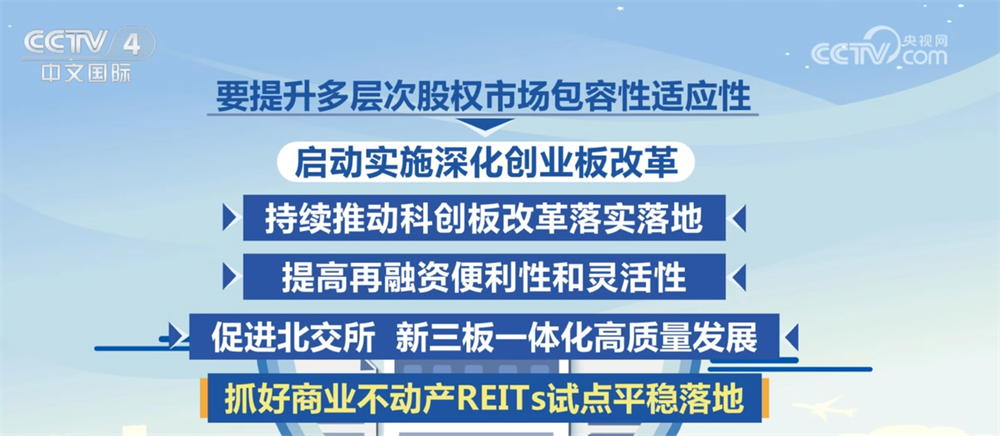
证监会确定2026年资本市场五方面工作任务 坚决防止市场大起大落
Shang Hai Zheng Quan Bao· 2026-01-17 01:31
Core Viewpoint - The China Securities Regulatory Commission (CSRC) held a meeting to summarize 2025's work and outline key tasks for 2026, focusing on stabilizing the market, enhancing service quality for high-quality development, improving regulatory effectiveness, promoting the growth and governance of listed companies, and advancing the opening of capital markets to a deeper and higher level [1][2]. Group 1: Market Stability and Development - The CSRC emphasized the need to consolidate the market's positive momentum and enhance monitoring and regulatory measures to prevent excessive speculation and market manipulation [3][4]. - In 2025, the capital market showed resilience and vitality despite facing multiple risks, with significant breakthroughs in attracting medium- and long-term funds [2]. - The total cash dividends and buybacks from listed companies reached 2.68 trillion yuan, while the total IPOs and refinancing amounted to 1.26 trillion yuan [2]. Group 2: Regulatory and Reform Initiatives - The meeting outlined five key areas of focus, including strengthening market monitoring, enhancing the quality of services for high-quality development, and improving the effectiveness of regulatory enforcement [3][4]. - A comprehensive system to combat financial fraud was established, resulting in the investigation of 701 securities and futures violations, with fines totaling 15.47 billion yuan [2]. - The CSRC plans to deepen public fund reforms and expand channels for long-term investment, promoting a market environment conducive to long-term and value investments [3]. Group 3: Governance and Corporate Development - The CSRC aims to enhance the governance of listed companies by implementing new regulations and improving the operational standards of these companies [4][5]. - Measures will be taken to strengthen the constraints on controlling shareholders and actual controllers, as well as to stimulate the vitality of mergers and acquisitions [4]. - The meeting also highlighted the importance of improving the regulatory framework for private equity funds and enhancing the governance of the capital market [4]. Group 4: International Engagement and Open Markets - The CSRC is focused on advancing the opening of capital markets, including optimizing the Qualified Foreign Institutional Investor (QFII) scheme and expanding the range of futures products available to foreign investors [4]. - Efforts will be made to enhance the regulatory and risk prevention capabilities in an open environment, as well as to participate actively in international financial governance [4].
巩固市场稳中向好势头坚决防止市场大起大落
Shang Hai Zheng Quan Bao· 2026-01-16 18:34
Regulatory Effectiveness - The focus is on enhancing regulatory enforcement effectiveness and deterrence by strictly adhering to laws and regulations, targeting financial fraud, price manipulation, and insider trading [1] - The mechanism for administrative and criminal connection is to be streamlined, promoting more representative lawsuits and advance compensation cases [1] - Industry institutions are urged to concentrate on their core business, improve governance, and develop in a differentiated manner [1] Corporate Governance and Value Growth - Continuous improvement of the operational standards of listed companies is emphasized, with the introduction of new regulatory guidelines for listed companies [1] - Strengthening constraints on the behavior of controlling shareholders and actual controllers, and improving systems for dividends, buybacks, equity incentives, and employee stock ownership [1] - The aim is to stimulate the vitality of mergers and acquisitions, enhancing the regulatory framework for the entire restructuring process to promote high-quality development of listed companies [1] Capital Market Openness - The initiative aims to deepen and elevate the two-way opening of the capital market, with a focus on optimizing the qualified foreign investor program and expanding the range of specific futures products [1] - Enhancements in cross-border investment and financing convenience are prioritized, along with the improvement of regulations for overseas listings to ensure standardized and transparent management [1] - The ability to regulate and prevent risks in an open environment is to be strengthened, with active participation in international financial governance [1] Party Governance and Anti-Corruption - The meeting calls for higher standards and practical measures to advance the comprehensive and strict governance of the China Securities Regulatory Commission [2] - Emphasis is placed on normalizing and institutionalizing the rectification of central inspections, establishing a clear focus on practical results and effectiveness [2] - Targeted measures are to be developed to prevent and combat new forms of corruption and hidden corruption in the capital market [2]
【金麒麟】吴晓求:中国资本市场未来成长可期
Zheng Quan Ri Bao Zhi Sheng· 2026-01-16 04:51
Group 1 - The core viewpoint is that the positive trend of China's capital market in 2026 is expected to continue, driven by both reform logic and industrial structure transformation logic [1][2] - The first dimension of development is systematic reforms in the asset, funding, and institutional aspects, with ongoing reforms in the asset side focusing on optimizing the structure of listed companies through the registration system and the Sci-Tech Innovation Board [2] - The second dimension emphasizes funding reforms, particularly the orderly entry of large funds into the market, including the gradual involvement of social security funds and commercial insurance funds, along with the innovation of product tools like broad-based ETFs [2] - The third dimension highlights institutional reforms aimed at enhancing market transparency and implementing severe legal penalties for serious violations, shifting from administrative penalties to criminal and civil liabilities [2] Group 2 - The significance of these reforms lies in their ability to restore market confidence and stabilize development expectations through coordinated reforms in the asset, funding, and institutional dimensions [3] - These reforms align with the major transformation of China's economic structure, as traditional economic theories struggle to explain new phenomena, such as the dominance of high-tech enterprises, which is altering the relationship between GDP growth and labor income [3] - The changing economic structure significantly impacts the market, as high-tech and innovative enterprises, traditionally viewed as "bubbles" under conventional valuation methods, are undergoing profound changes in valuation logic due to the transformation of development models [3]

吴晓求:建议从资产、投资、制度端构建资本市场成长的核心支点
Sou Hu Cai Jing· 2026-01-15 20:33
Group 1 - The core task during the "14th Five-Year Plan" period is to reconstruct the ecological chain of China's capital market, focusing on reforms from the asset side, investment side, and institutional side to build the core support for market growth [2] - The goal of asset side reform is to adjust the structure of listed companies, promoting high-tech and innovative enterprises as the main entities in the market, ensuring that assets meet investors' risk-return expectations [2] - The core objective of funding side reform is to expand market liquidity, encouraging large funds to enter the market, as the previous market was dominated by individual investors, limiting the entry of long-term funds due to regulatory constraints and risk considerations [2] Group 2 - Institutional side reform aims to ensure market confidence, expectations, and bottom lines, with a primary goal of enhancing market transparency through accurate disclosure of statutory information by issuers [2] - A shift from administrative penalties to a legal system focused on criminal penalties and civil compensation is necessary to improve the regulatory framework [2] - The healthy development of the capital market relies on a sound legal system, a strong spirit of contract, and sufficient market transparency, which are essential for attracting capital [3]

清华大学何平:国际资本流动对中国资本市场影响日益加深
Xin Lang Cai Jing· 2026-01-15 11:09
Core Viewpoint - The Chinese capital market is undergoing significant changes, transitioning from a policy-driven market to a more effective market, with increasing influence from international capital flows, making it an important part of global asset allocation [1][3]. Group 1: Market Transition - The capital market in China is shifting from administrative pricing to a more market-oriented pricing mechanism, indicating a move towards a market-driven era [1][3]. - The primary goal of market-oriented reforms is to enhance market efficiency, ensuring that quality assets are reasonably priced and resources are effectively allocated [1][3]. Group 2: International Influence - The impact of international capital flows on the Chinese capital market is growing, with recent rapid growth in the capital market and stock indices closely linked to international capital movements [1][3]. - Five key international factors currently influencing the Chinese capital market include: 1) Decline in dollar credit, 2) Overvaluation of the dollar, 3) Weakness in the European economy, 4) Recovery of the Japanese economy, and 5) Bubble in the U.S. stock market [1][3]. Group 3: Future Outlook - The Chinese capital market is entering a new phase characterized by structural opportunities, value reconstruction, and coordinated institutional reforms, with a positive outlook for development [2][4]. - The transition from a closed market to an open market, along with the economic potential and resilience of China, is favorable for the growth of the capital market [2][4].
清华大学何平:中国资本市场正成为全球资产配置重要部分
Xin Lang Cai Jing· 2026-01-15 11:03
Group 1 - The core viewpoint is that China's capital market is transitioning from a policy-driven market to a more effective market, with increasing influence from international capital flows, making it an important part of global asset allocation [1][3][4] - Over the past few decades, China has continuously promoted market-oriented reforms, transitioning from administrative pricing to inquiry-based pricing and from approval systems to registration systems, marking the entry into a market-oriented era [1][3] - The primary goal of market-oriented construction is to enhance market effectiveness, allowing quality assets to be reasonably priced and resources to be effectively allocated, which is also the foundation for market openness [1][3] Group 2 - The opening of the capital market and market-oriented reforms have increased the impact of international capital flows on China's capital market, with rapid growth in the capital market and stock indices closely related to international capital trends over the past year [1][3] - Five current international factors influencing China's capital market have been summarized: 1) Decline of dollar credit 2) Overvaluation of the dollar exchange rate 3) Weakness in the European economy 4) Recovery of the Japanese economy 5) Bubble in the US stock market [1][3]
吴晓求:未来资本市场应做好资产端、投资端和制度端改革
Sou Hu Cai Jing· 2026-01-15 10:16
Group 1 - The core viewpoint is that China's capital market has undergone fundamental changes, with restored market confidence and stable expectations. Future reforms should focus on asset, investment, and institutional aspects to meet diverse financing needs of enterprises and wealth management needs of residents [2][3] - On the asset side, there is a need to adjust the structure of listed companies to make high-tech and innovative enterprises the mainstay. The capital market fundamentally relies on the operational achievements of rising companies for value appreciation, providing risk-return sources for investors [2] - On the investment side, expanding market liquidity is crucial, particularly by introducing "big funds." The current investor composition is dominated by small investors, and there are significant restrictions on institutional long-term funds such as commercial insurance, social security funds, and corporate annuities entering the market [2] Group 2 - On the institutional side, the core of reform is to ensure market confidence and expectations, prioritizing market transparency. Strengthening regulatory deterrence and accountability mechanisms is essential, with severe penalties for behaviors such as information fraud, market manipulation, and insider trading [3]