食品行业

Search documents
【环球财经】美关税冲击加剧 约旦出口行业困则思变
Xin Hua She· 2025-09-26 08:17
Group 1 - Jordan's export industry is significantly impacted by US trade protectionism, with calls for market diversification and enhanced export capabilities [1][2] - The US is Jordan's largest export market, with an estimated export value of approximately 22 billion dinars (about 31 billion USD) in 2024, accounting for a quarter of Jordan's total exports [1] - The garment industry is the largest export sector in Jordan, facing profit compression and increased competition due to US tariffs [1][2] Group 2 - The garment sector's reliance on US exports is highlighted, with over 80% of products from major companies like Jordan's Al-Waseet Garments Co. exported to the US [1] - The food industry also reports significant negative impacts from US tariffs, with exporters facing pressure to reduce prices despite thin profit margins [2] - Experts emphasize the need for Jordanian exporters to diversify markets and improve competitiveness in response to US tariff uncertainties [2][3] Group 3 - The Jordanian government is negotiating with the US to lower tariffs on jewelry, while jewelers seek to expand into Gulf and North African markets [3] - The leather and textile sectors are urged to enhance operational efficiency and production capacity to improve competitiveness [3] - Long-term structural reforms are necessary for Jordan, including updating production lines and increasing local content to reduce dependence on the US market [3]
美关税冲击加剧 约旦出口行业困则思变
Xin Hua She· 2025-09-26 05:49
Group 1 - Jordan's export industry is significantly impacted by U.S. trade protectionism, with a call for market diversification and enhanced export capabilities [1][2] - The U.S. is Jordan's largest export market, with exports to the U.S. projected at approximately 2.2 billion dinars (about 3.1 billion USD) in 2024, accounting for a quarter of Jordan's total exports [1] - The garment industry is the largest export sector in Jordan, facing profit compression and increased competition due to U.S. tariffs [1][2] Group 2 - U.S. tariffs on Jordan's garment industry are higher than those imposed on Egypt and Kenya, leading to a slowdown in overseas orders [2] - The food industry is also significantly affected, with exporters facing pressure to reduce prices, which threatens their profit margins [2] - Local experts highlight that the uncertainty of U.S. tariffs poses the greatest challenge for Jordanian exporters, especially those relying on the U.S.-Jordan Free Trade Agreement [2] Group 3 - Jordan's export community is urged to explore markets in Europe and Africa to mitigate the impact of U.S. tariffs [3] - The jewelry sector is seeking to expand into Gulf and North African markets while the government negotiates to lower tariffs on jewelry exports [3] - Structural reforms are necessary for Jordan to enhance competitiveness, including improving operational efficiency and increasing local content in products [3]
麦趣尔:股东昌吉州国投拟减持不超过348万股
Mei Ri Jing Ji Xin Wen· 2025-09-24 12:46
Group 1 - The core point of the article is that Maquiar (SZ 002719) announced a share reduction plan by a major shareholder, which may impact the company's stock performance [1] - Changji State-owned Assets Investment and Operation Group Co., Ltd., a shareholder holding over 5% of Maquiar's shares, plans to reduce its holdings by up to 3.48 million shares, representing no more than 2% of the total share capital [1] - The reduction will occur within three months starting from 15 trading days after the announcement, with a maximum of 1.74 million shares to be sold through centralized bidding, accounting for no more than 1% of the total share capital [1] Group 2 - For the first half of 2025, Maquiar's revenue composition is entirely from the food industry, with a 100% share [1] - As of the report date, Maquiar's market capitalization stands at 1.6 billion yuan [1]

龙大美食:9月19日召开董事会会议
Mei Ri Jing Ji Xin Wen· 2025-09-19 13:11
Group 1 - The company Longda Food announced the convening of its sixth fifth board meeting on September 19, 2025, to discuss the proposal for the second extraordinary shareholders' meeting of 2025 [1] - For the first half of 2025, Longda Food's revenue composition was as follows: 81.87% from the slaughtering industry, 17.42% from the food industry, and 0.71% from other sources [1] - As of the report date, Longda Food's market capitalization was 6.2 billion yuan [1]

盖世食品龙虎榜:营业部净买入258.38万元
Zheng Quan Shi Bao Wang· 2025-09-15 13:50
Group 1 - Gaisi Food (836826) experienced a price increase of 3.02% with a trading volume turnover rate of 38.27% and a total transaction amount of 365 million yuan, showing a price fluctuation of 17.85% [1][2] - The stock was listed on the daily trading list due to its turnover rate reaching 38.27%, with a net buying amount of 2.5838 million yuan from brokerage seats [2] - In the last six months, Gaisi Food has appeared on the trading list 10 times, with an average price drop of 1.79% the day after being listed and an average drop of 4.17% over the following five days [2] Group 2 - The top five brokerage seats accounted for a total transaction amount of 71.5428 million yuan, with a buying transaction amount of 37.0633 million yuan and a selling transaction amount of 34.4795 million yuan, resulting in a net buying amount of 2.5838 million yuan [2] - The largest buying brokerage was Dongfang Caifu Securities, Lhasa Tuanjie Road First Securities, with a buying amount of 8.5683 million yuan, while the largest selling brokerage was Guotai Haitong Securities, Nanjing Changfu Street, with a selling amount of 5.2626 million yuan [2] - Detailed trading data shows the top five buying and selling brokerages, indicating significant trading activity and interest in Gaisi Food [2]

爱普股份:9月15日召开董事会会议
Mei Ri Jing Ji Xin Wen· 2025-09-15 12:36
Group 1 - The core point of the article is that Aipu Co., Ltd. (SH 603020) announced the convening of its sixth board meeting on September 15, 2025, in Shanghai, where it reviewed the proposal for appointing the board secretary [1] - For the fiscal year 2024, Aipu's revenue composition is heavily weighted towards the food industry, accounting for 99.13%, while other businesses contribute only 0.87% [1] - As of the report, Aipu's market capitalization stands at 3.7 billion yuan [1]

黑芝麻:9月14日召开董事会会议
Mei Ri Jing Ji Xin Wen· 2025-09-15 09:28
Group 1 - The company Black Sesame (SZ 000716) held its seventh temporary board meeting on September 14, 2025, to discuss the proposal for the fourth temporary shareholders' meeting of 2025 [1] - For the first half of 2025, Black Sesame's revenue composition was as follows: 65.6% from the food industry, 31.97% from e-commerce, and 2.43% from other businesses [1] - As of the report date, Black Sesame's market capitalization was 5 billion yuan [1]

美国8月CPI走高 难阻美联储下周降息
Jin Rong Shi Bao· 2025-09-12 04:37
Group 1 - The core inflation data for August shows a year-on-year increase of 2.9%, the largest rise since January, indicating a potential shift in monetary policy by the Federal Reserve [1][2] - The Consumer Price Index (CPI) rose by 0.4% month-on-month, surpassing market expectations, with significant increases in housing costs and food prices, particularly a 4.5% surge in tomato prices [2][3] - The labor market is showing signs of weakness, with initial jobless claims reaching the highest level since October 2021, suggesting a potential increase in layoffs and a shift in the labor market balance [2][3] Group 2 - The interplay of rising inflation and a weakening labor market presents a complex policy challenge for the Federal Reserve, with a low probability of a significant rate cut in September [3] - The increase in inflation is attributed to the transfer of rising costs from tariffs on imported goods to consumers, raising concerns about potential stagflation risks [3]
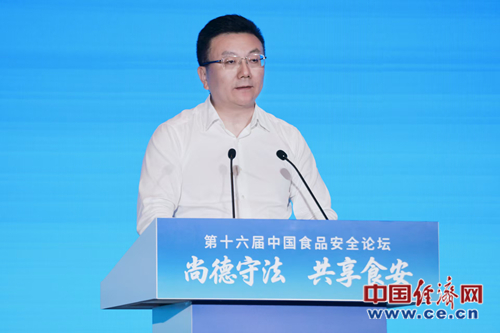
国家食品安全风险评估中心主任李宁:不断完善食品安全国家标准体系
Zhong Guo Jing Ji Wang· 2025-09-12 01:59
Core Viewpoint - The 16th China Food Safety Forum emphasized the importance of continuously improving the national food safety standard system to ensure safety and promote development [1][2]. Group 1: Food Safety Standards - Since the implementation of the Food Safety Law in 2009, China has published a total of 1,725 national food safety standards covering over 340 food categories and more than 20,000 indicators [1]. - The standards address major health hazards affecting Chinese residents and manage the entire food supply chain from production to consumption [1]. Group 2: New Standards and Regulations - This year, 126 new standards and amendments were released, focusing on limits for harmful substances in food, hygiene regulations, and nutritional labeling, among others [2]. - The new standards aim to meet public expectations for food safety and support the urgent needs of food industry transformation and regulatory efficiency [2]. Group 3: Labeling Innovations - The new General Principles for Prepackaged Food Labels and Nutritional Labels introduce mandatory allergen labeling, standardized quantitative labeling, and digital labeling, enhancing transparency and consumer protection [3]. - The nutritional labels will now include additional information on saturated fats and sugars, promoting healthier food choices and reducing food waste [3]. Group 4: Digital Labeling - The National Health Commission and the State Administration for Market Regulation have announced measures to promote digital labeling, simplifying information access for consumers and enhancing regulatory oversight [4]. - Hundreds of companies and over a thousand products have already adopted digital labels, covering major food categories such as dairy, meat, and beverages [4].

司光:勠力同心、齐抓共管,坚决落实“四个最严”
Zhong Guo Jing Ji Wang· 2025-09-11 12:11
Core Viewpoint - The 16th China Food Safety Forum emphasizes the importance of collaborative governance and technological innovation in ensuring food safety amidst rapid industry changes [2][4]. Group 1: Food Safety Governance - The government is urged to strictly implement the "four strictest" requirements and enhance comprehensive supervision from production to consumption to ensure food safety [3]. - Food production and operation enterprises must strengthen their responsibility awareness, establish risk management systems, and ensure the provision of safe food [3]. - Industry associations are encouraged to play a bridging role, promoting self-discipline and industry integrity to foster healthy development within the food sector [3]. Group 2: Technological Innovation - There is a call for increased investment in food safety technology research and development, promoting collaboration between industry, academia, and research institutions [3]. - The implementation of smart regulatory measures, such as "Internet + Bright Kitchen" and AI + big data risk warning systems, is essential for enhancing food safety monitoring [3][4]. - The goal is to achieve early detection and resolution of risks through advanced technology and equipment [3]. Group 3: Social Participation - The forum advocates for the establishment of platforms for public participation in food safety oversight, encouraging consumer involvement in monitoring [4]. - Industry associations should facilitate resource sharing and professional training to enhance industry self-regulation [4]. - There is a need for effective communication strategies to raise public awareness about food safety, including media's role in reporting both violations and positive examples [4][5].