
资产管理

Search documents
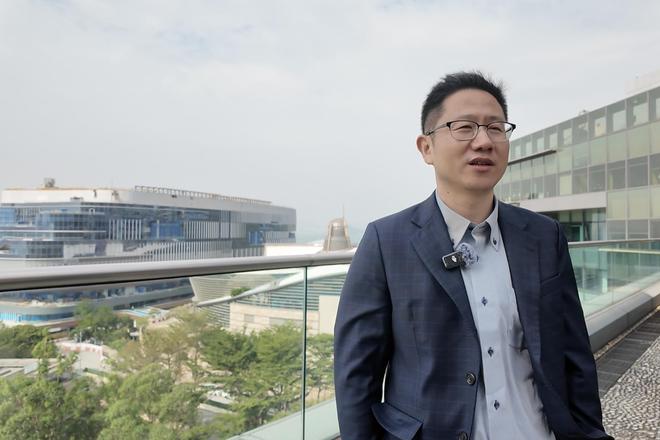
香港“兴”观察|“又是被资金推着跑的一天”——一位香港金融从业者的一日见证
Xin Hua She· 2025-12-30 09:21
Core Insights - The Hong Kong stock market shows clear signs of recovery in 2025, with major indices steadily rising and IPO fundraising reaching a global peak, indicating a vibrant trading environment [2][3]. Group 1: Market Developments - The People's Bank of China is set to deepen financial market connectivity between the mainland and Hong Kong, supporting the offshore RMB market and enhancing cross-border financial services [3]. - As of December 19, 2025, 106 companies have listed on the Hong Kong Stock Exchange, raising a total of 274.6 billion HKD, leading all global exchanges [4]. - The introduction of the Hang Seng Biotechnology Index futures on November 28 enhances the financial tools available for the biotech sector, improving the financing environment for companies in this field [5]. Group 2: Policy Impact - Recent measures from the China Securities Regulatory Commission, including the expansion of eligible products for the Stock Connect program, have broadened investment opportunities for asset management firms in Hong Kong [4]. - The government's plans to launch cross-border RMB repurchase agreements are seen as a significant benefit for RMB bond projects, enhancing the attractiveness of the bond market [4]. Group 3: Industry Trends - The Hong Kong capital market is experiencing a structural upgrade, shifting from traditional sectors like finance and real estate to a focus on new economy enterprises, with a diverse range of products and funding channels [7]. - The number of new listings in Hong Kong has increased significantly, with 93 companies listed in the first 11 months of the year, a 52% rise compared to the previous year [7]. - The average daily trading volume of exchange-traded funds (ETFs) has surged by 116% year-on-year, reflecting increased investor interest and market activity [8].


牛露华国华兴益资管副总经理、牟联光国华兴益资管首席合规官任职资格获批
Xin Lang Cai Jing· 2025-12-30 07:30
12月30日金融一线消息,上海金融监管局发布关于牛露华国华兴益保险资产管理有限公司副总经理任职 资格的批复,核准牛露华国华兴益保险资产管理有限公司副总经理的任职资格。 同日,上海金融监管局发布关于牟联光国华兴益保险资产管理有限公司首席合规官任职资格的批复,核 准牟联光国华兴益保险资产管理有限公司首席合规官的任职资格。 责任编辑:曹睿潼 同日,上海金融监管局发布关于牟联光国华兴益保险资产管理有限公司首席合规官任职资格的批复,核 准牟联光国华兴益保险资产管理有限公司首席合规官的任职资格。 责任编辑:曹睿潼 12月30日金融一线消息,上海金融监管局发布关于牛露华国华兴益保险资产管理有限公司副总经理任职 资格的批复,核准牛露华国华兴益保险资产管理有限公司副总经理的任职资格。 ...
龚俊榕获批担任工银安盛资管副总经理
Xin Lang Cai Jing· 2025-12-30 07:30
责任编辑:曹睿潼 12月30日金融一线消息,上海金融监管局发布关于龚俊榕工银安盛资产管理有限公司副总经理任职资格 的批复,核准龚俊榕工银安盛资产管理有限公司副总经理的任职资格。 12月30日金融一线消息,上海金融监管局发布关于龚俊榕工银安盛资产管理有限公司副总经理任职资格 的批复,核准龚俊榕工银安盛资产管理有限公司副总经理的任职资格。 责任编辑:曹睿潼 ...
10余家资管机构谈“三投资”:将理念转化为市场各方一致行动
Di Yi Cai Jing· 2025-12-30 06:21
近日,由中共上海市委金融委员会办公室(下称"上海市委金融办")、上海证券交易所(下称"上交 所")指导,上海资产管理协会(下称"协会")主办的2025资产管理行业践行资本市场"理性投资、价值 投资、长期投资"(下称"三投资")理念优秀实践机构座谈会在上交所举行。 上海市委金融办副主任曹艳文;上交所党委委员、副总经理苑多然;协会会长,中保投资有限责任公司 党委书记、董事长贾飙;协会秘书长韩康等出席座谈会。 贾飙表示,这是上海资产管理协会连续两年主办的"资产管理行业践行'三投资'理念优秀实践活动"。协 会先后组织举办"三投资"座谈会、专业技术沙龙、专题培训班,并与上交所、第一财经共同主办《秒懂 金融·资管行业践行"三投资"理念优秀实践系列访谈》节目。通过一系列活动,推动资管与文化融合发 展,持续提升资产管理业价值观和行为规范等"软实力"。 他同时表示,协会制定了未来五年建设发展规划要点,明确提出"促进建设一流资产管理机构""推进资 管业金融文化建设",其中一项重点工作就是持续深化"三投资"品牌活动影响力。资管机构要从品牌建 设、文化建设、发展战略三方面深化对"三投资"理念的理解和实践,为自身创造价值。 "践行'三 ...
《中国资产管理行业发展研究报告2025》在福州发布
Zhong Guo Fa Zhan Wang· 2025-12-30 02:36
Core Insights - The "Wealth Management Fuzhou Summit (2025)" and the release of the "China Asset Management Industry Development Research Report 2025" aim to provide important references for policy-making and industry practices, promoting higher quality and sustainable development in China's wealth management sector [1] Group 1: Industry Trends and Challenges - The report highlights that in 2024, China's asset management industry will face pressures from demand contraction, supply shocks, and weakened expectations, leading to a deep transformation under regulatory guidance [3] - The current systemic issue of "high savings - financing difficulties - asset scarcity" is attributed to the failure of financial intermediaries to convert risk into returns, necessitating a transformation in the wealth management system [2] Group 2: Asset Management Sector Analysis - The banking wealth management sector is experiencing steady growth but faces challenges such as declining yields, requiring optimization of product layouts and enhanced customer management [4] - The securities company's asset management is recovering under a "public + private" dual-drive model, but faces issues of product homogeneity that need improvement in research capabilities [4] - The insurance asset management sector is benefiting from policy incentives and improved market conditions, showing a diverse landscape with "leading comprehensive firms and specialized smaller firms" [4] Group 3: Strategic Recommendations - Asset management institutions are encouraged to adopt multi-asset, multi-market, and multi-strategy configurations to diversify risks and enhance return resilience, particularly by capitalizing on AI-related industries [2] - Wealth management institutions should act as "connectors" for resource allocation, allowing more asset types into investment scopes while optimizing tax incentives and improving multi-tiered capital markets [2] - Internet wealth management platforms should foster a shift in client investment philosophy from short-term speculation to long-term asset allocation through intelligent advisory services [4]


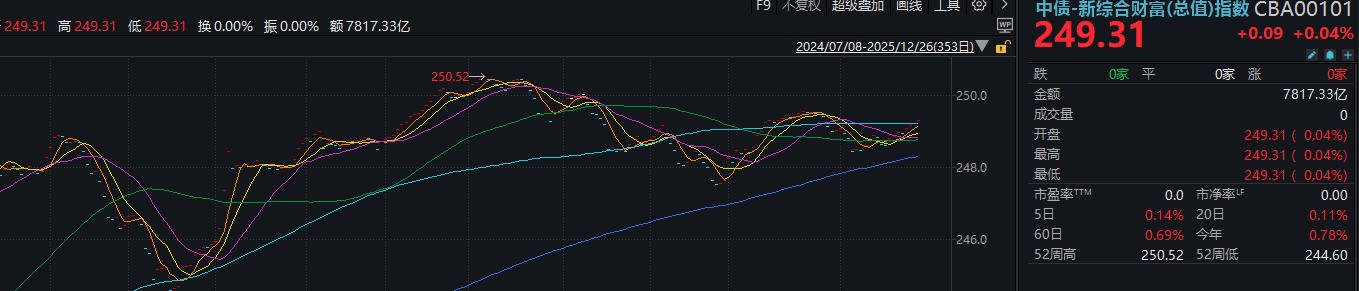
资管机构2026年展望:债市分歧加大、对股市更乐观
2 1 Shi Ji Jing Ji Bao Dao· 2025-12-30 01:36
Group 1: Market Outlook for 2026 - Asset management institutions have mixed views on the bond market for 2026, with many being more optimistic about the stock market [1][2] - The A-share market structure may change slightly in 2026, with technology stocks likely to continue leading, but differentiation is expected [1][8] - The domestic capital market is anticipated to show a pattern of stock and bond resonance upward in 2026 [8] Group 2: Bond Market Insights - There is significant divergence in opinions regarding the bond market, with some institutions believing that the space for bonds in 2026 is limited [2] - The 30-year government bond futures have dropped by 7.39% since July 2025, raising concerns about risks associated with long-term bonds [4] - The bond market is expected to experience low volatility with a slight upward trend in the 10-year bond yield to around 1.8% [4] Group 3: Stock Market Insights - The external environment for the stock market is favorable, with the U.S. Federal Reserve restarting its rate-cutting cycle, potentially providing additional liquidity to the Chinese stock market [7] - The continued low interest rates may drive a shift in wealth allocation from real estate to equities among residents [7] - The financial regulatory authority has eased restrictions on insurance capital entering the stock market, which may enhance investment activity [7] Group 4: Investment Strategies - Investment strategies for 2026 are still being defined, with a focus on stable products and dividend stocks, while higher-risk products may target technology stocks [8] - There is a potential for consumer blue-chip stocks to gain attention as their valuations have become attractive amid a recovering consumption growth [8] - The market is expected to benefit from a combination of U.S. rate cuts and domestic policy support, with bonds likely to return to a focus on fundamental recovery [8]
中国信达(01359.HK):公司章程修订获核准及不再设立监事会
Ge Long Hui· 2025-12-29 13:46
格隆汇12月29日丨中国信达(01359.HK)公告,公司于近日收到金融监管总局下发的《国家金融监督管理 总局关于中国信达资产管理股份有限公司修改公司章程的批覆》(金覆[2025]756号),核准修订后的公司 章程。 公司股东应注意英文版公司章程为中文版的翻译文件。倘若中英文两个版本间出现歧义及╱或不一致, 应以公司章程的中文版为准。鉴于修订后的公司章程已获核准生效,自公司章程获核准日起,公司不再 设立监事会,《中国信达资产管理股份有限公司监事会议事规则》等监事会相关公司治理文件亦同步废 止。甄庆贵、刘力、蔡小强、宫红兵、鲁宝兴、袁良明及周丽华不再担任公司监事,且已确认与公司并 无不同意见,亦无其他事项需要通知本公司股东。公司谨此就各位监事在任职期间为公司做出的贡献致 以衷心的感谢。 ...
哈尔滨银行与中国信达天津市分公司签订债权转让协议
Zhi Tong Cai Jing· 2025-12-29 13:42
Core Viewpoint - Harbin Bank is optimizing its asset structure by transferring non-performing assets to China Cinda Asset Management Co., Ltd. Tianjin Branch for approximately RMB 3.42 billion, with an initial transfer price of about RMB 2.34 billion [1] Group 1: Debt Transfer Agreement - The debt transfer agreement involves the transfer of certain non-performing loans, including principal and interest, with a total book balance of approximately RMB 5.74 billion as of the reference date of October 31, 2025 [1] - The transfer is conducted through a public bidding process, selecting China Cinda Asset Management Co., Ltd. Tianjin Branch as the buyer [1] - The board of directors believes that entering into the debt transfer agreement is beneficial for the company and its shareholders overall [1]
哈尔滨银行(06138)与中国信达天津市分公司签订债权转让协议
智通财经网· 2025-12-29 13:34
Core Viewpoint - Harbin Bank is optimizing its asset structure by transferring non-performing assets to China Cinda Asset Management Co., Ltd. Tianjin Branch for approximately RMB 3.42 billion, with an initial transfer price of about RMB 2.34 billion [1] Group 1: Debt Transfer Agreement - The debt transfer agreement was signed on December 29, 2025, where Harbin Bank (as the transferor) agreed to transfer certain debts to China Cinda Asset Management Co., Ltd. Tianjin Branch (as the transferee) [1] - The transferred debts include the principal and interest, along with other rights related to the debts, totaling a book balance of approximately RMB 5.74 billion as of the benchmark date of October 31, 2025 [1] Group 2: Asset Optimization - The transfer of non-performing assets is aimed at optimizing the company's asset structure, which is considered beneficial for the company and its shareholders [1] - The selection of China Cinda Asset Management Co., Ltd. Tianjin Branch as the buyer was conducted through a public bidding process [1]
香港“兴”观察丨“又是被资金推着跑的一天”——一位香港金融从业者的一日见证
Xin Hua Wang· 2025-12-29 11:57
Core Viewpoint - The Hong Kong capital market is showing signs of recovery, with significant increases in IPO fundraising and trading activity, indicating a positive outlook for the future [1][3]. Group 1: Market Trends - The Hong Kong stock market indices are steadily rising, with IPO fundraising reaching a global peak, totaling 274.6 billion HKD as of December 19, 2023, with 106 companies listed this year [3][5]. - The average daily trading volume of exchange-traded funds (ETFs) has increased by 116% compared to the previous year, reflecting heightened market activity [6]. Group 2: Policy and Regulatory Environment - The People's Bank of China is deepening financial market connectivity between the mainland and Hong Kong, supporting the offshore RMB market and enhancing cross-border financial services [2]. - The China Securities Regulatory Commission has introduced five measures to enhance cooperation with Hong Kong's capital market, including expanding the range of eligible products for the Stock Connect program [3]. Group 3: Sectoral Developments - The launch of the Hang Seng Biotechnology Index futures provides a risk hedging tool for the biotech sector, improving the financing environment for biotech companies [3]. - The introduction of a dedicated listing channel for technology and biotech companies has made it easier for these firms to go public, contributing to a 52% increase in new listings compared to the previous year [5]. Group 4: Future Outlook - The capital market is undergoing structural upgrades, shifting from traditional sectors to a focus on new economy enterprises, which is expected to attract more global capital [5][6]. - The Hong Kong government aims to leverage its institutional advantages to solidify its status as an international financial center, as stated in the Chief Executive's policy address [6].