半导体制造

Search documents
华虹公司:Q3净利1.77亿元,同比下降43.47%
Ge Long Hui A P P· 2025-11-06 09:04
格隆汇11月6日|华虹公司(688347.SH)发布2025年第三季度报告,第三季度实现营业收入45.66亿元,同 比增长21.10%;归属于上市公司股东的净利润为1.77亿元,同比下降43.47%。前三季度累计实现营业收 入125.83亿元,同比增长19.82%;归属于上市公司股东的净利润为2.51亿元,同比下降56.52%。 ...
华虹公司:2025年前三季度计提资产减值准备减利5850.06万元
Xin Lang Cai Jing· 2025-11-06 08:48
华虹公司公告称,董事会审议通过2025年前三季度计提资产减值准备事宜。公司本次计提信用减值损失 510.52万元,计提资产减值损失86394.88万元,转销资产减值损失81055.34万元。计提及转销各项资产 减值准备合计将减少2025年前三季度利润总额5850.06万元。本次计提遵照相关规定,真实反映财务状 况,不涉及会计方法变更,不损害公司和股东利益,不影响正常经营。 ...
商务部回应安世半导体相关问题
券商中国· 2025-11-06 08:21
Core Viewpoint - The Chinese government emphasizes that the Netherlands' interference in ASML's internal affairs has led to turmoil in the global semiconductor supply chain, and calls for constructive solutions to stabilize the situation [1]. Group 1: Government Response - The Chinese Ministry of Commerce has reiterated its stance on the issue of ASML, stating that the Netherlands has not shown a constructive attitude despite China's reasonable requests during negotiations [1]. - The Chinese government holds the Netherlands fully responsible for escalating the global supply chain crisis [1]. - China has approved export license applications from Chinese exporters related to ASML and is working to facilitate the resumption of supply from ASML (China) [1]. Group 2: Call for Cooperation - China urges the Netherlands to adopt a responsible attitude and cease interference in corporate internal affairs to find constructive solutions for the ASML issue [1]. - The Chinese government highlights the importance of maintaining stable and secure global semiconductor supply chains and the broader economic relations between China and the Netherlands [1].

欧洲头大:收拾荷兰的烂摊子,美国没这个能力
Guan Cha Zhe Wang· 2025-11-06 08:02
Core Viewpoint - The article discusses the ongoing crisis involving the Dutch government's seizure of the Chinese company Nexperia, which is causing significant disruptions in the global automotive supply chain, particularly affecting semiconductor production and leading to production cuts among major automakers [1][4]. Group 1: Impact on the Automotive Industry - The seizure of Nexperia has led to a "production crisis" for global automakers, with many companies beginning to scale back production due to the semiconductor supply issues [1]. - Major automotive manufacturers, including those in Europe, are expressing strong opposition to the situation, as the chips produced by Nexperia are critical not only for vehicles but also for various consumer electronics [1][4]. - If the situation remains unresolved in the coming weeks, there are concerns that global manufacturing output will be adversely affected [1][4]. Group 2: Responses from China and the Netherlands - China has indicated a willingness to provide export exemptions for companies facing difficulties, emphasizing a responsible approach to stabilizing the global semiconductor supply chain [2][6]. - The Dutch government has been criticized for its lack of constructive action and for exacerbating the global supply chain crisis, with calls for a resolution to the Nexperia issue [6]. - The EU has reported some progress in discussions regarding the semiconductor supply issue, suggesting that there may be a path forward to mitigate the crisis [4][5]. Group 3: Industry Reactions and Concerns - German automotive suppliers are actively seeking exemptions from Chinese export restrictions and are in communication with Chinese authorities to address the semiconductor supply issues [5]. - There are concerns within the industry regarding the complexity and uncertainty of the exemption application process, which could further delay resolution [5]. - The situation has prompted analysts to warn companies about the need for supply chain diversification to mitigate risks associated with geopolitical tensions [2].
陷“安世半导体”风波,闻泰科技再发利空
Shen Zhen Shang Bao· 2025-11-06 06:57
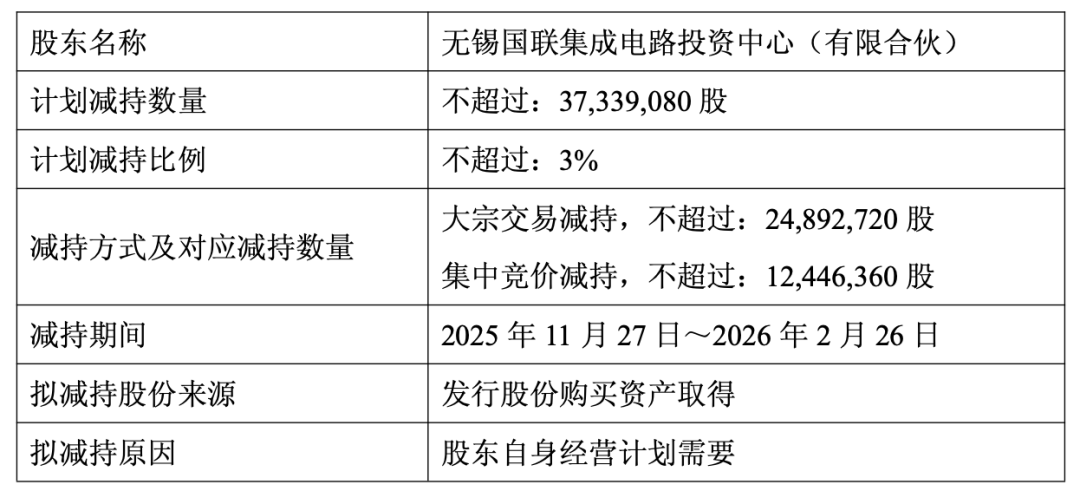
Group 1 - Wentech Technology (600745) announced that its major shareholder, Wuxi Guolian Integrated Circuit Investment Center, plans to reduce its holdings by up to 37,339,080 shares, representing no more than 3% of the company's total share capital [1][2] - The reduction will occur through block trading (up to 24,892,720 shares) and centralized bidding (up to 12,446,360 shares) between November 27, 2025, and February 26, 2026 [1][2] - As of November 5, Wuxi Guolian held 7.77% of Wentech's shares, making it the second-largest shareholder [2] Group 2 - Wentech Technology's stock price fell by 3.9% to 43.08 yuan per share, resulting in a total market capitalization of 53.618 billion yuan [2] - The estimated cash amount from this reduction is approximately 1.6 billion yuan based on the current stock price [2] - This marks the second reduction by Wuxi Guolian in recent months, following a previous announcement on June 5, where it planned to reduce up to 3% of its holdings [2] Group 3 - Wentech Technology is a semiconductor and product integration company, with its subsidiary, Anshi Semiconductor, recently under scrutiny due to a directive from the Dutch government to freeze its assets and intellectual property for one year [3] - Anshi Semiconductor's projected revenue for 2024 is approximately 14.7 billion yuan [3] - In Q3, Wentech reported a revenue of 4.427 billion yuan, a year-on-year decline of 77.38%, while net profit increased by 279.29% to 1.04 billion yuan [3]

荷兰安世半导体,新动态
Sou Hu Cai Jing· 2025-11-06 05:26
Core Viewpoint - The company welcomes the U.S. authorities' decision to suspend the implementation of the so-called "penetration rule" for one year and appreciates China's efforts to restore exports from its factories, ensuring the continued flow of critical mature process chips to the global market [1] Group 1 - The company announced that it suspended direct wafer supply to its Chinese factory due to non-payment of wafer fees on October 29, 2025, but has not completely halted wafer shipments, with all its factories in Europe and other regions of Asia operating normally [1] - The company denied the reinstatement of Zhang Xuezheng as CEO, stating that strategic decisions such as relocating parts of the business or dismissing executives require approval from the Dutch government and will continue for one year [1]
荷兰安世半导体回应供应链恢复进展:对美国当局暂停实施所谓的“穿透规则”一年表示欢迎,否认张学政恢复CEO职务
Ge Long Hui· 2025-11-06 05:01
Core Insights - The company welcomes the U.S. authorities' decision to suspend the implementation of the so-called "penetration rule" for one year [1] - The company appreciates China's efforts to restore exports from its factories and foundries, ensuring that critical mature process chips continue to flow into the global market [1] - The company is awaiting further details regarding the conditions, standards, and procedures for easing export restrictions [1] Company Operations - On October 29, 2025, the company suspended direct wafer supply to its Chinese factory due to non-payment of wafer fees, but it has not completely halted wafer shipments [1] - All factories in Europe and other regions in Asia continue to operate normally [1] Management and Strategic Decisions - The company denies the reinstatement of Zhang Xuezheng as CEO [1] - Strategic decisions, such as relocating parts of the business or dismissing executives, require approval from the Dutch government and will continue for one year [1]
安世芯片风波,又一车企将减产!
芯世相· 2025-11-06 04:38
Core Viewpoint - Nissan is planning to reduce the production of its popular Rogue SUV in Japan due to a shortage of chips from Nexperia, indicating ongoing supply chain challenges in the automotive industry [3][4]. Group 1: Nissan's Production Adjustments - Nissan will cut the production of approximately 900 Rogue SUVs starting the week of November 10, 2023, at its Kyushu plant due to semiconductor supply delays [3]. - The company is also assessing whether to adjust production plans for the week of November 17, 2023, as the situation remains fluid [3][4]. - Nissan's Rogue model, known as "X-Trail" in Japan and the UK, was one of its best-selling vehicles in the U.S., with nearly 246,000 units sold last year [3]. Group 2: Industry-Wide Impact - Other automakers have also responded to the chip shortage, with Mercedes-Benz stating that short-term supply is secured but reliable forecasts are difficult due to the complex supply chain [5]. - General Motors reported no impact on production, while Volkswagen acknowledged potential future impacts despite current stability [5]. - Honda has begun reducing or pausing production at some North American plants due to chip shortages, with its Celaya plant in Mexico already halted [5]. Group 3: Global Supply Chain Dynamics - The German government is actively lobbying China to protect the interests of German customers of Nexperia, highlighting the international dimensions of the semiconductor supply crisis [7]. - Companies like ZF Group are collaborating with Chinese authorities to ensure chip deliveries, indicating a proactive approach to mitigate supply chain disruptions [7]. - Recent regulatory changes in China have allowed for some flexibility in semiconductor exports, but special permits are still required [7].


会议酒店协议价及预定方式通知 | 2025异质异构集成前沿论坛
势银芯链· 2025-11-06 02:54
Core Points - The 2025 Heterogeneous Integration Frontier Forum will be held from November 17 to 19, 2025, in Ningbo, organized by the Yongjiang Laboratory in collaboration with TrendBank and the Ningbo Electronic Industry Association [2][41]. - The forum aims to discuss advancements in heterogeneous integration technologies and their applications in micro-nano manufacturing and semiconductor packaging [20][41]. Event Details - The forum will take place at the Ningbo Pan Pacific Hotel, with an expected attendance of 300 to 500 participants [41]. - A verification line for information materials and micro-nano device preparation will also be inaugurated during the event [2]. Accommodation Information - Special hotel rates have been arranged for attendees at the Ningbo Pan Pacific Hotel, with prices ranging from 350 to 600 RMB per night depending on room type [6][10]. - Additional nearby hotels include the Ningbo Radisson Hotel and the Ningbo Yidong Howard Johnson Hotel, with varying rates and availability [8][11]. Agenda Highlights - The forum will feature a series of keynote speeches, panel discussions, and workshops focusing on topics such as micro LED technology, advanced packaging, and the latest innovations in semiconductor manufacturing [19][36]. - Notable speakers include industry leaders and researchers from various institutions, discussing trends, challenges, and technological advancements in the field [20][30][36]. Registration and Fees - Registration for the forum is available at a fee of 2500 RMB per person, with early bird discounts and student rates offered [42]. - The registration includes access to conference materials, lunch, and a gala dinner on November 18 [42].

“不止稀土,中国还有三招能掐住美国”
Guan Cha Zhe Wang· 2025-11-06 01:57
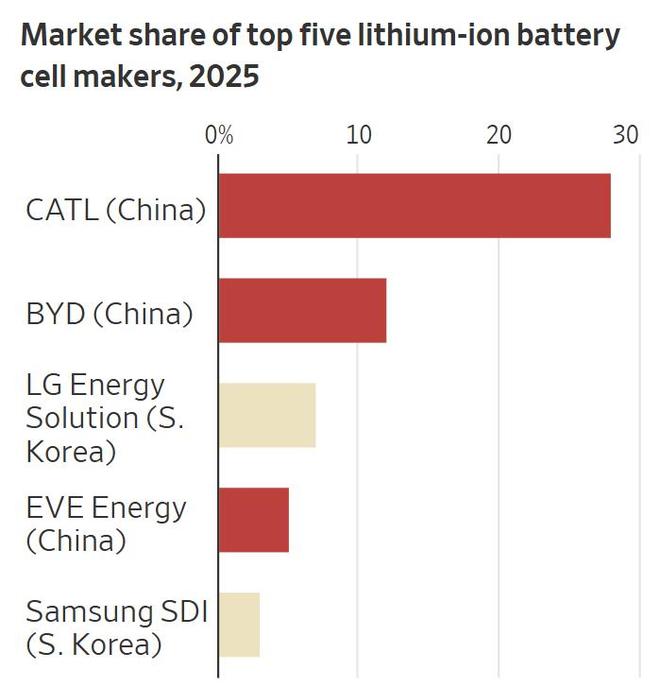
Core Viewpoint - The article discusses China's strategic dominance in critical industries such as rare earths, lithium-ion batteries, semiconductors, and pharmaceuticals, emphasizing its ability to leverage this position against the U.S. amid ongoing geopolitical tensions [1][14]. Group 1: Rare Earths and Supply Chain Control - China has established a leading position in the supply chain for rare earths, which are crucial for both military and civilian applications, and has implemented export controls as a common international practice [1]. - The U.S. media has suggested that China's control over rare earths has forced negotiations with former President Trump, highlighting the perceived "weaponization" of supply chains [1][14]. Group 2: Lithium-Ion Batteries - China produces 79% of the world's battery cathode materials and 92% of anode materials, controlling 63% of the market for refined lithium products, 80% of refined cobalt, and 98% of refined graphite [2]. - The two largest battery manufacturers globally are Chinese companies, CATL and BYD, which dominate the electric vehicle and energy storage markets [5]. Group 3: Semiconductor Industry - China accounts for approximately one-third of the global capacity for mature process semiconductors, which are essential for automotive, consumer electronics, and defense industries [5]. - The country has invested billions to enhance its semiconductor manufacturing capabilities, aiming for self-sufficiency [5]. Group 4: Pharmaceutical Sector - A significant portion of active pharmaceutical ingredients (APIs) used in U.S. medications is sourced from China, including key ingredients for widely used drugs like acetaminophen and ibuprofen [12]. - China has prioritized the development of its pharmaceutical and medical device industries, aiming to innovate and reduce reliance on foreign imports [12][14]. Group 5: Strategic Self-Sufficiency - Over the past two decades, China has systematically pursued economic self-sufficiency, reducing dependence on Western imports and establishing a robust industrial base [14][16]. - The Chinese government continues to strengthen its industrial capabilities, emphasizing the importance of a resilient supply chain and a modernized manufacturing system [14].