石化

Search documents
PP日报:震荡上行-20251022
Guan Tong Qi Huo· 2025-10-22 09:54
Report Industry Investment Rating - Not provided Core Viewpoint - The PP market is expected to show a weak and volatile trend. Although the downstream is in the peak season, the peak - season demand is lower than expected, and there are concerns about economic growth and the lack of actual anti - involution policies in the PP industry [1] Summary by Relevant Catalogs Market Analysis - PP downstream开工率 increased by 0.09 percentage points to 51.85% week - on - week, remaining at a relatively low level in the same period over the years. The plastic weaving开工率 remained flat at 44.26% week - on - week, and plastic weaving orders continued to decline slightly, slightly lower than the same period last year. On October 22, some overhauled devices such as Zhejiang Petrochemical 4PP restarted, and the PP enterprise开工率 rose to around 80.5%, at a moderately low level. The production ratio of standard wire drawing increased to around 27%. The petrochemical inventory accumulation during the National Day this year was similar to previous years, and the current petrochemical inventory is at a neutral level in the same period in recent years. The crude oil price may fluctuate more due to the upcoming Sino - US economic and trade consultations. There are new capacity additions, and recent overhauled devices have increased. The downstream is in the peak season, but the peak - season demand is lower than expected, and there are concerns about economic growth and the lack of anti - involution policies [1] Futures and Spot Market Conditions - Futures: The PP2601 contract decreased in positions and fluctuated upwards, with a low of 6575 yuan/ton, a high of 6642 yuan/ton, and finally closed at 6619 yuan/ton, below the 20 - day moving average, up 0.72%. The position decreased by 15,845 lots to 633,255 lots [2] - Spot: Most PP spot prices in various regions were stable, with wire drawing quoted at 6390 - 6630 yuan/ton [3] Fundamental Tracking - Supply: On October 22, some overhauled devices such as Zhejiang Petrochemical 4PP restarted, and the PP enterprise开工率 rose to around 80.5%, at a moderately low level [4] - Demand: As of the week of October 17, the PP downstream开工率 increased by 0.09 percentage points to 51.85% week - on - week, remaining at a relatively low level in the same period over the years. The plastic weaving开工率 remained flat at 44.26% week - on - week, and plastic weaving orders continued to decline slightly, slightly lower than the same period last year [4] - Inventory: The petrochemical early - morning inventory increased by 270,000 tons during the National Day holiday, decreased by 10,000 tons to 780,000 tons on Wednesday, 20,000 tons lower than the same period last year. The petrochemical inventory accumulation during the National Day this year was similar to previous years, and the current petrochemical inventory is at a neutral level in the same period in recent years [4] Raw Material End - The Brent crude oil 01 contract rose to $62/barrel, and the CFR propylene price in China remained flat at $775/ton week - on - week [5]
大庆石化:新型长链支化聚乙烯树脂新品订单如期交付客户
Zhong Guo Fa Zhan Wang· 2025-10-22 09:28
Core Insights - China National Petroleum Corporation's Daqing Petrochemical successfully produced two new types of long-chain branched polyethylene resin, with the first batch delivered to customers in Northeast China [1] - The production of these new products marks a shift towards high-end and refined product structures, expanding into niche markets [1][2] Group 1: Production Achievements - The continuous production at the full-density II unit achieved a total output of nearly 1,500 tons [1] - The new products are customized specialty resins aimed at applications in greenhouse films and packaging films [1] Group 2: Technical Enhancements - The technical team optimized the production technology plan based on previous trial production experiences, addressing potential risks during the reaction process [2] - Detailed emergency measures and training for operational staff were implemented to ensure smooth production [2] Group 3: Market Competitiveness - The newly developed polyethylene resins exhibit superior transparency and mechanical properties compared to conventional grades, positioning them to replace some high-pressure polyethylene resins [1] - The successful production and upcoming market application trials are expected to enhance Daqing Petrochemical's competitiveness in the high-end polyethylene resin sector [2]

三房巷:为全资子公司提供1.3亿元连带责任保证担保
Xin Lang Cai Jing· 2025-10-22 09:06
Core Viewpoint - The company has signed a maximum guarantee contract with Guangfa Bank Jiangyin Branch, providing joint liability guarantee for its wholly-owned subsidiary, Jiangsu Helen Petrochemical Co., Ltd., with a maximum principal debt amount of 130 million yuan [1] Group 1 - The guarantee was re-signed due to the expiration of the original guarantee, and there is no counter-guarantee involved [1] - The company has previously determined that the mutual guarantee limit among its subsidiaries will not exceed 11 billion yuan [1] - As of the announcement date, the total external guarantee amount by the company and its controlling subsidiaries is 8.633 billion yuan, which accounts for 149.60% of the most recent audited net assets, with no overdue guarantees [1]

中国化工企业有望重塑化工产业格局,石化ETF(159731)逆势上行
Mei Ri Jing Ji Xin Wen· 2025-10-22 03:13
Core Viewpoint - The China Petroleum and Chemical Industry Index has shown a slight increase, with leading stocks such as Hengyi Petrochemical and China National Offshore Oil Corporation driving the gains. The structural optimization of supply is anticipated, with a focus on resilient and advantageous sectors [1] Group 1: Market Performance - On October 22, the China Petroleum and Chemical Industry Index opened lower but rose approximately 0.15% [1] - Key stocks leading the index include Hengyi Petrochemical, Rongsheng Petrochemical, Tongkun Co., and China National Offshore Oil Corporation [1] - The Petrochemical ETF (159731) has followed the index's upward trend, highlighting its value positioning [1] Group 2: Supply Side Dynamics - Domestic policies frequently emphasize the need for structural optimization on the supply side, particularly against excessive competition [1] - Rising raw material costs and capacity impacts from Asia have led to shutdowns and capacity exits among European and American chemical companies [1] - Short-term geopolitical tensions have increased uncertainty in overseas chemical supply [1] Group 3: Long-term Outlook - China's chemical industry chain possesses a clear competitive advantage, driven by significant cost benefits and ongoing technological advancements [1] - Chinese chemical companies are rapidly filling gaps in the international supply chain, potentially reshaping the chemical industry landscape [1] Group 4: ETF Composition - The Petrochemical ETF (159731) and its linked funds closely track the China Petroleum and Chemical Industry Index [1] - The basic chemical industry accounts for 61.93% of the index, while the petroleum and petrochemical industry represents 30.84% [1] - The top ten weighted stocks in the index include Wanhua Chemical, China Petroleum, and China National Offshore Oil Corporation, collectively accounting for 55.12% of the index [1]
超千亿投资推进电网建设
Liao Ning Ri Bao· 2025-10-22 01:01
Core Viewpoint - The construction of the Liaoning power grid is a key initiative during the "14th Five-Year Plan" period, aimed at enhancing energy supply and supporting industrial transformation in the region [1][2]. Group 1: Infrastructure Development - The "14th Five-Year Plan" emphasizes the construction of a robust power grid, with over 100 personnel working on the 500 kV Liaobin transmission and transformation project [1]. - National Grid Corporation of China has invested over 100 billion yuan in Liaoning since the beginning of the "14th Five-Year Plan," marking a historical high in investment [1]. - The completion of 10 new 500 kV substations has significantly improved Liaoning's power supply capacity, increasing from 40 million kW in 2020 to a projected 50 million kW by 2025 [2]. Group 2: Technological Innovation - Liaoning's power grid has integrated 16 types of original technology achievements, achieving full domestic production across the supply chain [2]. - The province has successfully implemented the world's first large-capacity black start test for a city grid, enhancing the resilience of the power system under extreme conditions [2]. - Innovative technologies such as the first domestic 66 kV static synchronous compensator and the first 10 kV superconducting fault current limiter have been introduced [2]. Group 3: Service Improvement - The smart distribution network has stabilized voltage levels, allowing for consistent power supply even during peak demand periods [3]. - The "Three Zero" service initiative has benefited 491,000 users, saving a total of 6.384 billion yuan in electricity costs [3]. - Continuous improvements in power supply services have enhanced user satisfaction and contributed to the overall development of the region [3].
恒逸石化:公司本次回购股份已完成
Zheng Quan Ri Bao Zhi Sheng· 2025-10-21 13:45
(编辑 姚尧) 证券日报网讯 10月21日晚间,恒逸石化发布公告称,截至2025年10月20日,公司本次回购股份已完 成。在回购期内,公司通过回购专用证券账户以集中竞价交易方式累计回购(第五期)股份数29, 240,840股,占公司总股本的0.81%。 ...

创新潮涌逐浪高——以创新驱动引领高质量发展一线见闻
Xin Hua Wang· 2025-10-21 12:52
Group 1 - The Tianjin Nangang Ethylene project, a key national project, is set to be completed and put into operation in November 2024, with a total investment exceeding 30 billion yuan, providing 4 million tons of high-end chemical products and fine chemical raw materials annually, driving the development of a trillion-yuan downstream industry [1] - The Tianjin Nangang Ethylene is reshaping the petrochemical industry through "intelligent + big data" approaches, continuously improving production efficiency and product quality [3] - Starting from January 2025, Tianjin Nangang Ethylene will operate entirely on green electricity, becoming the first fully green electricity factory in Tianjin and China Petrochemical, setting a new benchmark for the industry's green transformation [3] Group 2 - In Quzhou, Zhejiang Province, enterprises are ramping up production to meet annual targets, with Zhejiang Zhefeng New Materials Co., Ltd. actively expanding into high-end specialty paper sectors while maintaining traditional advantages [5] - In the quartz technology sector, Zhejiang Fuled Quartz Technology Co., Ltd. has established sales management departments in Europe, Southeast Asia, and the Americas, achieving seamless integration with international markets [8] Group 3 - In Chipping District, Shandong Province, embryo egg production enterprises are busy processing and shipping products to biopharmaceutical companies, indicating a thriving industry [7] - The Chipping District has increased support for livestock breeding enterprises, enhancing product value by upgrading poultry products from food-grade to pharmaceutical-grade [10] Group 4 - The China International Digital Economy Expo, held from October 17 to 19 in Shijiazhuang, Hebei, focused on the theme "Trusted Data Empowering Industrial Development," showcasing trends and research achievements in the digital economy [12] - In Faku County, Liaoning Province, a new logistics network has been established in collaboration with China Post, utilizing unmanned technology to enhance rural logistics and solve the "last mile" delivery challenge [13]

PP日报:震荡运行-20251021
Guan Tong Qi Huo· 2025-10-21 10:24
Report Industry Investment Rating - No specific industry investment rating provided Core Viewpoint - The PP market is expected to show a weak and volatile trend due to factors such as supply - demand pressure, cost changes, and macro - economic concerns [1] Summary by Related Catalogs 行情分析 - PP downstream开工率环比回升0.09个百分点至51.85%,处于历年同期偏低水平,其中塑编开工率环比持平于44.26%,订单略减且略低于去年同期 [1] - 10月21日新增检修装置,PP企业开工率下跌至80%左右,标品拉丝生产比例下降至25%左右 [1] - 今年国庆石化累库幅度与往年类似,目前石化库存处于近年同期中性水平 [1] - 成本端原油价格下跌,供应上新增产能投产,近期检修装置增加,下游进入旺季但需求不及预期,贸易商让利促成交,中美贸易摩擦加剧对经济担忧,PP产业反内卷政策未落地,预计PP偏弱震荡 [1] 期现行情 期货方面 - PP2601合约减仓震荡运行,最低价6530元/吨,最高价6619元/吨,收盘于6583元/吨,在20日均线下方,跌幅0.17%,持仓量减少5749手至649100手 [2] 现货方面 - PP各地区现货价格多数下跌,拉丝报6390 - 6630元/吨 [3] 基本面跟踪 - 供应端10月21日新增检修装置,PP企业开工率下跌至80%左右,处于中性偏低水平 [4] - 需求端截至10月17日当周,PP下游开工率环比回升0.09个百分点至51.85%,处于历年同期偏低水平,塑编开工率环比持平,订单略减 [4] - 国庆节假期石化早库环比增加27万吨,周二石化早库环比减少1万吨至79万吨,较去年同期低3.5万吨,目前石化库存处于近年同期中性水平 [4] - 原料端布伦特原油01合约下跌至61美元/桶下方,中国CFR丙烯价格环比持平于775美元/吨 [5]
多家石化企业深陷债务危机
Zhong Guo Hua Gong Bao· 2025-10-21 10:08
Group 1 - The Latin American petrochemical industry is under significant pressure despite entering the summer demand season, with overall demand showing no signs of improvement [1] - Major petrochemical companies in the region are exploring financial solutions, with a high likelihood of debt restructuring due to ongoing demand weakness [1][2] - Brazil's petrochemical sector is facing deteriorating conditions, while Mexico's petrochemical companies are faring better due to favorable trade policies [1] Group 2 - Brazilian company Braskem is experiencing severe financial difficulties, leading to a significant drop in its stock price after announcing the hiring of external advisors to explore financial options [2] - Braskem's main products, including polyethylene (PE), polypropylene (PP), and polyvinyl chloride (PVC), are suffering from global supply surplus and price pressures [2] - Unigel, another Brazilian producer, has recently filed for judicial recovery after prolonged debt restructuring negotiations, while Unipar is one of the few companies showing signs of financial recovery [2] Group 3 - Mexico's state-owned oil giant Pemex is burdened with $100 billion in debt, which poses a significant challenge for the country's petrochemical industry [3] - The Mexican government plans to increase import tariffs on various chemicals and polymers, which may help local producers improve their financial conditions [3][5] - If Pemex can restore healthy operations, it could potentially unlock up to $50 billion in investments for the Mexican chemical industry [3] Group 4 - Analysts from BTG Pactual highlight potential opportunities for Mexican chemical producers Alpek and Orbia, despite the overall weak market conditions [4] - Alpek's profitability is supported by declining costs of key raw materials, even as its main markets remain sluggish [4] - The Mexican government's trade policies and the introduction of an economic support plan in 2026 may provide relief for the local petrochemical industry [5]
中国首套,在钦州产出!
Sou Hu Cai Jing· 2025-10-21 09:51
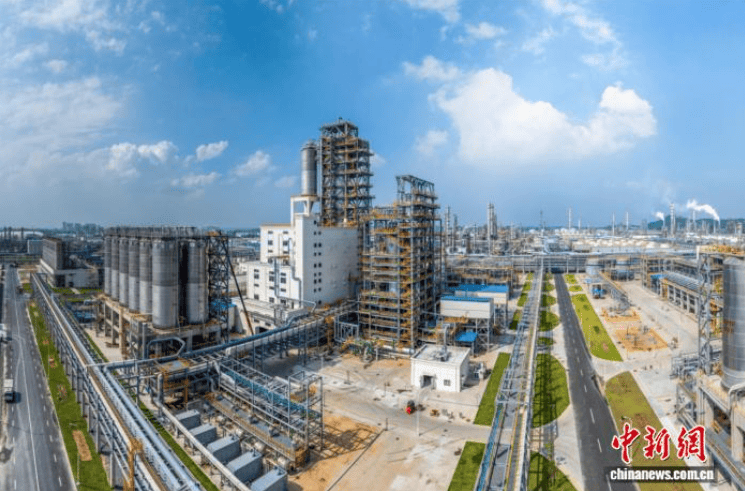
Core Insights - The first batch of qualified products from the 400,000 tons/year polypropylene plant of China National Petroleum Corporation (CNPC) in Qinzhou, Guangxi, was successfully produced on the 16th, marking the successful initial operation of China's first plant capable of producing a full product range of polypropylene [1][3] Group 1 - The new polypropylene plant covers a wide range of products, including homopolymer, ethylene random copolymer, impact copolymer, and butene series (butene random copolymer and butene-ethylene ternary copolymer), totaling over 270 product grades [3] - The plant is designed to meet diverse market demands for differentiated and high-quality polypropylene materials, with applications in sectors such as filament, film, and injection molding, providing quality raw material support for multiple downstream industries [3] - The construction of the plant was undertaken by China National Petroleum Corporation Jilin Chemical Engineering Construction Co., Ltd., with groundbreaking on December 10, 2023 [3] Group 2 - The commissioning of this plant enhances the security and autonomy of China's petrochemical supply chain [3] - The efficient capacity release from the plant is expected to optimize the supply structure of China's chemical products and reduce reliance on imports of high-end materials [3]