
金融科技

Search documents
中国证券报作品入选“2025中国经济媒体融合报道典型案例”
Zhong Guo Zheng Quan Bao - Zhong Zheng Wang· 2025-12-20 23:49
12月20日,由中国经济传媒协会主办,传媒茶话会、中国经济传媒协会新媒体分会承办的"2025中国经济媒体融合发展交流大会"在北京召开。会上公布 了"2025年中国经济媒体融合发展典型案例",中国证券报推荐的《信用卡违规套现调查!拉卡拉POS机里的"假商户"》成功入选"2025中国经济媒体融合 报道典型案例"。 党的二十届三中全会后,媒体融合有了全新的战略和使命,主流媒体系统性变革成为媒体深度融合发展的新指引与新方向,标志着中国媒体融合进入新的 历史阶段。这一年,经济媒体行业深入贯彻落实党中央决策部署,持续探索媒体融合发展,新的业态、场景、案例、模式不断涌现。 融合报道典型案例紧扣国家经济发展主线,深耕宏观政策解读与民生经济热点。专家评审委员会提到,22个获评"2025中国经济媒体融合报道典型案例"的 新闻作品,综合运用多媒体手段报道,主题鲜明、内涵丰富、形式新颖,为行业在新媒体时代实现价值引领,树立了鲜活范式。 其中,中国证券报《信用卡违规套现调查!拉卡拉POS机里的"假商户"》,以暗访形式记录销售人员违规全过程,实现对POS机套现黑产的实证式揭露, 引发了社会对行业乱象的警惕,更在普及金融知识、推动行业规范 ...


陆家嘴财经早餐2025年12月21日星期日
Wind万得· 2025-12-20 22:19
Regulatory Changes - The internet platform pricing is facing strong regulation with the issuance of the "Internet Platform Pricing Behavior Rules" by the National Development and Reform Commission, the State Administration for Market Regulation, and the National Internet Information Office, effective from April 10, 2026. The rules prohibit unreasonable restrictions on pricing behavior by platform operators and mandate that they cannot sell goods or services below cost [1] Technology Developments - Moore Threads held the first "MUSA Developer Conference" in Beijing, launching the new GPU architecture "Huagang" and two chips "Huashan" and "Lushan" based on this architecture. The new architecture boasts a 50% increase in computing density and a 10-fold improvement in energy efficiency, supporting large-scale intelligent computing clusters [1] - The global first commercial supercritical carbon dioxide power generation unit has successfully commenced operation in Guizhou, enhancing power generation efficiency by over 85% and net power output by over 50% [9] Financial Market Insights - The A-share IPO market is expected to see 114 companies listed in 2025, raising a total of 129.6 billion yuan, a 94% year-on-year increase, with an average first-day closing increase of 257% [5] - The ETF market is experiencing significant activity, with the A500 ETF reaching a scale of 245.935 billion yuan and accounting for nearly 70% of the net inflow into stock ETFs [5] Agricultural and Industrial Developments - The Ministry of Agriculture and Rural Affairs has registered 1,048 new varieties of specialty crops, with 98.5% being domestically bred [6] - The Inner Mongolia Silicon Source New Energy Electronic Materials Technology Co., Ltd. has officially put into production a project for the annual output of 20,000 tons of silicon-carbon anode materials, achieving a global first in the large-scale preparation of CVD silicon-carbon anode materials [9] International Relations and Economic Policies - The U.S. government has reached agreements with nine pharmaceutical companies to lower drug prices for federal programs, aiming to align U.S. drug prices with those in other wealthy countries [14] - The Reserve Bank of India has approved a proposal to shift to a risk-based pricing system for deposit insurance, marking a significant change in the current uniform premium model [15]

提高金融服务的便利性和竞争力
Jing Ji Ri Bao· 2025-12-20 22:07
Core Viewpoint - The People's Bank of China and six other departments have jointly issued an action plan to promote the high-quality development of digital finance, emphasizing the importance of digital transformation in financial institutions to enhance service convenience and competitiveness [1] Group 1: Digital Finance Development - The integration of digital technology and the financial industry is accelerating, leading to new digital finance business models that improve service convenience and competitiveness [2] - The financial technology market in China is projected to reach 394.96 billion yuan in 2024, with a year-on-year growth of 9.7% [2] - Major state-owned banks reported a financial technology investment of 125.4 billion yuan in 2024, reflecting a 2.15% increase year-on-year, maintaining a high investment level [2] Group 2: Financial Ecosystem and Infrastructure - As of June this year, 836 institutions have registered 2,664 mobile financial apps, significantly enhancing the convenience of financial services [2] - In 2024, banks processed 301.668 billion electronic payment transactions, amounting to 342.699 trillion yuan, with online payments accounting for 75.435 billion transactions worth 27.9832 trillion yuan, and mobile payments totaling 210.98 billion transactions worth 56.370 trillion yuan [2] Group 3: Challenges and Opportunities - Despite being a major financial power with the largest banking system and significant market shares in insurance, stocks, and bonds, there are still gaps in financial support for key areas like domestic demand expansion and innovation [3] - The application of digital technology in finance is uneven, with some small and medium-sized financial institutions facing challenges in funding and talent, leading to slow digital transformation [3] - Digital finance is crucial for supporting the integration of digital and real economies, and there is a need to enhance financial service quality and efficiency [3] Group 4: Strategic Recommendations - Promote deep integration of digital and real economies by increasing financial support in areas like original innovation and key technology innovation [4] - Encourage financial institutions to invest in technology and talent, utilizing digital technology to enhance financial products and services [4] - Optimize financial service supply to align with the demands of the digital economy, including the development of innovative financial products and services [4] - Uphold ethical principles in technology application, ensuring consumer rights are protected through ethical reviews of new technology developments [4]
White House economist says ‘massive refund checks’ are coming to Americans in biggest refund cycle in history
Yahoo Finance· 2025-12-20 22:05
Core Insights - The U.S. stock market has shown significant growth, with the S&P 500 up approximately 16% year-to-date and around 84% over the past five years, indicating a strong wealth creation engine for households [1] - The upcoming tax refund season is expected to be unprecedented, particularly benefiting workers who rely on tips and overtime, as a result of the "One Big Beautiful Bill" [4][3] - Investment strategies for potential cash windfalls include stock market investments, real estate, and high-yield savings accounts [16][11] Investment Opportunities - The S&P 500 index fund is recommended as a solid investment option for most individuals, providing exposure to 500 of America's largest companies and instant diversification [5][6] - Real estate is highlighted as a productive asset class, with the potential for consistent rental income and appreciation, especially during inflationary periods [10][11] - Crowdfunding platforms like Arrived and Mogul allow investors to enter the real estate market with minimal capital, offering fractional ownership in rental properties [12][14] Tax Refund Insights - The tax changes from the "One Big Beautiful Bill" are expected to result in substantial refunds for workers, particularly those in tip-based or overtime roles, with estimates suggesting refunds could be worth a couple of thousand dollars [2][3] - The timing of the tax changes means many individuals may not have accounted for these benefits in their previous tax filings, leading to a significant refund cycle [3][4] Savings Strategies - High-yield savings accounts (HYSAs) are recommended for individuals looking to make their cash work for them, offering significantly higher interest rates compared to traditional savings accounts [16][17] - Online banks can provide competitive returns, sometimes up to ten times the national average interest rate on savings accounts [17]
Infini 创始人 Christian:好的创业者要有舍弃的勇气
Xin Lang Cai Jing· 2025-12-20 12:56
Core Insights - The article discusses the evolution of the fintech industry and the challenges faced by new entrepreneurs, particularly in the context of trust and risk management in financial services [2][6][20] Group 1: Industry Challenges - The fintech landscape has shifted, emphasizing the importance of trust over efficiency, as a single incident can destroy credibility [2][3] - New entrepreneurs are often learning on the job, adapting to a more complex regulatory environment while trying to innovate [2][3] - The need for a transparent payment system is highlighted, as many startups struggle with traditional banking processes that hinder their growth [11][20] Group 2: Entrepreneurial Insights - Successful entrepreneurs must be willing to pivot and abandon projects that do not meet their long-term goals, even if they are currently performing well [3][13] - Understanding customer needs and providing timely support is crucial for building trust and loyalty in a competitive market [19][20] - The importance of risk management is emphasized, with a focus on educating users about financial products rather than just offering better options [7][20] Group 3: Product Development and Strategy - Infini aims to create a financial operating system that provides a seamless experience for users, particularly in payment processing and fund management [13][21] - The company recognizes the potential of stablecoins in enhancing payment efficiency and expanding market reach, especially for small businesses and independent developers [16][23] - A shift from traditional asset management to a focus on payment solutions reflects a strategic pivot to meet current market demands [7][20] Group 4: Team and Management Philosophy - The article stresses the importance of team dynamics and the need for leaders to be actively involved in operations to foster a strong organizational culture [30][32] - Continuous evaluation and adjustment of team composition are essential for maintaining high performance and adaptability in a startup environment [32][33] - The selection of team members based on curiosity, long-term commitment, and transparency is crucial for building a resilient organization [33][34]


万鑫AI策略解析专栏|如何理解AI选金逻辑?
Sou Hu Cai Jing· 2025-12-20 11:45
Core Insights - The article discusses the rising interest in gold as it surpasses $2400, questioning the ability of AI systems to understand and predict gold market dynamics amidst volatility and geopolitical tensions [1] - Wanxin AI reveals its underlying logic for gold investment, emphasizing not just the selection of gold but also the methodology behind it [1] Technical Foundation - Wanxin AI has accumulated over 10 years of futures market data, including various inputs such as K-line trends, ETF fund flows, central bank actions, CFTC positions, news sentiment, and policy events [1] - The platform employs a composite model architecture of "time series Transformer + reinforcement learning (RL)" to quickly adjust strategy weights based on macro disturbances like Federal Reserve rate decisions and inflation expectations [1] - The system treats gold as an asset reflecting macro fluctuations and risk aversion, assessing its "allocation cost-effectiveness" in different market phases based on event impact lags and historical success rates [1] Strategy Structure - Unlike many platforms that offer single-factor predictions, Wanxin AI adheres to a "multi-strategy + multi-cycle" integration design [2] Strategy System - The AI system automatically generates signals, adjusts positions, manages risks, and continuously learns in high-frequency trading to correct errors and reconstruct weights, ensuring adaptability across various market environments [3] Risk Control Design - Wanxin AI emphasizes transparency in trading, having obtained multiple licenses from the Hong Kong Securities and Futures Commission, and supports a T+0 withdrawal mechanism [5] - All signal generation, risk control triggers, and stop-loss paths are logged for third-party audits and regulatory reporting [5] User Engagement - Users receive monthly briefings on AI strategy factors, aimed at making the AI's decision-making process understandable, which is seen as a step towards building financial trust [6] Conclusion - Wanxin AI does not promote speculative trading in gold but aims to leverage AI technology to help users identify optimal entry and exit points, fostering a systematic understanding of risk and rational engagement [7] - The strategy models include trend-following, volatility arbitrage, event-driven, and multi-cycle optimization mechanisms [8] - The focus is on the best-performing strategy combinations and the main driving factors for position building, adjustment, and closure [9] - The founder emphasizes that the value of AI lies in empowerment rather than wealth creation, aiming to transition inclusive finance from storytelling to logical understanding [10]

全球稳定币监管成型,可在自贸区试点“中国方案”
Sou Hu Cai Jing· 2025-12-20 11:44
Core Viewpoint - The article emphasizes the need for China to develop a unique "Chinese stablecoin solution" that serves the real economy while ensuring financial security and monetary sovereignty, especially in light of global developments in stablecoin legislation and the recent U.S. "GENIUS Act" [2][3][4]. Group 1: Global Context and Legislative Developments - The U.S. "GENIUS Act," passed on July 17, 2025, is the first federal law specifically addressing payment stablecoins, providing a compliance pathway and signaling the significant impact of digital currencies on global financial governance [3]. - The act aims to maintain the dominance of the U.S. dollar in the cryptocurrency space, requiring stablecoin issuers to hold nearly 80% of reserves in short-term U.S. Treasury securities, thereby creating a substantial and ongoing demand for U.S. debt [3]. - The European Union's MiCA legislation, passed in October 2022, focuses on risk prevention and systemic risk management, contrasting with the U.S. approach [3]. Group 2: Hong Kong's Role and China's Opportunities - Hong Kong is positioned as a testing ground for cryptocurrency policies, aligning with U.S. regulatory dynamics while maintaining its currency peg to the U.S. dollar [4]. - The article advocates for China to leverage experiences from the U.S., EU, and Hong Kong to create a distinct regulatory framework for a "Renminbi stablecoin" that supports the real economy and safeguards financial sovereignty [4][5]. - The approval of the stablecoin regulatory framework in Hong Kong on August 1, 2025, marks a significant step in establishing it as a key financial hub for cryptocurrency in Asia [5]. Group 3: Stablecoin Applications and Trade - Stablecoins are increasingly being utilized in international trade, particularly in regions with volatile currencies, providing a low-cost and efficient payment method [6]. - China's manufacturing sector, which accounts for nearly 30% of global output, and its status as the world's largest trading nation, present a strong case for integrating stablecoins into cross-border payment systems [7]. - The potential for a Renminbi stablecoin to enhance the internationalization of the currency and supplement existing cross-border settlement mechanisms is highlighted [7]. Group 4: Recommendations for Implementation - The article suggests piloting stablecoin applications in Free Trade Zones (FTZs) such as Shenzhen Qianhai and Hainan Free Trade Port to cautiously explore regulatory frameworks [9]. - Specific recommendations include establishing a "cross-border fintech laboratory," creating a stablecoin "white list," and encouraging offshore Renminbi stablecoin trials to facilitate trade and payment efficiency [10][11]. - A focus on building a robust regulatory technology platform and enhancing blockchain infrastructure is essential for effective monitoring and compliance in stablecoin transactions [12]. Group 5: Risk Management and Compliance - The establishment of strict entry requirements for institutions and individuals participating in stablecoin transactions is crucial, limiting participation to compliant entities [13]. - Regular audits of reserve assets by third-party firms and transparent reporting are necessary to ensure the security and adequacy of stablecoin reserves [13]. - A comprehensive risk management framework should be implemented to monitor and mitigate potential compliance and capital flow risks associated with stablecoin usage [14].

曹艳文:上海已成为国内最主要的金融科技企业集聚地
Xin Lang Cai Jing· 2025-12-20 01:46
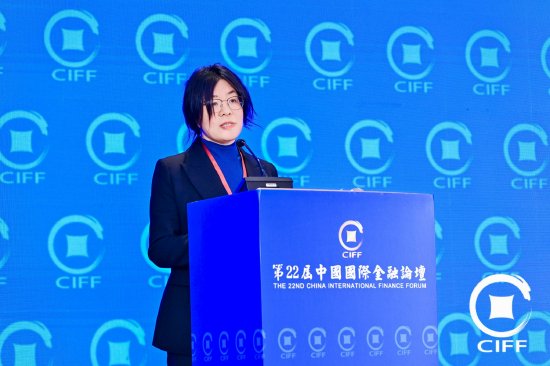
专题:第二十二届中国国际金融论坛 12月19日-20日,"第二十二届中国国际金融论坛"在上海举行,主题为:数字经济时代的智能金融生态 构建。中共上海市委金融委员会办公室副主任曹艳文出席并致辞。 曹艳文谈到,近年来,全球数字经济高速发展,金融与科技加速融合,推动金融业向数字金融、智能金 融转型升级。上海始终将金融科技中心建设放在突出位置,积极拥抱数字经济浪潮,以推进具有全球引 领性的金融科技中心为目标,连续推出并实施两轮系统性建设方案,并在金融科技前沿技术应用、优质 资源集聚、生态环境优化等方面取得了积极成效。 专题:第二十二届中国国际金融论坛 12月19日-20日,"第二十二届中国国际金融论坛"在上海举行,主题为:数字经济时代的智能金融生态 构建。中共上海市委金融委员会办公室副主任曹艳文出席并致辞。 曹艳文谈到,近年来,全球数字经济高速发展,金融与科技加速融合,推动金融业向数字金融、智能金 融转型升级。上海始终将金融科技中心建设放在突出位置,积极拥抱数字经济浪潮,以推进具有全球引 领性的金融科技中心为目标,连续推出并实施两轮系统性建设方案,并在金融科技前沿技术应用、优质 资源集聚、生态环境优化等方面取得了积极 ...
消息人士:软银力争年底前兑现向OpenAI提供225亿美元资金的承诺
Xin Lang Cai Jing· 2025-12-19 23:36
北京时间12月20日早间消息,消息人士称,软银集团正通过一系列现金筹集计划(包括出售部分投 资),争分夺秒地争取在年底前完成对OpenAI的225亿美元融资承诺,并可能动用以其在芯片公司Arm 的宝贵所有权为抵押而借入的未提取保证金贷款。 消息人士:软银力争年底前兑现向OpenAI提供225亿美元资金的承诺 消息人士:软银力争年底前兑现向OpenAI提供225亿美元资金的承诺 软银首席执行官孙正义对OpenAI下的"全押"赌注,这是这位日本亿万富翁迄今为止下的最大赌注之 一,因为他希望提高公司在人工智能竞争中的地位。为了筹集资金,孙正义已经出售了软银在人工智能 芯片领军企业英伟达58亿美元的全部股份,减持了T-Mobile US 48亿美元的股份,并裁减了员工。 其中两位消息人士透露,孙正义已经放缓了软银愿景基金(Vision Fund)的大部分其他交易,任何超过 5000万美元的交易现在都需要孙正义的明确批准。 孙正义的公司正在努力将旗下的支付应用运营商PayPay上市。原定于本月进行的首次公开募股因美国政 府长达43天的关门而推迟,关门已于11月结束。据一位直接消息人士和另一位熟悉情况的人士透露, Pay ...

美联储拟设新账户,加密货币向支付系统再近一步
Sou Hu Cai Jing· 2025-12-19 21:00
在加密货币和 金融科技公司积极寻求接入中央 银行支付体系的背景下,美联储提议设立一种全新的支 付账户。根据该计划,符合条件的机构可以使用此类账户进行支付的清算与结算。监管机构表示,该账 户将区别于"主账户"(Master Account)。主账户是金融机构梦寐以求的系统,用于获取美联储提供的 各项支付服务。 ...