林业

Search documents
江西安远:山林“静资产”变增值“动资源”
Xin Hua She· 2025-06-09 02:58
Core Viewpoint - The collective forest rights reform in Anyuan County is transforming the management and economic potential of forest resources, allowing local farmers to benefit financially without deforestation [1][2][3] Group 1: Collective Forest Rights Reform - Anyuan County is implementing a collective forest rights reform involving over 100,000 forest farmers, addressing historical issues of fragmented ownership and management [1] - The reform includes a "shareholding to households" model, allowing villagers to hold shares in collective forests, leading to a first dividend distribution of 1.4 million yuan [1] - The issuance of 266 forest tickets and 500 forestry operating income rights certificates has provided a clear identification for fragmented forest lands, enabling a new mechanism for forest ticket circulation [1] Group 2: Financial Innovations - The introduction of forest tickets has transformed forest assets into valuable resources, enabling financing through forest rights collateral, with a successful loan of 2.6 million yuan for a local agricultural company [2] - Anyuan County has established a financial closed loop combining "forest rights mortgage + income rights pledge + forest insurance," creating Jiangxi Province's first forest rights trading platform [2] - In 2024, the county's collective forest land storage area is projected to reach 32,000 acres, with a total forest rights storage value of 430 million yuan and forest rights loans amounting to 350 million yuan [2] Group 3: Economic and Ecological Impact - The implementation of a multi-layered ecological model in forest management has significantly increased per-acre output value from 1,600 yuan to 8,500 yuan [3] - The county has promoted over 300,000 acres of under-forest economy, leading to the development of unique industries such as "forest + medicine," "forest + fungi," and "forest + bees" [3] - Anyuan County's forest coverage has increased from 79% to 82.72%, with a 5.2-fold growth in total forestry output value, and forestry income now accounts for 51% of farmers' income [3]
我国将开展第四次全国农业普查,“大食物生产情况”纳入普查内容
Xin Jing Bao· 2025-06-06 10:50
Core Points - The State Council has announced the fourth national agricultural census will be conducted in 2026, focusing on agricultural production conditions, food production, and new agricultural productivity [1][2] - The census aims to provide a comprehensive understanding of the current state of agriculture, rural areas, and farmers' lives, which is crucial for formulating effective agricultural policies and promoting rural revitalization [2][4] Group 1: Census Overview - The census will be conducted every ten years, with the last one in 2016, which recorded 2.04 million agricultural operating units and a cultivated land area of 134.92 million hectares [2][3] - The census will include various stakeholders such as rural households, urban agricultural operators, and local government bodies [3][4] Group 2: Census Content and Scope - The census will cover five main areas: agricultural production conditions, food and large food production, new agricultural productivity, rural development basics, and rural residents' living conditions [4][5] - New topics added to this census include diversified food supply, new agricultural productivity, and the construction of livable and workable rural areas [4][5] Group 3: Methodology and Technology - The census will utilize satellite remote sensing, drones, and artificial intelligence to accurately measure crop planting areas and assess facility agriculture conditions [5][6] - The census will be conducted in four phases from 2025 to 2029, with the main data report expected by the end of 2027 [5][6] Group 4: Data Quality and Security - Ensuring data quality is a top priority, with measures in place to prevent statistical fraud and ensure the accuracy and completeness of the data collected [6] - Strict confidentiality measures will be enforced to protect the identity and privacy of census participants [6]
“四农普”来了,将对农业新质生产力等进行调查
第一财经· 2025-06-06 06:06
Core Viewpoint - The State Council of China has announced the initiation of the Fourth National Agricultural Census in 2026, which aims to comprehensively assess the current state of agriculture, rural development, and farmers' lives in the context of modern agricultural policies and rural revitalization efforts [1][2]. Group 1: Overview of the Census - The Fourth National Agricultural Census will provide an objective reflection of new developments in agriculture, rural construction, changes in farmers' lives, and the effectiveness of rural reforms [1]. - The census will cover various subjects, including rural households, urban agricultural operators, agricultural production units, village committees, and township governments, focusing on sectors such as crop cultivation, forestry, animal husbandry, fishery, and related services [1]. Group 2: Methodology and Innovation - This census will employ a combination of comprehensive surveys and sampling, as well as long and short forms, to enhance efficiency and reduce the burden on grassroots workers [2]. - Modern technologies such as satellite remote sensing, drones, and artificial intelligence will be utilized to improve the digitalization of the census process [2]. - The census aims to create a unified agricultural data map to facilitate the application and sharing of census results [2]. Group 3: Timeline and Phases - The standard reference point for the census is set for December 31, 2026, with data collection covering the entire year of 2026 [2]. - The census will be conducted in four phases: preparation (2025-2026), on-site registration (January-May 2027), data processing and publication (June-December 2027), and data application development (2028-2029) [2]. Group 4: Importance and Confidentiality - The Fourth National Agricultural Census is a significant national survey that requires the cooperation of a wide range of participants due to its extensive scope and high technical demands [3]. - It is emphasized that all collected data must be reported truthfully, and any identifiable information must be kept confidential and not used for purposes outside of statistical analysis [3].

“四农普”来了,将对农业新质生产力等进行调查
Di Yi Cai Jing· 2025-06-06 03:18
Core Viewpoint - The fourth national agricultural census in China, scheduled for 2026, aims to comprehensively assess the current state of agriculture, rural development, and farmer livelihoods, which is crucial for formulating effective agricultural policies and promoting rural revitalization [2][4]. Group 1: Census Overview - The census will cover various subjects, including rural households, urban agricultural producers, agricultural production units, and local government bodies [2]. - It will encompass multiple sectors such as crop cultivation, forestry, animal husbandry, fishery, and related services [2]. Group 2: Methodology and Innovation - The census will employ a combination of comprehensive surveys and sampling, as well as long and short questionnaires, to enhance efficiency and reduce the burden on local workers [3]. - Modern technologies like satellite remote sensing, drones, and artificial intelligence will be utilized to improve the data collection process [3]. - The census aims to create a unified agricultural data platform to facilitate the application and sharing of census results [3]. Group 3: Timeline and Phases - The standard reference point for the census is set for December 31, 2026, with data collection covering the entire year of 2026 [3]. - The census will be conducted in four phases: preparation (2025-2026), field registration (January-May 2027), data processing and publication (June-December 2027), and data application development (2028-2029) [3]. Group 4: Importance and Confidentiality - The census is a significant national survey that requires cooperation from a wide range of participants, emphasizing the need for accurate data reporting [4]. - Strict confidentiality measures will be enforced to protect sensitive information collected during the census [4].
盛来运:第四次全国农业普查有对农业新质生产力的调查
Zheng Quan Shi Bao Wang· 2025-06-05 23:39
Core Viewpoint - The State Council has announced the fourth national agricultural census to be conducted in 2026, aiming to assess the modernization of agriculture and rural areas in China [1][2]. Group 1: Census Overview - The census will take place on December 31, 2026, with data collected for the entire year [1]. - It is a significant national survey aimed at understanding the agricultural landscape and rural conditions in the context of China's modernization efforts [1][2]. - The census will include various subjects such as rural households, agricultural production units, and local government bodies [1]. Group 2: Key Areas of Investigation - The census will investigate five main areas: 1. Agricultural production conditions, including workforce, land use, and social services [2]. 2. Food production status, covering grains, economic crops, and livestock products [2]. 3. New agricultural productivity, focusing on modern agricultural entities and technologies [2]. 4. Rural development basics, including industry growth and governance [2]. 5. Rural residents' living conditions, assessing family situations and quality of life [2]. Group 3: Methodology and Technology - The census will utilize a combination of comprehensive surveys and sampling methods to enhance efficiency and reduce the burden on local authorities [2]. - Modern technologies such as satellite remote sensing, drones, and artificial intelligence will be employed to improve data collection and analysis [2]. - The initiative aims to create a unified agricultural census data platform to facilitate the sharing and application of results [2].
全面摸清“三农”家底 服务农业强国建设
Xin Hua She· 2025-06-05 13:32
Core Insights - The fourth national agricultural census will be conducted in 2026, marking a significant step in understanding the agricultural landscape in China and supporting the construction of a strong agricultural nation [1][2] Group 1: Importance of the Census - The census aims to comprehensively assess the current state of agriculture, rural development, and farmers' living conditions, which is crucial for formulating effective agricultural policies and promoting rural revitalization [2] - It reflects the historical achievements and transformations in agricultural development since the last census in 2016 [2] Group 2: Census Subjects and Scope - The census will target various subjects, including rural households, urban agricultural operators, agricultural production units, village committees, and township governments [3] - The industry scope includes crop cultivation, forestry, animal husbandry, fishery, and related services [4] Group 3: Main Content of the Census - The census will investigate five key areas: agricultural production conditions, food production status, new agricultural productivity, rural development basics, and rural residents' living conditions [5] Group 4: Innovations and Changes - The census will incorporate updated content reflecting new agricultural practices and rural modernization, utilizing a combination of comprehensive and sampling surveys to enhance efficiency [6] - Modern technologies such as satellite remote sensing, drones, and artificial intelligence will be employed to improve data collection and analysis [6] Group 5: Timeline and Phases - The census will be conducted in four phases: preparation (2025-2026), on-site registration (January-May 2027), data processing and publication (June-December 2027), and data application (2028-2029) [8] Group 6: Implementation and Support - A leadership group has been established to oversee the census, ensuring collaboration among various government departments and local authorities [9] - Participation from census subjects is essential, requiring accurate and timely reporting of data [10]
广东城乡绿意从“点上盆景”拓展为“全域风景”
Zhong Guo Xin Wen Wang· 2025-06-05 06:57
Core Viewpoint - Guangdong is committed to enhancing its ecological environment to support high-quality development, focusing on increasing forest coverage and improving forest quality [1][2]. Group 1: Forest Coverage and Quality Improvement - Guangdong's forest coverage rate is 53.39%, making it one of the greenest provinces in China [2]. - Over the past three years, Guangdong has optimized 6.2862 million acres of forest and improved 4.8116 million acres of forest care, increasing the proportion of mixed forests [2]. - The province plans to create 1,030 large forest patches, with 732 patches between 1,000 to 3,000 acres, 150 patches between 3,000 to 5,000 acres, and 148 patches over 5,000 acres [2]. Group 2: Urban and Rural Greening Initiatives - Guangdong is implementing urban-rural greening actions, promoting parks in rural areas and forests in urban settings, with 21 cities and 27 counties participating in the "Forest City" initiative [2][3]. - The province aims to build at least one new suburban or mountain park in each of the 57 counties by the end of December 2025 [2]. Group 3: Green Infrastructure Development - The province has enhanced the greening quality of highways and railways, establishing green corridors totaling 2,992 kilometers and covering 796,000 acres [3]. - Guangdong's rural greening efforts have resulted in the planting of over 42 million seedlings, with 112 green ancient tree villages and 210 ancient tree parks established [3]. Group 4: Ongoing and Future Projects - Guangdong plans to construct 359 forest patches over 1,000 acres this year, rehabilitate 1.5 million acres of low-quality forests, and nurture 2.05 million acres of new forests [4]. - The province will also develop 40 premium green beauty spots and six green beauty belts, including a high-standard "Ring Nan Kunshan - Luofu Mountain" green beauty belt [4].
云南景谷林业股份有限公司关于召开 2024年度暨2025年第一季度业绩说明会的公告
Zhong Guo Zheng Quan Bao - Zhong Zheng Wang· 2025-06-04 23:15
登录新浪财经APP 搜索【信披】查看更多考评等级 本公司董事会及全体董事保证本公告内容不存在任何虚假记载、误导性陈述或者重大遗漏,并对其内容 的真实性、准确性和完整性承担法律责任。 重要内容提示: 总经理:吴昱 ( 会议召开时间:2025年6月12日(星期四)15:00-16:00 ● 会议召开地点:上海证券交易所上证路演中心(https://roadshow.sseinfo.com/) ●会议召开方式:上证路演中心网络互动 ( 投资者可于2025年6月5日(星期四)至6月11日(星期三)16:00前登录上证路演中心网站首页点击"提 问预征集"栏目或通过公司邮箱jglymsc@163.com进行提问。公司将在说明会上对投资者普遍关注的问 题进行回答。 云南景谷林业股份有限公司(以下简称"公司")已于2025年4月29日发布公司2024年度报告及2025年第 一季度报告,为便于广大投资者更全面深入地了解公司2024年度经营成果、财务状况,公司计划于2025 年6月12日 (星期四)15:00-16:00举行2024年度暨2025年第一季度业绩说明会,就投资者关心的问题进 行交流。 一、 说明会类型 本次投资者说 ...

“这里的绿水青山令人如痴如醉”
Ren Min Ri Bao· 2025-06-04 21:56
"当溪流轻吻山峦,智慧栖息林间。风穿过叶隙向人类低语:与地球共生共荣,方能筑就永续文明。双 峰环抱处,一为绿水青山,一为金山银山,蕴藏着超越黄金的智慧。"参观完浙江安吉余村,埃及环境 部研究员萨莉·阿博纳姆写下这样的诗句。来华多日的学习、见闻令她感慨不已:"这段旅程令人备受鼓 舞,让我明白可持续发展并非遥不可及的梦想,而是可以凭借决心、智慧和不懈努力实现的目标。" 通过理论学习和实地参访,学员们加深了对中国林业发展状况特别是森林可持续经营的了解。他们认 为,中国举办相关研修班、培训班为各国交流分享技术和经验搭建平台,为全球林业发展提供助力。 "中国政府制定了符合中国国情的林业发展管理规划,推动生态保护与绿色产业协同发展,这是中国实 现绿色发展的关键。"所罗门群岛林业部高级林业官约瑟夫·塔瓦塔表示,中国的湿地通过保护性开发实 现生态价值转化,传统村落通过合理改造更加现代化,既让传统文化得到保护又让生态增绿、人民增 收。林业与生态旅游融合、创新森林资源管理等中国经验值得学习借鉴。 研修班结束之际,尼泊尔自然保护国家信托基金拉詹·保德尔表示:"这是一次宝贵的学习经历,我们可 以从丰富的中国经验中受益。" 《 人民日 ...
向沙地要“产值”——辽宁科尔沁沙地兴绿见闻
Ren Min Ri Bao· 2025-06-04 01:55
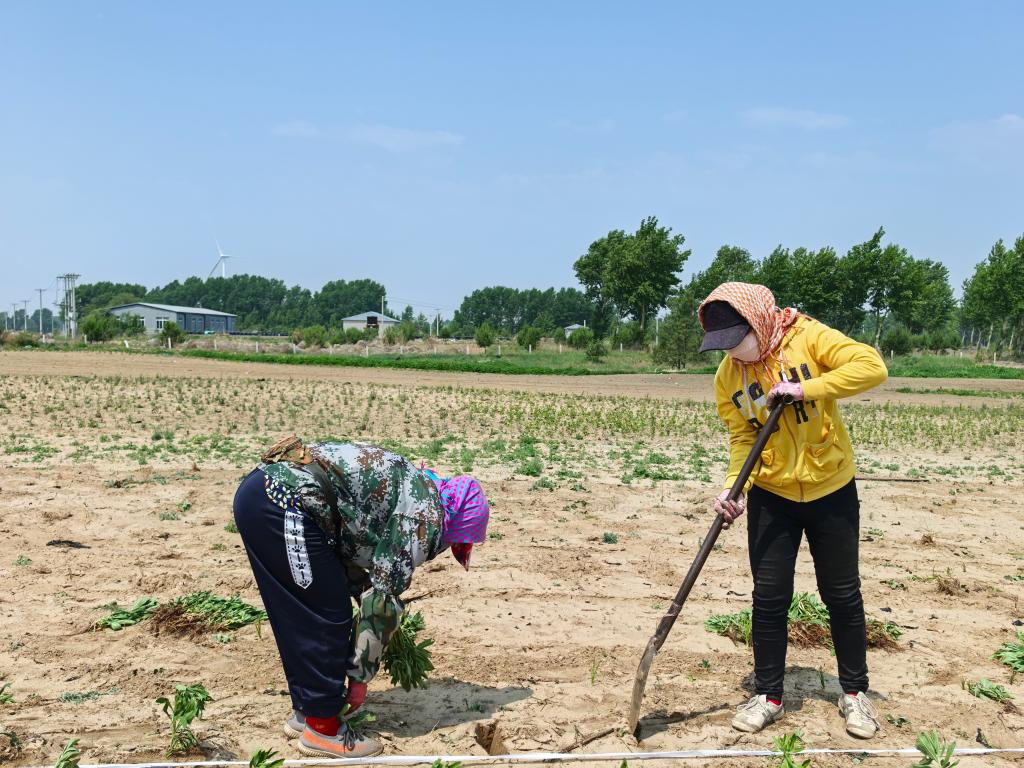
Group 1 - The core idea is the development of medicinal herb cultivation in sandy areas of Liaoning province, specifically in Zhangwu County, to enhance economic value and combat land degradation [1][2] - Zhangwu County has a history of land desertification, with 96% of its area affected, prompting local efforts to integrate forestry and under-forest economies for better economic returns [1][2] - The local government is implementing a model combining party leadership, cooperatives, and enterprises to encourage villagers to plant drought-resistant medicinal herbs, with expected annual income of 19,000 yuan per acre during the peak production period [1] Group 2 - In 2024, Zhangwu County will release a five-year development plan focusing on forestry and under-forest economies, aiming for a diversified development model that includes medicinal herbs, seedlings, flowers, vegetables, fungi, and silkworm farming [2] - Since 2023, Liaoning province has invested 2.4 billion yuan in combating desertification, achieving comprehensive management of 9.92 million acres and exploring green and prosperous development through projects like grafting Chinese red pine onto other species [2] - In Changtu County, a forest farm has completed afforestation of over 125,000 acres, protecting surrounding farmland and generating significant economic benefits through grafting red pine onto other trees [2]