Automobiles

Search documents
How Musk’s empire is struggling in the wake of his feud with #Trump #tesla #podcast
Bloomberg Technology· 2025-08-05 19:38
Government Policy & Regulation - The Trump administration's approach to AI regulation and policy is analogous to the ambitions of Tesla and XAI [1] - The "big beautiful bill" (likely referring to a government act) is considered detrimental to Tesla's financial interests [1] - Tesla potentially faces financial losses in the fourth quarter due to the aforementioned bill [1] Company Strategy & Performance - Tesla is positioned as a US manufacturer of automobiles and electric vehicles, and SpaceX as a national champion of space exploration [1] - Elon Musk expressed concerns about the ballooning budget, deficit, and government spending [1] - The staying power of Tesla relative to the rest of the automotive industry is a key question [1]



中国的通缩与关税 -对印度的影响-Asia Economics -The Viewpoint China’s deflation and tariffs – how they affect India
2025-08-05 08:17
Summary of Key Points from the Conference Call Industry Overview - The report focuses on the impact of China's deflationary pressures and tariffs on India's macroeconomic outlook and monetary policy [3][4][5]. Core Insights 1. **Deflationary Spillovers**: China's ongoing deflation and tariffs are creating a lowflation environment in India, affecting corporate pricing power and wage growth [4][5][31]. 2. **RBI's Monetary Policy**: The Reserve Bank of India (RBI) has cut interest rates by 100 basis points since February 2025, with a significant cut of 50 basis points in June 2025. This easing is expected to support economic reflation with a 2-3 quarter lag [4][15][56]. 3. **Inflation Dynamics**: Despite the lowflation challenge, high food prices have kept India's headline inflation above target levels, delaying monetary easing [4][10][25]. 4. **Trade Exposure**: India has a low exposure to global goods exports (12% of GDP), making it relatively insulated from external trade tensions compared to other Asian economies [5][21]. 5. **Corporate Sector Challenges**: The spillover effects from China's deflation have led to weaker corporate profit growth, which slowed to 7% compared to 9% in 2024. This has resulted in reduced wage growth and hiring in the corporate sector [43][44]. Important Data Points - **Inflation Rates**: India's headline CPI inflation has been below 4% since February 2025, with WPI tracking at -0.1% year-on-year as of June 2025 [25][31]. - **Trade Deficit**: India's trade deficit with China has widened by $30 billion over the past three years, reaching $110 billion [31]. - **Corporate Revenue Growth**: Corporate revenue growth for the BSE500 companies was 7% in Q1 2025, with expectations of recovery as policy easing continues [45]. Additional Considerations 1. **Tariff Implications**: Current tariffs on imports from India are set at 25%. If a trade deal is reached, this could reduce tariffs, but if not, the indirect effects of trade tensions may weigh on corporate confidence and capital expenditure [20][22]. 2. **Future Rate Cuts**: There is a high risk of further rate cuts if inflation continues to surprise on the downside due to external pressures [24][56]. 3. **Sector-Specific Deflation**: Nine manufacturing sectors in India are experiencing intensified deflation, correlating with China's PPI deflation, particularly in metals and electronics [37][41]. Conclusion - The interplay between China's economic challenges and India's domestic policies presents a complex landscape for investors. While India's low exposure to global trade offers some insulation, the ongoing deflationary pressures and potential tariff increases pose significant risks to corporate profitability and economic growth. The RBI's monetary easing is expected to support reflation, but the timing and effectiveness of these measures remain contingent on external economic conditions.

小米YU7云台摄像头过热、零重力座椅无法调节?官方回应
Feng Huang Wang· 2025-08-05 00:04
Group 1 - Xiaomi Auto released its 189th Q&A session addressing user concerns regarding OTA upgrades, appointment rescheduling, and features of the Xiaomi YU7 zero-gravity seat adjustment and 4K gimbal camera heat issues [1][2] - The recent OTA upgrade introduced a "custom key" function in the remote key, allowing users to personalize the fourth button's vehicle control functions via the Xiaomi Auto app [1] - The OTA upgrade now supports automatic updates and rescheduling of appointments, enhancing the convenience of the update process [1] Group 2 - Users can customize the zero-gravity seat adjustment in the Xiaomi YU7, with the ability to save the adjusted position for future use, where the driver's seat memory is linked to the user account and the passenger's seat memory is vehicle-specific [2] - The 4K gimbal camera's heat during operation is normal and does not affect safety or lifespan, with the aluminum alloy design facilitating better heat distribution compared to plastic [2] - The 4K gimbal camera can operate continuously in environments around 70°C and maintain functionality after being placed in 85°C conditions [2]

Selloff? What Selloff? Monday Market Rebound
ZACKS· 2025-08-04 23:21
Market Overview - Markets experienced a strong rebound, with the Dow gaining +585 points (+1.34%), S&P 500 up +91 points (+1.47%), Nasdaq increasing +403 points (+1.95%), and Russell 2000 rising +44 points (+2.05%) [1] Bond Market - Bond yields remained steady, with the 10-year yield at +4.20% and the 2-year yield at +3.69%, indicating a potential need for interest rate reductions [2] Economic Indicators - Factory Orders for June reported a decline of -4.8%, which was better than expected, following a record high increase of +8.3% in the previous month [3] Company Earnings - Palantir Technologies reported Q2 earnings of 16 cents per share, beating expectations, with revenues reaching $1.0 billion, surpassing the anticipated $938.3 million, marking a +68% growth in the U.S. market, +93% in commercial, and +53% in government sectors [4] - Palantir's revenue guidance for the next quarter is set at a low-end of $1.083 billion and $4.14 billion for the full year, exceeding previous estimates [5] - Hims & Hers Health reported earnings of 17 cents per share, missing consensus estimates, with revenues of $545 million falling short of the expected $553.2 million, leading to a -12% drop in after-market trading [6] - Vertex Pharmaceuticals saw a significant decline of -13.5% despite beating earnings estimates, due to the failure of a pain drug in Phase 2 testing and the resignation of CSO David Altshuler [7] Upcoming Earnings Reports - Anticipation builds for Q2 earnings reports from major companies including Caterpillar, McDonald's, Pfizer, and Amgen, with AMD and Rivian reporting after the market closes [8] Trade Deficit and Economic Data - The U.S. Trade Deficit is expected to improve to -$61.0 billion from -$75.5 billion, with S&P and ISM Services PMI expected to remain above the growth threshold of 50 [9]


Lyft and Baidu Plan to Launch Robotaxis in Europe Next Year
CNET· 2025-08-04 14:53
Group 1 - The article discusses the importance of services and software in enhancing user experience and productivity [1] - It highlights various tips and news related to optimizing the use of everyday services and applications [1] Group 2 - The focus is on how companies can leverage software solutions to improve operational efficiency [1] - There is an emphasis on the evolving landscape of service offerings in the tech industry [1]


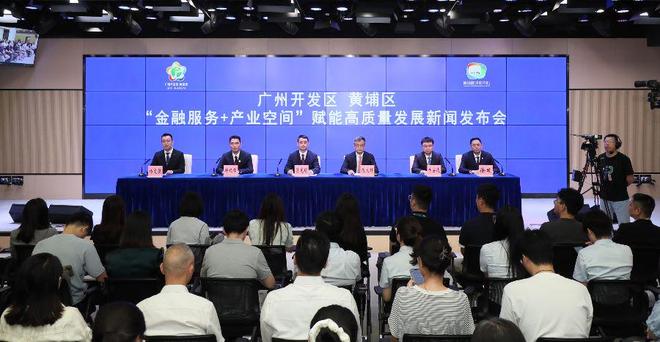
解码广州黄埔科企培育新范式:以金融创新托举企业“关键一跃”
2 1 Shi Ji Jing Ji Bao Dao· 2025-08-04 12:21
Core Viewpoint - The rapid growth of "Six Little Dragons" in Hangzhou has sparked nationwide discussions on the financial support needed for the development of innovative enterprises, highlighting the essential role of patient capital in nurturing unicorns [1][4]. Financial Policies and Measures - Guangzhou Development Zone and Huangpu District have introduced new financial policies aimed at addressing the specific financing needs of local innovative enterprises, including a maximum support of 20 million yuan for qualifying financial institutions and 500,000 yuan for individual enterprises through intellectual property pledge financing [1][6]. - The total scale of the newly established technology innovation and entrepreneurship investment mother fund is set at 5 billion yuan [1]. Challenges in Financing - Traditional credit models often deter financial institutions from supporting high-tech, high-risk, and low-capital innovative enterprises, particularly during their early stages when they lack collateral [4][5]. - The financial policies aim to provide substantial support to venture capital and private equity firms, encouraging them to invest early and in smaller amounts in hard technology [4][8]. Financial Resource Optimization - The new policies include incentives for establishing licensed financial institutions and subsidiaries, with support amounts reaching up to 20 million yuan for headquarters and 1.5 million yuan for professional subsidiaries [6][8]. - The policies also aim to enhance the quality of financial services by providing subsidies to venture capital firms that invest in local innovative enterprises [8][9]. Intellectual Property Financing - The financing scale for intellectual property pledges in Guangzhou Development Zone and Huangpu District has exceeded 15.2 billion yuan, with subsidies amounting to approximately 17.4 million yuan benefiting over 1,132 enterprises [10]. - The new policies encourage enterprises to use their intellectual property as collateral for financing, offering support of up to 500,000 yuan per enterprise [12][13]. Ecosystem for Innovative Enterprises - The region has established a modern financial service system that includes a policy framework, nurturing projects, service mechanisms, and activity brands to support enterprises at different stages of development [16]. - The introduction of a 5 billion yuan technology innovation and entrepreneurship investment mother fund aims to attract social capital to invest in strategic emerging industries [16].
FERRARI N.V.: ANNOUNCEMENT OF THE EIGHTH TRANCHE OF THE MULTI-YEAR SHARE REPURCHASE PROGRAM
Globenewswire· 2025-07-31 15:56
Core Viewpoint - Ferrari N.V. announces the continuation of its multi-year share buyback program, with an eighth tranche of up to Euro 360 million set to commence on August 22, 2025, and conclude by December 18, 2025 [1] Group 1: Share Buyback Program - The eighth tranche is part of a larger Euro 2 billion share buyback program initiated during the 2022 Capital Markets Day [1] - The Shareholders' Meeting held on April 16, 2025, authorized the purchase of up to 10% of the Company's common shares within an eighteen-month period [1] - The repurchase authority will expire on October 15, 2026, unless extended or renewed [1] Group 2: Execution Details - Ferrari has entered into a non-discretionary buyback agreement for up to Euro 280 million on the Euronext Milan market, with a primary financial institution making independent trading decisions [6] - An additional mandate for up to Euro 80 million will be executed on the New York Stock Exchange, where Ferrari will provide purchase instructions in compliance with applicable regulations [6]


2025 GT World Challenge Beijing E-Town Round to Debut in October
Globenewswire· 2025-07-31 07:18
Event Overview - The 2025 GT World Challenge Beijing E-Town Round will occur from October 17 to 19 at Tongming Lake in Beijing Economic-Technological Development Area, showcasing the integration of motorsport and automotive technology [1] - The event will feature a temporary street circuit of 4.9 kilometers, designed to meet FIA Grade 3 standards, with a maximum speed of 299 km/h and an estimated lap time of 93.4 seconds [2] Participation and Audience - Renowned global teams such as Lamborghini, Ferrari, Porsche, Audi, Mercedes-Benz, BMW, and Aston Martin are expected to participate, with over 10,000 spectators anticipated to attend [3] Technological Integration - The GT track will serve as a practical platform for advanced technologies, hosting the New Energy Innovation Challenge and Autonomous Driving Innovation Challenge to promote automotive tech innovation [4] - The event aligns with BDA's "3+1+N" development model for intelligent connected new energy vehicles, aiming to enhance local industry influence and accelerate technology commercialization [4] Value Ecosystem - The initiative aims to create a comprehensive value ecosystem encompassing premium racing experiences, technology applications, and future mobility visions, supporting Beijing E-Town's goal of becoming a hub for intelligent connected vehicles [5] Event Experience - The Tongming Lake area will transform into an "automotive carnival," featuring family-friendly activities, model car exhibitions, and interactive tech zones, celebrating the automotive industry's evolution [6] Organizational Structure - The event is co-organized by the Beijing Municipal Bureau of Sports, the Beijing Economic-Technological Development Area Administrative Committee, and the Federation of Automobile and Motorcycle Sports of China, with global sponsorship opportunities available [7]
X @Bloomberg
Bloomberg· 2025-07-31 07:12
Hyundai Motor and affiliate Kia could face as much as $5 billion in additional costs this year under a new trade agreement between the US and South Korea that imposes a 15% import tariff on automobiles https://t.co/gJFQMlQXjD ...
U.S. Reaches 15% Tariff Deal With South Korea Ahead Of August Deadline
Forbes· 2025-07-30 23:45
Group 1 - The U.S. and South Korea have agreed to a trade deal that enforces a 15% tariff rate on South Korean exports, which is an increase from the previous 10% rate [1][3] - South Korea is set to invest $350 billion into the U.S., with further details to be discussed by South Korean President Lee Jae Myung at the White House [2] - The new tariff rate is part of a broader strategy by the U.S. to negotiate similar deals with other countries, including Japan, the United Kingdom, the Philippines, and Indonesia [4] Group 2 - South Korea's key exports to the U.S. include vehicles and electronics, and the tariffs are aimed at reducing trade deficits and encouraging domestic purchases [6] - The implementation of tariffs is argued to potentially increase costs for American consumers, with estimates suggesting an additional $2,400 per household annually [6]