电池制造

Search documents
LG新能源与奔驰签署2.06万亿韩元电池供应协议
鑫椤锂电· 2025-12-08 08:06
关注公众号,点击公众号主页右上角" ··· ",设置星标 "⭐" ,关注 鑫椤锂电 资讯~ 本文来源:IT之家 韩国电池制造商LG新能源有限公司周一表示, 已与梅赛德斯-奔驰股份公司签署了一份价值2.06万亿 韩元(注:现汇率约合98.86亿元人民币)的电池供应协议。 LG新能源在一份监管文件中表示,此次供应将于2028年3月开始,持续至2035年6月。这一销量占该 公司2024年25.6万亿韩元年销售额的8%。该公司表示,这些电池将供应给北美和欧洲市场。 鑫椤会议: 会议主办:鑫椤资讯 会议时间:2026年3月19-20日 会议地点:江苏·常州 会议咨询: 13248122922(微信同) 鑫椤报告预售: 2025-2029年中国三元材料运行趋势及竞争策略研究报告 2025-2029年中国磷酸铁锂运行趋势及竞争策略研究报告 2025-2029年中国碳酸锂运行趋势及竞争策略研究报告 2025-2029年全球负极材料运行趋势及竞争策略研究报告 2025-2029年全球电解液运行趋势及竞争策略研究报告 2025-2029年全球储能市场运行趋势及竞争策略研究报告 2025-2029年全球固态电池运行趋势及竞争策略研 ...

密歇根建厂失败国际化受阻 国轩高科“押注”固态电池赛道赌未来
Guan Cha Zhe Wang· 2025-12-08 06:44
Core Viewpoint - Guoxuan High-Tech is experiencing a modern version of "prosperity and crisis," with rapid revenue growth and ambitious global and technological plans, while facing significant setbacks in overseas strategies, weak core business profitability, and strong reliance on government subsidies [1]. Group 1: International Expansion Challenges - The company's ambitious internationalization efforts faced a major setback in the U.S. market, particularly with the $2.4 billion battery factory project in Michigan, which was intended to produce over 40 GWh annually and create 2,350 high-paying jobs, but ultimately failed due to geopolitical issues and local opposition [1][2]. - The Michigan Economic Development Corporation (MEDC) officially terminated the project in October 2025, canceling $175 million in tax incentives and requiring the company to return $23.6 million in land subsidies, marking a significant blow to its U.S. expansion plans [2]. Group 2: Financial Performance and Dependency on Subsidies - The company's Q3 2025 financial report showed a net profit of 2.533 billion yuan, a staggering increase of 514.35% year-on-year, with Q3 alone contributing 2.167 billion yuan, up 1,434.42% [3]. - However, the core business profitability is weak, with a non-recurring net profit of only 85 million yuan in the first three quarters, and just 12.57 million yuan in Q3, indicating a fragile main business [3][4]. - Government subsidies played a crucial role in supporting the company's operations, with 537 million yuan received in the first three quarters of 2025. Historical data shows a long-standing dependency on these subsidies, with over 4.88 billion yuan received from 2019 to mid-2025, despite the company facing cumulative losses exceeding 1.4 billion yuan during the same period [4]. Group 3: Technological Aspirations and Challenges - In response to weak core business performance and high debt, the company is promoting its "Jinshi" all-solid-state battery technology, claiming an energy density of 350 Wh/kg and aiming for mass production by 2027 [5]. - However, significant challenges remain for the commercialization of solid-state batteries, including cost barriers, with current costs being 4 to 10 times higher than traditional lithium batteries, and complex manufacturing processes that are still in the engineering challenge phase [5]. - The company received a 1.5 billion yuan special subsidy from the Ministry of Industry and Information Technology for solid-state battery research and development, raising concerns about whether it is leveraging the narrative of a "solid-state battery revolution" to secure government and market resources to alleviate financial pressures [5][6].

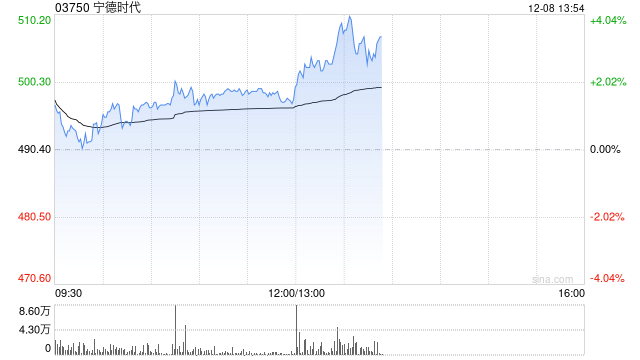
港股异动 宁德时代(03750)午后涨超4% 据报匈牙利电池工厂明年春季启动电芯量产
Jin Rong Jie· 2025-12-08 06:00
此前,宁德时代于2022年8月正式宣布将投资73.4亿欧元在匈牙利东部城市德布勒森建设一座100GWh的 电池工厂。该项目占地221公顷,位于德布勒森南部工业园区,地理位置优越,靠近奔驰、宝马、 Stellantis和大众等客户的汽车工厂。德布勒森电池制造基地是推进欧洲电池产能建设的重点项目之一。 随着欧洲电动汽车普及率持续攀升(预计2024年底新车占比将达到29%),对本地化电池生产的需求日益 迫切。 本文源自:智通财经网 智通财经获悉,宁德时代(03750)午后涨超4%,截至发稿,涨3.59%,报508港元,成交额9.86亿港元。 消息面上,北极星储能网12月8日消息,据市场媒体报道,宁德时代欧洲业务总经理Matt Shen于12月4 日在匈牙利东部城市德布勒森宣布,该公司位于当地的电池工厂将于2026年3月或4月启动电芯量产,具 体时间取决于相关许可证的审批进度。该制造基地初期规划年产能高达40GWh,据悉,全部产能已被 客户预订。在电芯量产线进行最终设备安装与调试的同时,基地内的电池模块组装线已先行投产。截至 目前,模块生产线已累计生产超过12万个电池模块,为超过3万辆在欧洲行驶的电动汽车提供了动力。 ...

宁德时代午后涨超4% 据报匈牙利电池工厂明年春季启动电芯量产
Zhi Tong Cai Jing· 2025-12-08 05:55
此前,宁德时代于2022年8月正式宣布将投资73.4亿欧元在匈牙利东部城市德布勒森建设一座100GWh的 电池工厂。该项目占地221公顷,位于德布勒森南部工业园区,地理位置优越,靠近奔驰、宝马、 Stellantis和大众等客户的汽车工厂。德布勒森电池制造基地是推进欧洲电池产能建设的重点项目之一。 随着欧洲电动汽车普及率持续攀升(预计2024年底新车占比将达到29%),对本地化电池生产的需求日益 迫切。 消息面上,北极星储能网12月8日消息,据市场媒体报道,宁德时代欧洲业务总经理Matt Shen于12月4 日在匈牙利东部城市德布勒森宣布,该公司位于当地的电池工厂将于2026年3月或4月启动电芯量产,具 体时间取决于相关许可证的审批进度。该制造基地初期规划年产能高达40GWh,据悉,全部产能已被 客户预订。在电芯量产线进行最终设备安装与调试的同时,基地内的电池模块组装线已先行投产。截至 目前,模块生产线已累计生产超过12万个电池模块,为超过3万辆在欧洲行驶的电动汽车提供了动力。 宁德时代(03750)午后涨超4%,截至发稿,涨3.59%,报508港元,成交额9.86亿港元。 ...
宁德时代午后涨超3% 据报匈牙利电池工厂明年春季启动电芯量产
Xin Lang Cai Jing· 2025-12-08 05:55
Core Viewpoint - Contemporary Amperex Technology Co., Limited (CATL) is set to commence mass production of battery cells at its factory in Debrecen, Hungary, by March or April 2026, depending on the approval of relevant permits [1][5] Group 1: Company Developments - CATL's factory in Hungary is initially planned to have an annual production capacity of 40 GWh, with all capacity already booked by customers [1][5] - The battery module assembly line at the factory has already commenced production, having produced over 120,000 battery modules to power more than 30,000 electric vehicles operating in Europe [1][5] - In August 2022, CATL announced an investment of €7.34 billion to build a 100 GWh battery factory in Debrecen, Hungary [1][5] Group 2: Market Performance - CATL's stock price increased by 3.38% to HKD 507, with a trading volume of HKD 1.079 billion [1][5]
对标丰田 比亚迪电池工厂推行“无瑕运营”计划
Xi Niu Cai Jing· 2025-12-08 05:52
Core Insights - BYD has launched a "Flawless Operation" initiative in its battery factories starting from Q3 2023, aiming for zero defects in battery products throughout their lifecycle [2] - The initiative involves enhancing efficiency across manufacturing, processes, and customer service to minimize errors [2] - BYD aims to achieve industry-leading management levels within 3-5 months and align with external major clients' standards by 2026, ultimately targeting Toyota's management standards [2] Group 1 - BYD is the world's second-largest power battery manufacturer, primarily supplying its own brands, including Dynasty, Ocean, Tengshi, Fangchengbao, and Yangwang [2] - In the first three quarters of 2025, BYD's domestic power battery installation volume reached 113.42 GWh, with external supply installation volume at 23.65 GWh, marking an external supply share of 20.85% [2] - The company's energy storage business is also expanding rapidly, indicating a growing market presence [2] Group 2 - The shift from self-supply to a balanced internal and external supply model presents new and higher demands on BYD's manufacturing system [3] - The "Flawless Operation" initiative is designed to ensure high quality, stability, and consistency in large-scale production [3] - The success of this initiative and its ability to meet expected goals will be closely monitored by industry analysts [3]

港股异动 | 宁德时代(03750)午后涨超4% 据报匈牙利电池工厂明年春季启动电芯量产
智通财经网· 2025-12-08 05:48
此前,宁德时代于2022年8月正式宣布将投资73.4亿欧元在匈牙利东部城市德布勒森建设一座100GWh的 电池工厂。该项目占地221公顷,位于德布勒森南部工业园区,地理位置优越,靠近奔驰、宝马、 Stellantis和大众等客户的汽车工厂。德布勒森电池制造基地是推进欧洲电池产能建设的重点项目之一。 随着欧洲电动汽车普及率持续攀升(预计2024年底新车占比将达到29%),对本地化电池生产的需求日益 迫切。 智通财经APP获悉,宁德时代(03750)午后涨超4%,截至发稿,涨3.59%,报508港元,成交额9.86亿港 元。 消息面上,北极星储能网12月8日消息,据市场媒体报道,宁德时代欧洲业务总经理Matt Shen于12月4 日在匈牙利东部城市德布勒森宣布,该公司位于当地的电池工厂将于2026年3月或4月启动电芯量产,具 体时间取决于相关许可证的审批进度。该制造基地初期规划年产能高达40GWh,据悉,全部产能已被 客户预订。在电芯量产线进行最终设备安装与调试的同时,基地内的电池模块组装线已先行投产。截至 目前,模块生产线已累计生产超过12万个电池模块,为超过3万辆在欧洲行驶的电动汽车提供了动力。 ...
水利测雨雷达系统在三峡工程完成部署;“成都造”动力锂电池开启铁路运输新模式丨智能制造日报
创业邦· 2025-12-08 03:24
Group 1 - The first railway transport of "Chengdu-made" power lithium batteries marks a new logistics model, with the first trial train carrying batteries from Zhongxin Innovation Technology (Chengdu) Co., Ltd. to Shanghai, indicating a shift from road to rail transport, which is expected to reduce logistics costs by 20% to 30% [2] - Atlas Data Storage has launched the "Atlas Eon 100," the world's first scalable DNA data storage solution, claiming it can store data for thousands of years without needing refreshment, and remains stable in high-temperature environments [2] - The deployment of a hydrological radar system at the Three Gorges Project enhances safety and flood prevention efforts, addressing limitations of traditional rain measurement methods that are affected by environmental factors and have low resolution [2]

供需面改善,铅价反弹修复
Tong Guan Jin Yuan Qi Huo· 2025-12-08 02:16
1. Report Industry Investment Rating No information provided in the content. 2. Core Viewpoints of the Report - Last week, the main contract price of Shanghai lead futures rebounded steadily. The market's dovish bets on the interest - rate cut path increased, the US dollar was weak, and non - ferrous metals such as copper and tin strengthened, driving up the lead price. The supply - demand tension of lead ore is difficult to reverse in the short term, and the cost side supports the lead price. Although the production of some refineries recovered in November, there were more refinery overhauls in December, and the production of primary and recycled lead is expected to decline month - on - month. The terminal consumption is divided, with the consumption of electric bicycle batteries weakening, but the consumption of automobile starting batteries improving, and large - and medium - sized battery enterprises starting year - end stockpiling. Overall, the macro - environment is warm, the fundamentals are marginally improved, and social inventories have dropped to a new low for the year, supporting the lead price. It is expected that the lead price will remain oscillating strongly in the short term, but the rebound space is restricted by the import expectation of lead ingots, and attention should be paid to the resistance around 17,500 yuan/ton [3][6][7]. 3. Summary According to the Directory 3.1 Transaction Data | Contract | 11/28 | 12/5 | Change | Unit | | --- | --- | --- | --- | --- | | SHFE Lead | 17,090 | 17,290 | 200 | yuan/ton | | LME Lead | 1,981 | 2,009 | 28 | US dollars/ton | | Shanghai - London Ratio | 8.63 | 8.61 | - 0.02 | | | SHFE Inventory | 37,799 | 34,735 | - 3,064 | tons | | LME Inventory | 263,175 | 243,550 | - 19,625 | tons | | Social Inventory | 3.07 | 2.36 | - 0.71 | 10,000 tons | | Spot Premium | - 65 | - 65 | 0 | yuan/ton | [4] 3.2 Market Review - Last week, the price of the main Shanghai lead PB2601 contract rebounded steadily, breaking through the moving - average pressure and finally closing at 17,290 yuan/ton, with a weekly increase of 1.17%. The LME lead price also rebounded slightly, closing at 2,009 US dollars/ton, with a weekly increase of 1.41%. In the spot market, the supply of lead in the Jiangsu, Zhejiang, and Shanghai markets was limited, and most of the lead ingots were from refineries. The supply of lead in the East China region was tight, and the mainstream origin quoted a premium of 0 - 50 yuan/ton over the SMM1 lead average price. The recycled lead refineries were more willing to sell, and the downstream enterprises mainly purchased through long - term contracts [5]. - As of December 5, the LME weekly inventory was 243,550 tons, a weekly decrease of 19,625 tons. The SHFE inventory was 34,735 tons, a decrease of 3,064 tons from the previous week. As of December 4, the SMM five - region social inventory was 23,600 tons, a decrease of 7,100 tons from Monday and 11,400 tons from Thursday of the previous week. As the delivery of the current - month contract approaches, some goods holders may transfer their inventory for delivery, and the social inventory is expected to stabilize [6]. 3.3 Industry News - As of the week of December 5, the domestic lead concentrate processing fee was 300 yuan/metal ton, and the imported ore processing fee was - 135 US dollars/dry ton, with the average values remaining flat month - on - month [8]. - In November, the electrolytic lead production was 327,600 tons, a month - on - month increase of 0.5% and a year - on - year decrease of 0.7%. It is expected to slightly decrease to 323,400 tons in December. The recycled refined lead production in November was 296,100 tons, a month - on - month increase of 8.5% and a year - on - year increase of 10.2%. It is expected to slightly decrease to 290,300 tons in December [8]. 3.4 Related Charts The report provides multiple charts, including SHFE and LME lead prices, Shanghai - London ratio, SHFE and LME inventories, 1 lead premium and discount, LME lead premium and discount, the price difference between primary and recycled lead, recycled lead enterprise profits, lead ore processing fees, electrolytic lead and recycled refined lead production, lead ingot social inventory, and refined lead import profit and loss [9][11][13][15].
韩国电池生产商LG新能源与奔驰签署逾2万亿韩元电池供应协议!合同将于2028年3月开始,持续到2035年6月
Ge Long Hui· 2025-12-08 01:45
LG新能源在一份监管文件中表示,该合同项下的供应将于2028年3月开始,持续到2035年6月。 (责任编辑:宋政 HN002) 【免责声明】本文仅代表作者本人观点,与和讯网无关。和讯网站对文中陈述、观点判断保持中立,不对所包含内容 的准确性、可靠性或完整性提供任何明示或暗示的保证。请读者仅作参考,并请自行承担全部责任。邮箱: news_center@staff.hexun.com 韩国电池生产商LG新能源公司周一表示,已与梅赛德斯-奔驰集团签署了一项价值2.06万亿韩元 (约合13.9亿美元)的电池供应协议。 ...