
水产养殖

Search documents
湖北出台水产养殖尾水污染物排放标准
Zhong Guo Xin Wen Wang· 2025-08-27 12:08
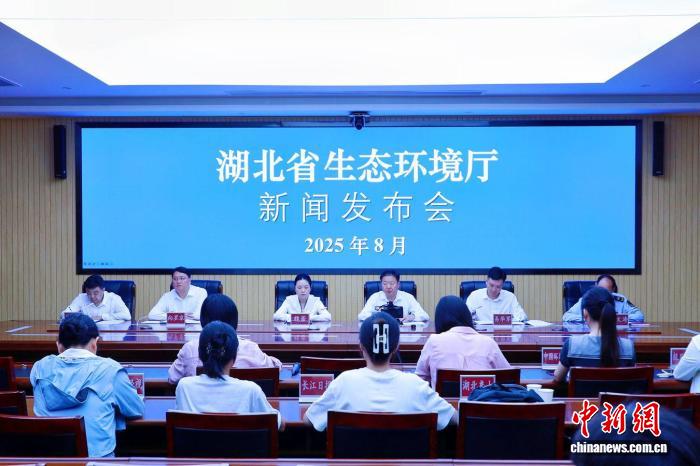
湖北出台水产养殖尾水污染物排放标准 来源:中国新闻网 编辑:张嘉怡 新闻发布会现场。湖北省生态环境厅供图 广告等商务合作,请点击这里 中新网武汉8月27日电 (梁婷 李斌)《湖北省水产养殖尾水污染物排放标准》(以下简称标准)近日出台, 将进一步完善湖北水污染物排放标准体系,促进水产养殖业污染防治与绿色发展。湖北省生态环境厅27 日举行新闻发布会,对上述标准进行详细解读。 湖北是水产养殖大省,是国家重要的水产养殖和粮食作物、经济作物种植基地。养殖尾水治理是长江高 水平保护十大攻坚行动的重要内容。 此次出台的标准,聚焦规模化养殖主体,监管对象为养殖水面200亩及以上的池塘、连片池塘及工厂化 养殖设施,兼顾规模化管理与地方实际需求。设置pH、悬浮物、高锰酸盐指数、总氮、总磷5项核心指 标。 同时,标准将受纳水域划分为特殊保护、重点保护和一般水域,特殊保护水域为法律法规规定的禁止设 置排污口的水域,重点保护水域和一般水域分别执行一级、二级排放标准。此外,对Ⅱ、Ⅲ类水质目标 的湖泊(水库)保护区外围500米内养殖区实施严格管控,不区分排放去向,养殖尾水排放执行一级标 准。例如,洪湖、梁子湖、斧头湖的湖泊保护区外围500 ...

国联水产:上半年净亏损5.4亿元,同比由盈转亏
Xin Lang Cai Jing· 2025-08-27 11:29
国联水产8月27日披露半年报,公司上半年实现营业收入16.51亿元,同比下降18.36%;归属于上市公司 股东的净利润亏损5.4亿元,上年同期净利润1754.06万元;基本每股收益-0.479元。 ...

苏状元荣膺水产“奥斯卡”BAP认证,以国际标准重塑大闸蟹产业!
Sou Hu Wang· 2025-08-27 09:15
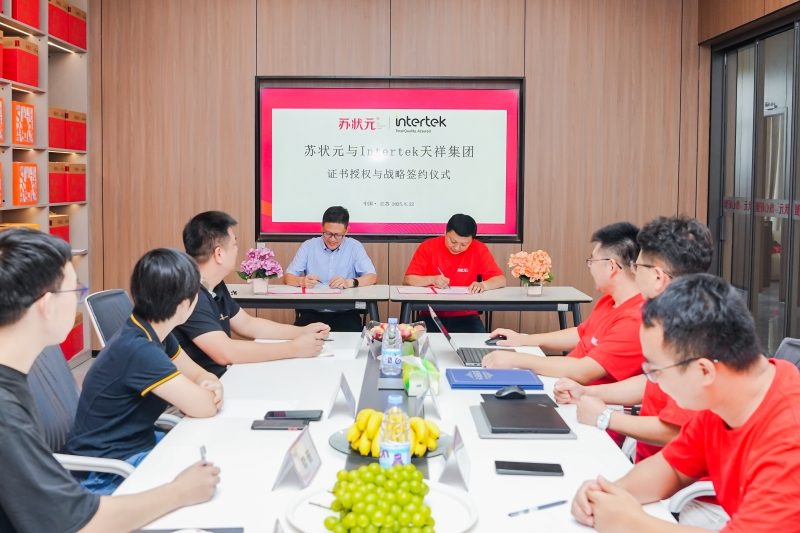
Core Viewpoint - Su Zhuangyuan has partnered with Intertek to achieve BAP certification, aiming to ensure high-quality and sustainable production of Chinese hairy crabs, addressing industry issues such as inconsistent standards and quality concerns [1][2][4]. Industry Overview - The Chinese hairy crab market has seen significant growth, with production increasing from 748,700 tons in 2016 to 839,000 tons in 2023, and demand rising from 743,000 tons to 844,300 tons in the same period [2]. - The wholesale market for hairy crabs reached 33.357 billion yuan in 2023, highlighting the industry's prosperity despite existing challenges like fraud and quality issues [2]. Company Achievements - Su Zhuangyuan has established itself as a quality benchmark in the hairy crab industry, having been recognized as the top brand in the new ingredient category for two consecutive years (2024-2025) [4][10]. - The company has successfully implemented a comprehensive quality control system, utilizing advanced technology and sustainable practices in its operations [7][8]. Strategic Initiatives - The partnership with Intertek and the attainment of BAP certification signify a commitment to international quality standards, enhancing consumer trust and safety [4][15]. - Su Zhuangyuan has invested in a large-scale distribution center and smart crab ponds, employing automation and AI technology to improve supply chain transparency and efficiency [8]. Brand Positioning - The brand's slogan "Choose Su Zhuangyuan for Quality Crabs" reflects its dedication to providing high-quality products, which has resonated well with consumers, leading to strong sales performance [10][11]. - Su Zhuangyuan aims to expand its market presence globally, with a mission to let "300 million people enjoy Su Zhuangyuan crabs all year round" and to showcase Chinese hairy crabs on the world stage [12][15].
威海上半年绿色贷款余额超1353亿元
Qi Lu Wan Bao· 2025-08-27 07:29
Core Insights - Weihai City has made significant progress in green finance reform and innovation, establishing a comprehensive framework that integrates financial services with environmental sustainability [1][2][3] Group 1: Green Finance Achievements - The total balance of green loans in Weihai reached 135.31 billion yuan, marking a year-on-year increase of 35.49%, accounting for 21.8% of all loans [1] - The launch of the "Green Finance Digital Comprehensive Service Platform" named "Green e-Rong" aims to enhance project identification and financing efficiency, integrating 11 types of authoritative data and serving 140,000 enterprises [2] - The establishment of the first carbon credit financial service platform in Shandong Province, covering monitoring, accounting, management, and trading processes, has processed 1.8 million data entries [3] Group 2: Blue Economy Initiatives - Weihai has created the first blue investment and financing project database in the country, with 71 projects initially included, securing 15.9 billion yuan in credit for 33 projects [4] - The city has introduced innovative financial products such as the first marine sustainable development-linked loan and the first marine carbon credit pledge loan in the province [4][5] Group 3: Carbon Trading and Environmental Impact - The first carbon credit transaction for double-shelled mollusks in Shandong Province was completed, with an average annual reduction of 1.3077 million tons of CO2 equivalent from 2021 to 2024 [6] - The integration of carbon credit trading with financial and tourism sectors is being explored to enhance the economic benefits of ecological conservation [6] Group 4: Green Banking Initiatives - Weihai has established a "recognition + assessment" closed-loop system for green branches, with 21 branches recognized, and 10 of the first 12 branches rated as "excellent" [7] - Green branches have issued loans totaling 35.04 billion yuan, with green loans accounting for 83% of the total, supporting over 50 green projects [7]

亲,这份潜江小龙虾邀请函,速查收——
Jin Rong Shi Bao· 2025-08-27 07:18
Core Insights - The article highlights the significant development and innovation in the crawfish industry in Qianjiang, Hubei Province, showcasing its importance as a key economic driver and a popular product both domestically and internationally [1][2]. Industry Overview - Qianjiang crawfish has established a comprehensive industrial chain that includes breeding, ecological farming, processing, logistics, e-commerce, and cultural events, demonstrating a well-rounded development across primary, secondary, and tertiary industries [1]. - The crawfish industry in Qianjiang has gained recognition from various public figures, enhancing its market presence and consumer appeal [1]. Innovation and Farming Practices - The "Four Seasons Crawfish" farming model allows for year-round cultivation, with farmers reporting significant income increases. For instance, one farmer mentioned an annual net income of over 300,000 yuan from 30 acres of land, compared to previous losses of 20,000 to 30,000 yuan in less favorable years [2]. - The establishment of a research base for crawfish farming includes facilities for breeding, nutrition research, and environmental monitoring, contributing to improved farming practices and yields [2]. Financial Support and Development - The People's Bank of China in Qianjiang has played a crucial role in supporting the crawfish supply chain through financial services, launching a supply chain finance service that includes six credit products and facilitating loans totaling 2.15 million yuan on its first day [3]. - The local government has actively promoted an optimized business environment, which has been essential for the growth of the crawfish supply chain and related financial services [3].
(活力中国调研行)湖北潜江打造“四季有虾”模式 小龙虾“链”出大产业
Zhong Guo Xin Wen Wang· 2025-08-27 03:35
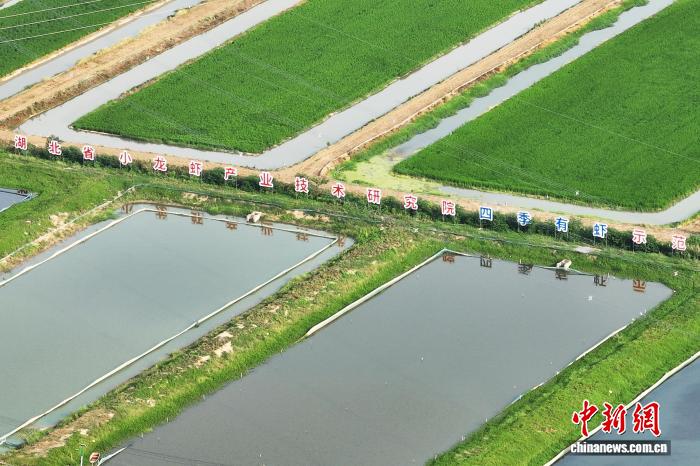
Core Viewpoint - Hubei Qianjiang is developing a "Four Seasons with Shrimp" model to stabilize the supply of crayfish year-round, enhancing farmers' income and promoting industrial growth [2][4]. Group 1: Industry Development - The "Four Seasons with Shrimp" model integrates research, enterprises, and farmers to create a stable supply chain for crayfish, addressing previous seasonal limitations [2]. - The Zhangjiakou "Four Seasons with Shrimp" experimental demonstration base features 17 ponds covering 170 acres, enabling a full-cycle process from seedling cultivation to adult shrimp farming [2][4]. - The crayfish farming area in Qianjiang has reached 947,000 acres, forming a complete industry chain that includes research, farming, processing, logistics, and dining, with a total output value exceeding 87 billion yuan [5]. Group 2: Economic Impact - The implementation of the "Four Seasons with Shrimp" model has led to a winter shrimp output of 24,000 tons from December 2024 to February 2025, generating a value of 2.19 billion yuan [4]. - The price of large-sized shrimp during the Spring Festival reached 54 yuan per jin, three times higher than summer prices, benefiting the restaurant industry significantly [4]. - The brand value of Qianjiang's crayfish industry is estimated at 52.72 billion yuan, indicating strong market recognition and potential for growth [5]. Group 3: Future Prospects - The local government plans to focus on factory farming, standardization, and deep processing to accelerate the formation of a trillion-yuan industry cluster [5].
柬埔寨“鱼米走廊”研修班南京开课
Xin Hua Ri Bao· 2025-08-26 23:12
Core Viewpoint - The training program for Cambodian "Fish-Rice Corridor" construction is aimed at enhancing agricultural development through knowledge exchange and practical experience in Jiangsu province [1] Group 1: Training Program Details - The training program is organized by the provincial government’s foreign affairs office and the Jiangsu Academy of Agricultural Sciences [1] - It integrates resources from various sectors including government departments, research institutions, and enterprises to ensure effective training [1] - The curriculum focuses on rice planting and aquaculture, presenting advanced models of Jiangsu's agricultural development [1] Group 2: Practical Learning and Collaboration - The program includes field trips to Jiangning District, Yangzhou, and Zhenjiang to observe the implementation of rural revitalization strategies [1] - A joint laboratory for nutrition and active factor detection has been established between Jiangsu and Cambodia, recognized as a key project by the Ministry of Agriculture and Rural Affairs [1] - The laboratory aims to provide technical training for Cambodian personnel and accelerate the development of active functional products [1]
南海水产研究所副所长张殿昌:重点培育饲料效率高、耐粗饲料的水产品种,降低养殖成本
Nan Fang Nong Cun Bao· 2025-08-26 13:32
Core Viewpoint - The South China Sea Fisheries Research Institute emphasizes the need to cultivate high feed efficiency and rough feed-resistant aquatic species to reduce aquaculture costs [1][3]. Group 1: Recommendations for Marine Ranching Development - Zhang Dianchang proposed two major recommendations for the development of marine ranching in Guangdong Province [3]. - The focus should be on core species such as golden pomfret, which are key to deep-sea farming in Guangdong [5]. Group 2: Comprehensive Technological Initiatives - A full-chain industrial technology breakthrough is necessary, covering seven key areas [6]. - Strengthening the breeding of breakthrough new varieties is essential, with a focus on high feed efficiency and rough feed resistance [8]. - For instance, reducing the feed conversion ratio for golden pomfret from 2.2 to 1.5 could lower the cost by 3-4 yuan per kilogram and reduce fishmeal usage by 20% [9]. Group 3: Technological Development and Support - Development of controlled indoor breeding technology to ensure stable supply of seedlings throughout the year [10]. - Breakthroughs in equipment technology, such as adjustable gravity net cages, are crucial for ensuring the safety of facilities and fish [10]. - Precision nutrition feed technology should be developed to create suitable feed for different growth stages, further lowering feed conversion ratios [11]. Group 4: Disease Control and Brand Building - Establishing a comprehensive disease control system, including rapid pathogen detection and efficient vaccine development, is vital [11]. - Enhancing brand building to increase the value of Guangdong's marine ranching industry is also recommended [12]. Group 5: Technology Transfer and Collaboration - Strengthening deep innovation cooperation between universities, research institutions, and enterprises is necessary for technology transfer [13]. - Utilizing the South China Sea Fisheries Technology Innovation Alliance to support the development of core technologies and equipment for modern marine ranching [14]. - Establishing a national marine ranching engineering research center to promote joint investment in R&D by government and enterprises [16].

评论丨以大省之责,绘就岭南农业现代化新图景
Nan Fang Nong Cun Bao· 2025-08-26 10:04
Core Viewpoint - Guangdong province is leading the modernization of agriculture in China, with a total agricultural output value of 970.1 billion yuan, positioning itself as a key player in national food security and agricultural innovation [4][16]. Group 1: Agricultural Output and Industry Structure - Guangdong's agricultural sector includes 5,507 leading enterprises and generates 1.63 trillion yuan in processing revenue, showcasing a robust industrial foundation [5]. - The province's agricultural output is crucial for the food supply of 1.4 billion people in China, emphasizing its role as a major agricultural supplier [14]. Group 2: Challenges and Development Goals - Despite significant achievements, Guangdong faces challenges such as small-scale specialty industries, weak biological seed industry, limited agricultural machinery application, and product homogeneity [7][8]. - The province aims to achieve the "14th Five-Year" agricultural modernization goals through initiatives like the "Hundred Million Thousand Project," focusing on key areas such as aquaculture and marine seed industry [18][19]. Group 3: Innovation and Technology - Innovation is essential for agricultural modernization, with a focus on technological empowerment, chain integration, and policy innovation [11]. - Guangdong is addressing challenges in biological breeding technology by integrating resources from universities and enterprises to achieve breakthroughs in areas like gene editing and smart breeding [28]. Group 4: Collaborative Efforts and Policy Innovation - The province is promoting a collaborative model that connects leading agricultural enterprises with local farmers to enhance income and employment opportunities [41]. - Policy innovations such as "agricultural insurance + futures" mechanisms are being explored to support the agricultural sector and improve financial access for farmers [36][50]. Group 5: Future Outlook - Guangdong is committed to transforming agricultural modernization into tangible results, focusing on both industrial prosperity and rural revitalization [54]. - The province's agricultural modernization efforts are characterized by a proactive approach, aiming to navigate challenges and seize opportunities in the agricultural landscape [56].
海大集团董事长薛华:打造水产育种“远洋舰”
Nan Fang Nong Cun Bao· 2025-08-26 09:03
Core Viewpoint - The chairman of Haida Group, Xuehua, emphasizes the importance of technological innovation in building a modern agricultural industry system, particularly in the field of aquatic breeding and food security [4][5][6]. Group 1: Aquatic Breeding Strategy - Haida Group aims to create a "deep-sea breeding flagship" by enhancing collaboration between breeding enterprises and research institutions to tackle the challenges of deep-sea breeding [9][12]. - The company has established a comprehensive commercial breeding system that covers major economic species consumed nationally, focusing on breakthroughs in factory-based and deep-sea breeding [10][11]. Group 2: Modern Aquaculture Facilities - The company proposes the construction of "super factories" for near-sea aquaculture to overcome traditional aquaculture limitations and achieve controllable production [13][14]. - Factory-based aquaculture is seen as a modern approach to enhance efficiency and reduce risks, especially in the context of marine ranching [15][16]. Group 3: Feed Supply and Market Position - Haida Group is currently the world's largest feed producer, with an expected feed volume of over 30 million tons this year, aiming to be the first agricultural enterprise to reach this milestone [18]. - The company plans to increase research investment to improve feed supply, particularly focusing on the nutritional needs of marine aquaculture species [20][21]. Group 4: Future Growth Targets - Over the next five years, Haida Group aims to double the growth of its main business segments, with a target revenue of over 200 billion yuan by 2030 and feed sales reaching 51.5 million tons [22][23].
