
新型显示

Search documents
2025年工业经济实现向新向优发展
Xin Lang Cai Jing· 2025-12-26 20:00
Group 1 - The core viewpoint of the meeting emphasizes the need for the industrial economy to advance towards new and superior development by 2025, achieving qualitative improvements and reasonable quantitative growth [1] - It is projected that by 2025, the total revenue from telecommunications services and software business will grow by approximately 9% and 12% year-on-year, respectively, while the digital industry revenue is expected to increase by around 9% [1] - The meeting highlights the importance of consolidating the positive momentum of the industrial economy in 2026, enhancing the resilience and security of the industrial chain, and accelerating technological innovation capabilities [1] Group 2 - The meeting outlines the goal of fostering emerging and future industries, specifically mentioning the development of key sectors such as integrated circuits, new displays, new materials, aerospace, low-altitude economy, and biomedicine [2] - It calls for the implementation of a new round of key industry growth plans, focusing on stabilizing effective investment in manufacturing and enhancing the quality of industrial chains [2] - The initiative includes the cultivation of "little giant" enterprises, manufacturing champions, and national-level characteristic industrial clusters for small and medium-sized enterprises [2]
工业和信息化部部署2026年重点工作
Shang Hai Zheng Quan Bao· 2025-12-26 18:58
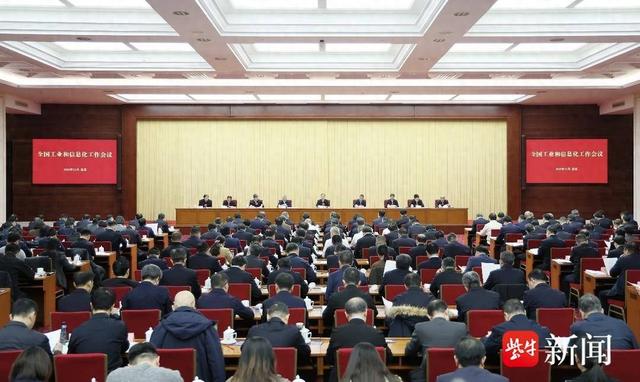
Core Insights - The national industrial and information technology work conference held on December 25-26 outlined key tasks for 2026, focusing on stabilizing growth, enhancing innovation, promoting integration, optimizing governance, and preventing risks to achieve qualitative and quantitative improvements in the industrial economy [1] Group 1: Stabilizing Growth - The primary task for 2026 is to stabilize growth in the industrial economy, with a focus on implementing a new round of ten key industry growth plans and supporting major industrial provinces [1] - There will be an emphasis on increasing the supply of green products, trendy products, and products for the elderly, while systematically cultivating a lineup of high-quality consumer goods [1] - Enhancing the resilience and safety of industrial chains is crucial for stabilizing growth, with actions planned for high-quality development of key industrial chains and promoting the development of characteristic mineral resource industries [1] Group 2: Optimizing Industrial Structure - The conference called for optimizing and upgrading traditional industries through standard guidance, equipment updates, process upgrades, digital empowerment, and management innovation [2] - There will be a focus on nurturing emerging and future industries, including integrated circuits, new displays, new materials, aerospace, low-altitude economy, and biomedicine, along with support for artificial intelligence initiatives [2] - The establishment of national emerging industry development demonstration bases and innovative industrial clusters is planned, alongside innovation tasks in future industry segments [2] Group 3: Strengthening Innovation - The goal for 2026 includes overcoming core technologies that drive industrial development and strengthening high-level manufacturing pilot platforms [3] - The creation of a national integrated technology market and the promotion of a "pay after use" reform for technological achievements are key initiatives [3] - The conference emphasized the need for deep integration of information technology and industrialization, with the establishment of high-quality industry data sets and digital transformation scenarios [3] Group 4: Optimizing Governance - The conference highlighted the need to accelerate the implementation of the "14th Five-Year" series of plans in the industrial and information technology sector and to address "involution" competition [4] - There will be a focus on enhancing the supply capacity of high-quality standards and fostering the development of "little giant" enterprises and national-level specialized industrial clusters [4] - Promoting green and low-carbon development in the industrial sector is also a priority, with initiatives for energy-saving transformations and the establishment of national green factories and industrial parks [4]
工信部部署2026年重点工作,事关人工智能、低空经济
Xin Lang Cai Jing· 2025-12-26 13:54
Core Insights - The National Industrial and Information Technology Work Conference was held from December 25 to 26, focusing on the development of emerging industries and future industries, including integrated circuits, new displays, new materials, aerospace, low-altitude economy, and biomedicine, while supporting artificial intelligence initiatives [2][4] Group 1: Industrial Economic Performance - The industrial economy is expected to show steady progress, with telecommunications business volume and software business revenue projected to grow by approximately 9% and 12% year-on-year, respectively, and digital industry revenue also expected to increase by around 9% [3] - From January to November, the added value of high-tech manufacturing and equipment manufacturing industries grew by 9.2% and 9.3% year-on-year, respectively, with the core AI industry exceeding 1 trillion yuan and new energy vehicle exports surpassing 2 million units [3] Group 2: Key Focus Areas for 2026 - The year 2026 marks the beginning of the "15th Five-Year Plan," emphasizing the integration of technological and industrial innovation, and the need to stabilize growth, enhance innovation, promote integration, optimize governance, and mitigate risks [4] - Ten key areas of focus for 2026 include consolidating the positive trend of the industrial economy, enhancing industrial chain resilience, accelerating technological innovation, optimizing traditional industries, and fostering emerging and future industries [5][6] Group 3: Technological and Industrial Integration - The conference highlighted the importance of deepening the integration of information technology and industrialization, including the establishment of high-quality industry data sets and the promotion of digital transformation in key industries [6] - Initiatives to support the integration of AI and manufacturing, as well as the development of industrial internet platforms, were also emphasized [6] Group 4: Green and Sustainable Development - The promotion of green and low-carbon development in the industrial sector is a priority, with efforts to enhance energy efficiency and carbon reduction in industrial enterprises, and the establishment of standards for carbon footprint accounting [6][7] - The conference also called for the cultivation of national green factories and industrial parks, as well as the promotion of comprehensive utilization of industrial solid waste [7] Group 5: Enterprise Development and Governance - The conference aims to foster high-quality enterprises, including "little giant" companies and manufacturing champions, while addressing issues related to overdue payments to enterprises [7] - Enhancing governance efficiency in the industrial and information sectors is crucial, with a focus on curbing "involution" competition and promoting policy coordination across industries [7]

工信部:推进AI+制造专项行动,培育一批重点行业智能体
Nan Fang Du Shi Bao· 2025-12-26 08:17
Core Insights - The conference highlighted the expected growth in telecommunications and software business revenues by approximately 9% and 12% respectively for 2025, with digital industry revenue also projected to grow by around 9% [1] - The manufacturing sector is undergoing a transformation, with significant increases in high-tech and equipment manufacturing value added, and the establishment of numerous advanced smart factories and green factories [1] - The meeting outlined ten key focus areas for 2026, emphasizing the cultivation of emerging industries such as integrated circuits, new materials, and artificial intelligence [2] Group 1 - The total telecommunications business volume and software business revenue are expected to grow by 9% and 12% respectively in 2025 [1] - The value added of high-tech manufacturing and equipment manufacturing increased by 9.2% and 9.3% year-on-year [1] - The core AI industry has surpassed 1 trillion yuan, and exports of new energy vehicles have exceeded 2 million units [1] Group 2 - The conference set a focus on nurturing emerging industries, including integrated circuits, new displays, and aerospace [2] - There is a strong emphasis on the deep integration of information technology and industrialization, with initiatives to create high-quality industry data sets and digital transformation scenarios [2] - The meeting also stressed the importance of improving industry governance efficiency and curbing low-price, low-quality competition [2]
工信部发声!打造集成电路等新兴支柱产业
Zhong Guo Zheng Quan Bao· 2025-12-26 08:14
Group 1 - The conference emphasized the cultivation and expansion of emerging and future industries, including integrated circuits, new displays, new materials, aerospace, low-altitude economy, and biomedicine, while supporting artificial intelligence initiatives and orderly commercial trials for satellite IoT [1][2] - Key focus areas for 2026 include consolidating the industrial economy's stable growth, enhancing the resilience and security of industrial chains, and accelerating technological innovation capabilities in industries [1][2] - The conference outlined ten priority areas for development, including optimizing traditional industries, promoting green and low-carbon industrial development, and fostering deep integration of information technology and industrialization [2][3] Group 2 - The conference highlighted the importance of creating national emerging industry development demonstration bases and building innovative industrial clusters, as well as advancing key innovation tasks in future industries [2] - It was noted that by 2025, the telecommunications business volume and software business revenue are expected to grow by approximately 9% and 12% respectively, with digital industry revenue also projected to increase by around 9% [3] - The conference reported significant growth in high-tech manufacturing and equipment manufacturing, with respective increases of 9.2% and 9.3% year-on-year from January to November [3]
深入整治“内卷式”竞争 工信部部署2026年重点工作
Xin Hua Wang· 2025-12-26 06:53
会议提出,要全力巩固工业经济稳中向好态势,加大绿色产品、潮品、适老产品等供给,着力稳定制造 业有效投资。持续提升产业链韧性和安全水平,实施新一轮重点产业链高质量发展行动,深入实施产业 基础再造工程。加快提升产业科技创新能力,攻克一批带动产业发展的核心技术,做强一批高水平制造 业中试平台,加快培育全国一体化技术市场。 新华社北京12月26日电(记者周圆、唐诗凝)记者26日从全国工业和信息化工作会议上获悉,工业和信 息化部部署2026年重点工作时提出,深入实施新一轮十大重点行业稳增长工作方案,推动特色优势矿产 资源产业高质量发展,打造新兴支柱产业,推进"人工智能+制造"专项行动,深入整治"内卷式"竞争 等。 工业和信息化部部长李乐成在会上表示,2026年是"十五五"开局之年,要锚定实现新型工业化这个关键 任务,进一步全面深化改革,推动科技创新和产业创新深度融合,推动信息化和工业化深度融合,因地 制宜发展新质生产力,推动工业经济实现质的有效提升和量的合理增长,加快建设现代化产业体系,确 保实现"十五五"良好开局。 在培育壮大新兴产业和未来产业方面,会议明确,将打造集成电路、新型显示、新材料、航空航天、低 空经济、生 ...
工信部:完善具身智能、元宇宙等的创新发展政策 加强6G技术研发
智通财经网· 2025-12-26 05:56
Core Insights - The National Industrial and Information Technology Work Conference was held in Beijing on December 25-26, focusing on fostering emerging industries and future sectors, including integrated circuits, new displays, new materials, aerospace, low-altitude economy, and biomedicine [1][3][4]. Group 1: Emerging Industries and Future Sectors - The conference emphasized the importance of developing new pillar industries such as integrated circuits, new displays, new materials, aerospace, low-altitude economy, and biomedicine [4][8]. - Support for artificial intelligence initiatives and the orderly development of satellite IoT commercial trials was highlighted [4][8]. - The establishment of the first national emerging industry development demonstration bases and the creation of innovative industrial clusters were discussed [4][8]. Group 2: Industrial and Information Integration - The conference called for deep integration of information technology and industrialization, including the creation of high-quality industry data sets and digital transformation scenarios [4][8]. - Initiatives to promote "AI + manufacturing" and the development of intelligent manufacturing systems were outlined [4][8]. Group 3: Industrial Development Goals - The conference set ambitious goals for 2026, focusing on stabilizing industrial economic growth, enhancing industrial chain resilience, and improving technological innovation capabilities [5][6][7]. - Specific actions include supporting key industries, optimizing traditional industries, and fostering new and future industries [7][8]. Group 4: Quality Development in Information and Communication - The conference announced plans for high-quality development in the information and communication sector, including the launch of a "broadband upgrade" initiative and the acceleration of mobile IoT development [9]. - Emphasis was placed on strengthening data protection and establishing mechanisms for cross-border data flow in key sectors [9]. Group 5: Governance and Policy Implementation - The conference stressed the importance of enhancing governance efficiency and implementing a series of plans for the industrial and information sectors [10][12]. - Measures to combat "involution" in competition and promote high-quality standards were discussed [10][12].
成都如何加快建设全国先进制造业基地?
Xin Lang Cai Jing· 2025-12-25 18:26
Core Viewpoint - The construction of a national advanced manufacturing base in Chengdu is a strategic initiative aimed at enhancing the city's competitiveness and supporting national manufacturing development goals [4][10]. Group 1: Strategic Importance - The national government aims to optimize the spatial structure of productivity and enhance the resilience and security of industrial supply chains through the establishment of advanced manufacturing bases [4]. - Chengdu is expected to play a crucial role in supporting high-quality national manufacturing development and act as a significant growth pole in the new development landscape [4][10]. - The city is tasked with not only strengthening its own manufacturing capabilities but also leading regional manufacturing coordination and development [4][5]. Group 2: Current Challenges - Chengdu has made significant progress in manufacturing, establishing five national-level advanced manufacturing clusters and eleven trillion-level industrial chains, but still lags behind cities like Shanghai and Shenzhen in terms of scale, core competitiveness, and innovation capabilities [5][10]. - The number of national high-tech enterprises in Chengdu is approximately half that of Shanghai and Shenzhen, indicating a need for improvement in technological support [5]. Group 3: Development Strategies - Chengdu aims to strengthen its key industrial chains by supporting leading enterprises in sectors like new displays and aerospace to integrate into national productivity layouts [6]. - The city plans to enhance industrial chain quality and efficiency by creating detailed maps of manufacturing chains and attracting high-quality supporting projects [7]. - Collaborative efforts between Chengdu and the surrounding regions, particularly in the Chengdu-Chongqing area, are essential for mutual development and leveraging complementary advantages [8][9]. Group 4: Future Directions - The city is focused on building an advanced manufacturing industry system that emphasizes new industrialization and the development of emerging industries [11]. - An innovation system will be established to support the growth of technology enterprises and foster collaboration between large enterprises and specialized small and medium-sized enterprises [12]. - Chengdu will enhance its industrial park system to improve competitiveness and visibility, ensuring a robust foundation for the advanced manufacturing base [12].

盐南高新区:打造高质量发展“近悦远来”新样本
Xin Hua Ri Bao· 2025-12-24 23:49
Core Insights - The article highlights the remarkable development journey of Yannan High-tech Zone during the "14th Five-Year Plan" period, emphasizing urban expansion, industrial strength, innovation, and improved living standards [1][2]. Economic Development - Yannan High-tech Zone aims for a GDP of 29.299 billion yuan in 2024, maintaining a strong position among provincial high-tech zones in Jiangsu [2] - The area has established 21 innovation brands, including national-level integration demonstration zones and green energy demonstration zones [2] - Industrial transformation focuses on a dual-driven model of advanced manufacturing and modern services, fostering new productive forces in big data, renewable energy, robotics, and new displays [2][3] Innovation and Infrastructure - Over 180,000 square meters of innovation carriers have been built or are under construction, with 260 national high-tech enterprises and 46 provincial specialized enterprises [3] - The establishment of offshore innovation centers in major cities aims to facilitate the transformation of innovative ideas into practical applications [3] - The region has seen over 5,000 new legal entities and more than 10,000 new business entities in five years, indicating vibrant economic activity [3] Environmental and Social Responsibility - Yannan High-tech Zone emphasizes ecological priority and green development, integrating renewable energy and low-carbon industries into daily life [4] - The area has achieved a doubling of foreign trade import and export volume compared to the end of 2020, with significant annual growth in foreign investment [4] Urban Development and Quality of Life - The urban landscape is being optimized with new projects like Nanhai Future City and the "Eye of Chuan River," enhancing the city's appeal [6] - The region has invested over 34 billion yuan in education, resulting in the construction of 20 new or renovated schools [8] - Healthcare improvements include the establishment of 30 new medical institutions, covering a comprehensive healthcare system [8] Community and Cultural Engagement - The area has developed a robust social security network, adding over 26,000 new insured individuals since the beginning of the "14th Five-Year Plan" [9] - Cultural events and community activities, such as the "Night Life Festival," have enriched the social fabric and enhanced community engagement [10] - The integration of digital technology in agriculture and community services has improved local livelihoods and strengthened rural economies [10]
成都都市圈5年:加速打造长江上游核心增长极
Zhong Guo Jing Ying Bao· 2025-12-23 17:04
Core Insights - Chengdu Metropolitan Area is the third nationally approved urban agglomeration in China and the first in the Midwest, comprising Chengdu, Deyang, Meishan, and Ziyang [1][2] - The area has transitioned from a "growth phase" to an "enhancement phase" over the past five years, with significant improvements in urban integration and overall strength [1][3] Development Achievements - The Chengdu Metropolitan Area has established over 350 educational partnerships and facilitated 757.78 million medical insurance settlements, with a total payment of 2.965 billion yuan [2] - The "one-hour traffic circle" has been realized, with ongoing construction of railways expected to fully cover the metropolitan area by 2027 [2] - The cross-city railway S3 line has seen an average monthly passenger volume of approximately 907,000, with a peak of 1.06 million in a month [2] Industrial Growth - The area has developed nine key industrial chains, including new displays, rail transit, and clean energy equipment, with a total scale exceeding 1.2 trillion yuan [3] - Eighteen national-level industrial clusters have been cultivated, with over 2,860 enterprises in cross-city cooperation, marking a year-on-year growth of 21.8% [3] Collaborative Development - The Chengdu Metropolitan Area is increasingly collaborating with the Yangtze River Delta, showcasing its development achievements and inviting investment opportunities [4][5] - The area aims to leverage the advanced industries and capital from the Yangtze River Delta while serving as a strategic hub for the Belt and Road Initiative [5] Future Goals - Future plans include enhancing the metropolitan area's core functions, industrial collaboration, and technological transformation, aligning with national and provincial development strategies [5]