旅游业

Search documents
95亿人次里的“新”年味儿(每周经济评论)
Ren Min Ri Bao· 2026-02-24 22:18
Core Insights - The 2026 Spring Festival travel period is expected to see a record high of 9.5 billion trips, reflecting a strong economic pulse and the vast potential of China's domestic market [1][2][3] Group 1: New Trends in Travel - Reverse Spring Festival travel is emerging as a new trend, with many young people bringing their parents to big cities for the holiday. The booking volume of flights for travelers aged 60 and above has increased by over 35% year-on-year, with a preference for first-tier and new first-tier cities [1] - The focus has shifted from material satisfaction to spiritual resonance, with a growing interest in cultural and tourism experiences. For instance, the popularity of the "Only Henan·Drama Fantasy City" event during the Spring Festival has surged by 2.5 times year-on-year [1] Group 2: New Consumption Trends - The consumption landscape is evolving, with a stronger presence of domestic trends. Events like the Shanghai Yuyuan Lantern Festival are incorporating trendy IPs, and non-heritage market activities in Shaanxi and Henan are attracting visitors [2] - The demand for diverse travel experiences is rising, with significant growth in duty-free shopping during the Spring Festival. The Haikou Customs reported over 1.1 billion yuan in duty-free shopping and more than 190,000 shoppers, representing increases of 6.3% and 26% respectively [2] Group 3: Enhanced Service Quality - The Spring Festival travel period poses challenges for transportation capacity and service quality. In response, various measures have been implemented to improve convenience, such as a new phone booking service for elderly travelers and expanded pet transport services [3] - The introduction of "green trains" and "slow trains" aims to meet the travel needs of people in remote areas, enhancing accessibility and service inclusivity [3]
春节假期日均出入境人次同比增长10.1%
Zhong Guo Zheng Quan Bao· 2026-02-24 20:28
Group 1 - The core viewpoint of the articles highlights a significant increase in cross-border travel during the Spring Festival, with a total of 17.8 million people entering and exiting the country, reflecting a 10.1% daily growth compared to the previous year [1] - The peak day for border crossings was February 21, with 2.259 million people crossing, indicating strong demand for travel [1] - Domestic residents accounted for 9.514 million crossings, showing a 10.2% increase in daily average compared to last year, while foreign visitors increased by 21.8% to 1.313 million [1] Group 2 - The increase in visa-free countries and mutual visa agreements has significantly enhanced the convenience of cross-border travel, contributing to sustained growth in outbound tourism [2] - There is a growing demand among Chinese tourists for high-quality, immersive travel experiences, as evidenced by the rising popularity of skiing trips and other travel products [2] - Southeast Asian countries remain popular destinations for outbound travel, with long-haul destinations like Oman, Kazakhstan, South Africa, Qatar, and Argentina seeing order volumes more than double compared to last year [1][2]
“家门口旅游”火爆应将热度延续下去
Xin Lang Cai Jing· 2026-02-24 19:19
Core Viewpoint - The article highlights a significant shift in travel behavior during the 2026 Spring Festival, with a surge in "tourism-style New Year" and "return-home tourism-style travel," indicating a growing trend of local tourism during the holiday season [1] Group 1: Travel Trends - The traditional concept of returning home for the New Year has evolved, with many individuals opting for local and surrounding area tourism instead of long-distance travel [1] - The article notes that this year's Spring Festival has seen unprecedented travel activity, with various new travel experiences emerging, suggesting that tourism has become an integral part of people's lifestyles [1] Group 2: Implications for the Industry - The record-high travel enthusiasm during the longest Spring Festival holiday serves as a strong incentive for optimizing public holiday arrangements and promoting diverse cultural and tourism integration [1] - The article emphasizes the potential for tourism to be embedded and expanded in various scenarios, reflecting a shift towards more frequent and routine travel experiences [1]
9天长假落幕 成都春节消费“热气腾腾”
Xin Lang Cai Jing· 2026-02-24 19:19
Core Insights - The article highlights the vibrant economic activity in Chengdu during the Spring Festival, showcasing a blend of traditional and modern consumer experiences that drive tourism and local commerce [9][10]. Group 1: Travel and Tourism - During the Spring Festival, Chengdu's dual airports served over 2.6 million passengers, with an average of 290,000 travelers per day, indicating a significant increase in air travel demand [9]. - The city welcomed 23.78 million tourists during the holiday, generating a total tourism expenditure of 25.75 billion yuan, with online and offline consumption reaching 63.17 billion yuan [10]. Group 2: Night Economy - The night economy in Chengdu thrived, with events like the night cruise on the Jinjiang River attracting approximately 418,000 visitors, including around 8,000 foreign tourists [10]. - Restaurants in popular districts experienced long queues, reflecting the high demand for dining options during the evening hours [11]. Group 3: Local Events and Markets - The "Village Sugar Fair" emerged as a significant event, combining local agricultural products with cultural experiences, attracting both locals and tourists [12][14]. - The fair facilitated business opportunities, with several contracts signed, including a total investment of 370 million yuan from three companies [14]. Group 4: Emerging Consumer Trends - The pet economy saw a notable rise, with a 46% increase in pet boarding demand and a surge in sales of pet-related products during the festival [15]. - Cultural and creative products gained popularity, with museums in Chengdu receiving high visitor numbers and generating substantial sales from creative merchandise [16]. Group 5: Technological Integration - AI-driven consumer products became a highlight, with innovative items like AI blind boxes selling out quickly, indicating a shift in consumer preferences towards technology-enhanced experiences [16]. - The integration of AI in retail settings, such as interactive experiences in stores, reflects a broader trend of redefining consumer engagement during the holiday season [16].

新华鲜报|策“马”出游!最长春节假期5.96亿人次创新高
Xin Hua She· 2026-02-24 14:35
旅行年味浓。这段时间,文化和旅游系统精心组织"欢欢喜喜过大年"主题活动,多措并举保障市场秩序 和安全稳定。多地非遗展演、庙会热闹登场,带来浓浓年味。"文博馆里过大年"成风尚,浙江、辽宁、 宁夏的文博场馆推出数百场主题展览与体验活动,让市民游客沉浸式感受传统文化。洛阳古城特色文化 街区、长沙五一商圈等地国风满满人气旺,夜间经济活力十足。 文旅消费旺。春节前夕,2026年全国春节文化和旅游消费月活动火热启动,各地集中发放消费券、专项 补贴等,推动文旅市场购销两旺。"惠民范儿"带动消费潮,飞猪数据显示,春节假期国内游订单量再创 新高,其中门票订单量同比增长超80%,酒店间夜量同比增长75%,国内游人均预订金额较去年提升约 10%。 新华社北京2月24日电 题:策"马"出游!最长春节假期5.96亿人次创新高 过年旅游,旅游过年。今年春节假期,国内游客人数和花费均创历史新高! 文化和旅游部24日发布:假日9天,全国国内出游5.96亿人次,较2025年春节假日8天增加0.95亿人次; 国内出游总花费8034.83亿元,较2025年春节假日8天增加1264.81亿元。 "过去9天,中国旅游业度过了一个繁荣、有序、普惠、共享 ...
大摩闭门会:马年开市四问 _纪要
2026-02-24 14:16
Summary of Key Points from Conference Call Industry or Company Involved - The discussion primarily revolves around the **global economic environment**, **U.S. tariff policies**, **China's economic situation**, and the **impact of AI technology** across various sectors. Core Insights and Arguments 1. **U.S. Tariff Policy Changes**: - The U.S. Supreme Court ruling limits presidential tariff powers, potentially leading to a decrease in global average tariff rates, with Asian countries' rates dropping from 20% to 17% and China's from 32% to 24% [2][4][12] - Despite nominal decreases, targeted tariffs on specific industries may still be implemented, increasing risks for businesses [4][12] 2. **China's Economic Re-inflation Challenges**: - China faces significant challenges in achieving re-inflation, requiring a reduction in excess industry investment, capacity cuts, and a substantial increase in consumer demand [2][6][21] - Current policies focus on short-term stimulus, with limited improvements in social security and disposable income, leading to expectations of weak deflation through 2026 [2][6][21] 3. **Impact of AI Technology**: - AI is causing a domino effect across industries, significantly altering traditional business models and creating new investment opportunities [2][7][8] - The market's pricing of AI disruption risks has surged from 4% to 24%, indicating heightened concern over AI's potential to replace jobs and alter industry dynamics [9] 4. **AI Infrastructure Constraints**: - AI infrastructure faces physical limitations, particularly in storage shortages and advanced manufacturing processes, which could benefit certain sectors while posing risks to service-oriented industries [10][11] 5. **U.S. Stock Market Stability**: - The U.S. stock market, particularly the S&P 500, is stabilizing, with projected earnings growth of 12% in 2026 and 17% in 2027, despite AI's disruptive potential being manageable [13] 6. **Japanese Market Outlook**: - Following the ruling party's electoral victory, the Nikkei index target price has been raised, with expected earnings growth of 12% in 2026 and 43% in 2027, driven by re-inflation and corporate governance reforms [14] 7. **Chinese Stock Market Dynamics**: - The Chinese stock market is expected to receive support in 2026, contingent on a rebound in fundamentals, with potential for a positive trajectory if conditions improve mid-year [3][20] 8. **Global Economic Environment**: - A stable global macroeconomic environment is beneficial for increasing institutional investor risk appetite, positively impacting Chinese stocks and the yuan's strength against the dollar [15][16] Other Important but Possibly Overlooked Content 1. **Tourism Industry Performance**: - The tourism sector is thriving, with significant growth in domestic and inbound travel expected to reach a cumulative revenue of 50 trillion RMB over the next five years [25] 2. **Aviation Industry Trends**: - The aviation sector is experiencing capacity constraints, with limited growth in flight operations, but is expected to see a positive trend in profitability and ticket prices through 2026-2027 [26][28] 3. **Overall Economic Sentiment**: - Current monetary and financial data indicate a persistent supply-demand imbalance, with cautious private sector investment and a need for further monetary easing contingent on market performance [22]
OTA专家春节出行情况交流
2026-02-24 14:15
Summary of Conference Call Notes Industry Overview - The conference call discusses the performance of the domestic travel and hotel industry during the 2026 Spring Festival, highlighting significant trends in both domestic and outbound tourism [1][2][3][6]. Key Points on Domestic Air Travel - Domestic flight supply during the 2026 Spring Festival contracted by 2%-3% year-on-year, which contributed to a demand increase [1][2]. - Air travel volume increased by approximately 14%-15% compared to the previous year, outperforming the overall market growth of 8%-9% [2][9]. - Ticket prices peaked around the seventh day of the festival, with a year-on-year increase of 6%-7%, and a maximum increase of 10% in the two weeks leading up to the festival [1][2]. Key Points on Domestic Hotel Industry - Hotel occupancy rates during the 2026 Spring Festival rose by about 17%-18% year-on-year, while prices slightly decreased by 1%-2% [1][3]. - High-star and mid-high star hotels achieved occupancy rates exceeding 75%, while budget hotels faced lower occupancy due to intense competition [7][17]. - The market is experiencing structural adjustments, with increased hotel supply in smaller cities and surrounding areas of major cities to meet dispersed demand [1][5]. Key Points on Outbound Tourism - The outbound tourism market showed significant recovery, with transportation and hotel volumes increasing by nearly 30% year-on-year [1][6]. - Airfare for outbound flights decreased by approximately 5% year-on-year, particularly for short-haul destinations in Southeast Asia, which have returned to 2019 levels [6][11]. - Hotel prices for outbound travel increased by about 5% year-on-year, indicating a recovery in the market [6]. Key Points on Market Trends and Consumer Behavior - The extension of the Spring Festival holiday by one day positively impacted service consumption, with a notable increase in travel, accommodation, and transportation sectors [1][8][9]. - The overall booking volume increased by around 20% compared to the previous year, with a clear trend of staggered travel before and after the holiday [12]. Key Points on Future Outlook for the Hotel Industry - The hotel supply growth rate is expected to stabilize between 3%-5%, with a cautious outlook on new supply due to market saturation [4][13]. - Hotel prices are anticipated to stabilize and show positive growth starting from March 2026 or during the summer peak season [4][13]. - Structural issues persist in the low-star hotel segment, which faces significant competition and operational challenges, particularly in regions like Yunnan and Guizhou [14]. Key Points on Regulatory Environment and Competition - Ongoing government investigations into environmental practices may impact operators, with potential adjustments in exclusivity, pricing tools, and commission structures [15][16]. - Despite these regulatory challenges, major platforms are expected to maintain their market positions due to structural advantages [16]. - Hotel operators like Huazhu and Atour have shown stable performance during the festival, with cautious strategies in response to regulatory uncertainties [17].
湾财晚报 | 春节国内游创历史新高;“36斤活羊烤完剩6.9斤”原因曝光;春节票房最新数据
Nan Fang Du Shi Bao· 2026-02-24 14:09
Group 1 - The domestic tourism during the Spring Festival reached a historical high with a total expenditure exceeding 803.48 billion yuan, marking an increase of 126.48 billion yuan compared to the previous year [2] - A total of 596 million domestic trips were made during the 9-day holiday, an increase of 95 million trips compared to the 8-day holiday in the previous year [2] - The cultural and tourism market in the country is reported to be stable and orderly [2] Group 2 - In 2025, the Hong Kong Stock Exchange is projected to rank first globally in new stock financing, with 488 companies having submitted applications for listing, the highest number from Guangdong province [3] - The real estate market in Shenzhen showed strong rebound post-Spring Festival, with second-hand residential transactions averaging 3.1 units per day, up 211.1% year-on-year, and new home transactions averaging 3.7 units per day, up 125.6% [5] - The trend of "reverse New Year" is emerging, with many young people bringing their parents to Shenzhen for family reunions, which is accelerating housing demand [5] Group 3 - The total box office for the Spring Festival film season reached 5.75 billion yuan with 120 million viewers, although the overall performance was considered average due to a lack of blockbuster films [6] - The average ticket price during the Spring Festival dropped to the lowest level in six years, with significant reductions in third and fourth-tier cities, decreasing by over 6% year-on-year [6] - The number of screening sessions during the Spring Festival exceeded 4.35 million, setting a new historical high for the festival [6]

(经济观察)中国旅游市场马年“开门红”
Zhong Guo Xin Wen Wang· 2026-02-24 13:15
Group 1 - The Chinese tourism market experienced a significant boost during the longest Spring Festival holiday, with 596 million domestic trips and total spending of 803.48 billion yuan, both reaching historical highs [1] - Traditional cultural experiences and new AI-driven consumption trends played a crucial role in enhancing the holiday tourism market, with many regions organizing unique activities to attract visitors [1] - Guangdong's tourism strategy, themed "Come to Guangdong for the New Year," emphasized a blend of intangible cultural heritage and modern experiences, leading to over 80% year-on-year growth in hotel bookings in popular destinations like Shantou [1] Group 2 - Fuzhou launched a New Year cultural tourism month with over 1,800 events, while Jiangxi and Fujian saw significant increases in tourism orders due to the popularity of intangible cultural heritage, with growth rates of 48% and 12% respectively [2] - Hainan's tourism market thrived during the holiday, receiving 12.32 million visitors and achieving total spending of 18.37 billion yuan, marking increases of 28.9% and 30.7% compared to the previous year [2] - AI technology emerged as a new trend in travel consumption, with a reported 800% increase in AI order volume on the Fliggy platform during the holiday, particularly in ticket booking services which saw a 24-fold increase [2] Group 3 - The extended holiday also stimulated outbound travel demand, with short-haul destinations like South Korea, Singapore, and Malaysia being popular, while long-haul travel to countries like Italy and Spain saw notable growth compared to last year [3]
马年春节假期泉州累计接待游客逾1618万人次
Zhong Guo Xin Wen Wang· 2026-02-24 12:49
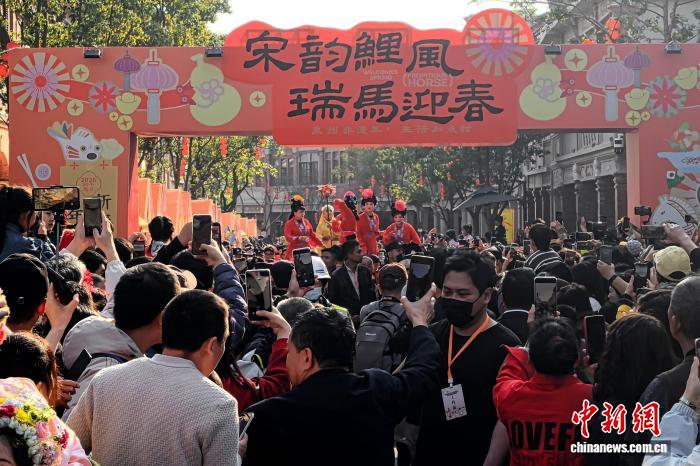
马年春节假期泉州累计接待游客逾1618万人次 中新网泉州2月24日电 (记者 孙虹)马年春节假期,世界遗产城市福建泉州的文旅市场持续火爆、人气拉 满。一场场流动的非遗盛宴惊喜连连,传统与现代在街头巷尾相融共生,让海内外游客在泉州留下独属 于马年新春的美好记忆。 据泉州市文化广电和旅游局24日发布的测算数据,2026年春节假期,全市累计接待游客1618.39万人 次、游客旅游总花费164.59亿元,比去年同期分别增长59.98%、63.02%,按可比口径分别增长42.19%、 44.91%。 马年春节假期,世界遗产城市福建泉州的文旅市场持续火爆。图为泉州古城中山路游客众多。中新网记 者 孙虹 摄 数据显示,泉州春节期间核心景区客流全线飘红,重点景点再破历史峰值,中心城区酒店入住率均超 95%,再现"一房难求",永春县、德化县、泉州台商投资区酒店平均入住率超90%,高峰期11个县(市、 区)入住率均超95%。泉州古城累计客流量突破250万人次,创同期历史新高;41家重点监测景区共接待 游客1041.08万人次、同比增长44.7%,实现门票收入4952.4万元、同比增长19.9%。 本文为转载内容,授权事宜请联系原 ...