
火箭制造

Search documents
期待!可重复使用火箭朱雀三号进入首飞关键准备阶段
Ren Min Ri Bao· 2025-10-20 12:15
Core Points - The reusable rocket Zhuque-3 has successfully completed fueling integration and static fire tests, entering the critical preparation phase for its maiden flight, which is scheduled for this year [1] - Zhuque-3 is a domestically developed liquid launch vehicle designed for large constellation networking tasks, featuring high payload capacity, low cost, and reusability [6] - The rocket is capable of autonomous high-precision return after executing orbital launch missions, achieving soft landing for reuse [6]

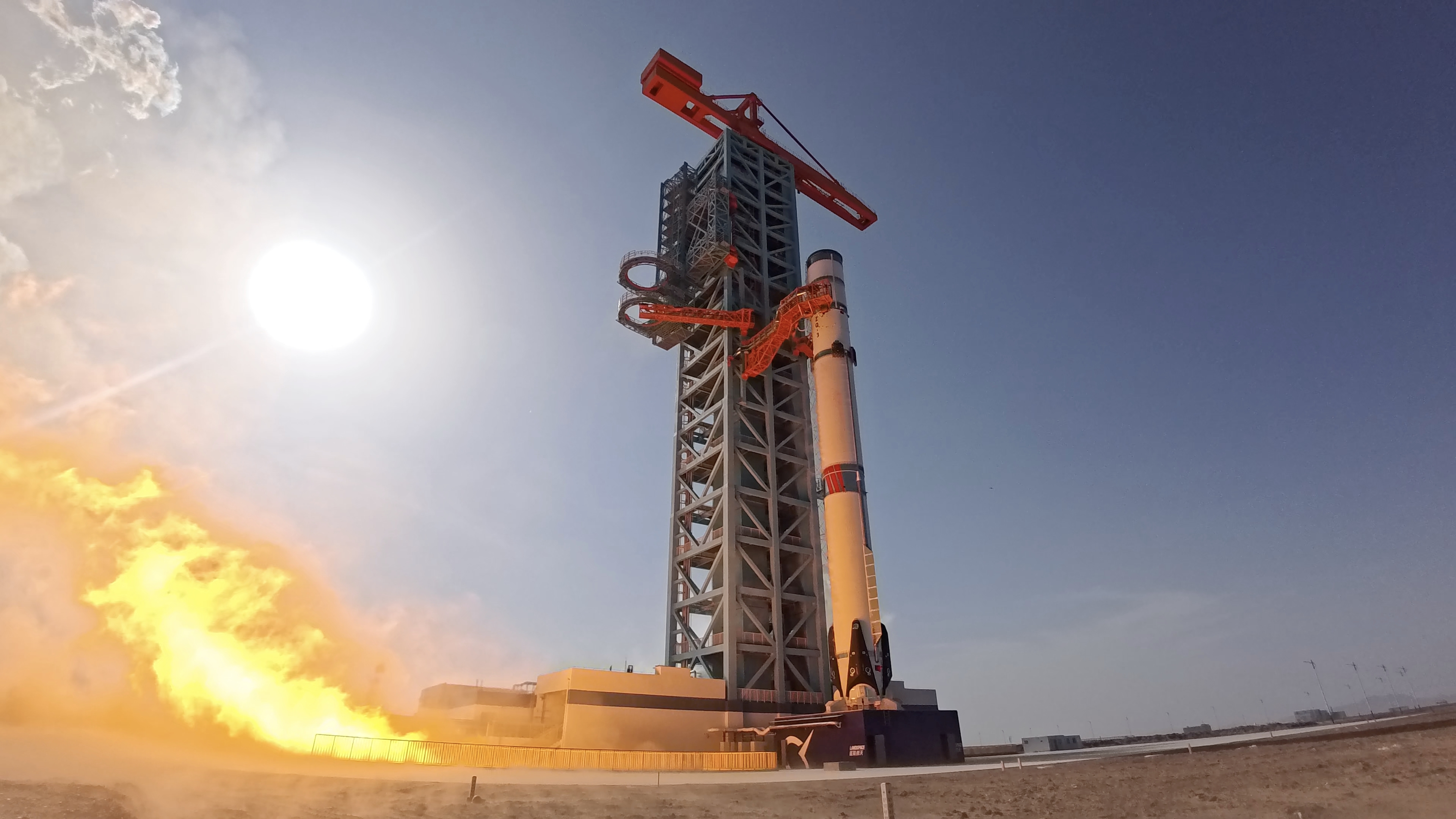
首飞在即 朱雀三号可复用火箭完成加注合练及静态点火试验
Zhong Guo Xin Wen Wang· 2025-10-20 12:03
Core Points - The Zhuque-3 rocket has successfully completed its first phase of flight testing, which includes fueling integration and static fire tests, as part of its preparation for the inaugural launch [1] - The rocket is designed for large constellation networking tasks and is characterized as a high-capacity, low-cost, reusable liquid launch vehicle [1] Group 1 - The Zhuque-3 rocket underwent fueling integration and static fire tests from October 18 to 20 at the Dongfeng Commercial Space Innovation Test Area [1] - The first phase of the flight test is followed by a second phase focused on orbital launch and attempting first-stage recovery [1] - The Zhuque-3 rocket was officially initiated in August 2023 and features a diameter of 4.5 meters for the first and second stages, a fairing diameter of 5.2 meters, and a total length of 66.1 meters with a launch mass of approximately 570 tons [1] Group 2 - The rocket's first stage is equipped with nine Tianque-12A liquid oxygen-methane engines, and it includes grid fins and landing legs for high-precision return and soft landing capabilities [1] - The Zhuque-3 rocket aims to achieve reusability after completing its orbital missions, enhancing its operational efficiency [1]
固体运载火箭“海澜之家号”成功发射
Ren Min Wang· 2025-10-12 06:52
Core Viewpoint - The successful launch of the "Gravity-1 Yao-2·Hailan Home" rocket marks a significant advancement in China's commercial space sector, showcasing the collaboration between the national brand Hailan Home and the private rocket company Dongfang Space [1][2][5]. Group 1: Rocket Specifications and Capabilities - The "Gravity-1 Yao-2·Hailan Home" rocket has a total height of 30 meters, with a core stage and booster diameter of 2.65 meters, and a launch weight of 405 tons [4]. - It features a launch thrust of 600 tons and is equipped with a 4.2-meter diameter fairing [4]. - The rocket can carry up to 6.5 tons to low Earth orbit and 4.2 tons to a 500-kilometer sun-synchronous orbit, with capabilities for launching multiple satellites in a single mission [4]. Group 2: Strategic Importance and Collaboration - Hailan Home emphasizes the importance of commercial space as a new engine for China's aerospace development, contributing to the vision of becoming a space power [5]. - The partnership between Hailan Home and Dongfang Space, initiated in April 2023, aims to support national aerospace development and reflects a shared ambition in space exploration [5]. - The successful launch symbolizes a remarkable intersection of national branding and cutting-edge technology, reinforcing Hailan Home's commitment to innovation and responsibility [5].

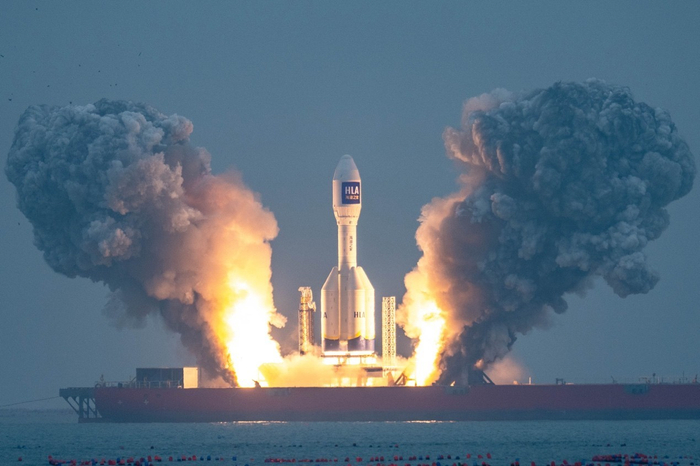
全球运力最大固体火箭“引力一号”再度成功发射
Guan Cha Zhe Wang· 2025-10-11 05:33
Core Viewpoint - The successful launch of the Gravity-1 remote two carrier rocket marks a significant achievement in China's commercial space sector, showcasing advancements in solid rocket technology and raising discussions about the future direction of the industry [1][5]. Group 1: Rocket Specifications and Achievements - The Gravity-1 rocket is the world's largest solid propellant carrier rocket, with a launch mass of 405 tons and a thrust of 600 tons, capable of carrying 6.5 tons to low Earth orbit and 4.2 tons to a 500 km sun-synchronous orbit [3]. - The rocket's successful launch from the sea near Haiyang, Shandong, represents China's first successful sea launch of a bundled configuration carrier rocket [1][3]. Group 2: Technological Advancements and Market Strategy - The Gravity-1 rocket has undergone significant upgrades in reliability, stability, and adaptability to various orbits and launch points compared to its predecessor [5]. - The choice of solid rockets over liquid rockets has sparked debate within the commercial space sector, as solid rockets have higher launch costs per kilogram and may not meet the low-cost demands of future high-frequency satellite networks [5][6]. Group 3: Industry Context and Future Considerations - The commercial space industry predominantly utilizes liquid rockets, which account for over 70% of the domestic market, due to their higher performance and reusability [5][6]. - The strategy of using solid rockets as a transitional technology aims to leverage existing military technology for rapid market entry, with plans to develop liquid rockets for future demands [6].

星际荣耀完成7亿元新融资,加速火箭量产与IPO进程
Nan Fang Du Shi Bao· 2025-09-19 07:57
Core Viewpoint - The capitalization process in China's commercial aerospace sector is accelerating, highlighted by Beijing Xingji Glory Space Technology Co., Ltd. completing a D+ round financing of 700 million RMB, aimed at enhancing its core rocket product development and production capabilities [2][4]. Funding Allocation - The newly injected funds will focus on three main areas: the continued research and testing of the "Double Curve No. 3" reusable liquid rocket, the construction of a production base in Chengdu, and the establishment of an engine production line in Mianyang [2][3]. - The Chengdu production base project has a total investment exceeding 3 billion RMB and aims to achieve an annual production capacity of 20 rockets once operational [2]. Product Development - The "Double Curve No. 3" rocket is designed to compete with SpaceX's Falcon 9, targeting high-frequency, low-cost launch services for future low-orbit satellite constellations in China [3]. - The first flight test of the "Double Curve No. 3" is scheduled for the end of 2025, aiming to complete a full process verification including "orbital insertion + sea recovery" [3]. Market Demand - There is a significant demand for launch capacity driven by large satellite constellation plans, such as the "G60 Thousand Sails Constellation" and "GW Constellation," which together plan to launch over 20,000 satellites [4]. - The current supply-demand imbalance in the market has led to instances where launch service procurements have failed due to insufficient qualified suppliers [4]. Industry Trends - The company is in the process of preparing for an IPO on the Sci-Tech Innovation Board, reflecting a broader trend of commercial aerospace companies seeking to enter capital markets [4][5]. - The recent regulatory changes have opened new pathways for commercial aerospace firms to list, with several companies already in the IPO preparation phase [5]. Future Outlook - As more commercial aerospace companies successfully enter the capital market, the competitive landscape and development models within the industry are expected to be reshaped, facilitating larger production scales and reduced launch costs [6].

低轨卫星星座高频发射 星际荣耀7亿D+轮融资交割
2 1 Shi Ji Jing Ji Bao Dao· 2025-09-19 03:42
Group 1 - The core point of the article is that the private rocket company, Galactic Glory, has secured 700 million RMB in funding to establish a production base for reusable rockets with an annual capacity of 20 launches [1][6] - The funding round was led by Chengdu Advanced Capital, with participation from other investment funds [1] - Galactic Glory is the first private commercial launch vehicle company in China to achieve orbital launch, with its products including the Hyperbola series of launch vehicles and the Focus series of liquid rocket engines [1] Group 2 - The company plans to use the raised funds primarily for the development of the Hyperbola-3 reusable launch vehicle and the construction of a rocket production base in Chengdu [1][4] - The Hyperbola-3 is designed to meet the high-frequency and large-scale space transportation needs for satellite constellation networking and cargo transport to space stations [4] - The production base in Chengdu will integrate research, production, and testing of large liquid reusable launch vehicles, aiming for an annual output of 20 Hyperbola-3 rockets once fully operational [6] Group 3 - The domestic low Earth orbit satellite constellation launch plans have been increasing in frequency, with the G60 constellation aiming to launch over 15,000 satellites and having already completed five batches of launches this year [2] - The competition for limited orbital and frequency resources is intensifying, with the capacity for approximately 100,000 satellites in low Earth orbit [3] - The market is witnessing a shift as private rocket companies are beginning to take on national-level satellite constellation launch tasks, indicating a growing opportunity for these companies [3]
星际荣耀成都可重复使用火箭生产基地将开工,完成 D+ 轮融资首批资金 7 亿元交割
Sou Hu Cai Jing· 2025-09-19 00:00
Group 1 - The company, Xingji Glory Aerospace Technology Group, has completed the first tranche of D+ round financing, raising 700 million RMB, led by Chengdu Advanced Capital [1][3] - The raised funds will be primarily used for the research and development of the reusable Hyperbola-3 rocket, the construction of a rocket production base in Chengdu's Shuangliu District, and the establishment of an engine production line in Mianyang's Fucheng District [3] - The project aims to enhance the production capacity of the Hyperbola-3 series rockets to 20 units per year, significantly improving the company's mass production capabilities and seizing opportunities in the domestic low-orbit satellite launch market [3][4] Group 2 - The financing will accelerate the development process of the Hyperbola-3 reusable rocket, with the company currently preparing for its first flight test, which includes "orbital insertion + sea recovery" [4] - The establishment of the production base in Chengdu will integrate research, production, and testing of large liquid reusable launch vehicles, filling a gap in the rocket assembly and manufacturing sector in Chengdu [3]
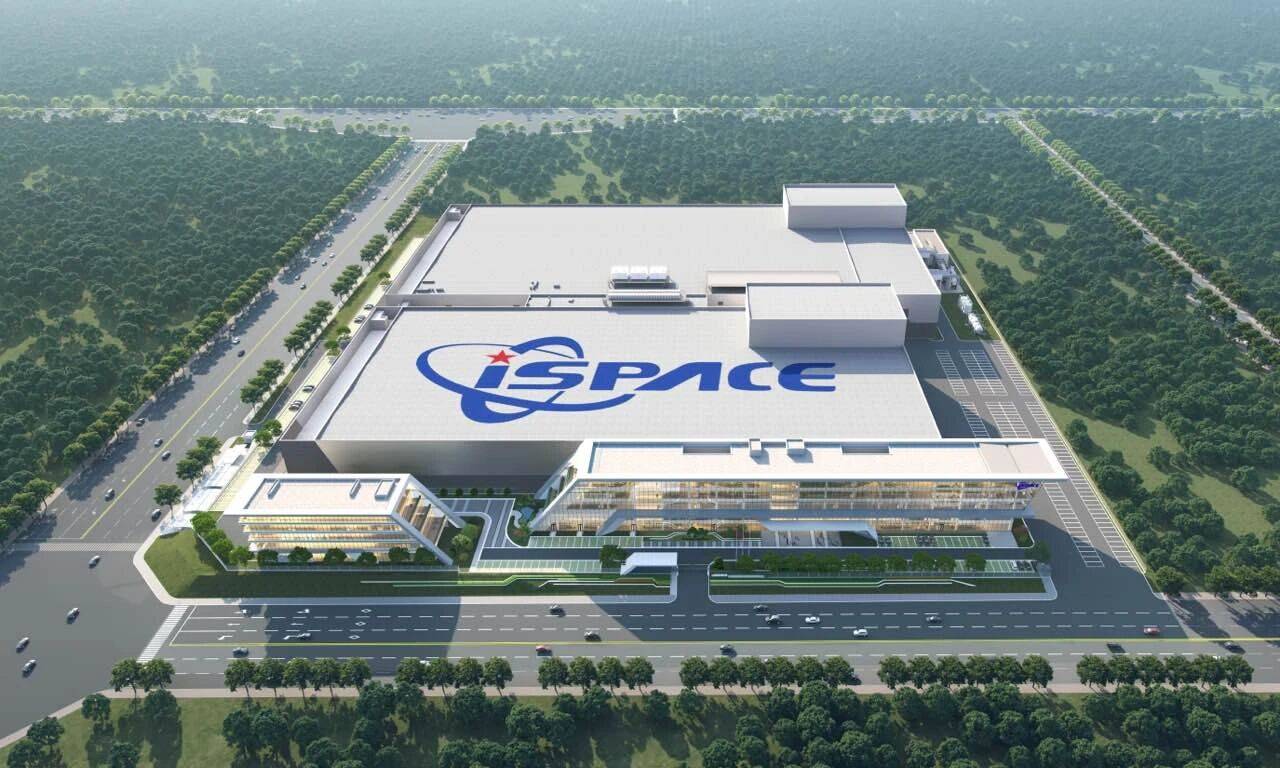
星火空间打造国内首款电动泵循环液体火箭“进化一号”
Zhong Guo Xin Wen Wang· 2025-09-17 07:13
Core Viewpoint - Starfire Space is developing the "Evolution No. 1" electric pump cycle liquid rocket, which aims to be the first of its kind in China, focusing on low-cost, high-reliability, and rapid-response small satellite launch services [1][2]. Group 1: Rocket Development - The "Evolution No. 1" rocket is designed with a launch thrust of 90 tons, utilizing electric pump cycle technology with kerosene and liquid oxygen as propellants [1]. - The first stage of the rocket will employ nine 10-ton electric cycle engines in parallel, achieving a total thrust of 90 tons [1]. - The electric pump cycle technology is expected to significantly improve launch efficiency while maintaining system reliability, potentially lowering launch costs to a more competitive range [1]. Group 2: Market Position and Collaboration - Starfire Space has established cooperation intentions with multiple commercial satellite companies and research institutions, with plans to expand into hypersonic flight tests and biological payload research launches [1]. - The company is positioned to fill a gap in the aerospace information industry in Hefei, being the first local enterprise focused on the research and manufacturing of complete rockets [2]. Group 3: Technical Advantages - The electric pump cycle technology offers advantages such as simplified structure, higher specific impulse, and lower costs compared to traditional gas generator cycle or staged combustion engines [1]. - By replacing traditional turbine pumps with electric pumps, the company aims to reduce fuel consumption rates and significantly lower manufacturing costs [1].
星火空间完成5500万元天使轮融资 打造全球最大电循环液体火箭“进化一号”
Zheng Quan Ri Bao Wang· 2025-09-16 09:13
Core Insights - Starfire Space Technology Co., Ltd. has completed its angel round financing, raising 55 million yuan, with total funding nearing 100 million yuan since its establishment in May 2024 [1][2] - The company focuses on the research and manufacturing of electric pump cycle liquid rocket engines and launch vehicles, with its "Evolution No. 1" rocket being the first of its kind in China and the largest globally [1] Company Overview - Starfire Space was founded in May 2024 and specializes in electric pump cycle liquid rocket engines and launch vehicles [1] - The "Evolution No. 1" rocket has a launch thrust of 90 tons, targeting low-cost, high-reliability, and rapid-response small satellite launch services [1] Technology and Innovation - The company adopts an electric pump cycle technology, which is simpler and more cost-effective compared to traditional gas generator or staged combustion engines [1] - The core advantages of the electric pump cycle include simplified structure, high specific impulse, and reduced costs, achieved by replacing traditional turbine pumps with electric pumps [1] Market Position and Strategy - Starfire Space aims to serve the small and medium satellite networking, replenishment, and scientific payload launch markets [1] - The company has established cooperation intentions with multiple commercial satellite companies and research institutions, with plans to expand into hypersonic flight tests and biological payload research launches [1] Team and Support - The core team consists of members from major aerospace organizations and has an average age of 35, showcasing a youthful and high-execution capability [2] - The local government in Hefei has actively supported the aerospace industry, providing talent, funding, and supply chain support, which is crucial for the development of startups like Starfire Space [2] Investment Perspective - Investors like Jinsaha Capital and Hefei Industrial Investment Fund express confidence in the long-term opportunities in China's commercial aerospace sector, particularly in small satellite launches and low-cost rockets [2] - Starfire Space's differentiated competitive strategy and clear technological path are seen as key factors for its potential to become a leading force in China's commercial aerospace industry [2]
超5万平米!济南东部拟建大载重火箭总部及总装制造基地
Qi Lu Wan Bao Wang· 2025-08-27 07:55
Core Insights - Jinan Steel Group plans to construct a "Heavy-Lift Rocket Headquarters and Assembly Manufacturing Base" in the Jinan Lingang Economic Development Zone, marking a significant advancement in the rocket assembly sector following the establishment of a satellite assembly base [1][2] - The project will cover a total construction area of 50,854.42 square meters and is designed by the China Aviation Planning and Design Institute [1] Project Details - The project includes three main buildings: - Rocket Assembly Testing Plant with a height of 18.35 meters and a floor area of 59,986.38 square meters - Power Station with a height of 8.35 meters and a floor area of 1,620.55 square meters - Component Manufacturing Plant with a height of 15.35 meters and a floor area of 23,888.45 square meters [2] - Jinan Steel Group has previously collaborated with Deep Blue Aerospace to establish the Deep Blue Jinan Changqing Testing Base, focusing on rocket engine and power system testing [2] Industry Context - The aerospace information industry in Jinan is expanding, with 148 companies in the sector generating a revenue of 13.379 billion yuan in the first half of the year, including 57 large-scale enterprises [2] - The establishment of the new manufacturing base is expected to enhance Jinan's industrial layout in the aerospace sector and inject new momentum into the development of the aerospace information industry [2]
