
风险投资

Search documents
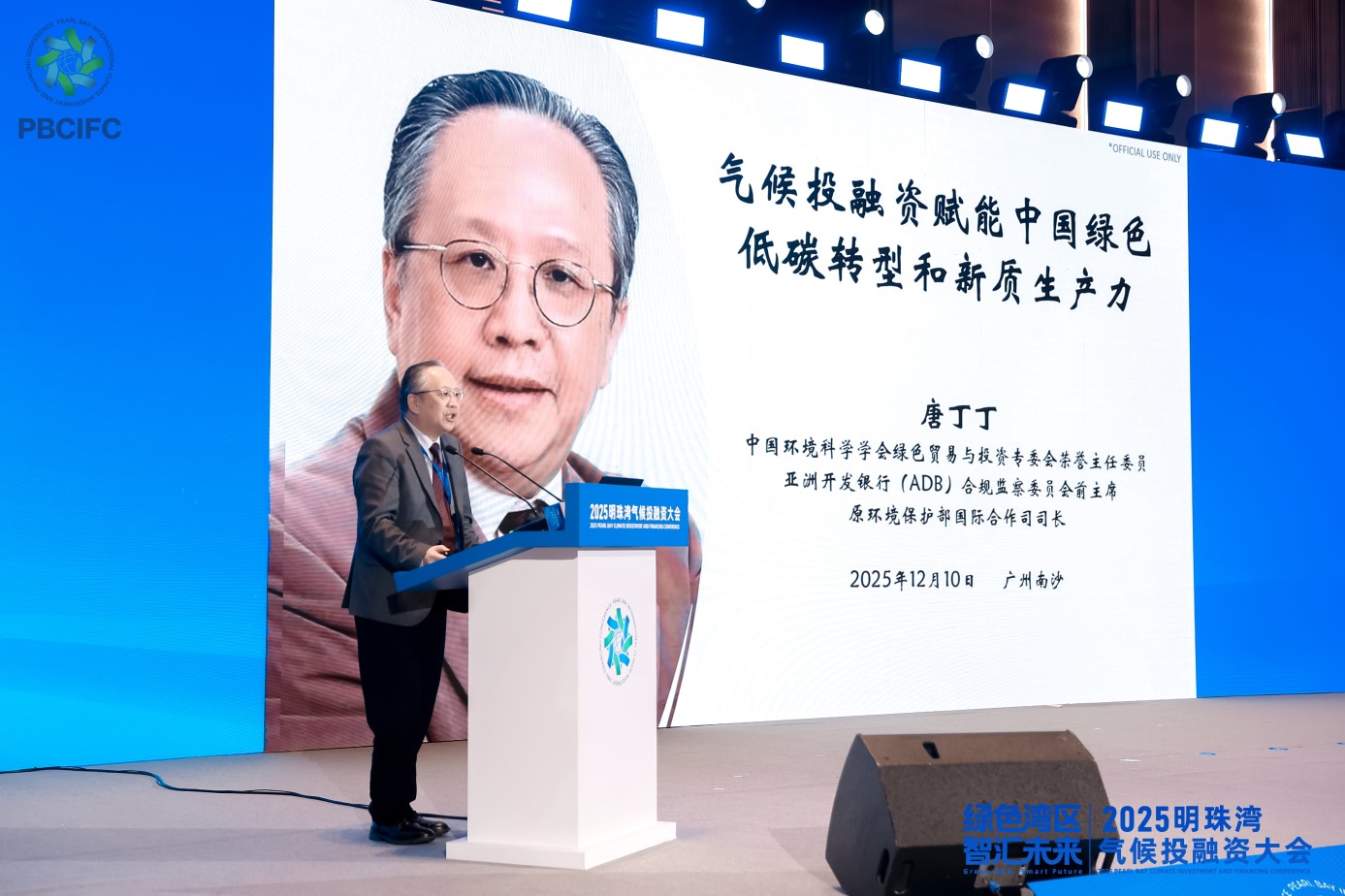
亚洲开发银行合规监察委员会前主席、中国环境科学学会绿色贸易与投资专委会荣誉主任委员唐丁丁:金融助力新质生产力高质量发展就是支持绿色低碳转型
Xin Hua Cai Jing· 2025-12-10 14:00
Core Viewpoint - Climate investment and financing should not merely focus on spending to reduce pollution and carbon emissions, but rather represent a profound transformation in development methods and a revolution in productivity, providing strategic support for China's economic transition to be not only "green" but also "high-quality" and "sustainable competitive" [1] Group 1: Climate Investment and Financing - Climate investment and financing address the core issue of "where the money comes from and where it goes," clearing significant obstacles for green and low-carbon transitions [2] - Traditional financial institutions often hesitate to invest in green technologies due to their long investment cycles, high risks, and uncertain short-term returns [2] - Climate investment and financing can fill market gaps by establishing special funds, green credit, green bonds, and transition finance tools to support these projects [2] Group 2: Recommendations for New Productive Forces - The first recommendation is to support breakthroughs from "0 to 1" through venture capital and private equity, and to promote industrialization from "1 to N" via project financing and asset securitization, driving the commercialization of technologies like large-scale energy storage and efficient hydrogen production [3] - The second recommendation focuses on cultivating emerging industrial clusters around "new three items," with climate investment and financing aiding in the formation of complete industrial and supply chains, while also providing transition finance for energy-saving transformations in traditional high-energy-consuming industries [3] - The third recommendation emphasizes creating new market demands and business models, with carbon markets and ESG investments being examples of new markets generated by climate investment and financing [4]

这家水下VC,悄悄搞定10个亿
投中网· 2025-12-10 03:06
Core Viewpoint - The article discusses the resilience and adaptability of a venture capital firm, Jingshui Lake Venture Capital, which has successfully navigated through industry fluctuations and established a stable presence in the early-stage investment landscape, focusing on sectors like smart energy and industrial technology [5][6]. Fundraising and Market Dynamics - Jingshui Lake Venture Capital has raised over 1 billion yuan in a year through various funds, including blind pool funds and S funds, indicating a significant achievement in a challenging market environment [6][7]. - The firm’s fundraising strategy is characterized by a combination of primary, secondary, and direct investments, tailored to meet the needs of limited partners (LPs) and the current market conditions [6][7]. - The CEO of Touzhong Information highlighted that the market is at a turning point, moving towards a new balance after a period of harsh market clearing, rather than returning to the previous bubble era [6][7]. Investment Strategy and Execution - Jingshui Lake has adapted its exit strategies in response to delayed IPOs, opting for equity transfers and S transactions to generate cash flow for LPs, demonstrating a proactive approach to liquidity [7][8]. - The firm has successfully executed multiple equity transfers and S transactions, achieving favorable pricing and significantly improving the DPI (Distributions to Paid-In capital) of its first fund [7][8]. - The S fund strategy is seen as a response to the changing market landscape, allowing the firm to manage existing investments while preparing for future opportunities [27][28]. LP Relationships and Fund Structure - The fundraising process is described as a mutual selection between the firm and LPs, with a strong emphasis on transparency and data sharing regarding past investment performance [11][12]. - Approximately two-thirds of the current fund comprises familiar LPs, while one-third consists of new LPs who are well-informed and have specific investment preferences [15][16]. - The firm maintains a cautious approach to expanding its LP base, focusing on building long-term trust and familiarity with existing partners to ensure alignment in investment strategies [21][22]. Sector Focus and Investment Philosophy - Jingshui Lake primarily invests in AI-driven industrial technology and smart energy applications, adhering to a strategy that emphasizes early-stage investments and leading roles in funding rounds [25][26]. - The firm avoids overextending into single sectors, maintaining a diversified portfolio that allows for a manageable number of investments per fund [25][26]. - The investment philosophy is rooted in a long-term perspective, aiming to accumulate value over time rather than chasing short-term gains [31][32].

一家“手艺人”VC的水下8年丨入局
暗涌Waves· 2025-12-10 01:05
Core Viewpoint - The article highlights the successful fundraising of over 1 billion RMB by a relatively low-profile venture capital firm, Jing Shui Hu Chuang Tou, emphasizing its unique investment philosophy focused on identifying alpha companies in a changing market environment [4][5]. Group 1: Fundraising Success - Jing Shui Hu Chuang Tou has raised over 1 billion RMB in less than 12 months, including a recent 500 million RMB blind pool fund [4]. - The firm has successfully attracted new limited partners (LPs) such as Yuan He Chen Kun and Xiamen Capital, indicating a strong interest in its investment strategy [4]. - The firm maintains a government-guided fund attribute below 30%, avoiding forced return metrics typically associated with such funds [4]. Group 2: Investment Philosophy - The firm focuses on finding alpha companies rather than chasing beta opportunities, demonstrating a commitment to quality over quantity in investments [5][11]. - Jing Shui Hu Chuang Tou's investment strategy includes a cautious approach to market trends, opting to avoid overhyped sectors while seeking undervalued opportunities [11][12]. - The firm emphasizes a hands-on approach post-investment, providing support to portfolio companies, especially those nearing IPO [11][25]. Group 3: Case Studies - A notable investment was made in Wo Tai Energy, which was initially overlooked by mainstream VCs but later became a unicorn, showcasing the firm's ability to identify potential in emerging sectors [7][8]. - The firm also invested in Polymaker, a 3D printing materials developer, after observing significant industry shifts, leading to substantial returns as the company grew [10][11]. - The investment in Mu Xing Intelligent, a logistics robotics company, highlights the firm's preference for companies with strong overseas market potential, which have shown significant growth [12][13]. Group 4: Fund Management and LP Relations - The firm maintains a high re-investment rate of over 70% from existing LPs, attributed to a shared understanding of the technology investment landscape [15][20]. - Jing Shui Hu Chuang Tou controls its blind pool fund size to around 500 million RMB, which is seen as optimal for early to mid-stage alpha investments [19]. - The firm has demonstrated a unique approach by returning uninvested funds to LPs rather than forcing investments into unsuitable projects [19][20]. Group 5: Market Strategy and Adaptation - The establishment of an S fund in collaboration with Yuan He Chen Kun was a strategic response to liquidity challenges in the IPO market, aiming to enhance returns for existing LPs [22][23]. - The firm’s approach to managing liquidity and maintaining influence over portfolio companies is seen as a key factor in building trust with LPs [25][26]. - The firm emphasizes a micro-focused investment strategy, avoiding macroeconomic predictions and instead concentrating on the fundamentals of each project [26].

这家水下VC,悄悄搞定10个亿
3 6 Ke· 2025-12-10 00:56
Core Insights - The article discusses the resilience and growth of Jingshui Lake Venture Capital, a relatively young VC firm that has successfully navigated industry challenges and established a stable position in the market [1][2][4] Fundraising and Strategy - Jingshui Lake has raised over 1 billion RMB in the past year, including new S funds and FOFs, indicating a significant achievement in a challenging market environment [2][3] - The firm employs a PSD (Primary+Secondary+Direct) strategy, which has evolved in response to LP demands and market conditions, rather than being a pre-planned approach [2][21] - The fundraising process has seen strong participation from existing LPs, with about two-thirds of the new fund coming from familiar investors, reflecting a solid trust base [5][9] Market Position and Adaptation - The firm has adapted to the changing market by exploring alternative exit strategies, such as equity transfers and S transactions, to provide liquidity to LPs amid delayed IPOs [3][24] - Jingshui Lake's successful transactions have improved the DPI of its first fund, showcasing its ability to navigate the current market landscape effectively [3][24] LP Relationships and Dynamics - The firm has established strong relationships with LPs, with approximately 30% of its old LPs being those with guiding fund attributes, which allows for greater investment flexibility [8][12] - New LPs are characterized by their clear investment preferences and understanding of the market, facilitating straightforward communication and collaboration [6][10] Investment Focus and Philosophy - Jingshui Lake focuses on early-stage investments in sectors like smart energy and industrial technology, maintaining a disciplined approach to avoid overextending into high-valuation areas [19][20] - The firm emphasizes a long-term investment strategy, aiming for sustainable growth rather than chasing short-term gains, which aligns with its overall investment philosophy [25][26] Future Outlook - The firm is cautious about expanding its scale, preferring to maintain a manageable fund size that allows for focused investment in quality projects [18][19] - Jingshui Lake's approach to investment is rooted in a deep understanding of market cycles, allowing it to make informed decisions about sector opportunities and risks [26][27]
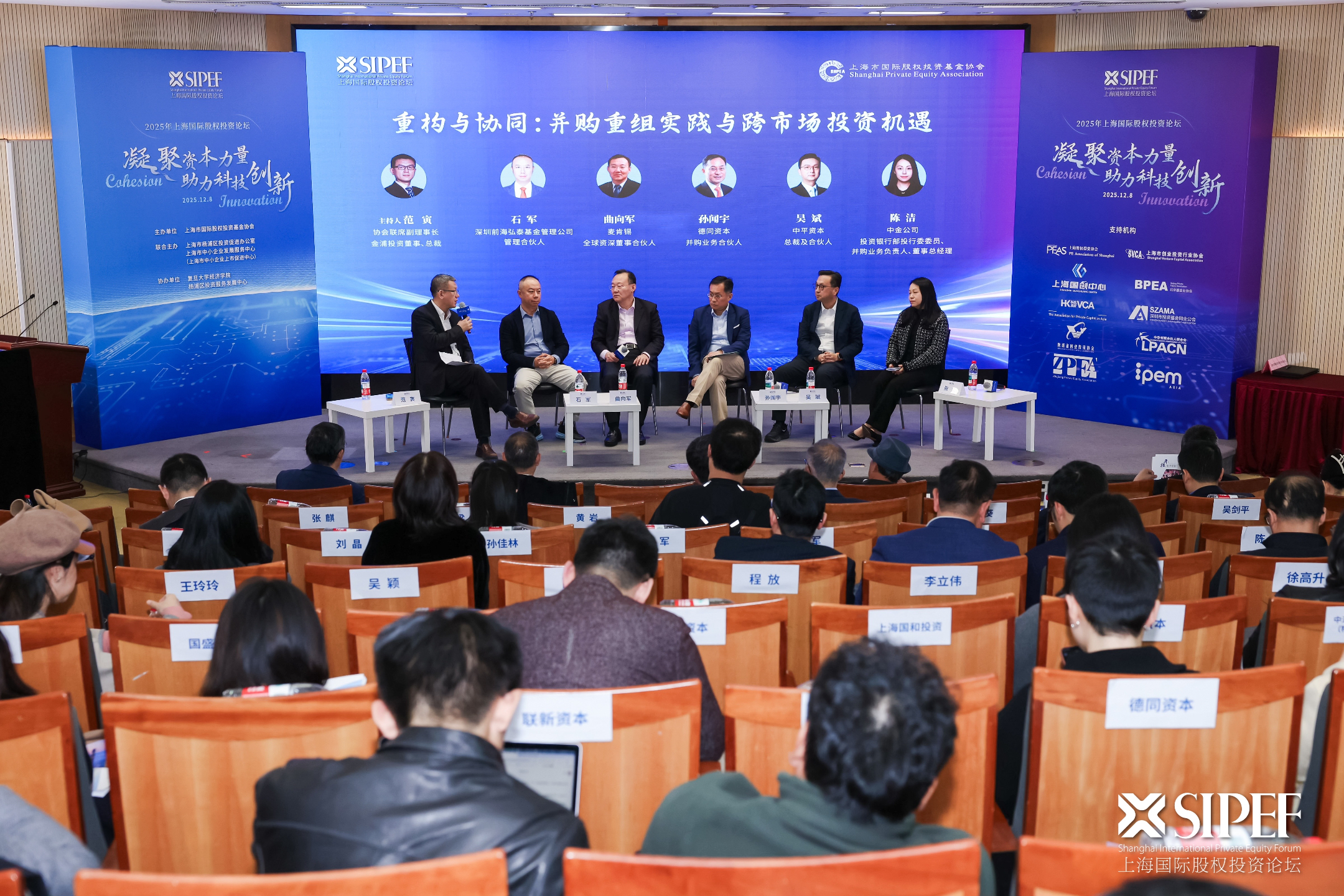
第十八届上海国际股权投资论坛召开,共探资本赋能科创新路径新机遇
Guo Ji Jin Rong Bao· 2025-12-09 12:35
Group 1 - The global economy is undergoing significant adjustments, with technological innovation becoming the core driver for industrial upgrades and economic growth [1] - Private equity (PE) and venture capital (VC) are essential in empowering technology enterprises and optimizing resource allocation [1][3] - The 18th Shanghai International Private Equity Forum (2025SIPEF) focused on the theme "Gathering Capital Power to Support Technological Innovation," bringing together industry leaders, investors, and government representatives [1] Group 2 - Yangpu District is positioned as a key area for innovation in Shanghai, with over 8,300 digital economy enterprises, including major players like Douyin and Meituan [1] - The district aims to accelerate the construction of a capital investment cluster and a financial service system to support technology transformation and enterprise growth [2] - The macroeconomic outlook for China emphasizes the need for expanding both domestic and foreign demand, with a focus on optimizing supply and enhancing overall economic performance [2][3] Group 3 - The Chinese merger and acquisition (M&A) market remains active, driven by policy support and industry consolidation, with PE firms needing to enhance their capabilities throughout the investment cycle [3] - Discussions at the forum highlighted the importance of cross-regional and cross-industry collaboration in M&A to create value and manage risks effectively [5] - The healthcare sector is experiencing rapid technological advancements, with a focus on source innovation and industrialization to drive high-quality development [6]
科创板制度未来发展路径探析|资本市场
清华金融评论· 2025-12-09 10:55
Core Viewpoint - The reform of the Sci-Tech Innovation Board (STAR Market) is a significant milestone in the market-oriented, legal, and international development of China's capital market, aimed at enhancing market functions and supporting technological innovation [4]. Group 1: Development and Achievements of the STAR Market - Since its establishment in 2018, the STAR Market has made notable progress in facilitating direct financing for technology enterprises, promoting deep integration of capital and industry, and exploring a disclosure-oriented regulatory system [4]. - The STAR Market has evolved through three phases: the establishment phase (2019-2020), the improvement phase (2021-2023), and the deepening reform phase (2024 onwards) [6]. - The establishment phase introduced a pilot registration system with five market capitalization-based listing standards, allowing unprofitable companies and those with special equity structures to list, thus enhancing issuance efficiency [6]. - The improvement phase saw the implementation of a comprehensive registration system and the establishment of a more complete market ecosystem, including the introduction of market maker systems and the first global depository receipts (GDR) [6]. - The deepening reform phase includes measures to enhance the registration system and investment coordination mechanisms, such as establishing a growth tier and expanding the applicability of the fifth set of standards [6]. Group 2: Challenges in the STAR Market - Despite a relatively mature system, structural issues remain, including a cautious execution of the registration system, which affects the balance between "release" and "management" [7]. - The mechanism for identifying sci-tech attributes does not adequately match the characteristics of emerging industries, relying heavily on traditional metrics like R&D investment and patent numbers [8]. - The marketization level of the primary market and the connection with the secondary market need improvement, as the collaboration between state funds and specialized investment institutions is unclear [8]. - The investment exit mechanism lacks flexibility, with long lock-up periods for strategic investors and pre-IPO institutions, impacting reinvestment capabilities and market liquidity [8]. - Red-chip companies face challenges related to valuation discrepancies, complex ownership structures, and cross-border regulatory coordination, leading to unstable market expectations [8]. Group 3: Optimization Paths for the STAR Market - Strengthening the identification mechanism for sci-tech attributes by emphasizing market mechanisms and professional investment capabilities, avoiding rigid administrative standards [10]. - Expanding the applicability of the fifth set of listing standards to include more flexible and industry-differentiated criteria, particularly for light-asset industries like AI and cloud computing [11]. - Constructing a comprehensive information disclosure mechanism covering the entire lifecycle of enterprises, including establishing a database for prospective listed companies and enhancing penalties for fraudulent disclosures [12]. - Exploring recognition mechanisms for early-stage and small-scale venture capital institutions to foster a more specialized investment ecosystem [13].

深创投董事长左丁:深化一二级市场协同 高效赋能产业科技创新
Sou Hu Cai Jing· 2025-12-09 00:22
12月7日,在2025上证(巢湖)上市公司高质量发展大会上,深创投董事长左丁表示,资本市场作为服务科技创新的主阵 地,只要打通一二级市场的堵点,连接资本与产业的断点,就能精准服务科技创新,推动科技成果转化成为现实生产力。 2025上证(巢湖)上市公司高质量发展大 THE CECH 大上海高级金融学院创院理事长居光绍: 挥长三角区域优势 打造科技金融协同发展高地 (CVC)、科技核心企业战略投资与产业并购每 起,科技巨头从技术领导者转型为资本配置者 国超风险投资市场格局,2025年,利技模心介绍 主导的产业风险投资基金规模占风险投资总额 的51%,前次超越传统风投。 从会睡了具来看,科技产业的长周即特性 元在线合面式进国语学发生理论书学院课 t的长期变本工具。2025年,保险资金与主权3 体基金加速配置科技股权,全球保险资金配置和 接企业股权聚模达1.32万亿元,占科技股权融资 总量的35%。 从并购来看,中国科技行业并购变局合额占 全行业并销总额的比里呈现被动上升态势,着 至2024年已达30.4%。"并拥六条" 发布后,新加 生产力机械并购凸跃。从全球指图看,英国在科 程并购领域仍占据主导地位,持然引领全球 ...
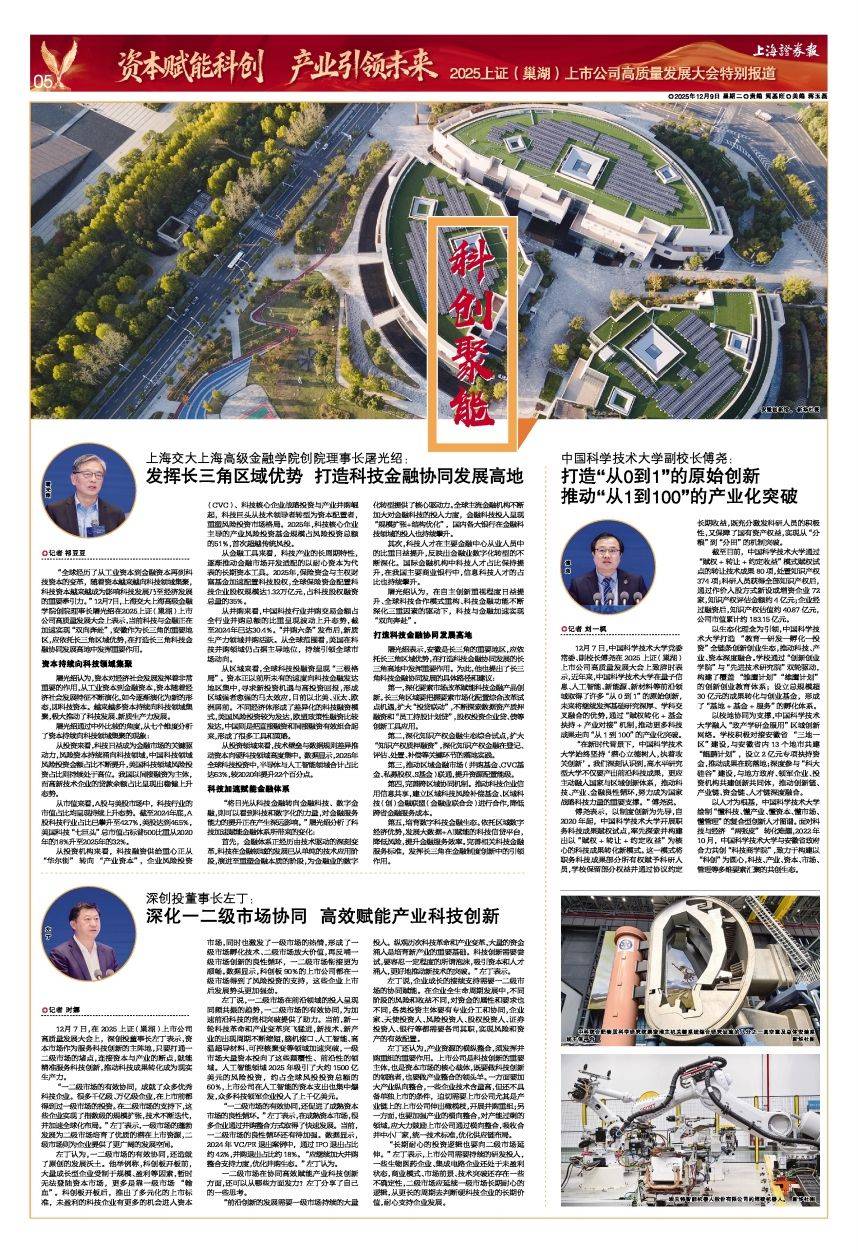
科创聚能
Shang Hai Zheng Quan Bao· 2025-12-08 18:18
安徽创新馆。 新华社图 屠光绍 左 丁 傅 尧 中科院合肥物质科学研究院聚变堆主机关键系统综合研究设施的八分之一真空室及总体安装系统主体 平台 。新华社图 埃夫特智能机器人股份有限公司的焊接机器人。 新华社图 上海交大上海高级金融学院创院理事长屠光绍: 发挥长三角区域优势 打造科技金融协同发展高地 ◎记者 祁豆豆 "全球经历了从工业资本到金融资本再到科技资本的变革,随着资本越来越向科技领域集聚,科技资本 越来越成为影响科技发展乃至经济发展的重要牵引力。"12月7日,上海交大上海高级金融学院创院理事 长屠光绍在2025上证(巢湖)上市公司高质量发展大会上表示,当前科技与金融正在加速实现"双向奔 赴",安徽作为长三角的重要地区,应依托长三角区域优势,在打造长三角科技金融协同发展高地中发 挥重要作用。 资本持续向科技领域集聚 屠光绍认为,资本对经济社会发展发挥着非常重要的作用,从工业资本到金融资本,资本随着经济社会 发展特征不断演化,如今逐渐演化为新的形态,即科技资本。越来越多资本持续向科技领域集聚,极大 推动了科技发展、新质生产力发展。 屠光绍通过中外比较的角度,从七个维度分析了资本持续向科技领域集聚的现象: 从 ...
清华田轩:用包容创投、“不太积极”的二级市场激发科技创新
21世纪经济报道· 2025-12-07 09:41
Core Viewpoint - The article emphasizes the need for a more inclusive venture capital market and a "not overly aggressive" secondary market to support high-level technological self-reliance and innovation in China's capital market [1]. Group 1: Front-End Inclusion - The primary focus of financial support for technological innovation is to create a truly inclusive venture capital market, which is centered around the introduction and expansion of "patient capital" [3]. - The concept of "patient capital" has been repeatedly highlighted in several important policy documents from the central government, underscoring the role of venture capital in nurturing new productive forces [3]. - A healthy innovation ecosystem must first embrace "atypical" entrepreneurs who possess unique traits necessary for disruptive innovation, which requires a long-term capital base to support them [4]. Group 2: Back-End Safeguarding - As innovative companies transition from startup to growth and public listing, a critical shift in the capital market environment is necessary [6]. - A "not overly aggressive" secondary market can effectively motivate listed companies to engage in long-term, high-quality technological innovation, countering the pressure for short-term performance [6]. - Strong anti-takeover provisions, such as dual-class share structures, can protect management from short-term acquisition threats, allowing them to invest in long-term R&D projects [7]. - Maintaining moderate stock liquidity is crucial, as excessive liquidity can attract short-term traders, pressuring companies to prioritize immediate profits over long-term innovation [7]. - The introduction of genuine long-term institutional investors is essential, as they can help companies focus on core operations and enhance the efficiency of innovation resource allocation [8]. Group 3: Systemic Innovation - The integration of an inclusive venture capital market and a supportive secondary market forms a cohesive "dual" ecosystem that addresses both the survival of innovation seeds and the amplification of innovation outcomes [8]. - The ultimate mission of comprehensive reform in China's capital market is not merely to pursue short-term market activity but to establish a financial ecosystem that understands and supports long-term technological innovation [8].

2025年10月VC/PE市场数据报告
citic securities· 2025-12-05 07:09
2025 年 10 月 VC/PE 市场数据报告 数据来源:投中嘉川 CVSource 报告时间:2025.11 2025 李洋洋 数据分析师 yangyang.li@chinaventure.com. | | 核心发现 2 | | | --- | --- | --- | | 李洋洋 | | | | 数据分析师 | 募资表现 2 | | | yangyang.li@chinaventure.com. | | | | cn | 新设基金数量 2 | | | | 基金新设地区情况 3 | | | | 基金新设及完成募资情况 | 4 | | 报告口径 | 投资表现 6 | | | 本报告图表数据来源均为 | | | | 投中嘉川 CVSource | 投资频次及投资规模 | 6 | | 新成立基金:于统计期限内, | 热点地区投资交易数量及规模 | 7 | | 新注册成立的基金 | 热点行业投资热度 7 | | | 完成募集基金:于统计期限 | 投资轮次 9 | | | 内,宣布募集完成的基金 | 投资交易规模细分量级 | 9 | | 融资规模:统计市场公开披露 | | | | | 投资交易重点案例 ...