
Alcoholic Beverages

Search documents
Alto Ingredients(ALTO) - 2025 Q3 - Earnings Call Presentation
2025-11-05 22:00
Financial Performance (Q3 2025 vs Q3 2024) - Net sales decreased from $2518 million to $2410 million[33] - Gross profit increased significantly from $60 million to $235 million[33] - Net income improved from a loss of $(28) million to a profit of $139 million[33] - Adjusted EBITDA increased from $122 million to $214 million[33] Liquidity and Capital Resources - Cash and cash equivalents decreased slightly from $355 million to $325 million[33] - Working capital increased from $953 million to $1085 million[33] - Long-term debt, net, increased from $929 million to $1006 million[33] - Borrowing availability was $850 million[33] Strategic Initiatives and Regulatory Landscape - The company is focusing on projects to lower carbon intensity to capture more benefits from Section 45Z tax credits[7] - There is policy momentum for E15, expanding market opportunity, with a potential 50% increase in annual U S ethanol demand if national year-round E15 adoption occurs[9, 14] - The company is applying for Section 45Z tax credits for Alto Columbia and Alto Pekin Dry Mill, estimated to total ~$18 million in the next two years[15]

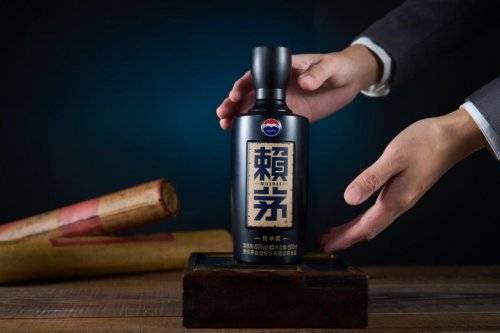
正品赖茅酒双11选购指南:官方渠道是关键
Sou Hu Cai Jing· 2025-11-04 10:57
Core Insights - The market for sauce-flavored liquor, particularly Lai Mao, is expanding, making the selection of authentic products a focal point for consumers [1] - Lai Mao, as a core sub-brand of the Moutai Group, emphasizes the values of "Respect for Heaven and People," aiming to set a standard for quality and integrity in the industry [3] Group 1 - Lai Mao adheres to the traditional "12987" brewing process, using high-quality raw materials from the core production area to ensure product quality [3] - The brand prioritizes consumer rights by establishing a comprehensive authenticity assurance system [5] Group 2 - The implementation of a digital anti-counterfeiting system allows consumers to verify product authenticity easily by scanning a QR code [5] - Lai Mao maintains a dual anti-counterfeiting barrier through both digital and traditional physical methods, raising the threshold for counterfeiting [5] Group 3 - The product features clear quality indicators, including a unique traceability QR code and visible production information, adhering to Moutai Group's unified quality control standards [7] - During the Double 11 shopping festival, the focus for consumers is on quality and assurance, with Lai Mao providing a robust protection system for consumer rights [7] Group 4 - Consumers are advised to purchase Lai Mao from officially authorized channels, both online and offline, which include major convenience stores and e-commerce platforms [7] - All authorized channels offer a "tenfold compensation" service for counterfeit products, reinforcing the brand's commitment to integrity [5][7]

Constellation Brands: Markets Drunk On AI Leave Alcohol Giant At Pandemic-Level Lows
Seeking Alpha· 2025-11-03 09:49
Group 1 - Constellation Brands (STZ) is identified as an undervalued stock within an undervalued sector, with a high potential for recovery in the short to medium term [1] - The analysis emphasizes a value-driven and contrarian approach, focusing on mispriced assets [1] Group 2 - The analyst is currently pursuing an MSc in Economics and Finance, specializing in fixed income and commodities, and occasionally engages in stock picking [1]

茅台为何48小时密集动作?
Hua Xia Shi Bao· 2025-10-31 02:21
Core Insights - The article highlights a series of significant events for Moutai over a 48-hour period, prompting a reevaluation of its value logic amidst slowing growth and stock price pressure [1][2][3] - The focus has shifted from short-term price fluctuations to a critical question: Can Moutai break through its bottleneck through strategic transformation and rebuild its long-term competitiveness? [1] Group 1: Key Events - On October 28, Moutai's chairman attended the inaugural Zhi Shui River Forum, which gathered major domestic and international liquor industry leaders, indicating a strong collaborative effort in the global liquor market [2] - Moutai's new management team emphasized green development and open sharing, launching a "High-Quality Development Promotion Action" with over twenty domestic and foreign liquor companies [2][3] - On October 29, Moutai celebrated the Chongyang Festival with significant events, including the unveiling of its biotechnology research company, signaling a commitment to innovation and future growth [2][3] Group 2: Financial Performance - For the first three quarters, Moutai reported total revenue of 130.9 billion yuan, a year-on-year increase of 6.32%, and a net profit of 64.63 billion yuan, also up 6.25% [3] - Despite the overall challenges in the liquor industry, Moutai's stable growth reflects its strong fundamentals and effective channel management [4][5] Group 3: Strategic Transformation - Moutai is focusing on three transformations: targeting new business demographics, expanding dining scenarios, and shifting from selling liquor to selling lifestyle experiences [4][5] - The company is gradually moving from reliance on high-end products to a diversified product matrix and expanding its global market presence [5][6] Group 4: Industry Context - The liquor industry is facing unprecedented challenges, with a reported 5.8% decline in production and a 10.93% drop in total profits in the first half of 2025 [4] - Moutai's recent actions signal a shift from a volume-price growth model to a focus on sustainable ecological value and international market participation [7][8] Group 5: Future Outlook - Moutai's new valuation logic emphasizes comprehensive ecological value over single product value, aiming for long-term growth despite current market pressures [8][9] - The company is adapting to changing consumer preferences, particularly among younger demographics, and is expected to continue evolving its marketing strategies to align with modern consumption trends [9]

Alcohol Stocks Take $830 Billion Hit as Drinking Habits Change
Yahoo Finance· 2025-10-30 20:00
Core Insights - The global beer, wine, and spirits industry has experienced a significant decline, with a total market value loss of $830 billion over the past four years, representing a 46% drop from its peak in June 2021 [1][2]. Industry Challenges - Shifting drinking patterns and rising health concerns are negatively impacting earnings, alongside external factors such as US tariffs, high interest rates affecting consumer spending, and elevated commodity prices [2][3]. - In China, weak household confidence and a ban on alcohol for official functions have further contributed to the industry's downturn [2][4]. Company Performance - Major companies like Diageo, Pernod Ricard, and Remy Cointreau have seen their stock prices hit decade-low levels, while Kweichow Moutai is trading over 40% below its 2021 high [4][5]. - The industry is facing pressure not only from declining revenues but also from high levels of debt and management turnover as companies adapt to changing market dynamics [5]. Changing Consumer Behavior - A Gallup survey indicates that US alcohol consumption has reached its lowest level since 1939, influenced by health warnings from organizations like the World Health Organization and changing preferences among younger generations [6][8]. - The trend of celebrities promoting non-alcoholic beverages and the rise of alternatives such as cannabis and weight-loss drugs are further impacting traditional alcohol sales [7][8].
Rémy Cointreau SA (REMYY) Q2 2026 Sales Call Transcript
Seeking Alpha· 2025-10-30 15:06
Core Insights - The company reported a 4.2% organic sales decrease in H1, with Q2 showing a significant decline of 11%, which is expected to be the lowest quarter of the year [1] - Sales performance varied by region, with strong growth in the U.S. Cognac division, while China faced depressed sales due to market challenges and unfavorable calendar effects [2] Sales Performance - H1 sales in the Americas grew by 12.8%, with slight growth in Q2, driven by robust performance [3] - Q2 sales decline was attributed to a volume decrease of 4.7% and a price/mix effect decline of 6.2%, primarily due to underperformance in high-end brands and cognac [2]


*ST椰岛(600238) - *ST椰岛2025年第三季度经营数据公告
2025-10-30 12:36
股票代码:600238 股票简称:*ST 椰岛 编号:2025-031 号 海南椰岛(集团)股份有限公司 2025 年第三季度经营数据公告 本公司董事会及全体董事保证本公告内容不存在任何虚假记载、误导性陈述或 者重大遗漏,并对其内容的真实性、准确性和完整性承担个别及连带责任。 根据《上海证券交易所上市公司自律监管指引第3号—行业信息披露》之《第 十二号—酒制造》的相关规定,现将海南椰岛(集团)股份有限公司2025年第三 季度酒类主要经营数据(未经审计)公告如下: 一、酒类产品销售情况 二、酒类销售渠道情况 三、酒类销售区域情况 1 / 2 单位:万元 币种:人民币 产品档次 2025 年 1-9 月 销售收入 2024 年 1-9 月 销售收入 同比(%) 主要代表品牌 鹿龟酒系列 3,694.11 1,061.12 248.13 鹿龟酒 海王酒系列 9,184.32 7,358.85 24.81 海王酒 白酒系列 1,311.63 3,145.17 -58.30 椰岛·国威系列、贵台酱酒系列、 椰岛海酱、海口大曲、原浆酒等 其他酒系列 462.46 1,091.36 -57.63 三椰春、苦荞酒等 合 计 ...

MGP Ingredients(MGPI) - 2025 Q3 - Earnings Call Transcript
2025-10-29 15:00
Financial Data and Key Metrics Changes - Consolidated sales decreased by 19% to $131 million compared to the prior year [22] - Adjusted EBITDA declined by 29% to $32 million, primarily due to lower gross profit [24] - Net income decreased to $15 million, with adjusted net income down 36% to $18 million [24] - Basic earnings per share decreased to $0.71, while adjusted basic earnings per share decreased 34% to $0.85 [25] - Year-to-date operating cash flows increased by 26% to $93 million [25] - Full-year 2025 adjusted EBITDA guidance raised to $110 to $115 million, and adjusted EPS guidance raised to $2.60 to $2.75 [26] Business Line Data and Key Metrics Changes - Branded spirits segment sales decreased by 3%, with premium plus sales showing growth driven by Penelope Bourbon [22] - Distilling solutions segment sales declined by 43%, with brown goods sales down by 50% [22] - Ingredient solutions segment sales increased by 9%, primarily due to higher specialty and commodity wheat protein sales [23] - Gross profit for the ingredient solutions segment declined by 36% due to operational issues [23] Market Data and Key Metrics Changes - Total U.S. whiskey production down 19% over the prior 12 months, down 28% over the prior six months, and down 32% over the prior three months [15] - Diageo North America recognized MGP Ingredients as one of its distinguished suppliers, indicating strong partnerships [15] Company Strategy and Development Direction - Company is conducting a strategic review to improve clarity and focus on high-potential brands while trimming underperformers [5][6] - New appointments in marketing and operations aim to strengthen brand growth and operational efficiency [6][7] - Focus on innovation and new product launches to meet consumer demand, particularly in the ready-to-pour cocktail segment [12] - Emphasis on operational reliability and cost savings to enhance productivity [8][19] Management Comments on Operating Environment and Future Outlook - Management acknowledges challenges in the industry but expresses confidence in the company's long-term potential [9] - The company is focused on building a resilient business model that can adapt to industry cycles [29] - Management is optimistic about the alignment and enthusiasm within the organization, which supports future growth [20] Other Important Information - The company is prioritizing strong cash generation and has reduced capital expenditures significantly [25][26] - The operational challenges in the ingredient solutions segment are being addressed through increased staffing and maintenance investments [17][19] Q&A Session Summary Question: Industry trends and channel inventory - Management noted that customers are seeking closer relationships due to elevated inventory and reduced production, with a shift towards direct dealings with MGP [31] Question: Gross margin performance - Margins were better than expected due to higher aged whiskey sales and effective cost management [32] Question: Portfolio management of branded spirits - Management is evaluating lower-performing brands while focusing on premium brands that show growth potential [37] Question: Customer purchasing behavior - Large multinationals have paused purchases, but craft customers are increasingly seeking aged whiskey, indicating a shift in demand [41][43] Question: Ingredient solutions segment performance - Management acknowledged operational issues but emphasized strong demand for products, with plans to improve reliability and performance [46][48] Question: Success of Penelope brand - Penelope is experiencing significant growth due to innovative marketing and appealing product offerings, attracting a diverse consumer base [56][58]

当消费分级遇见新型散酒铺,解码千亿潜力市场的发展之路
Sou Hu Cai Jing· 2025-10-27 14:02
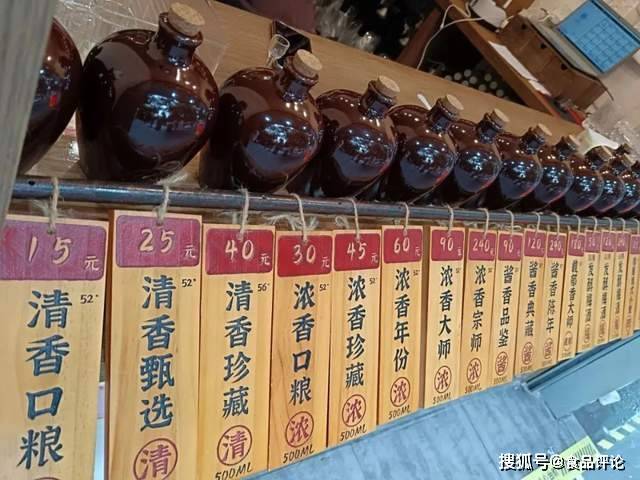
Core Insights - The emergence of new chain brands in the bulk liquor market, such as "Tang Sanliang", "Zebra Hero", and "Panda Liquor", reflects a shift towards diversified and convenient consumption patterns in the liquor industry [1][5] - The bulk liquor market is experiencing rapid growth, with an estimated market size of 800 billion yuan in 2024, projected to exceed 1 trillion yuan, particularly in the mid-to-high-end segment priced between 50-200 yuan per jin, which is growing at 25% [3][5] Group 1: Market Trends - The trend towards value-for-money has become a key factor influencing consumer decisions, prompting many well-known liquor companies to adjust their product structures and focus on affordable offerings [3][5] - New brands are rapidly expanding their presence, with over a thousand stores established by brands like Bailaoquan and Anning Shaojiu, alongside new entrants like "Tang Sanliang" and "Zebra Hero" [7][8] Group 2: New Store Formats - New-style liquor stores are characterized by modern designs and a wide variety of products, including over 120 SKUs that cater to diverse consumer tastes, enhancing the shopping experience [7][8] - These stores are strategically located within three kilometers of communities and utilize digital tools for instant consumer engagement, making purchasing more convenient [7][8] Group 3: Future Prospects and Challenges - The bulk liquor market is predicted to continue its expansion into lower-tier cities, aligning with consumer preferences for quality and price [9] - Challenges include homogenization of products and marketing strategies, which may lead to consumer fatigue and price wars that could compress profit margins [9] - The lack of industry standards poses risks to product quality, with potential reliance on inferior materials affecting consumer experience [9]
X @The Economist
The Economist· 2025-10-24 23:00
In the West, the industry has been fretting that young people are drinking less than previous generations. But the assumption that the trend for sobering up will go global looks questionable https://t.co/USNkb2XyBy ...