
Autos

Search documents
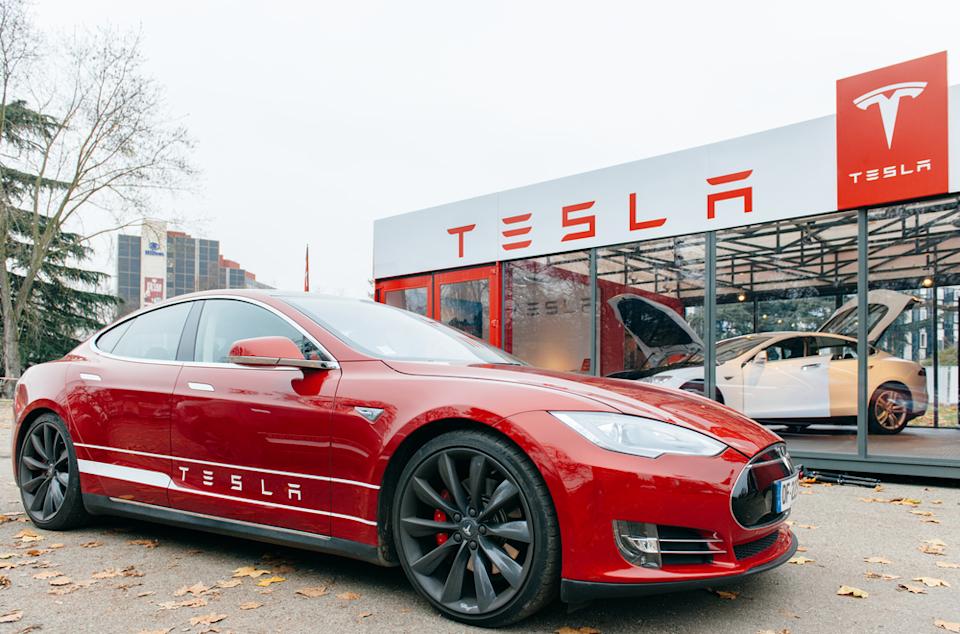
Is Tesla, Inc. (TSLA) A Good Stock To Buy Now?
Yahoo Finance· 2026-03-21 20:11
Core Investment Thesis - Tesla, Inc. is undergoing a strategic transformation from an electric vehicle manufacturer to a vertically integrated Physical AI and robotics company, with its automotive operations serving as a funding engine for this transition [3] - The company is aggressively pushing into humanoid robotics through its Optimus project, targeting a multi-trillion-dollar total addressable market [5] Financial Performance - Tesla's automotive revenue declined by 10% to $69.5 billion in 2025, yet the company expanded gross margins to 17.7% through cost efficiencies [3] - The energy generation and storage division generated $12.8 billion in revenue with nearly 30% margins, supported by a 48% year-over-year increase in deployments to 46.7 GWh [4] Technological Advancements - Tesla is scaling its software ecosystem, surpassing 1.1 million Full Self-Driving users and transitioning to a subscription-based model, enhancing recurring revenue visibility [4] - Optimus is backed by proprietary AI chips and advanced actuator technology, with internal factory integration expected in 2026 and external commercialization thereafter [6] Capital Expenditure and Financial Position - Tesla has over $20 billion in planned capital expenditures and a $44 billion cash reserve, building a formidable compute and manufacturing moat [7] - Despite elevated valuations, the company offers asymmetric upside potential if it successfully monetizes robotics at scale [7]


Is Tesla, Inc. (TSLA) A Good Stock To Buy Now?
Yahoo Finance· 2026-03-21 20:11
Core Thesis - Tesla, Inc. is undergoing a strategic transformation from an electric vehicle manufacturer to a vertically integrated Physical AI and robotics company, with its automotive operations serving as a funding engine for this transition [3][5]. Financial Performance - As of March 17th, Tesla's share price was $399.27, with trailing and forward P/E ratios of 369.69 and 192.31 respectively [1]. - Automotive revenue is projected to decline by 10% to $69.5 billion in 2025, yet gross margins have expanded to 17.7% through cost efficiencies [3]. - The energy generation and storage division has seen a 48% year-over-year increase in deployments to 46.7 GWh, generating $12.8 billion in revenue with nearly 30% margins [4]. Robotics and AI Initiatives - Tesla is aggressively pursuing humanoid robotics through its Optimus project, targeting a multi-trillion-dollar total addressable market [5]. - The company is reallocating resources by discontinuing Model S and X production to convert its Fremont facility into a dedicated robot manufacturing hub, aiming for an annual production of one million units [5][6]. - Optimus is expected to integrate into internal factory operations by 2026, with external commercialization to follow [6]. Capital Expenditure and Financial Position - Tesla has over $20 billion in planned capital expenditures and a cash reserve of $44 billion, which positions the company to build a significant compute and manufacturing advantage [7]. - Despite elevated valuations, Tesla presents asymmetric upside potential if it successfully monetizes robotics at scale, positioning itself as a leader in the emerging Physical AI supercycle [7].
X @Tesla Owners Silicon Valley
Tesla Owners Silicon Valley· 2026-03-21 19:06
RT Zack (@BLKMDL3)Tesla Semi in the wild transporting a full load of cars! https://t.co/zGvuYDFKRv ...
X @Tesla Owners Silicon Valley
Tesla Owners Silicon Valley· 2026-03-21 18:59
RT Connor Morrison (@ConMorri03)Awesome to see everyone at @UPTeslaFremont Cars and Coffee! 🙌 https://t.co/bilk5nNooc ...
Jim Cramer on Stellantis: “I Just Can’t Recommend It”
Yahoo Finance· 2026-03-21 16:31
Core Viewpoint - Stellantis N.V. (NYSE:STLA) is currently facing significant challenges, with a notable decline in share price and unfavorable market conditions, leading to recommendations against investment in the stock [1][4]. Company Overview - Stellantis N.V. manufactures and sells passenger and commercial vehicles and parts under several well-known brand names, including Jeep, Alfa Romeo, Peugeot, Chrysler, and Dodge [3]. Market Performance - Since the airing of negative comments regarding Stellantis, the company's share price has decreased by over 36% [4]. - The stock is currently trading at four times earnings, indicating potential financial strain and the need for capital if market conditions do not improve [3]. Investment Sentiment - Investment analysts express a preference for other automotive stocks, specifically mentioning General Motors (GM) as a more favorable option compared to Stellantis [3]. - The overall sentiment in the automotive sector is described as unfavorable, with the industry being characterized as a "bad house in a bad neighborhood" [3].

3 Top EV Stocks With AI Upside to Buy Right Now
The Motley Fool· 2026-03-21 15:45
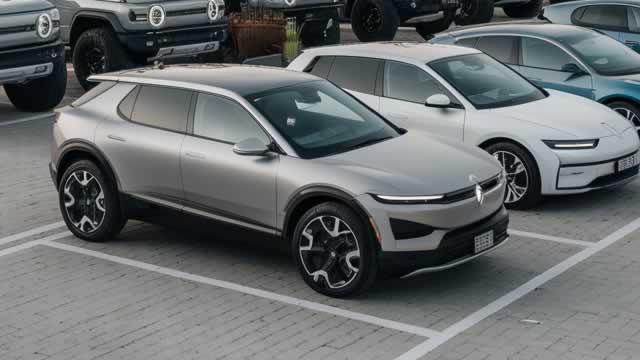
Core Insights - The electric vehicle (EV) sector is increasingly viewed through the lens of artificial intelligence (AI), with companies focusing on AI-driven software for future growth [1][2] Group 1: Tesla - Tesla is leading in AI investments, with a notable $2 billion investment in xAI, aiming for full self-driving capabilities [3][4] - The robotaxi market, which Tesla is entering, could be valued at over $5 trillion globally, with plans for a low-cost Cybercab EV to support this business [4] - Tesla's market cap is $1.4 trillion, but its stock may already reflect much of the potential benefits from AI investments, especially as auto sales decline [6] Group 2: Lucid Group - Lucid Group has significant growth potential, currently valued at $3.8 billion, which is only 0.3% of Tesla's size [7] - The company is launching new models, including a luxury SUV and plans for affordable vehicles, while also committing to AI and self-driving technology [8] - However, Lucid's small size may limit its ability to invest heavily in AI, raising concerns about share dilution impacting minority investors [10] Group 3: Rivian - Rivian is valued at $20 billion, offering substantial long-term upside compared to larger competitors like Tesla, with better capital-raising capabilities [11] - The company has clear AI ambitions, planning to integrate AI into production, driving experiences, and product development, including the production of its own AI chips [12][13] - Rivian's upcoming R2 SUV model, priced under $50,000, is expected to enhance production scale and data collection for AI development [13][14]
Should Tesla Be Worried About the National Highway Traffic Safety Administration? (Yes.)
The Motley Fool· 2026-03-21 13:33
Core Viewpoint - The U.S. National Highway Traffic Safety Administration (NHTSA) has intensified its investigation into Tesla's Full Self-Driving (FSD) system due to potential safety defects that may arise in low visibility conditions, affecting approximately 3.2 million vehicles manufactured since 2016 [1][2]. Investigation Details - NHTSA is examining whether the FSD system is safe to use in conditions such as fog, heavy rain, and glare, which could impair camera visibility [1][3]. - The investigation includes an "Engineering Analysis" to assess the effectiveness of the degradation detection system, which is designed to alert drivers when visibility is compromised [5][7]. - Previous incidents have shown that the degradation detection system failed to recognize conditions that impaired camera visibility, leading to accidents, including a fatality [6]. Potential Outcomes - If NHTSA finds that the degradation detection system is inadequate, it could lead to a recall, which may require Tesla to implement a software update to address the issues [9][10]. - There is a possibility that NHTSA may deem the camera-only system unsafe for self-driving applications, potentially requiring Tesla to make significant changes to the system or its marketing [10][11]. - A recall or significant changes to the FSD system could have substantial financial implications for Tesla and impact its reputation, especially in light of recent incidents involving its robotaxi fleet [11].

Nissan's new hybrid is a U.S.-first that mixes EV driving with a gas engine
CNBC· 2026-03-21 13:00
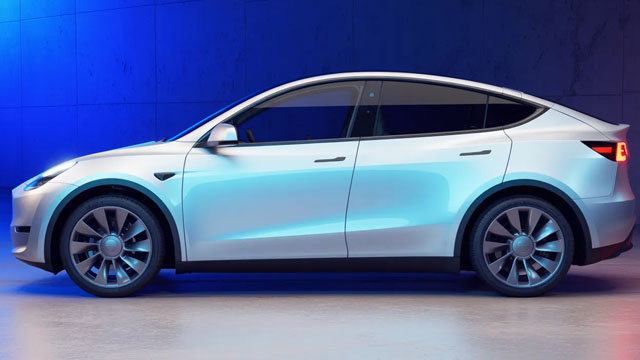
Core Viewpoint - Nissan Motor is set to introduce a new type of hybrid vehicle in the U.S. market, known as "e-Power," which operates like an all-electric vehicle but is powered by a traditional gas engine acting as a generator [1][2]. Group 1: Product Overview - The e-Power system is classified as a series hybrid, where the gas engine generates power for the electric motors that drive the vehicle, differing from traditional hybrids that use the gas engine for propulsion [2][3]. - The e-Power hybrid system is expected to debut in a new version of Nissan's popular Rogue compact SUV later this year [3]. Group 2: Market Context - The introduction of the e-Power hybrid comes at a time of rising gas prices and slower-than-expected adoption of electric vehicles (EVs), with a projected increase in hybrid vehicle sales [4]. - S&P Global Mobility forecasts that hybrids will account for 18.4% of new vehicle sales in the U.S. this year, a significant increase from 12.6% last year and 7.3% in 2023, while pure EV sales are expected to decrease to 7.1% [5]. Group 3: Unique Selling Proposition - The e-Power hybrid offers a unique powertrain for the U.S. market, functioning as an electrically driven vehicle without the need for a plug, allowing users to refuel it like a conventional car [6].
1 Brilliant Driverless-Vehicle Stock to Buy Before It's Too Late
The Motley Fool· 2026-03-21 12:05
Core Insights - The article emphasizes the potential of driverless vehicles to address significant transportation issues, including safety and traffic congestion [1] - Uber Technologies is highlighted as a leading player in the driverless vehicle market due to its innovative partnerships and strategic approach [2][4] Company Strategy - Uber's strategy focuses on a platform-as-a-service model, avoiding the capital-intensive manufacturing of vehicles while leveraging its existing network and data [4][6] - The company has established over 20 active partnerships with major players in the automotive and technology sectors, including Stellantis, Nvidia, Amazon's Zoox, and Alphabet's Waymo [5][6] Market Position - Uber's approach reduces risk by diversifying partnerships, ensuring that the failure of any single partnership does not hinder overall development in driverless technology [6] - Recent partnerships with Nvidia aim to deploy Level 4 self-driving technology across 28 cities by 2028, which could significantly enhance Uber's revenue potential without proportional cost increases [7][8] Investment Potential - The strategy positions Uber to capitalize on the rise of driverless vehicles while maintaining ownership of consumer data, presenting substantial upside for investors [8]


X @The Wall Street Journal
The Wall Street Journal· 2026-03-21 11:45
After driving the China-made Xiaomi SU7 electric car on U.S. roads, @JoannaStern asks why American automakers are so far behind—and when these advanced vehicles will make it here. 🔗 https://t.co/eWBozaPhT1 https://t.co/nJuYM5F1ax ...