半导体

Search documents
英伟达推出太空计算服务,将人工智能送入轨道
Xin Lang Cai Jing· 2026-03-16 20:24
Core Insights - NVIDIA has launched a space computing service plan at the GTC conference, introducing the Space-1 Vera Rubin module, IGX Thor, and Jetson Orin platforms designed for environments with constraints on size, weight, and power, providing data center-level performance and edge AI inference [1][2] Group 1 - The NVIDIA Space-1 Vera Rubin module is the latest component of NVIDIA's space-accelerated platform, offering up to 25 times the AI computing power for space-based inference compared to the NVIDIA H100 GPU, enabling next-generation capabilities for distributed computing centers (ODC), advanced geospatial intelligence processing, and autonomous space operations [1][2] - NVIDIA's CEO Jensen Huang emphasized that space computing is the final frontier, stating that intelligence must exist wherever data is generated as satellite constellations are deployed and space exploration deepens [1][2] - The AI processing across space and ground systems can facilitate real-time perception, decision-making, and autonomous operations, transforming orbital data centers into tools for exploration and spacecraft into autonomous navigation systems [1][2]

英伟达官方支持极简养虾
Xin Lang Ke Ji· 2026-03-16 20:13
Core Viewpoint - NVIDIA has introduced NemoClaw, a deployment toolchain specifically optimized for OpenClaw, emphasizing ease of installation and seamless integration with GPU servers [2] Group 1 - The installation of NemoClaw requires only two lines of commands, highlighting its user-friendly design [2] - NVIDIA aims to ensure that every GPU server can seamlessly connect to the OpenClaw ecosystem, integrating computing power with the agent framework [2] Group 2 - Jensen Huang praised OpenClaw as the fastest-growing open-source software in history, with a significant increase in GitHub stars [2] - By the end of 2025, OpenClaw's GitHub star count is projected to surpass that of established projects like Facebook's React and Linus Torvalds' Linux, which took over twenty years to reach similar levels [2]

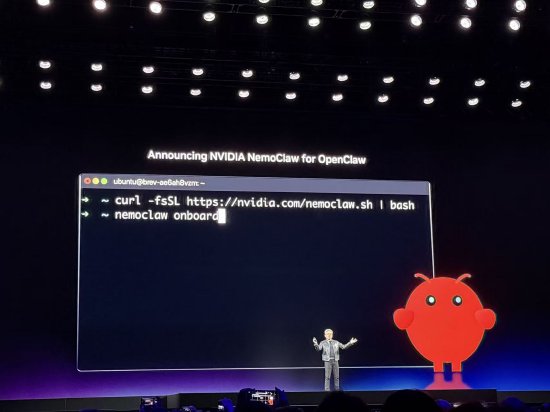
英伟达七款全新的Vera Rubin芯片现已进入全面量产阶段。
Xin Lang Cai Jing· 2026-03-16 19:33
Group 1 - Nvidia has launched seven new Vera Rubin chips, which have now entered full-scale production [1]
英伟达发布DLSS 5,黄仁勋高呼图形学的GPT时刻来了
Hua Er Jie Jian Wen· 2026-03-16 18:52
美东时间3月16日周一,英伟达在年度开发者大会GTC上正式发布DLSS 5,称这是自2018年实时光线追 踪以来,该公司在计算机图形学领域的最重大突破:通过实时神经渲染模型,将像素注入"电影级"光照 与材质细节,目标是在游戏中实现接近好莱坞视觉效果的可交互画面。 英伟达创始人兼CEO黄仁勋在GTC大会的讲话中将DLSS 5比作"图形学的 GPT 时刻",意在强调生成式 AI 在视觉表达与艺术可控性之间达成的新平衡。 据英伟达介绍,DLSS 5将于今年秋季面向主流游戏推出,并已获得包括 Bethesda、CAPCOM、网易、 腾讯、育碧等大型厂商的支持。 DLSS 从最初的超采样/AI 上采样,到后来的帧生成(frame generation),一路演进到了现在把"材质与 光照"也纳入 AI 学习对象的阶段。 英伟达指出,DLSS 4.5 已能生成大量像素并实现多倍帧生成(Dynamic Multi Frame Generation),而 DLSS 5 则在此基础上进一步将神经网络训练为理解场景语义与复杂光材质交互,从而在保证画面连贯 性的同时,输出具备次表面散射、纤维反射等细腻表现的像素。对玩家而言,这意味着 ...
英伟达发布NVIDIA DLSS 5
Hua Er Jie Jian Wen· 2026-03-16 18:34
Core Viewpoint - DLSS 5 introduces a new real-time neural rendering model that injects photo-realistic lighting and material properties into every pixel, marking a significant breakthrough in computer graphics since the debut of real-time ray tracing technology in 2018 [1] Group 1 - The new technology is described as a transformative moment in graphics, akin to a "GPT moment" in the field, merging handcrafted rendering with generative AI [1] - NVIDIA's founder and CEO, Jensen Huang, emphasizes that DLSS 5 significantly enhances visual realism while maintaining the creative control needed by artists [1]
STMicroelectronics (NYSE:STM) Update / briefing Transcript
2026-03-16 15:32
Summary of ST Intelligent Sensing Conference Call Company Overview - **Company**: STMicroelectronics - **Industry**: Semiconductor, specifically focusing on sensors and MEMS (Micro-Electro-Mechanical Systems) Key Points Industry and Market Trends - The sensor market is positioned at the intersection of several long-term trends across automotive, industrial, consumer, IoT, and healthcare sectors [8] - The broad sensor market, combining MEMS and imaging, is expected to grow from approximately $49 billion in 2025 to about $57 billion in 2028, representing a compounded average growth rate (CAGR) of around 4.7% [10] - Specific segments targeted by ST are growing faster than the overall market, with CMOS specialized image sensors expected to grow at about 5.7% CAGR and motion and pressure MEMS sensors at roughly 5.3% CAGR [11] Financial Performance and Projections - ST's sensor revenues, including MEMS sensors and actuators, are projected to reach $2.2 billion in 2025, growing at 10% year-over-year [5] - The company aims to grow sensor revenues at a mid-teens CAGR until 2028, starting from the $2.2 billion base [12] - The recent MEMS acquisition is expected to enhance ST's technology and product portfolio, aligning revenues more closely with the fast-growing automotive market, which is projected to account for 37% of MEMS revenues by 2025 [13] Product Portfolio and Technological Advancements - ST is developing intelligent sensors that capture and process data in real-time, essential for AI applications such as autonomous vehicles and smart homes [5] - The company has a leading portfolio in MEMS and imaging, with a focus on integrating AI capabilities into everyday applications [4] - Intelligent sensors are designed to process data locally, improving energy efficiency and reducing latency [15] Humanoid Robotics Opportunity - ST estimates the current addressable bill of materials for humanoid robots at about $600 per unit, with sensors contributing 30%-40% of this cost [20] - The company is engaged with major OEMs in the humanoid robotics space and is positioned as a strategic enabler in this growing market [20] - ST's comprehensive portfolio includes MEMS, imaging sensors, and microcontrollers, which are critical for the development of humanoid robots [24] Competitive Landscape - ST is noted for its unique capability to offer both MEMS and imaging sensors, embedding local low-power computational capabilities, which differentiates it from competitors [94] - The company is present in the top 10 humanoid makers and is confident in its positioning within the market [35] Strategic Partnerships and Development - ST is collaborating with NVIDIA to enhance the development experience for physical AI solutions, leveraging both companies' strengths [22] - The company plans to continue investing in advanced nodes for increased computational power, with a focus on in-house development [100] Customer Engagement and Market Dynamics - ST aims to create a combination of standard and custom devices to meet the needs of the humanoid robotics market [68] - The company believes that being part of an ecosystem will make it more difficult for competitors to replace its offerings [88] Additional Insights - The company emphasizes the importance of intelligent sensors as enablers of AI, capturing large datasets and processing them at the edge [15] - ST's strong technology roadmaps and scalable manufacturing model position it well to capitalize on the growing sensor market driven by physical AI [24] This summary encapsulates the key insights and strategic directions discussed during the ST Intelligent Sensing conference call, highlighting the company's focus on growth in the sensor market, particularly in the context of AI and robotics.

英伟达股价15%的跌幅掩盖了一个历史性买入信号
Xin Lang Cai Jing· 2026-03-16 15:04
MACD金叉信号形成,这些股涨势不错! 英伟达公司股价自2025年10月高点212.19美元已下跌15%,受到人工智能颠覆担忧、伊朗石油冲击和更 广泛市场焦虑等一系列因素的拖累。 但在抛售潮之下,可能隐藏着一个历史上曾回报过耐心投资者的买入信号——如果你能将这些线索联系 起来的话。 该信号来自摩根士丹利投资管理公司的高级投资组合经理安德鲁·斯利蒙,他最近发布了最新的股票评 论。 需要明确的是,斯利蒙没有点名英伟达。他的论点针对的是整个市场。但它与英伟达的关联度惊人。 选股的三重因素 斯利蒙追踪他称之为选股因素的"三重奏":动能、盈利修正和股票回购。 其中,盈利修正——即分析师上调公司盈利预测,股价随之上涨的模式——通常是未来回报最可靠的预 测指标之一。当华尔街上调某只股票的盈利预期时,其价格往往会同步上涨。 而现在,这种关系被打破了。盈利修正是今年迄今为止表现最差的因子之一。盈利预期被上调的公司并 未获得股价上涨的回报。 斯利蒙认为,原因是投资者过于关注宏观头条——伊朗问题、接近每桶100美元的油价、人工智能颠覆 恐慌、私人信贷压力——而忽视了单个公司的基本面。 斯利蒙追踪他称之为选股因素的"三重奏":动能、 ...
深夜,全线大涨!霍尔木兹海峡,重大变数!
券商中国· 2026-03-16 14:54
Market Sentiment Recovery - The cryptocurrency market has seen a significant rebound, with Bitcoin surpassing $74,000 and Ethereum exceeding $2,300, indicating a recovery in global investor risk appetite [2][8] - In the last 24 hours, approximately 99,200 traders were liquidated, with total liquidations exceeding $430 million, predominantly from short positions [2][8] Energy Market Dynamics - U.S. Treasury Secretary Janet Yellen stated that the current oil supply gap does not constitute a crisis, predicting that oil prices may drop below $80 per barrel in the coming months [2] - The global energy market is under pressure due to Middle Eastern tensions, but Yellen emphasized that the U.S. is allowing Iranian tankers to exit the Strait of Hormuz to ensure global supply remains uninterrupted [2] Stock Market Performance - Major U.S. and European stock markets experienced significant gains, with the Dow Jones up 1.16%, Nasdaq up 1.46%, and S&P 500 up 1.27% [5] - Technology stocks led the rally, with notable increases in companies like Micron Technology (up over 5%) and Intel (up over 4%) [5] Geopolitical Tensions - The situation in the Strait of Hormuz remains complex, with U.K. Prime Minister Starmer stating that restoring navigation is challenging and that the U.K. is working with allies on feasible solutions [5] - Iranian officials have reiterated their stance against a ceasefire, continuing military actions, which adds to the geopolitical uncertainty affecting markets [5][12] Cryptocurrency Market Trends - Bitcoin has shown resilience, outperforming traditional assets since the onset of the Iranian conflict, with a rise of over 10% this month compared to a nearly 5% drop in gold [8][9] - Institutional confidence appears to be returning, as evidenced by a net inflow of over $763 million into U.S. listed Bitcoin ETFs over the past week [9] Future Outlook for Bitcoin - Analysts suggest that Bitcoin's price may fluctuate between $60,000 and $100,000 depending on the developments in the Middle East [12][13] - The current market dynamics indicate that Bitcoin is becoming a more mature asset, potentially decoupling from traditional risk markets [12]

今天V型反弹的几个原因
表舅是养基大户· 2026-03-16 13:37
Core Viewpoint - The article discusses the strong performance of Hong Kong stocks, particularly the Hang Seng Technology Index, amidst rising oil prices and highlights the potential investment opportunities in the Chinese market driven by various factors [1][4]. Group 1: Market Performance and Influences - The Hang Seng Technology Index has outperformed globally, with significant gains noted in the context of rising oil prices [1]. - Michael Burry's bullish stance on the Hang Seng Technology Index has been validated by recent market movements, indicating a positive sentiment among investors [3]. - The strong performance of Hong Kong stocks has contributed to a V-shaped rebound in A-shares, driven by several key factors [4]. Group 2: Capital Inflows and Sector Performance - There are rumors of increased capital inflows from the Middle East into Hong Kong stocks, driven by a demand for safe-haven assets [5]. - Specific stocks like CATL and BYD have shown strong performance in both A-shares and H-shares, with H-shares outperforming [7]. - CATL's H-shares have surged over 35% since the onset of the Iran conflict, indicating a significant premium over its A-shares [9]. Group 3: Semiconductor Sector and Economic Data - The semiconductor sector has been a key driver of the market's V-shaped rebound, particularly following breakthroughs by Huahong in 7nm chip technology [12][13]. - Positive macroeconomic data for January-February has exceeded expectations, with notable growth in consumer spending, particularly in the food and beverage sector [16][18]. - The retail sales data for January-February shows a total of 86,079 million yuan, with a year-on-year growth of 2.8%, indicating a recovery in consumer confidence [21]. Group 4: Real Estate Market Trends - The real estate market in first-tier cities appears to be stabilizing, with a reduction in the rate of price declines [23]. - Recent data indicates that the decline in real estate prices is narrowing, which is crucial for maintaining consumer confidence and supporting the stock market [24]. - The trend suggests that high-quality properties in prime locations will be the future focus of the real estate sector, rather than a broad market recovery [28]. Group 5: Geopolitical and Economic Risks - The ongoing geopolitical tensions in the Middle East continue to pose uncertainties for the market, particularly with rising oil prices impacting economic stability [34][39]. - Institutional investors are currently exhibiting cautious behavior, with significant fund redemptions observed, indicating a risk-averse sentiment [40][42]. - The potential for price increases in consumer electronics due to rising storage chip costs could impact market dynamics, particularly for lower-end brands [44].