
装备制造业

Search documents
前8个月 规模以上工业企业利润增长0.9%
Mei Ri Shang Bao· 2025-09-28 00:11
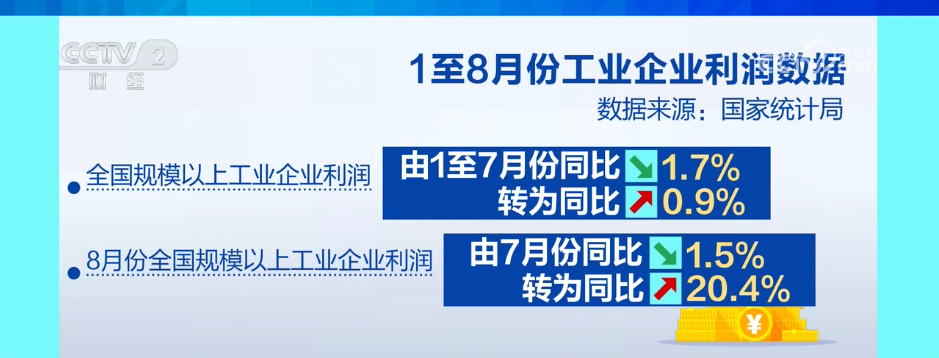
Core Viewpoint - The National Bureau of Statistics reported that from January to August, the total profit of industrial enterprises above designated size reached 46,929.7 billion yuan, showing a year-on-year increase of 0.9%, reversing a downward trend in profits since May of this year [1] Group 1: Profit Trends - From January to August, the profit of industrial enterprises turned from a year-on-year decline of 1.7% in July to a growth of 0.9% [1] - In August, profits of industrial enterprises experienced a significant improvement, with a month-on-month growth of 20.4%, compared to a decline of 1.5% in July [1] Group 2: Sector Performance - The manufacturing sector saw a profit increase of 7.4%, accelerating by 2.6 percentage points compared to the previous month [1] - The electricity, heat, gas, and water production and supply sector reported a profit growth of 9.4%, an acceleration of 5.5 percentage points [1] - The mining sector experienced a decline of 30.6%, but the rate of decline narrowed by 1.0 percentage points [1] Group 3: Revenue Growth - In August, the operating revenue of industrial enterprises grew by 1.9%, which is an acceleration of 1.0 percentage points compared to July [1] - The equipment manufacturing sector played a significant role, with profits growing by 7.2% from January to August, contributing 2.5 percentage points to the overall profit growth of industrial enterprises [1]
8月规上工业利润增长超20%
21世纪经济报道· 2025-09-27 13:47
Core Insights - In the first eight months of the year, the total profit of industrial enterprises above designated size reached 46,929.7 billion yuan, reflecting a year-on-year growth of 0.9% [4][5] - The equipment manufacturing sector showed a profit growth of 7.2%, significantly contributing 2.5 percentage points to the overall profit growth of industrial enterprises, marking it as one of the strongest sectors [6][9] - The profit trend reversed from a decline of 1.7% in the first seven months to a growth of 0.9% in the first eight months, indicating a recovery in industrial profits [4][5] Profit Analysis - In August alone, the profit of industrial enterprises above designated size saw a remarkable year-on-year increase of 20.4%, recovering from a decline of 1.5% in the previous month [4][5] - The total operating revenue for the first eight months was 89.62 trillion yuan, with a year-on-year growth of 2.3%, while operating costs increased by 2.5% to 76.70 trillion yuan [4][5] - The profit margin for operating revenue was 5.24%, showing a slight decrease of 0.06 percentage points year-on-year [4] Sector Performance - The mining sector experienced a significant profit decline of 30.6%, while the manufacturing sector's profits grew by 7.4%, and the electricity, heat, gas, and water supply sector saw a profit increase of 9.4% [7][8] - Notably, the power and heat production sector's profits rose by 13.0%, and the non-ferrous metal smelting and rolling sector increased by 12.7% [8] - The equipment manufacturing sector's profits increased by 7.2%, with seven out of eight industries within this sector reporting profit growth, particularly in railways, ships, and aerospace, which saw a profit increase of 37.3% [6][9] Future Outlook - The raw materials manufacturing sector's profits grew by 22.1%, driven by increased market demand and price recovery, while the consumer goods manufacturing sector transitioned from a profit decline of 2.2% to a growth of 1.4% [9] - The report emphasizes the need for policies to expand domestic demand and enhance market conditions for sustained profit recovery in industrial enterprises [9]


利好,工业利润起来了!前8月增长0.9%,扭转下降态势
2 1 Shi Ji Jing Ji Bao Dao· 2025-09-27 11:17
Core Insights - In the first eight months of the year, the total profit of industrial enterprises above designated size reached 46,929.7 billion yuan, reflecting a year-on-year growth of 0.9% [1][2] - The equipment manufacturing sector showed a profit growth of 7.2%, significantly contributing 2.5 percentage points to the overall profit growth of industrial enterprises [1][6] - The profit trend reversed from a decline of 1.7% in the first seven months to a growth of 0.9% in the first eight months, indicating a recovery in industrial profits [1][3] Revenue and Profit Analysis - From January to August, the operating revenue of industrial enterprises above designated size was 89.62 trillion yuan, with a year-on-year increase of 2.3% [2][3] - The operating costs amounted to 76.70 trillion yuan, reflecting a growth of 2.5% [2] - The operating profit margin was 5.24%, showing a slight decline of 0.06 percentage points year-on-year [2] Sector Performance - Among different ownership types, state-controlled enterprises reported a profit of 15,156.5 billion yuan, down 1.7%, while private enterprises saw a profit increase of 3.3% to 13,076.1 billion yuan [3][5] - The manufacturing sector achieved a profit of 35,233.5 billion yuan, growing by 7.4%, while the electricity, heat, gas, and water supply sector's profit rose by 9.4% [5][6] - The mining sector experienced a significant decline in profits, down 30.6% [5][6] Monthly Trends - In August alone, the profit of industrial enterprises above designated size surged by 20.4%, a notable recovery from a 1.5% decline in July [2][6] - The profit growth in August was attributed to a low base from the previous year and improved monthly performance [2][6] Industry-Specific Insights - The equipment manufacturing sector played a crucial role in profit recovery, with seven out of eight industries within this sector reporting profit growth [6][7] - The raw materials manufacturing sector saw a profit increase of 22.1%, significantly contributing to the overall profit growth of industrial enterprises [7] - Consumer goods manufacturing shifted from a decline of 2.2% to a growth of 1.4%, driven by strong performance in the beverage and agricultural product sectors [7]
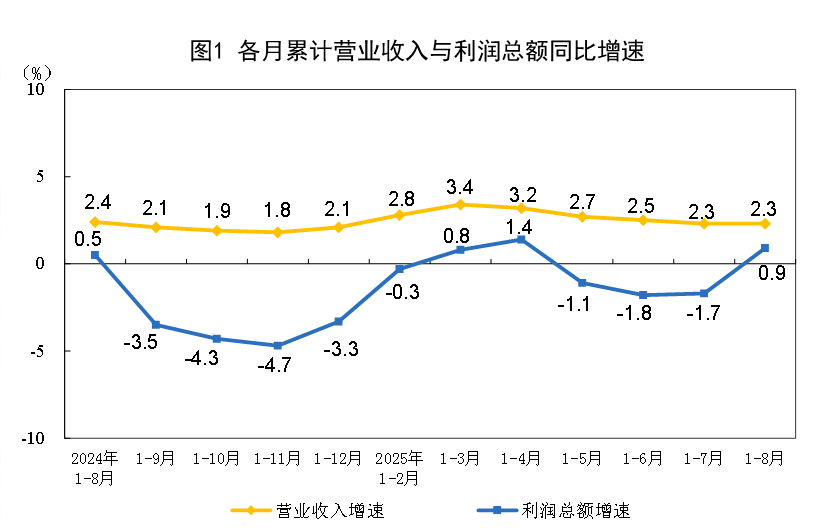
2025年1-8月工业企业利润分析:利润增速回升,关注政策接续
Yin He Zheng Quan· 2025-09-27 08:38
Profit Growth and Economic Indicators - From January to August 2025, industrial enterprises achieved a total profit of CNY 46,929.7 billion, a year-on-year increase of 0.9% compared to a previous decline of 1.7%[1] - The total operating revenue for the same period was CNY 89.62 trillion, reflecting a year-on-year growth of 2.3%[1] - In August alone, profits saw a significant year-on-year increase of 20.4%, improving from a previous decline of 1.5%[1] Price Index and Profit Margin - The Producer Price Index (PPI) decline narrowed to -2.9% in August from -3.6% in July, indicating a stabilization in prices[1] - The cumulative profit margin for industrial enterprises from January to August was recorded at 5.24%, with a month-on-month increase of 0.09 percentage points[1] - Manufacturing and electricity, heat, gas, and water supply sectors showed an upward trend in profit margins, while mining experienced marginal improvements[1] Inventory and Cost Management - Finished goods inventory reached CNY 6.73 trillion, with a year-on-year growth of 2.3%, indicating a continued slowdown in nominal inventory growth[1] - The cost per CNY 100 of operating revenue was CNY 85.58, an increase of CNY 0.19 year-on-year, while expenses decreased to CNY 8.37, down CNY 0.08 year-on-year[1] - The average accounts receivable collection period increased to 70.1 days, indicating cash flow pressures on enterprises[1] Sector Performance and Future Outlook - Equipment manufacturing profits grew by 7.2%, contributing 2.5 percentage points to the overall profit growth of industrial enterprises[1] - Raw materials manufacturing profits surged by 22.1% year-on-year, driven by increased market demand and price recovery[1] - Consumer goods manufacturing profits shifted from a decline of 2.2% in the first seven months to a growth of 1.4% in the first eight months[1]
增长0.9%,透过工业利润数据看经济韧性
Yang Shi Wang· 2025-09-27 08:22
Core Insights - The profits of industrial enterprises above designated size in China increased by 0.9% year-on-year from January to August this year, reversing a decline that had persisted since May [1][3]. Group 1: Profit Trends - From January to August, the profits of industrial enterprises shifted from a 1.7% year-on-year decline in the first seven months to a 0.9% increase, indicating a significant recovery [3]. - In August alone, profits for industrial enterprises experienced a notable improvement, achieving a growth of 20.4%, compared to a decline of 1.5% in July [3]. Group 2: Sector Performance - The equipment manufacturing sector saw a profit increase of 7.2% from January to August, making it one of the strongest contributors to the overall profit recovery of industrial enterprises [5]. - Among the eight industries within the equipment manufacturing sector, seven reported profit growth, with the railway, shipbuilding, aerospace, and electrical machinery industries showing particularly rapid profit increases [5]. Group 3: Raw Materials and Consumer Goods - The profits of the raw materials manufacturing sector rose by 22.1% year-on-year, accelerating by 10 percentage points compared to the first seven months, driven by increased market demand, price recovery, and reduced costs [7]. - The steel industry turned from losses to profits, while the non-ferrous metals sector also saw significant profit growth [7]. - The consumer goods manufacturing sector transitioned from a year-on-year decline to a 1.4% profit increase, with the beverage and agricultural products industries achieving double-digit growth [7]. Group 4: Economic Outlook - The improvement in industrial profits is corroborated by revenue growth, cost reductions, and other positive financial indicators, suggesting a favorable impact on market expectations and laying a solid foundation for overall industrial profit improvement for the year [7].
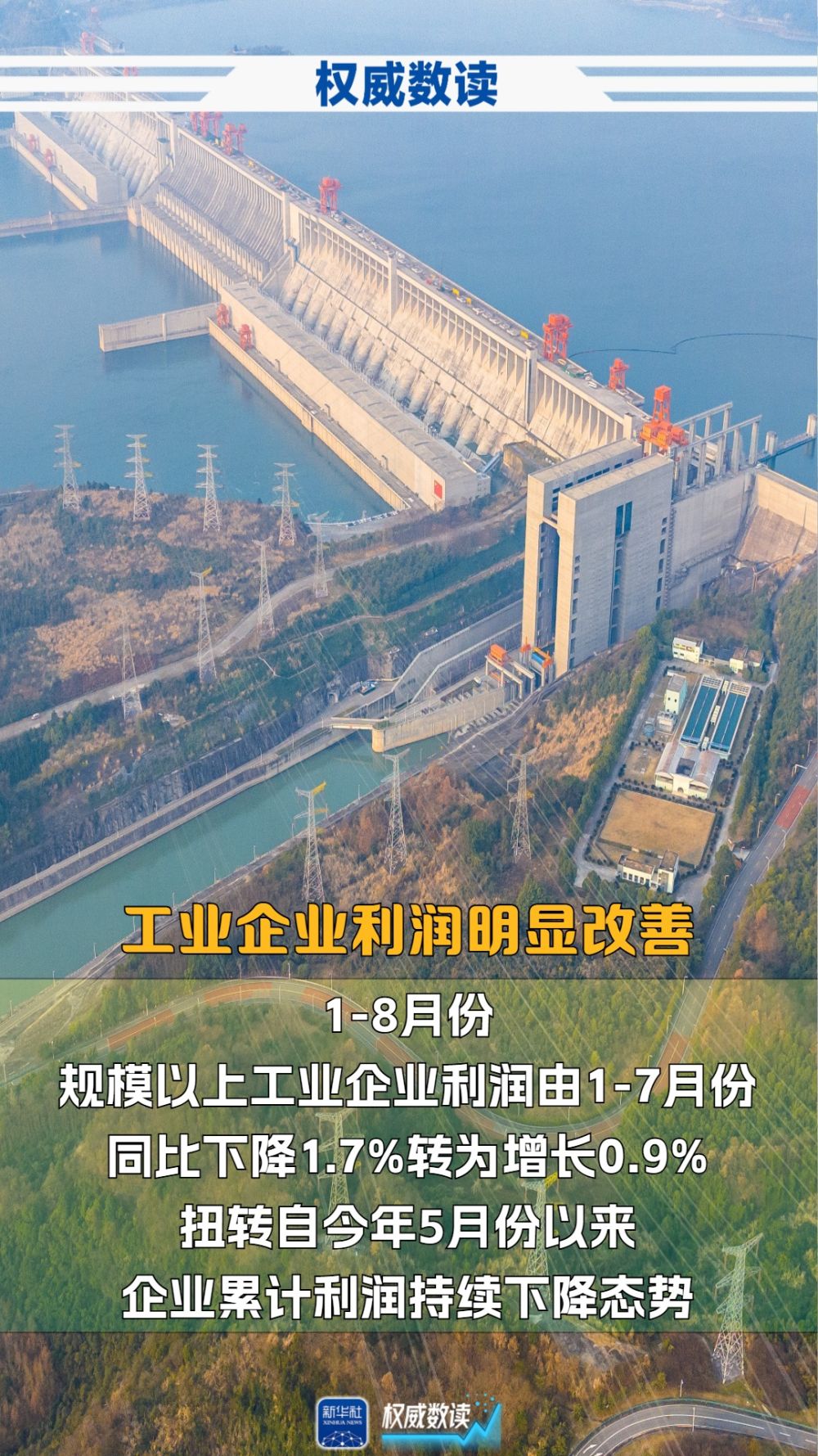
权威数读|前8个月,规上工业企业利润实现同比增长
Xin Hua She· 2025-09-27 08:19
Group 1 - The core viewpoint of the article indicates that from January to August, the profits of industrial enterprises above designated size increased by 0.9% year-on-year, supported by macro policies and a low base from the previous year [1] - The equipment manufacturing industry showed strong support, contributing significantly to the overall profit growth of industrial enterprises [8] - Profits improved across different scales of enterprises, indicating a broad-based recovery in the industrial sector [1] Group 2 - The revenue of industrial enterprises above designated size maintained stable growth, with a year-on-year increase of 2.3% from January to August [7] - The equipment manufacturing sector's profit grew by 7.2% from January to August, driving a 2.5 percentage point increase in the overall industrial profit [8] - The profit of the materials manufacturing industry increased by 22.1% year-on-year, accelerating by 10.0 percentage points compared to the previous month [9]
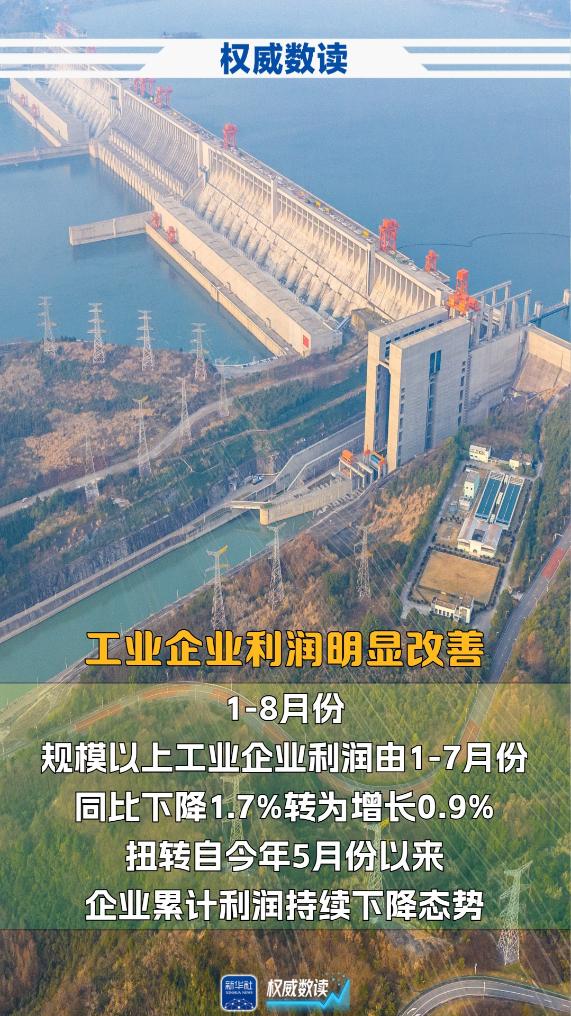
前8个月,规上工业企业利润实现同比增长
Xin Hua She· 2025-09-27 08:16
Group 1 - The core viewpoint is that from January to August, the profits of industrial enterprises above designated size increased by 0.9% year-on-year, supported by macro policies and a low base from the previous year [1][2] - The revenue of industrial enterprises above designated size maintained stable growth, with a year-on-year increase of 2.3%, consistent with the growth rate from January to July [3] - The equipment manufacturing industry showed strong support, with profits increasing by 7.2%, contributing 2.5 percentage points to the overall profit growth of industrial enterprises [4] Group 2 - The profits of raw material manufacturing increased by 22.1%, accelerating by 10.0 percentage points compared to the previous month [6] - The profits of consumer goods manufacturing turned from a decline of 2.2% in January to July to a growth of 1.4% in the following months [6]
权威数读丨前8个月,规上工业企业利润实现同比增长
Xin Hua Wang· 2025-09-27 08:01
Core Insights - In the first eight months of the year, profits of industrial enterprises above designated size increased by 0.9% year-on-year, reversing a declining trend since May [1][2] - The growth in profits is supported by robust performance in the equipment manufacturing sector and a low base from the previous year [1][2] Group 1: Profit Trends - Profits of industrial enterprises above designated size turned from a decline of 1.7% in the first seven months to a growth of 0.9% in the first eight months [2] - The equipment manufacturing sector significantly contributed to the overall profit growth, with a 7.2% increase in the first eight months, boosting the total industrial profit growth by 2.5 percentage points [6] Group 2: Revenue Performance - Revenue of industrial enterprises above designated size grew by 2.3% year-on-year in the first eight months, remaining stable compared to the first seven months [5] - The raw materials manufacturing sector saw a notable profit increase of 22.1%, accelerating by 10.0 percentage points compared to the previous month [8] Group 3: Sector Performance - Consumer goods manufacturing profits improved from a decline of 2.2% in the first seven months to a growth of 1.4% in the first eight months [8]
国家统计局发布重要数据
21世纪经济报道· 2025-09-27 06:06
9月27日,国家统计局发布2025年1—8月份工业企业利润数据,以下为国家统计局工业司首席统计师于卫宁的 解读: 工业企业营收保持稳定增长 。1—8月份,规模以上工业企业营业收入同比增长2.3%,与1—7月份持平。其 中,8月份工业企业营业收入增长1.9%,较7月份加快1.0个百分点,营业收入增长加快,为企业盈利继续恢复 创造有利条件。 装备制造业"压舱石"作用明显 。1—8月份,规模以上装备制造业利润增长7.2%,拉动全部规模以上工业企业 利润增长2.5个百分点,是拉动作用最强的板块之一,对规模以上工业企业利润恢复支撑作用明显。从行业 看,在装备制造业的8个行业中有7个行业利润实现增长,其中,铁路船舶航空航天、电气机械行业利润增长较 快,增速分别达37.3%、11.5%;专用设备、电子行业利润分别增长6.9%、7.2%,较1—7月份加快3.7个、0.5 个百分点。 原材料制造业利润增长较快,消费品制造业利润由降转增 。受市场需求增加、价格回升、成本有所下降等因 素带动,1—8月份,原材料制造业利润同比增长22.1%,较1—7月份加快10.0个百分点,拉动全部规模以上工 业企业利润增长2.5个百分点。其中,钢 ...

8月重要数据明显改善,增长20.4%
Zheng Quan Shi Bao· 2025-09-27 06:05
Core Insights - The profit of industrial enterprises above designated size in August turned from a decline of 1.5% in July to a growth of 20.4% year-on-year, leading to a cumulative profit growth of 0.9% from January to August, reversing a previous decline trend since May [1][3][2] Summary by Categories Profit Trends - The profit of industrial enterprises above designated size showed significant improvement, with a notable monthly increase in August [3] - From January to August, the manufacturing sector grew by 7.4%, the electricity, heat, gas, and water production and supply sector grew by 9.4%, while the mining sector saw a decline of 30.6% [3] Revenue and Cost Analysis - In August, the operating revenue of industrial enterprises increased by 1.9%, accelerating by 1.0 percentage points compared to July, while the cost per hundred yuan of operating revenue decreased by 0.20 yuan, marking the first year-on-year decrease since July 2024 [3][4] Sector Performance - The equipment manufacturing and raw materials manufacturing sectors significantly contributed to profit growth, with equipment manufacturing profits increasing by 7.2% from January to August, contributing 2.5 percentage points to overall industrial profit growth [6] - The raw materials manufacturing sector saw a profit increase of 22.1% year-on-year, also contributing 2.5 percentage points to overall industrial profit growth [6] Company Size and Type - Profits improved across different scales of enterprises, with medium and small enterprises seeing year-on-year profit growth of 2.7% and 1.5%, respectively [8] - Private enterprises experienced a profit growth of 3.3%, surpassing the average growth rate of all industrial enterprises [9] Policy Impact - Recent policies aimed at promoting the development of the private economy, such as the Shanghai Private Economy Promotion Regulation, are expected to enhance market competition and support private enterprises [9]