
跨境电商

Search documents
临沂星联好物跨境电子商务有限公司成立 注册资本5万人民币
Sou Hu Cai Jing· 2025-12-13 04:26
Core Viewpoint - Recently, Linyi Xinglian Haowu Cross-Border E-Commerce Co., Ltd. was established with a registered capital of 50,000 RMB, indicating a new player entering the cross-border e-commerce market in China [1] Company Overview - The legal representative of the company is Yang Huanxi [1] - The registered capital of the company is 50,000 RMB [1] Business Scope - The company is engaged in various business activities including internet sales (excluding licensed goods), import and export of goods, and technology import and export [1] - The company also focuses on retail and wholesale of various products such as arts and crafts, daily necessities, cosmetics, clothing, and accessories [1] - Specific exclusions in the business activities include ivory and its products [1]
破解企业出海难题 龙华发布产业出海联盟出海行动计划
Nan Fang Du Shi Bao· 2025-12-13 02:05
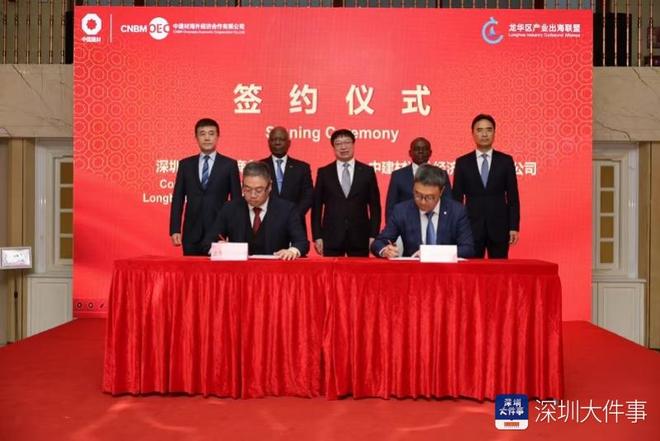
Core Viewpoint - Longhua District is seizing the historical opportunities presented by the Hainan Free Trade Port's closure and the hosting of APEC 2026 in Shenzhen to promote an outbound action plan for its industrial alliance, aiming to create a visible and tangible outbound service system for enterprises [2][5]. Group 1: Outbound Action Plan - The Longhua District government and China National Building Material Group (CNBM) held a cooperation exchange conference to launch the outbound action plan and service list 2.0 version [3][5]. - The action plan utilizes both online and offline methods to streamline the "government, enterprise, platform" working mechanism [6][7]. - An online platform called "Longshu Trade" has been developed to provide precise and efficient outbound services and information support for enterprises [6][10]. Group 2: Service System - The offline strategy includes a new outbound system structured as "1+3+4+N," which consists of one special team, three major hubs, four platform projects, and multiple service points [7][8]. - The special team includes members from 31 district departments to enhance inter-departmental collaboration in supporting enterprises [7]. - The three major hubs leverage resources from international enterprises like CNBM Overseas, Shenzhen Urban Transport Group, and Fosun Commerce to create a service matrix for large and small enterprises [8][9]. Group 3: Service Offerings - The service list 2.0 version has been upgraded to "Golden Twenty-Six Articles," providing comprehensive support across seven areas, including public services, supply chain services, compliance management, financial services, talent services, overseas landing services, and digital services [10][11]. - New services include a pilot project for cross-border e-commerce export consolidation and comprehensive international trade services [11][12]. - The one-stop service base for automobile exports has improved efficiency, reducing the export process to three days, with a 10% increase in efficiency [10][12]. Group 4: Collaboration and Resource Integration - The conference facilitated cooperation agreements between Longhua District Business Bureau and CNBM Overseas, as well as between CNBM Overseas and Fosun Commerce [13]. - Experts and enterprise representatives shared practical experiences and strategies for international market expansion, enhancing resource alignment and clarifying outbound directions for enterprises [13].

(经济观察)中企出海迎海南自贸港封关新机遇
Zhong Guo Xin Wen Wang· 2025-12-12 12:17
中新社海南澄迈12月12日电 (记者 尹海明)在海南自贸港即将启动全岛封关运作之际,一个中国企业出 海基地11日在海南自贸港13个重点园区之一的海南生态软件园启动,为企业量身定制出海方案。同时, 涵盖新消费、商业零售、医疗健康、金融投资等多个行业领域的8家企业与该基地签约。 (经济观察)中企出海迎海南自贸港封关新机遇 越来越多的企业正选择从海南出海。据了解,今年前10个月,海南全省新增对外投资备案企业296家, 同比增长43%;实际对外投资额31.7亿美元,同比增长42.6%。 魏峰认为,借助海南自贸港这一政策高地,加速布局跨境研发、高端制造与离岸金融等新兴领域,可为 企业全球化征程提供有力支撑。(完) 来源:中国新闻网 编辑:张嘉怡 海南生态软件园跨境事业部总经理林诗基告诉中新社记者,该基地以"立足自贸港、链接全中国、服务 全球化"为愿景,依托海南自贸港税收政策优势,通过整合园区产业集群和专业机构的全国资源,搭建 产业链协同与资源对接平台,构建了全链条服务生态体系。 中企出海正展现强大的韧劲与活力。中国上市公司协会党委书记魏峰在正于海南省澄迈县举行的2025中 国上市公司出海产业发展大会上说,2025年上半 ...
“谁能拒绝宝安呢”!宝安有宝地 兴业到宝安
Nan Fang Du Shi Bao· 2025-12-12 06:41
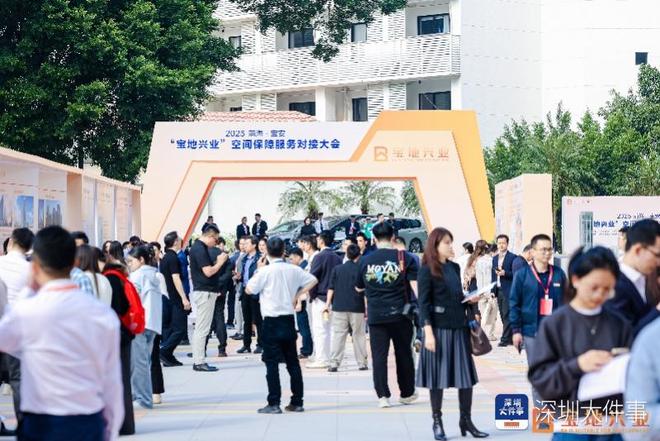
Core Insights - The article emphasizes the importance of land as a critical resource for industrial development in Bao'an, Shenzhen, which is seen as a manufacturing hub and a key area for industrial upgrades [1][3] - The "2025 Qianhai-Bao'an 'Treasure Land for Business' Space Guarantee Service Matching Conference" showcased Bao'an's innovative approach to redefining the relationship between land, industry, and urban development [1][3] Group 1: Industrial Space and Services - Bao'an is characterized by its extensive industrial space, with an area of approximately 397 square kilometers and over 100 million square meters of industrial space, making it a natural testing ground for spatial reforms [3][4] - The district has implemented a detailed zoning strategy to cater to various industries, including a 155.6 square kilometer air transport economic zone for headquarters economy and dedicated areas for modern services and advanced manufacturing [4][5] - Bao'an has introduced a digital platform called "AI Smart Space" to facilitate the matching of enterprises with suitable industrial spaces, which has already helped 63 companies find a total of 459,000 square meters of space [5][8] Group 2: Efficiency and Customization - The Bao'an government has streamlined the land service process, ensuring that enterprises can quickly secure land and begin operations, thereby enhancing efficiency in the manufacturing sector [5][10] - Companies like Shenzhen Xinyi Chang Technology have found tailored solutions for their specific spatial needs, demonstrating Bao'an's commitment to understanding and meeting the requirements of high-tech manufacturing firms [8][13] - The article highlights the importance of a supportive ecosystem, where land is not just a physical space but is integrated with policies, talent, and innovation resources, creating a self-sustaining industrial environment [15] Group 3: Economic Impact and Future Outlook - The conference is part of a broader strategy to create a service ecosystem that addresses the three critical elements for business growth: funding, application scenarios, and spatial resources [15] - Bao'an's approach to industrial space and services is expected to attract high-end talent and drive significant economic output, with companies projecting substantial revenue growth from their operations in the area [9][10] - The article concludes that Bao'an's innovative spatial services and policies are reshaping the traditional investment attraction model, making it a competitive location for businesses [10][15]
海南实际使用外资增长42.2%
Ren Min Ri Bao· 2025-12-11 20:43
Core Points - Hainan Free Trade Port will commence its closure operation on December 18, with significant growth in service trade and foreign investment in the first three quarters of 2023, showing increases of 23.1% and 42.2% respectively [1] - The Ministry of Commerce has prepared for the implementation of closure policies, including the release of a list of prohibited and restricted import/export goods, and the relaxation of import management for 98 product codes [1] - The Ministry aims to enhance trade management transparency and has conducted simulations to ensure smooth policy execution [1] Group 1 - The Ministry of Commerce will leverage the closure operation to promote institutional openness and position Hainan Free Trade Port as a key gateway for China's new era of opening up [2] - The focus will be on integrating trade management policies with zero tariffs and tax exemptions for processing and value-added activities, maximizing the benefits of openness [2] - There will be an emphasis on expanding market access in the service sector and improving the management system for the negative list of cross-border service trade [2]
中国(鞍山)跨境电商综试区9610首单测试成功
Zheng Quan Shi Bao Wang· 2025-12-11 14:21
Core Viewpoint - Liaoning Chaopeng Clothing Co., Ltd. successfully completed the first test order of the China (Anshan) Cross-Border E-Commerce Comprehensive Pilot Zone, utilizing China Post logistics to send products to Japan, marking a significant step in cross-border e-commerce development in Anshan [1] Group 1 - The successful completion of the 9610 first order test fills a gap in Anshan's cross-border e-commerce retail export sector [1] - The pilot zone now covers three types of cross-border e-commerce regulatory models: 9610, 9710, and 9810, along with the 1039 market procurement trade method [1] - A comprehensive foreign trade service system has been established, driven by both "cross-border e-commerce" and "market procurement trade" [1]
华凯易佰:公司业绩来源仍保持多元化与分散化的特点
Zheng Quan Ri Bao Wang· 2025-12-11 13:41
证券日报网讯12月11日,华凯易佰(300592)在互动平台回答投资者提问时表示,SHOPEE平台目前是 公司跨境电商销售渠道之一,但销售额占公司整体营收的比重相对较低,公司业绩来源仍保持多元化与 分散化的特点。 ...

事关海南自贸港封关,商务部最新发声
21世纪经济报道· 2025-12-11 11:56
Group 1 - The core viewpoint of the article is that Hainan Free Trade Port is entering a new phase of full island closure operations, with the Ministry of Commerce announcing support measures for high-standard construction [1][3]. - The Ministry of Commerce is preparing for the implementation of closure policies, including the release of a list of prohibited and restricted import/export goods, and the relaxation of import management for 98 product codes [3][4]. - The Ministry supports innovative development in Hainan by promoting pilot projects for temporary import of repaired and remanufactured products, and establishing cross-border e-commerce pilot zones [3][4]. Group 2 - The Ministry aims to leverage the closure operation as an opportunity to promote institutional openness and make Hainan a key gateway for China's new era of opening up [4]. - There will be a focus on aligning trade management policies with "zero tariffs" and tax exemptions for processing and value-added, to fully release the benefits of openness [4]. - The Ministry plans to enhance market access and open fields, particularly in the service sector, and improve the management system for cross-border service trade negative lists [4].
跨境电商:推动中国—波兰 经贸合作的重要引擎
Sou Hu Cai Jing· 2025-12-11 11:39
Core Insights - The global trade landscape is evolving from a focus on "goods flow" to a dual system of "data and goods," with cross-border e-commerce emerging as a new channel connecting economies [1] - The partnership between China and Poland is particularly significant, as both countries can leverage their strengths in manufacturing and digital economy to enhance trade cooperation [1] Group 1: Current Economic Cooperation Landscape - China and Poland have a long-standing trade relationship with complementary industrial structures, with Poland being a key logistics hub in Central and Eastern Europe [4] - In 2024, Poland's imports from China are projected to reach €49.2 billion, while exports to China are expected to be around €3.6 billion, with major imports including electronics and textiles [4] - Cross-border e-commerce is becoming a new driving force for trade optimization and industrial upgrading between the two countries, as many Chinese companies are using Poland as a distribution center for Europe [4] Group 2: E-commerce Market Growth in Poland - Poland's e-commerce sector has shown robust growth, with a market size projected to increase from $24.76 billion in 2025 to $37.39 billion by 2030, reflecting an annual growth rate of 8.59% [6] - The internet penetration rate in Poland is nearly 90%, supported by government and EU funding for digital transformation initiatives [6] - Local platform Allegro dominates the market, with projected revenues of approximately $13.8 billion in 2024, while international platforms like AliExpress and SHEIN are rapidly expanding their presence [8] Group 3: Opportunities and Challenges in Cross-border E-commerce - Chinese manufacturing has advantages in textiles, consumer electronics, and smart home products, while the multi-modal transport network facilitates cost-effective cross-border transactions [9] - Compliance with EU customs and VAT regulations poses challenges for Chinese sellers, requiring additional investment in certification and tax declaration [9][10] - Delivery efficiency and after-sales service remain critical, as lack of local service partners can lead to issues in delivery times and return processes [12] Group 4: Case Studies and Market Strategies - AliExpress utilizes a global supply chain and local warehousing to ensure delivery times of 3-10 days, while Temu employs aggressive pricing strategies to attract younger consumers [13][14] - Allegro's strategy focuses on enhancing service quality and setting higher standards for overseas merchants, which helps mitigate the impact of cross-border platforms [14][15] Group 5: Future Outlook and Cooperation Prospects - Future trends in cross-border e-commerce between China and Poland may focus on digital deepening, green transformation, and compliance upgrades [16] - Digital technologies such as big data and AI will be crucial for understanding consumer preferences and optimizing marketing strategies [16] - Compliance with EU regulations on tax transparency and consumer protection will be essential for sustainable growth in cross-border e-commerce [16][17]

美国商标审查全面提速!USPTO库存降至34.6万,注册周期或大幅缩短
Sou Hu Cai Jing· 2025-12-11 11:14
Core Insights - The U.S. Patent and Trademark Office (USPTO) has significantly improved its trademark examination performance for FY 2025, indicating a more predictable and efficient process for cross-border e-commerce sellers focusing on the U.S. market [2][5]. Group 1: Performance Metrics - The average time to first action for trademark applications has been reduced to 5.6 months, compared to the goal of 6.7 months [4][5]. - The average total processing time for trademark applications has decreased to 11.7 months, against a target of 13 months [4][5]. - The backlog of unexamined trademark categories has dropped to 346,378, a reduction of over 90,000 from the previous year [5]. Group 2: Implications for Cross-Border E-Commerce Sellers - The trademark examination cycle is becoming more predictable, allowing sellers to proactively incorporate U.S. trademarks into their product selection and branding strategies [6][7]. - It is advisable for sellers to secure core brand names early, as the increasing number of applications makes the trademark database more crowded, reducing the risk of rejections and disputes [7]. - The U.S. market should no longer be viewed as a "step behind" in trademark registration; sellers can plan and file U.S. trademarks in sync with their EU and UK trademarks to expedite brand protection [7]. - A multi-faceted approach to trademark protection is recommended, combining word marks with graphic (logo) trademarks and considering design patents and copyright registrations for comprehensive product protection [9].
