
Robotics

Search documents
从生产线到产业链,从“制造”到“智造” 广东“AI+制造”炼成万亿元级新基座
Xin Lang Cai Jing· 2026-01-26 00:26
Core Insights - The integration of artificial intelligence (AI) into manufacturing is reshaping the competitive landscape in Guangdong, marking a significant shift towards becoming a manufacturing powerhouse [1][8] - The Guangdong provincial government is actively aligning its policies with the national "AI+" action plan, emphasizing the importance of AI in enhancing manufacturing capabilities [1][2] Policy Framework - Guangdong is transitioning from merely providing policies to creating opportunities, establishing a collaborative system that aligns national strategies with provincial deployments and local implementations [2] - The effectiveness of policies is reflected in the rapid transformation of AI initiatives into industrial momentum, supported by a closed-loop system of top-level design, mid-level refinement, and grassroots execution [2] Manufacturing Ecosystem - Guangdong boasts the most comprehensive manufacturing ecosystem in China, with over 3,700 AI and robotics companies, including more than 2,000 core AI enterprises [3] - The province's industrial landscape serves as an ideal testing ground for AI applications, providing diverse and real-world scenarios for validation [3][6] Future Directions - The focus for the next 2-3 years will be on integrating large models with robotics, with the belief that success in real-world applications will define the next generation of products [4] - The shift from "functioning" to "thinking" in AI-driven manufacturing is crucial, emphasizing a problem-oriented approach that prioritizes practical value [5] Collaborative Innovation - The integration of academia, industry, and application is creating a positive feedback loop in Guangdong's industrial parks, significantly shortening the technology transfer cycle [6] - Successful case studies in areas like industrial visual recognition and smart welding equipment highlight the tangible benefits of AI in addressing production challenges [6] Competitive Landscape - Future competition will hinge not only on technology but also on ecosystem and standards, necessitating a leap in three dimensions: opening high-value scenarios, enhancing core technology autonomy, and expanding global influence [7] - Guangdong's development logic for "AI+ manufacturing" is clear: leveraging manufacturing strength with intelligent applications and innovative practices [7]
广东如何在“十五五”期间实现关键一跃?
Xin Lang Cai Jing· 2026-01-26 00:25
Group 1 - The core viewpoint emphasizes the need for Guangdong to enhance its industrial development by addressing existing bottlenecks and establishing "Science and Innovation Special Zones" to promote collaboration in artificial intelligence and other key sectors [2][3] - The "14th Five-Year Plan" has shown Guangdong's strong industrial foundation, with significant achievements in digital economy and industrial clusters, but challenges remain in the integration of innovation and industrial chains [2][3] - Suggestions include forming "innovation alliances" involving leading enterprises and research institutions to strengthen the connection between innovation and industry [2] Group 2 - The "15th Five-Year Plan" aims to build a modern industrial system with international competitiveness, highlighting the importance of integrating modern service industries with manufacturing to enhance overall industrial capabilities [3] - Recommendations include leveraging modern services to improve manufacturing efficiency and establishing mechanisms for deeper integration between the two sectors [3] - Emphasis on identifying key points for industrial integration and enhancing collaboration with top universities in the Guangdong-Hong Kong-Macao Greater Bay Area to address technology transfer weaknesses [3] Group 3 - There is a focus on modernizing infrastructure to support the industrial system, with calls for advancements in low-altitude economy, smart construction, and marine economy [4] - Suggestions include promoting digital transformation in construction processes and creating integrated platforms for design, construction, and operation [4] - The need for a "marine + infrastructure + industry" development model is highlighted to leverage state-owned enterprises' expertise in marine engineering [4] Group 4 - The artificial intelligence sector faces challenges such as low efficiency in resource support and weak collaboration between innovation and industry chains [5] - Recommendations include creating a provincial-level "computing power network" to enhance efficiency and accessibility of computing resources [5] - The proposal to strengthen public data resource allocation and promote high-quality data sharing within the Guangdong-Hong Kong-Macao Greater Bay Area is also noted [5]
广发基金刘玉:驶向深海,发现机器人产业“新大陆”
Zhong Guo Zheng Quan Bao - Zhong Zheng Wang· 2026-01-25 23:06
Core Insights - The year 2025 marked a pivotal moment for the robotics industry, transitioning from experimental showcases to practical applications in various sectors [1][3] - The industry is expected to experience significant growth, with a projected increase in humanoid robot production reaching 100,000 units by 2026, driven by commercialization across multiple sectors [3][8] Industry Developments - The robotics industry has achieved several milestone breakthroughs, with domestic production exceeding expectations and reaching over 10,000 units [3] - The emergence of cost reduction through domestic core component breakthroughs has cleared obstacles for large-scale production, significantly lowering production costs compared to 2024 [3] - The integration of AI models, such as 'visual-language-action' frameworks, is anticipated to enhance robots' capabilities, enabling them to understand and make decisions autonomously [4] Investment Strategies - Investors are advised to "deeply engage with the industry and follow changes," focusing on the established automotive supply chain that underpins robotics [5] - Investment opportunities are categorized into three areas: supply chain targets closely linked with leading companies like Tesla, new component demands arising from technological iterations, and growth opportunities within domestic supply chains [5][6] - The investment approach combines a focus on industry fundamentals with dynamic adjustments based on ongoing industry developments [7] Market Outlook - The robotics sector is characterized by a blend of optimism and caution, with key milestones such as Tesla's production advancements and public showcases expected to influence market sentiment [8] - The long-term outlook for the robotics industry is positive, with expectations of robots serving as interfaces between the physical and intelligent worlds, integrating with AI, communication technologies, and brain-machine interfaces [9]



具身智能产业化,下一步怎么做
Xin Lang Cai Jing· 2026-01-25 20:20
Core Insights - The article highlights the advancements in humanoid robots and their applications in various sectors, emphasizing the shift from experimental technology to practical use in real-world scenarios [1][4] - The focus is on the integration of embodied intelligence in commercial and industrial settings, showcasing how robots can enhance efficiency and customer experience [2][3] Group 1: Industry Trends - The transition from human-driven services to human-robot collaboration is identified as a core area for the application of embodied intelligence, with examples such as robot delivery services in hotels and unmanned coffee shops [2] - The humanoid robot industry has seen significant progress, with various products demonstrating improved capabilities, yet the challenge remains to move beyond the laboratory and into everyday use [1][4] Group 2: Company Developments - Magic Atom, a key player in the industry, has reported substantial interest in its products, with 5 billion yuan in intended contracts and over 1.3 billion yuan in signed orders, indicating strong market demand [4] - The company aims to achieve "thousand-unit" sales across various product categories in the coming year, focusing on rapid deployment in commercial settings while continuing to develop industrial applications [4] - The establishment of a data collection factory is a strategic move to gather real-world data, which is crucial for refining product offerings and enhancing operational efficiency [3]
2月北京站:头部智驾企业“盲盒”、天工机器人——芯之所驱 形之所塑
泽平宏观· 2026-01-25 16:06
以下文章来源于泽平宏观商学 ,作者泽平宏观商学 泽平宏观商学 . 前沿科技企业实战研学 读万卷书行万里路 科增行 014> 盲盒:头部智能驾驶企业 当前正处于从 L2 到 L4 自动驾驶迭代、从汽车向 通用机器人跨越的历史拐点。智驾芯片及解决方案市 场正以接近 50% 的年复合增长率奔向万亿规模。公司 凭借国产替代与技术普惠的双重红利,占据了中国智 驾市场的"半壁江山"。 在物理AI加速落地浪潮与国产替代加速的双重β 下,公司作为国产中大型算力芯片头部企业及具备软 硬一体能力的供应商,推动汽车从"功能"迈向"智 能",让机器更懂人类,让出行更安全、更自由。 天工机器人:北京人形机器人创新中心 日程安排 ● ● 国家战略级平台,定义全栈自主新高度 北京人形机器人创新中心于2023年11月成立,是 国内首个省级人形机器人创新中心,也是国内首家具 身智能软硬件全栈科技公司,全面覆盖人形机器人大 脑、小脑、本体与数据的研发攻关并且构建了良好的 开源生态。 2月27日 (星期五) 目前已推出自主研发的全国产化"具身天工"系 列人形机器人和"天轶"系列轮式人形机器人,可覆 盖工业制作、特种作业、物流分拣、商业导览等多元 ...

开箱广货爆款!广东机器人产量全国领跑,供应链全球最齐
Nan Fang Du Shi Bao· 2026-01-25 13:41
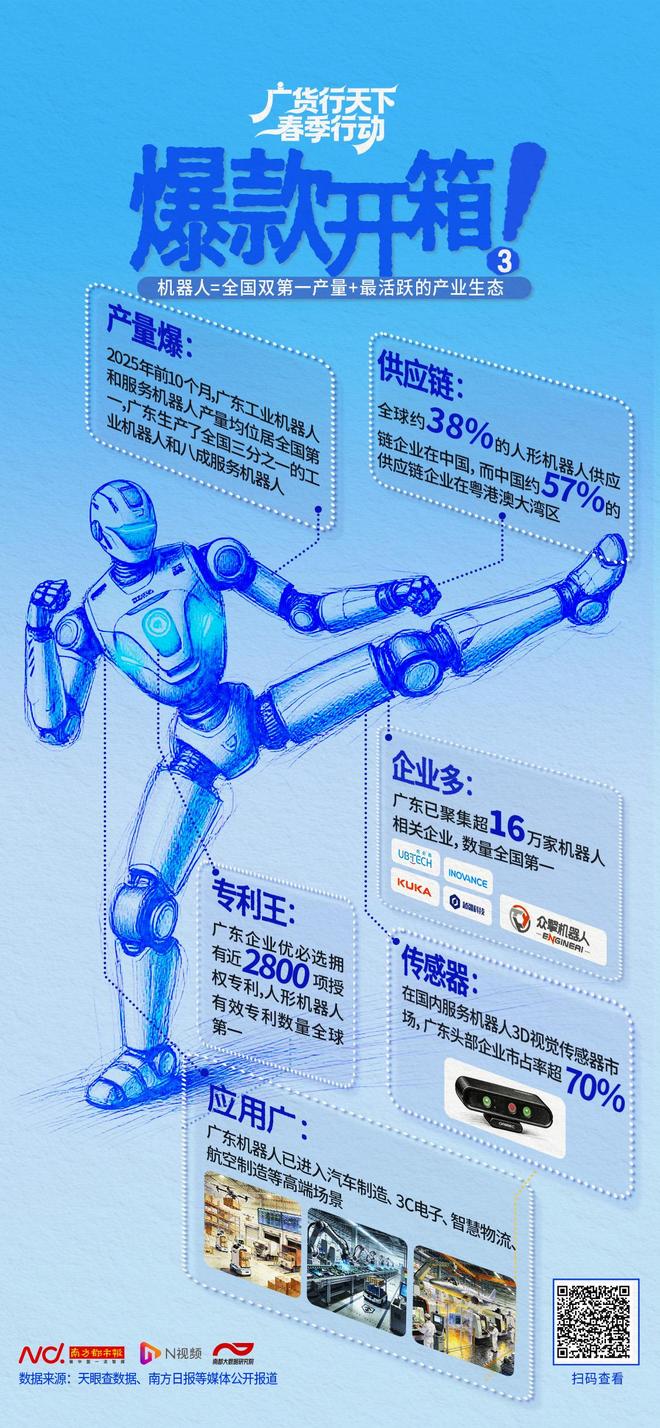
广货爆款开箱 开箱!解码广货。每期一爆款,开箱见真章。 从一部智能手机到一辆新能源车,"广货"早已是国民生活中的"硬核存在"。它到底有多能打?爆款背后 藏着怎样的创新密码?南都大数据研究院"广货爆款开箱"专栏上线!用数据带您透视广货从核心零件到 全球布局的真实战力,解码它如何风靡世界。 第三期,开箱生产线上的"钢铁手臂",物流仓库里的"灵活身姿",以及迈向通用场景的"人形先锋"—— 广东造机器人。 机器人=全国双第一产量+最活跃的产业生态 ******************* 2025年前10个月广东工业机器人 HOLES 和服务机器人产量均位居全国第 全球约380/0的人形机器人供应 亚机器人和八成服务机器人 链企业在中国, 而中国约579/0的 供应链企业在粤港澳大湾区 talles: 广东已聚集超16万家机器人 相关企业, 数量全国第一 INQUANCE 或者 : 0 Kallik 公擊机器/ 广东企业优必选拥 有近2800 项授 TRACE 权专利,人形机器人 在国内服务机器人3D视觉传感器市 有效专利数量全球 场,广东头部企业市占率超 700/ ■!! 0 0 航空制造等高端场景 and and ...


对话优必选周剑:为了造出真正的人形机器人,我愿意赌上一切
晚点LatePost· 2026-01-25 10:08
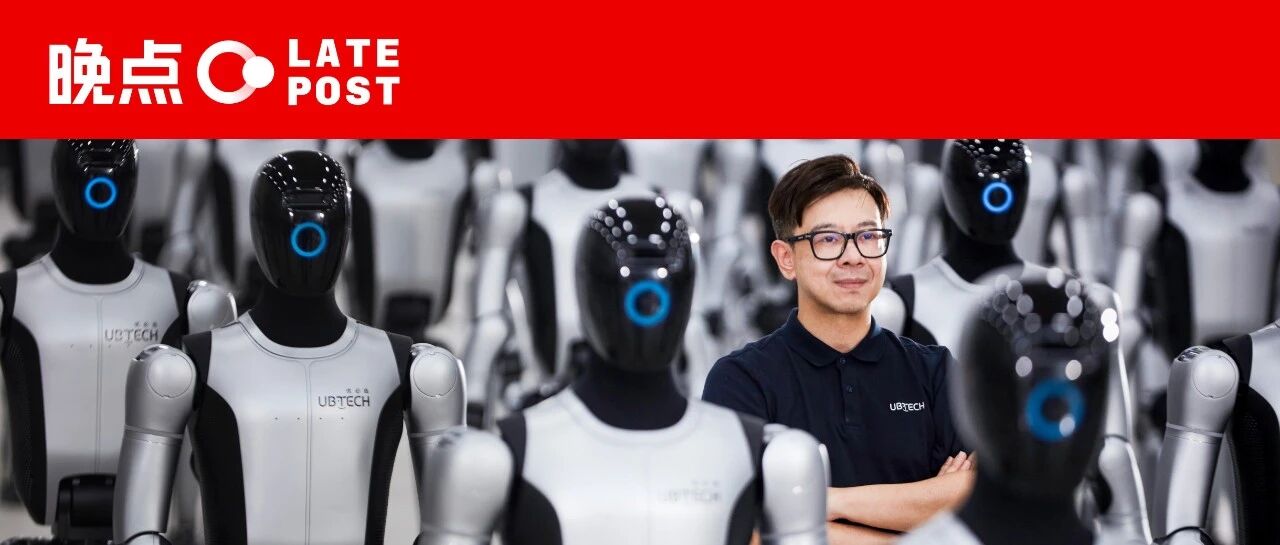
Core Viewpoint - The founder of UBTECH, Zhou Jian, emphasizes the importance of genuine technological advancement in humanoid robotics, warning against superficial trends and the potential pitfalls of the industry [2][3][4]. Group 1: Company Overview - UBTECH, founded by Zhou Jian, is one of the longest-standing companies in the humanoid robotics sector, having been established for 14 years [2]. - The company has never turned a profit but has invested heavily in R&D, with over one-third of its revenue allocated to this area [2][4]. - UBTECH went public in December 2023, becoming the first publicly listed humanoid robotics company, with a market valuation of HKD 38 billion at listing [3][4]. Group 2: Industry Insights - Zhou Jian criticizes the current state of the humanoid robotics industry, noting that many companies are not genuinely innovating but rather creating "humanoid machines" that lack true intelligence [6][10]. - He believes that the industry is experiencing a bubble, with many companies emerging without a solid understanding of the technology [6][8]. - The focus on superficial capabilities, such as dancing and performing tricks, detracts from the development of true embodied intelligence, which is essential for practical applications [10][12]. Group 3: Technological Development - UBTECH has been developing its large humanoid robot, Walker, for nearly a decade, focusing on a full-stack technology approach [4][13]. - The company has invested billions in developing the "brain" of its robots, which includes advanced perception and decision-making capabilities [13][39]. - Zhou Jian asserts that true humanoid robots must possess the ability to autonomously perceive, decide, and execute tasks in real-world environments, rather than relying on remote control or pre-programmed actions [10][12]. Group 4: Market Position and Future Outlook - As of early 2024, UBTECH's market capitalization fluctuated significantly, reaching a peak of HKD 130 billion before settling around HKD 72.5 billion [3]. - The company aims to address the labor shortage in manufacturing, with humanoid robots expected to play a crucial role in alleviating workforce challenges in the coming years [22][28]. - Zhou Jian predicts that 2026 will mark a turning point for the humanoid robotics industry, with a clearer understanding of viable market directions [8][29]. Group 5: Competitive Landscape - Zhou Jian respects all efforts in the humanoid robotics sector but believes UBTECH stands out due to its comprehensive technology and deep understanding of the industry [16]. - The company has secured significant orders, with a total order value exceeding RMB 1.4 billion by 2025, positioning it as a leader in the global market [31][32]. - Zhou Jian expresses confidence in UBTECH's ability to compete effectively, citing its unique technological capabilities and production capacity [16][23].
全球首条,机器人关节自动化产线启动
财联社· 2026-01-25 05:36
Core Insights - The article highlights the launch of the world's first automated production line for robotic joint modules by Yiyou Technology in Pudong, marking a significant leap from technology research to large-scale manufacturing in the embodied intelligence industry [1][2]. Group 1: Production and Manufacturing - The automated production line is designed to address the challenges of precision and consistency in the manufacturing of robotic joints, which are critical for the performance and cost of humanoid robots [2]. - The production line has an annual capacity of 100,000 units, with plans to expand to 300,000 units, providing unprecedented capacity support for downstream robotic manufacturers [2]. Group 2: Technological Advancements - Yiyou Technology's automated production line integrates precision assembly, automatic calibration, and performance testing, achieving full-process automation from parts to finished joint modules [2]. - The founder of Yiyou Technology stated that the launch of this production line signifies a transition from a "workshop" era to a "precision manufacturing" era for core components of humanoid robots [2]. Group 3: Market Position and Support - Yiyou Technology has become a key player in the commercialization of humanoid robots, serving as a designated supplier for the mass production of the A2 series by ZhiYuan Robotics [3]. - The company has focused on the research and development of integrated robotic joint modules since its inception, with a core team boasting over 20 years of experience in robotics [3]. Group 4: Software Ecosystem - In addition to hardware, Yiyou Technology is building an open software ecosystem, supporting mainstream industrial protocols like CANopen and EtherCAT, and providing cross-platform SDKs and comprehensive development documentation to facilitate integration for downstream developers [5].
全球首条机器人关节自动化产线启动,年产能10万台
Zheng Quan Shi Bao Wang· 2026-01-25 04:41
Group 1 - The core point of the article is that Yiyou Technology has launched the world's first automated production line for robotic joints in Pudong, marking a significant leap from technology research to large-scale manufacturing, which will accelerate the mass application of humanoid robots [1] - This automated production line is designed to cover the entire manufacturing process of joint modules, integrating precision assembly, automatic calibration, and performance testing, achieving full-process automated production from parts to finished joint modules [1] Group 2 - The current annual production capacity of the line is 100,000 units, with planned expansions set to increase total capacity to 300,000 units, providing unprecedented capacity assurance for downstream complete machine enterprises [2]
研发在成都,生产在绵阳 “飞地”招商 上下游就近造机器人
Si Chuan Ri Bao· 2026-01-25 01:25
"成都的人才优势很明显。"谈及将核心研发团队布局在成都的原因,曾熠透露,团队中不乏从国内 外知名高校招揽的人才。这个约100人的研发团队,与绵阳本部有着清晰的分工:产品开发、算法迭 代、前沿探索在成都开展,产品的中试测试、数采训练、生产交付在绵阳完成。 这种布局很快产生"磁吸效应"。曾熠回忆,去年10月,与公司长期合作的视觉传感器供应商四川中 科友成科技有限公司,正为在成都市郫都区办公地点招引专业技术人才一事发愁。双方偶然聊起后,该 公司随即决定将二三十人的研发团队迁入同一栋楼。 1月19日,在位于成都市锦江区的艺尚锦江文创中心4号办公楼内,一群工程师正围着一台四足机器 人调试。 "我们研发团队的成员中,硕博学历占比超六成。"站在调试间里,曾熠指着一旁正在进行机器人避 障测试的工程师们向记者介绍。他是中国兵器装备集团自动化研究所有限公司(以下简称兵器自动化所 公司)机器人创新中心技术总工程师。 这里不仅是绵阳市属国企四川九洲电器集团有限责任公司在成都的办公基地,也是中国(绵阳)科 技城科产协同中心(简称协同中心)。去年9月,作为四川省人形机器人创新联合体和四川省人形机器 人制造业创新中心的牵头单位,兵器自动化 ...
