酒店业

Search documents
如何应对“人均消费不到8毛”?“酒店业周期破局”论坛举行
Nan Fang Du Shi Bao· 2025-08-12 06:32
Core Insights - The high-end hotel industry is facing significant challenges, with many properties being sold off without interest, indicating a deep adjustment period for the sector [1] - Consumer behavior is shifting towards emotional spending, with many opting for experiences over traditional hotel stays, leading to a decline in average spending per visitor [3][4] - The hotel industry must innovate its business models and operational strategies to adapt to changing consumer demands and economic conditions [4][5] Consumer Market Changes - Current consumers are driven by emotions in their purchasing decisions, leading to a decline in average spending, such as the example of a tourist area where the average spend dropped to less than 0.8 yuan [3] - The shift from high-speed growth to slow, quality-driven growth necessitates a change in business logic for companies in the hotel sector [3] Response to New Consumption Patterns - The hotel industry is entering a new cycle where economic and mid-range hotels are preferred, capturing about 80% of the market share [5] - Companies like Dongcheng Group are focusing on high cost-performance to meet consumer needs, with significant reductions in construction costs for hotel rooms [4][5] Enhancing Core Competitiveness - The competitive landscape requires hotels to enhance their core competencies, transforming from mere accommodation providers to cultural experience hubs [7] - Innovations in product design, service upgrades, and operational strategies are essential for hotels to thrive in the current environment [7] Service Optimization - Key service enhancements include improving sleep quality, bathroom facilities, and breakfast offerings, alongside new demands such as laundry services [8] - The focus should be on intelligent management upgrades and enhancing guest experiences to create a welcoming environment [8] AI Integration in Hotel Operations - AI technology is being leveraged to optimize various aspects of hotel operations, from customer acquisition to service delivery, enhancing overall efficiency [11] - The integration of AI can help in dynamic pricing and improving guest interactions, thereby increasing operational effectiveness [11] Cross-Industry Collaboration - Collaboration between travel companies and hotels is essential to meet evolving consumer demands, such as the need for family-connected rooms [12] - The focus on data-driven partnerships can enhance service offerings and improve customer satisfaction [12]


旅游“出圈” 上市酒店企业跑出复苏加速度
Xin Hua Wang· 2025-08-12 05:47
Group 1 - The hotel industry is experiencing a strong recovery in 2023, driven by the release of pent-up demand for travel and tourism, leading to improved financial performance for major hotel companies [1][2] - Shoulv Hotel (首旅酒店) expects to turn a profit in 2023, with a projected net profit of between 770 million to 830 million yuan, representing a year-on-year increase of 1.352 billion to 1.412 billion yuan, or a growth of 232% to 243% [1] - Huazhu Group reported that its RevPAR (Revenue per Available Room) reached 122% of 2019 levels in 2023, with an ADR (Average Daily Rate) of 299 yuan, up 26.6% year-on-year [2] Group 2 - The average RevPAR is a key indicator reflecting the operational quality and profitability trends of hotels, which has shown significant improvement in 2023 [1] - The tourism industry is expected to continue its strong performance into 2024, with projections of over 6 billion domestic tourist trips and 6 trillion yuan in domestic tourism revenue [3] - Jinjiang Hotels is actively expanding its management services and partnerships to enhance long-term competitiveness and financial performance [4] Group 3 - The hotel management and operations of Lingnan Holdings are also recovering rapidly, focusing on brand expansion and capitalizing on the recovery of business and tourism markets [2] - The success of the TV drama "Blossoms" has boosted the visibility of Jinjiang Hotels' historical properties, leading to increased interest and occupancy [4] - Dongwu Securities highlights that leading hotel companies are showing cash cow attributes with continuous growth in total revenue and profitability levels [5]


更亲民,五星级酒店也摆摊卖包子了
3 6 Ke· 2025-08-12 03:23
Core Insights - Five-star hotels in China are embracing street vending as a viable business strategy amid declining traditional revenue streams [2][6][11] - The shift reflects a broader trend of high-end hotels adapting to changing consumer preferences and economic conditions [14][19] Group 1: Market Trends - Since July, a wave of street vending has swept through five-star hotels across China, including notable establishments in Shanghai, Zhengzhou, and Changsha [2] - The proportion of business travelers at high-star hotels has dropped from 60% to below 50%, with average daily rates (ADR) in first-tier cities declining by 3.7% to 4.2% year-on-year [2][6] - Revenue for five-star hotels has significantly decreased, with some reporting a nearly 40% drop compared to 2019 [6][10] Group 2: Business Adaptation - Hotels like the Yonghe Bojue International Hotel in Zhengzhou have successfully generated daily revenues of around 30,000 yuan from street vending, which helps cover staff wages [2][3] - The Changsha Meixi Lake Jinmao Hotel initially focused on breakfast but quickly expanded to include lunch and dinner offerings due to high demand from local residents [5][8] - The shift to street vending is seen as a necessary survival strategy, allowing hotels to maintain staff and engage with the community [8][12] Group 3: Operational Changes - Hotels are implementing flexible staffing strategies, encouraging employees to take on multiple roles to adapt to fluctuating demand [17][18] - The Yonghe Bojue International Hotel has also reintroduced a "chef at home" service, reflecting a shift in service delivery to meet changing consumer needs [15] - Cost control measures are being adopted, including reducing menu prices and offering budget-friendly meal options to attract more customers [16][18] Group 4: Future Outlook - The initial excitement around street vending is beginning to wane, with revenues at the Yonghe Bojue Hotel dropping from a peak of 100,000 yuan to around 50,000 to 60,000 yuan [19] - Hotel operators express a desire to maintain core business operations while exploring new revenue streams, emphasizing that traditional services remain essential [13][18]
酒店业“寒冬”下的求生之路——专访伯豪瑞廷酒店总经理芦键
Hua Xia Shi Bao· 2025-08-12 01:32
Core Insights - The hotel industry is facing significant challenges in the summer of 2025, with average room prices dropping by 10%-12% and revenue only reaching 70% of budget expectations due to various factors including global economic conditions and increased competition [2][3] - Major hotel groups are expanding despite the downturn, with Huazhu opening 694 new hotels and Jinjiang adding 97, indicating a growing supply in a declining demand environment [2][3] Market Performance - The hotel room occupancy rate for the Berghotel is over 80%, slightly down from previous years, with room prices decreasing by approximately 10% [4][5] - The increase in hotel supply has led to a competitive market where hotels must lower prices to attract guests, contrasting sharply with the past when luxury hotels were in high demand [5] Customer Demographics - There is a noticeable shift in customer demographics, with family travelers becoming the majority during the summer months, prompting hotels to adapt by offering family rooms and tailored services [6][7] - The hotel industry is responding to the decline in business travelers by introducing flexible meeting packages and business discounts to cater to various customer needs [6][11] Operational Strategies - To maintain profitability in a price-sensitive market, hotels are focusing on optimizing operational costs, particularly labor costs, by implementing flexible staffing and smart management systems [7][8] - The rise of budget hotels with smart technology is impacting high-end hotels, necessitating a reevaluation of service offerings and pricing strategies [8] Future Outlook - The hotel industry anticipates a market downturn around mid-August 2025, with strategies in place to attract business travelers through government events and special promotions for families [9][10] - Hotels are enhancing their marketing efforts through social media and online travel agencies to reach younger families and business clients, while also improving service quality through staff training [12]
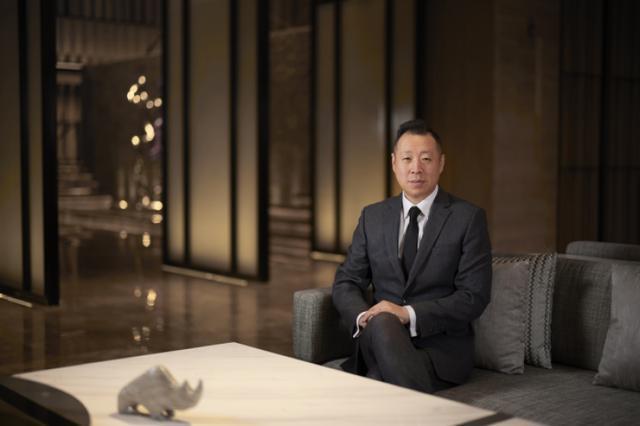
东呈集团程新华新书首发 专家论道穿越周期的智慧火花
Sou Hu Cai Jing· 2025-08-11 13:16
Core Insights - The 19th China Brand Festival was held in Shenzhen, where industry leaders discussed the future of brand development in the new era [1][2] - Cheng Xinhua, Chairman and CEO of Dongcheng Group, released a new book titled "The Power to Cross Cycles," emphasizing the importance of high cost-performance in the hotel industry [2][4] - The book launch was accompanied by a forum focusing on breaking through industry cycles, featuring discussions on strategies for the hotel sector [5][7] Company Overview - Dongcheng Group has achieved a "tenfold growth in five years," ranking among the top five hotel groups in China and the top fourteen globally [2][13] - The company has maintained a long-term commitment to high cost-performance and has adapted its strategies to embrace digital technology and younger demographics [7][13] - Dongcheng's future vision is likened to a forest, emphasizing sustainable growth rather than short-term gains [7] Industry Trends - The hotel industry is facing challenges due to economic slowdowns and shifting consumer trends, necessitating enhanced risk resilience among industry players [5][9] - Experts at the forum highlighted the need for differentiation and innovation in the hotel sector to overcome existing bottlenecks [9][11] - The importance of leveraging AI and data analytics for operational efficiency and customer engagement was emphasized by various industry leaders [11][13] Recognition and Achievements - Dongcheng Group was recognized in the "Top Brand 2025 China Brand 500 Strong" list, with a brand value of 10.466 billion [13]
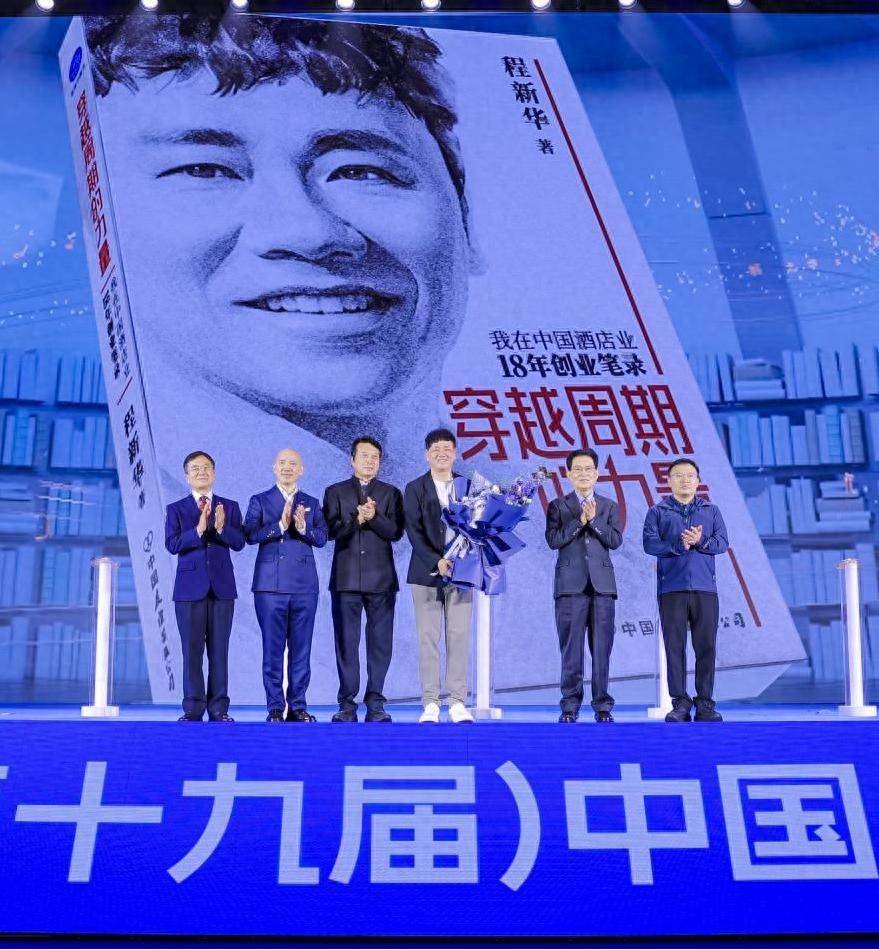
东呈首发《穿越周期的力量》!中国品牌节论道“高性价比”
Nan Fang Du Shi Bao· 2025-08-11 12:51
Core Viewpoint - The launch of the book "The Power to Cross Cycles: My 18 Years of Entrepreneurship in China's Hotel Industry" by Cheng Xinhua, founder and CEO of Dongcheng Group, highlights the company's journey and insights into the hotel industry, emphasizing high cost-performance and long-termism as key strategies for navigating industry cycles [1][4][9]. Group 1: Book Launch and Event Highlights - The book was officially launched at the 19th China Brand Festival, attended by notable figures from cultural and business sectors, enhancing the event's significance [3]. - Cheng Xinhua's speech shared practical examples of Dongcheng's strategies for overcoming industry challenges, focusing on the company's evolution and strategic insights [4][7]. Group 2: Company Growth and Strategy - Dongcheng Group, founded in 2006, has achieved rapid growth, becoming one of the top five hotel groups in China and the top fourteen globally, recognized as a "dark horse" in the industry [4]. - The company has adopted a long-term perspective, emphasizing high cost-performance as a guiding principle for development, which resonates with current market trends [7][9]. Group 3: Industry Insights and Trends - The hotel industry is transitioning from rapid growth to stable growth, necessitating a shift in operational focus from expansion to efficiency and profitability [7]. - Cheng Xinhua's insights reflect a broader understanding of consumer trends, advocating for localized innovation and a commitment to balancing business growth with social responsibility [8]. Group 4: Brand Value and Recognition - Dongcheng Group has been recognized in the "Top Brand 2025 China Brand 500 Strong" list, achieving a brand value of 10.466 billion, indicating its strong market presence and potential for future growth [11].
拍出842元一平超低价,西安高星酒店紧急“呼叫”煤老板
Sou Hu Cai Jing· 2025-08-11 07:34
图源:小红书 "我很怀念煤老板做投资人的日子,他们特别好。" 当年的著名编剧汪海林,说出了不少影视人的心声,在一众喜欢"瞎干预"的投资人面前,煤老板成了被怀念的对象。 如今,怀念煤老板的远不止影视圈,如今还有一大批挂牌待售的高星酒店。 愁云惨淡。 用这个词来形容今年的西安高星酒店大宗交易市场的行情,再恰当不过了。 近期,西安二环边一座建成超30年历史的地标四星级酒店以超低价拍卖成交,吸引市场诸多关注。 据京东拍卖平台显示,今年7月西安骊苑大酒店名下资产被西安晨钟实业有限公司以1878.86万元拍下,按此拍卖价格折合单价仅842元/平方米,直接突破 了西安高星酒店拍卖的下限。 842元一平拍下的,除了酒店建筑本身,还包含酒店的电子设备(如电脑、打印机、电视机、空调等)、其他设备(如家具、灯具、装饰物品等酒店经营 用品)等固定资产。 对比今年被卖掉的高星酒店: 沈阳世茂希尔顿酒店折合每平方均价约为1.15万元; 成都希顿国际酒店相当于7900元每平方米; 莫干山开元名庭酒店折合2440元/每平方米; 哪怕同样是四星级的东莞君爵酒店,成交单价也折合为1387元/平方米。 作为西安老地标的骊苑大酒店,如今拍出超低价不 ...

酒店业周期破局论坛在深圳举行 探索行业可持续发展之路
Zhong Guo Xin Wen Wang· 2025-08-10 15:03
中国旅游研究院国际交流部主任杨劲松表示,今年,全球旅游业呈现显著恢复态势,已超过2019年同期 水平。他提出,中国酒店业需通过"小而精、小而美、小而暖"实现差异化,关注在地文化连接、情绪价 值与非功能性服务,同时探索"酒店+"融合模式。 在高峰对话环节,跨界协同破局来自酒店集团、资管、科技企业、旅游平台的嘉宾围绕"周期破局"展开 对话,大家一致认为,面对消费者需求多元化、市场竞争加剧等挑战,酒店业须通过聚焦核心需求,强 化科技赋能,深化跨界协同,坚持长期主义,最终实现从"生存"到"破局"的跨越。(完) (文章来源:中国新闻网) 中新网深圳8月10日电 (记者郭军)由品牌联盟与东呈集团联合主办的酒店业周期破局论坛9日在深圳举 行。本次论坛以"穿越周期的力量"为主题,汇聚政府领导、行业协会专家、企业领袖、学者及媒体代 表,围绕酒店业在周期挑战下的破局路径展开深度探讨,为酒店业应对周期波动、实现可持续发展提供 思路与方向。 教育部旅游管理教指委副主任、中国旅游与酒店投资人联盟主席马勇指出,当前酒店业面临"碳基时代 向硅基时代"转型的挑战,人工智能、消费市场变化(如情绪消费、理性消费)及行业生态重构是关键变 量。 东 ...
女童被吸入水池溺亡,涉事酒店:合作温泉已停业整改
Bei Ke Cai Jing· 2025-08-10 13:13
Group 1 - A tragic drowning incident occurred on July 18, involving a 6-year-old girl at the children's water play area of the Wyndham Hotel in Xishuangbanna, Yunnan, where she became trapped in a drainage pipe and ultimately drowned [1][2] - The Wyndham Hotel stated that the children's water play area, known as Jiumu·Manquan SPA, is not operated by the hotel but is part of a cooperative relationship, and the SPA has since been closed for rectification [1][2] - The Jiumu·Manquan SPA, which opened in September 2023, covers an area of 20,000 square meters and includes various hot spring pools in addition to the children's water play area [1][2] Group 2 - The local emergency management bureau in Xishuangbanna has initiated an investigation into the drowning incident, with a working group established to look into the matter [2] - Jiumu·Manquan SPA is operated by Jiuhe Hotel Management Co., Ltd., which was established in 2022 and is a member of Yunnan Mingrun Hotel Management Co., Ltd., with a registered capital of 600,000 yuan [2]
更亲民!五星级酒店也摆摊卖包子了
经济观察报· 2025-08-10 04:27
Core Viewpoint - The trend of high-end hotels engaging in street vending reflects a strategic shift to adapt to declining traditional revenue streams and attract a broader consumer base [2][9][20]. Group 1: Market Trends and Challenges - Since July, a wave of street vending has emerged among five-star hotels across China, including notable establishments in Shanghai, Zhengzhou, and Changsha [2]. - The 2024 China Hotel Industry Development Report indicates a significant decline in business traveler occupancy rates for high-star hotels, dropping from 60% to below 50% [2]. - Average daily room rates (ADR) in first-tier cities have decreased by 3.7% to 4.2%, with occupancy rates (OCC) down by 2% to 4% [2]. - Revenue for high-end hotels has seen a drastic decline, with some reporting a nearly 40% drop compared to 2019 [9][10]. Group 2: Innovative Business Strategies - The initiative to sell street food has proven financially beneficial, with some hotels generating daily revenues of approximately 30,000 yuan, which can cover staff wages [2][4]. - The success of street vending is attributed to strategic locations with high foot traffic and appealing food offerings that resonate with current consumer preferences [5][6]. - Hotels are expanding their offerings beyond breakfast to include lunch and dinner options, significantly increasing revenue streams [7][21]. Group 3: Operational Adjustments - Hotels are adopting flexible staffing strategies, encouraging employees to take on multiple roles to maintain service quality despite reduced staff numbers [24][25]. - The focus remains on core services such as room bookings and event hosting, with street vending seen as a temporary measure rather than a primary revenue source [18][25]. - Cost control measures are being implemented, including menu adjustments and pricing strategies to attract more customers [22][23]. Group 4: Consumer Engagement and Brand Building - Street vending serves as a platform for hotels to engage with local communities, fostering brand recognition and trust among potential customers [16][18]. - The introduction of promotional activities, such as live streaming and community events, aims to enhance customer interaction and drive future bookings [16][17]. - Hotels are leveraging their street food operations to promote their core services, creating opportunities for upselling and customer retention [16][18].