化妆品

Search documents
深度解析泉果刚登峰,为何这时更需要关注他?
Xin Lang Cai Jing· 2025-12-22 06:29
Core Viewpoint - The article emphasizes the importance of time in investment, highlighting the growth of a fund manager's credibility and trustworthiness over a longer career span [1][2]. Group 1: Background of the Fund Manager - The fund manager, Gang Dengfeng, has 16 years of experience in the securities industry and 11 years in investment management, evolving from a novice to a seasoned professional [2]. - Gang Dengfeng's early career was shaped by his exposure to value investing principles at Dongfang Securities, which laid a strong foundation for his investment philosophy [4][5]. - The investment philosophy of Gang Dengfeng is influenced by his early experiences and the quality of the team he worked with at Dongfang Securities [4][5]. Group 2: Investment Philosophy and Framework - Gang Dengfeng's investment framework is characterized by a focus on quality growth with a mid-level industry perspective, aiming for sustainable opportunities rather than speculative gains [8][31]. - The investment strategy prioritizes holding high-quality companies with strong financial metrics and competent management, leading to a low turnover rate in his portfolio [13][35]. - The concentration of holdings has increased over time, with the top ten holdings' concentration rising from 36.40% at the end of 2023 to 58.67% by the end of Q3 2025 [35]. Group 3: Performance Metrics - The fund managed by Gang Dengfeng, Quan Guo Si Yuan, has shown a net value growth rate of 32.28% over the past year, significantly outperforming the benchmark [21]. - The fund's turnover rates were recorded at 66.87% for 2023, 96.65% for 2024, and 115.48% for the first half of 2025, indicating a strategy focused on long-term holdings [31][32]. - The fund's maximum drawdown was -13.76% over the past year, compared to -21.04% for the CSI 300 index, demonstrating better risk management [16][37]. Group 4: Market Context and Future Outlook - The current market environment is seen as favorable for active equity funds, with a shift towards shareholder returns and dividends in the A-share market [19]. - The article suggests that the quality investment style may see a resurgence after a prolonged downturn, as high-quality companies are expected to perform better in a recovering economic environment [21]. - The increasing demand for equity investments among residents is noted, as traditional low-risk assets have become less attractive [19].

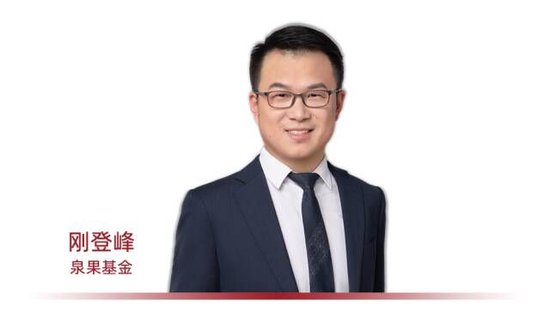
深度解析泉果刚登峰,为何这时更需要关注他?
点拾投资· 2025-12-22 06:19
Core Viewpoint - The article emphasizes the importance of time in investment, highlighting that the longer the investment horizon, the greater the power of compound interest. It also discusses the evolution of fund manager Gang Dengfeng, showcasing his growth and investment philosophy over the years [1][2]. Group 1: Investment Philosophy - Gang Dengfeng's investment framework is characterized by a focus on quality growth with a mid-level industry perspective. He aims for sustainable growth rather than short-term speculative gains, emphasizing the importance of investing in companies with strong fundamentals and management [10][14]. - The investment approach includes a low turnover rate, indicating a long holding period for stocks. For instance, the turnover rates for the fund managed by Gang Dengfeng were 66.87% in 2023, 96.65% in 2024, and 115.48% in the first half of 2025, reflecting a strategy of holding quality stocks for extended periods [11][14]. Group 2: Stock Selection Criteria - Gang Dengfeng focuses on a limited number of high-quality companies, defined by strong financial metrics such as high Return on Equity (ROE) and excellent management teams. This selective approach aims to minimize trading losses and enhance overall returns [14][16]. - The concentration of holdings has increased over time, with the top ten holdings in his fund rising from 36.40% at the end of 2023 to 58.67% by the third quarter of 2025, indicating a strategy of focusing on fewer, high-quality investments [14][16]. Group 3: Market Context and Timing - The article suggests that the current market environment is favorable for actively managed equity funds, as historical data indicates that active management tends to outperform broad market indices during periods of structural growth opportunities. For example, the active equity index returned 28.06% in 2025, significantly outperforming the 14.30% return of the CSI 300 index [22][23]. - The shift in the Chinese capital market towards shareholder returns and dividends is highlighted, with total dividends reaching nearly 2.5 trillion yuan in 2025, indicating a growing demand for equity investments among retail investors [23]. Group 4: Industry Diversification - Gang Dengfeng's portfolio is diversified across various industries, including electric vehicles, internet, consumer electronics, and industrial metals. This broad industry coverage is designed to create multiple sources of excess returns and reduce maximum drawdowns for investors [17][23]. - The article notes that the fund's maximum drawdown was -13.76% over the past year, compared to -21.04% for the CSI 300 index, demonstrating the benefits of industry diversification in mitigating risks [17][23].

科技赋能“美丽经济” 化妆品进入AI质控时代
Zhong Guo Jing Ji Wang· 2025-12-22 05:43
Core Insights - The technology developed for intelligent detection and evaluation of beauty and health products has successfully overcome key technical bottlenecks, providing significant support for the high-quality development of China's beauty and health industry [1][2] Group 1: Technological Achievements - The research team established an AI risk detection system and developed eight exclusive detection methods for high-concern substances, achieving an analysis accuracy rate exceeding 95% [2] - A "four-dimensional three-level" quality grading model framework was constructed, along with a database covering over 200 banned and restricted substances [2] - The team successfully developed a skin moisture detection prototype and a visual-touch fusion dexterous hand system, with a positioning error of less than or equal to 3% [2] Group 2: Application and Impact - The technology provides high-sensitivity detection tools and quality grading models for regulatory agencies, aiding in precise regulation [2] - A scientific quality grading system is established to help consumers identify product authenticity and protect their legal rights [2] - The remote evaluation system can reduce R&D costs for companies and shorten the time to market, with related patents and technical standards having industrialization potential [2]
毛戈平在杭州成立化妆品商贸公司,注册资本1.5亿
Xin Lang Cai Jing· 2025-12-22 03:26
天眼查工商信息显示,近日,毛戈平(杭州)化妆品商贸有限公司成立,法定代表人为宋虹佺,注册资 本1.5亿人民币,经营范围包括化妆品零售、个人卫生用品销售、互联网销售、市场营销策划等。股东 信息显示,该公司由毛戈平全资持股。 ...

这是昌平的新名片,请惠存!
Bei Jing Ri Bao Ke Hu Duan· 2025-12-22 03:18
Group 1 - The core product "Anse® Roselle Red" developed by Beijing Shangjie Youlan Technology Co., Ltd. is the first domestically approved cosmetic raw material in China and the first high molecular coloring agent approved for use in cosmetics globally, highlighting innovation in the beauty and health industry in Changping [1] - Changping has established a modern industrial system supported by three leading industries: pharmaceutical health, advanced energy, and advanced manufacturing, promoting a comprehensive innovation ecosystem from basic research to industrial clustering [4][12] - The district's GDP has grown at an average annual rate of 6.2% during the 14th Five-Year Plan period, surpassing the city's average by 1.3 percentage points, with total GDP exceeding 180 billion [8] Group 2 - Changping has implemented over 20 policy documents to support the construction of the Beijing Free Trade Zone, including the establishment of the first international research hospital and the first decentralized clinical trial pilot in the country [12][14] - The district has seen significant foreign investment, with 3,016 projects registered, including 415 foreign-funded projects, and actual foreign investment exceeding $1.5 billion, reflecting a robust economic environment [14] - The ecological environment has improved significantly, with PM2.5 levels reduced to below 30 micrograms, and the forest coverage rate reaching 49.5%, enhancing the quality of life for residents [34][36]

2025年10月中国美容化妆品及洗护用品进出口数量分别为26540吨和132160吨
Chan Ye Xin Xi Wang· 2025-12-22 03:16
Core Insights - The report by Zhiyan Consulting analyzes the current market status and future prospects of the cosmetics industry in China from 2026 to 2032 [1] Import and Export Data - In October 2025, the import volume of beauty cosmetics and personal care products in China was 26,540 tons, representing a year-on-year decrease of 6.2% [1] - The import value for the same period was $1.213 billion, reflecting a year-on-year decline of 18.4% [1] - In contrast, the export volume for beauty cosmetics and personal care products in October 2025 reached 132,160 tons, showing a year-on-year increase of 15% [1] - The export value was $634 million, which is a year-on-year growth of 4.8% [1] Company Profile - Zhiyan Consulting is recognized as a leading industry consulting firm in China, specializing in in-depth industry research reports, business plans, feasibility studies, and customized services [1] - The company has over a decade of experience in the industry research field, providing comprehensive industry solutions to empower investment decisions [1]

林清轩启动公开招股:国货高端护肤第一股价值几何?
Jin Rong Jie· 2025-12-22 02:06
Core Viewpoint - Lin Qingxuan, a high-end skincare brand in China, has officially launched its IPO process, aiming to become the first domestic high-end skincare stock on the Hong Kong Stock Exchange, with a global offering of approximately 13.97 million shares [1] Group 1: Company Development and Technology - Lin Qingxuan has transitioned from following technology to leading it, particularly in the field of cell-level anti-wrinkle technology, marking a significant leap in the domestic skincare industry [2] - The brand's flagship product, the fifth-generation Camellia Oil Anti-Wrinkle Repair Essence, utilizes a core ingredient that activates cellular autophagy mechanisms, representing a new paradigm in anti-wrinkle skincare [3] - The company has established a robust R&D ecosystem by integrating industry, academia, and medical research, enhancing its technological foundation for sustainable growth [4] Group 2: Market Position and Performance - Lin Qingxuan ranks first among domestic high-end skincare brands in China, with a market share of 1.4%, and is the only domestic brand among the top 15 high-end skincare brands [8] - The brand's sales performance is strong, with its star product achieving cumulative sales of over 45 million bottles and maintaining the top position in retail sales for 11 consecutive years [6] - Financially, Lin Qingxuan has shown impressive growth, with revenue increasing from 690 million yuan in 2022 to 1.21 billion yuan in 2024, reflecting a compound annual growth rate of 32.3% [7] Group 3: Future Plans and Strategic Goals - The funds raised from the IPO will be used to deepen R&D innovation, expand channel networks, and strengthen brand building, with a goal to increase the number of stores to 1,500 within three years [10] - Lin Qingxuan aims to further leverage its cell-level anti-wrinkle technology to enhance its product matrix and accelerate offline store expansion [10] - The company is positioned to contribute significantly to the global skincare technology landscape, showcasing the rise of domestic technological capabilities in the high-end beauty market [11]
国货美妆从流量竞技转向科技驱动
Ren Min Ri Bao· 2025-12-21 22:41
中国香料香精化妆品工业协会数据显示:2024年我国化妆品市场交易总额为10738.22亿元,市场规模连 续两年突破万亿元,其中,国货品牌交易额占比达55.2%,市场潜力巨大。 政策支持凝聚合力、科研机构有效对接、研究应用互联互通,形成了支撑广东深圳化妆品产业蓬勃发展 的良好生态。"化妆品行业的高质量发展,离不开科研支撑与制度保障。深圳不仅为企业提供了深厚的 创新土壤,还为新原料、新技术的落地提供了前沿的验证平台。"深圳市市场监督管理局相关人员表 示。 在政策与产业协同的背景下,一批注重研发的本土企业不断加快技术成果转化的步伐。HBN持续深耕 新成分的高效性、稳定性与功效验证,积累了扎实的实验数据与理论基础,并拓展了功效维度与应用边 界。 HBN于2021年获国家高新技术企业认定,2023年入选深圳市专精特新中小企业,2024年被认定为广东 省功效护肤创新工程技术研究中心。在第二十届中国医师协会皮肤科医师年会暨全国美容皮肤科学大会 上,由HBN联合中国质量检验检测科学研究院化妆品技术中心共同牵头的《化妆品功效证据权重评估 指导原则》团体标准正式立项。"国货品牌正在从制造向'质造'与'智造'跃迁。"广东省化妆品学 ...
打通产学研 串起创新链 国货美妆从流量竞技转向科技驱动
Ren Min Ri Bao· 2025-12-21 22:21
Core Insights - The Chinese cosmetics market is projected to reach a total transaction value of 1,073.822 billion yuan in 2024, marking the second consecutive year of surpassing the trillion yuan mark, with domestic brands accounting for 55.2% of the market share, indicating significant growth potential [1] - The industry is shifting from a marketing-driven approach to one focused on solid research and genuine efficacy, as highlighted by HBN's founder, emphasizing the need for domestic brands to invest in long-term research and innovation [1] - The current consumer trend shows a more rational approach, with leading brands increasing R&D investments to attract consumers through high-quality products and differentiated brand highlights [1] Industry Development - The transition from quantity to quality in domestic cosmetics relies on high-quality innovation and supportive industrial policies, with the regulatory framework continuously improving, including the implementation of the Cosmetics Supervision and Administration Regulations [2] - The synergy between policy support and industry development has fostered a robust ecosystem in Shenzhen, which provides a strong foundation for innovation and a platform for the application of new materials and technologies [2] - Local companies focusing on R&D are accelerating the transformation of technological achievements, with HBN emphasizing the effectiveness, stability, and efficacy verification of new ingredients [2] Company Achievements - HBN was recognized as a national high-tech enterprise in 2021, selected as a specialized and innovative small and medium-sized enterprise in Shenzhen in 2023, and designated as a Guangdong Provincial Engineering Research Center for Efficacy Skincare Innovation in 2024 [3] - HBN is leading the establishment of a group standard for "Guidelines for the Weight Assessment of Efficacy Evidence in Cosmetics" in collaboration with the China Quality Inspection and Testing Science Research Institute [3] - The industry is witnessing a transition from manufacturing to quality and intelligent production, as stated by the chairman of the Guangdong Cosmetics Society [3]
上海“消费第一城”实锤!多组数据揭秘:买走全国30%化妆品,“即买即退”销售额暴增21倍
Xin Lang Cai Jing· 2025-12-21 11:24
Group 1 - The core viewpoint of the article highlights Shanghai's resilience in consumer spending, with a total retail sales figure of 15,212.93 billion yuan from January to November, reflecting a year-on-year growth of 5.0% [1][14] - Shanghai has maintained a positive growth trend in retail sales since May 2025, outperforming both the national average and other cities of similar size [1][14] - The city is focusing on boosting consumption as a primary economic development task, especially in light of the challenges faced in 2024 [1][14] Group 2 - Shanghai consumers accounted for 23.2% of the national clothing and footwear sales, 10.9% of gold and jewelry, and 14.9% of daily necessities over the past 11 months, with cosmetics leading the category [3][16] - The retail sales of cosmetics in Shanghai reached 130.609 billion yuan from January to November, marking a 5.7% year-on-year increase and representing over 30% of the national total for this category [3][16] - The city has implemented a series of measures to stimulate consumption, particularly in the beauty industry, which has a significant market scale and global influence [3][16] Group 3 - Shanghai has seen a surge in new retail stores, with 848 new stores opened from January to October, including 275 in retail, and a significant number of global and national first stores [5][18] - The city is pioneering measures to facilitate the inspection of imported consumer goods, enhancing the availability of new products in the market [5][18] - Local beauty brands are gaining prominence, supported by social media platforms and targeted policies to foster high-quality development in the cosmetics industry [5][18] Group 4 - The number of inbound tourists to Shanghai has surpassed last year's total, with a notable increase in domestic tourism as well [6][19] - Shanghai's tourism sector is bolstered by a variety of events and activities throughout the year, contributing to consumer engagement and spending [6][20] - The city has introduced initiatives like the "Shanghai Summer" international consumption season, featuring over 300 events to attract visitors [6][20] Group 5 - Shanghai's departure tax refund policy has been optimized, leading to a significant increase in tax refund sales, which grew by 83.8% year-on-year [10][23] - The city has over 1,700 stores participating in the departure tax refund program, enhancing the shopping experience for international tourists [10][23] - The implementation of consumer-friendly policies has positively influenced various retail categories, including automobiles and home appliances, with notable sales growth in recent months [11][24] Group 6 - The restaurant industry in Shanghai is showing signs of recovery, with November's revenue at 15.359 billion yuan, reflecting a slight year-on-year decline but a significant improvement compared to earlier in the year [13][26] - Targeted policies and financial incentives, such as dining vouchers, have been introduced to support the restaurant sector and improve the business environment [13][26] - The Shanghai Catering Association anticipates a positive trend in the dining market as consumer confidence grows and holiday demand increases [13][26]