
助贷

Search documents
助贷行业出现资金大迁徙
2 1 Shi Ji Jing Ji Bao Dao· 2025-08-15 13:17
Core Viewpoint - The implementation of the new regulations on internet lending by the National Financial Regulatory Administration is causing a significant shift in the lending landscape, with banks and consumer finance companies reallocating resources towards compliant platforms while trust and commercial insurance funds are stepping in to fill the funding gaps left by traditional lenders [2][4][6]. Group 1: Regulatory Impact - The new regulations require banks to clearly define service fees and comprehensive financing costs in their agreements with lending platforms, directly addressing the high-cost lending issues in the industry [4][5]. - The regulations have led to a clear segmentation in the lending market, with high-interest lending platforms facing rejection from banks and consumer finance companies, while those with lower rates are experiencing intense competition [6][7]. Group 2: Funding Sources - Trust funds, previously sidelined due to cost disadvantages, are becoming increasingly active in the consumer finance market as traditional funding sources tighten [9][10]. - Trust companies are focusing on high-quality asset packages, particularly those associated with leading lending platforms, as they seek to mitigate risks while capitalizing on competitive returns [11][12]. Group 3: Alternative Financing Channels - In addition to trust funds, commercial factoring and financing leasing companies are being considered as alternative funding sources, although their capacity to fill the gaps is limited due to regulatory constraints [14][15]. - The regulatory environment is tightening around commercial factoring and financing leasing, which may further restrict their ability to engage in consumer lending activities [16][17].


助贷行业出现资金大迁徙
21世纪经济报道· 2025-08-15 12:17
Core Viewpoint - The implementation of the "New Lending Regulations" by the National Financial Regulatory Administration is causing a significant shift in the lending industry, leading to a migration of funds and a restructuring of partnerships between banks and compliant lending platforms [1][3]. Group 1: Impact of New Regulations - The new regulations require banks to clearly define service fees and financing costs in their agreements with lending platforms, directly addressing the high-cost lending issue [3][4]. - Lending platforms are now categorized based on their scale, with those above 60 billion yuan generally offering lower interest rates (below 24%), while smaller platforms often maintain higher rates (up to 36%) [3][5]. - The regulations have led to a significant reduction in funding for high-interest lending institutions, with many being excluded from bank partnerships due to high credit risks and regulatory pressures [5][6]. Group 2: Funding Sources and Trends - As banks tighten their funding, trust companies and commercial factoring firms are emerging as alternative funding sources for lending institutions facing capital shortages [6][8]. - Trust funds, which had previously retreated from the mainstream lending market, are becoming more active again due to the reduced supply from smaller banks and private banks [9][10]. - The cost of trust funding is generally higher than that of banks, with rates around 5.5% plus additional fees, leading to a total cost of 6% to 7% [11]. Group 3: Challenges in Alternative Funding - Commercial factoring companies are also being considered for funding, but their ability to provide significant capital is limited due to regulatory constraints and their focus on traditional receivables [13][14]. - The regulatory environment is tightening around both factoring and financing leasing companies, which may further limit their participation in consumer lending [15]. - The overall trend indicates that while there is a search for alternative funding sources, the landscape is becoming increasingly competitive and regulated, making it challenging for smaller lending platforms to secure necessary capital [12][15].

实测助贷巨头信用飞:36%高利率,买会员强制捆绑续费,贷款担保合同是空白协议
Sou Hu Cai Jing· 2025-08-13 04:00
Group 1 - The new regulations for online lending services, known as "助贷新规," will be fully implemented in less than 50 days, requiring commercial banks to clearly define service fees and include them in the borrower's comprehensive financing costs [1][28][29] - The regulations effectively cap the annualized interest rate for lending services at 24%, signaling the end of the traditional "双融担" model [2][28] - Some institutions are adapting to the new regulations by shifting to models like "24% + equity" or "24% + notarization," while others, such as the well-known lending platform CreditFly, continue to charge an annualized interest rate cap of 36% [3][28] Group 2 - CreditFly has faced numerous user complaints regarding its high interest rates, with reported comprehensive borrowing costs reaching 35.99%, where the interest rate itself only accounts for 5.5% [4][8][13] - Users have reported that CreditFly's service agreements lack transparency, with significant fees hidden in the fine print, leading to confusion about the actual costs associated with borrowing [12][15][18] - The platform's membership services include automatic renewal clauses, which have led to complaints about unexpected charges and lack of user control over subscription renewals [25][27] Group 3 - CreditFly has been listed among the cooperative institutions of two financial entities, indicating its ongoing operations despite the impending regulatory changes [30][31] - The company claims to prioritize consumer rights protection, with a dedicated committee and high customer service satisfaction rates, yet there are concerns about its compliance with the new regulations [31][32]

助贷新规大限临近,谁在借36%的“高”利贷?
3 6 Ke· 2025-08-12 08:46
Core Viewpoint - The new regulations on internet lending by commercial banks, set to be fully implemented by October 1, aim to reshape the lending industry through "penetrating supervision," requiring all service fees to be included in the borrower's comprehensive financing costs, directly impacting the controversial interest rate range of 24% to 36% [2][12]. Group 1: Borrowers and Their Characteristics - The borrower demographic primarily consists of young individuals aged 25 to 35, particularly those born in the 1990s, who often face unstable incomes and pressing financial obligations such as rent and emergency expenses [5][6]. - Many borrowers are classified as "grey credit" individuals or small business owners with credit issues, making them ineligible for traditional bank loans [6]. - A significant portion of borrowers comes from second and third-tier cities, with a majority holding a college degree or lower, indicating a lack of financial literacy and reliance on lending platforms [6][8]. Group 2: Borrowing Needs and Market Dynamics - The primary borrowing needs stem from urgent financial pressures, with 52% of stable employment individuals and 69% of flexible employment individuals reporting difficulties in obtaining loans [7]. - There is a notable imbalance in supply and demand for loans among small businesses, with 66% expressing a need for loans but only 21% receiving support from banks [8]. - The existence of the 36% interest rate is seen as a "risk pricing" mechanism for high-risk borrowers, reflecting the challenges they face in accessing traditional financial services [8]. Group 3: Regulatory Implications and Industry Concerns - The impending regulations raise concerns about a potential "one-size-fits-all" approach that could push borrowers towards higher-risk underground lending options, exacerbating their financial burdens [12][14]. - Many small businesses and individuals rely on the 24% to 36% interest rate range as a last resort; cutting off this legal channel may lead them to seek out unregulated intermediaries [14][15]. - The regulatory changes could significantly impact mid-tier lending platforms that depend on the higher interest rate range for their operations, potentially leading to business closures and liquidity risks for banks involved in lending [17][18]. Group 4: Addressing Industry Malpractices - The high interest rates, while serving a purpose, have led to numerous consumer complaints regarding misleading advertising and hidden fees, necessitating regulatory intervention to address these issues [21][22]. - Recommendations for regulation include mandatory disclosure of comprehensive annualized interest rates, clear contract management, and restrictions on misleading advertising practices [23]. - Establishing a dynamic regulatory mechanism is essential to monitor borrower demographics and default rates, ensuring that high-risk borrowers are not disproportionately affected by the new regulations [23][24].
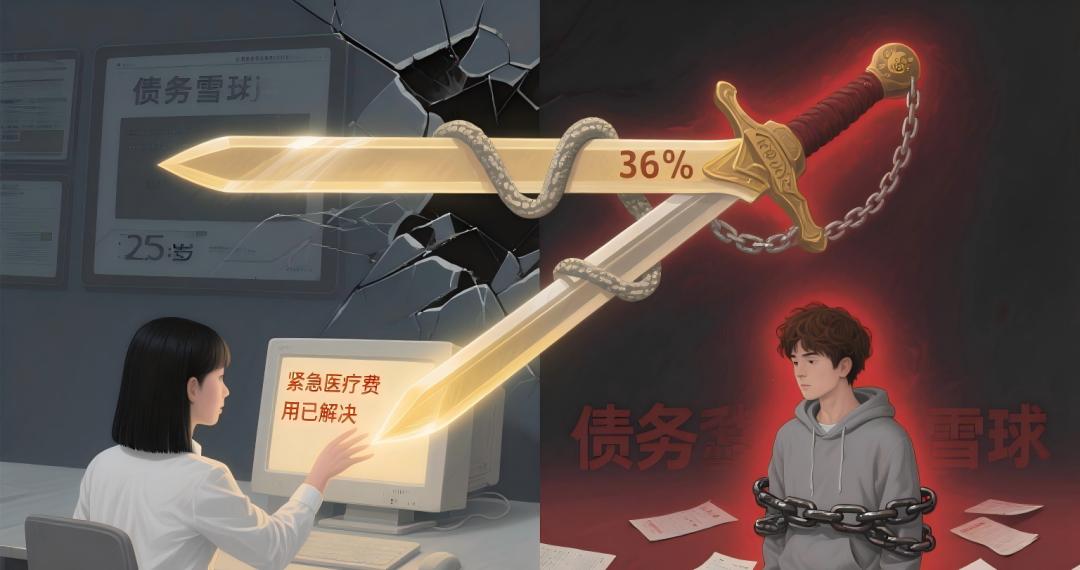
助贷规模扩大 合规是展业方向
Jin Rong Shi Bao· 2025-08-08 07:55
Core Insights - The growth of loan facilitation platforms has made them significant players in the financial sector, with approximately 9 platforms having loan scales exceeding 100 billion yuan, including Ant Group surpassing 1 trillion yuan [1] - The business model of loan facilitation involves internet financial platforms collaborating with banks to direct traffic and jointly issue loans, without the platforms providing funding [1] Business Model - Loan Facilitation - Loan facilitation has emerged as a distinct model due to the increasing value of traffic in the platform economy, where internet platforms seek monetization channels through financial services [1] - The 2023 report by the China Internet Finance Association defines loan facilitation as the collaboration between online financial platforms and banks to conduct traffic directing and joint loan issuance [1] Financial Technology Company Performance - In Q3 2024, several listed financial technology companies reported significant transaction amounts facilitated, with JiaYin Technology at 26.7 billion yuan (up 10.3%), XinYe Technology at 15.4 billion yuan (up 25%), and YiRenZhiKe at 13.4 billion yuan (up 36%) [2] - The number of cooperative financial institutions for these companies has generally exceeded 100, indicating a broadening of their loan facilitation business [2] Core Resources - Technology - Technology plays a crucial role in customer acquisition and risk control, with financial institutions actively exploring and implementing technological solutions [3] - Financial technology companies are investing heavily in research and development, with one company reporting R&D expenditures of 149 million yuan in Q3, a 17.7% increase [3] Future Development - Compliance - Despite having a first-mover advantage, financial technology companies face pressures in customer acquisition, with a shift towards optimizing existing customer bases and deepening channel engagement [5] - The loan facilitation industry is under significant compliance pressure, particularly regarding interest fees and collection practices, necessitating ongoing consumer protection efforts [5] - Regulatory policies are increasingly focused on enhancing the self-operated and risk control capabilities of financial institutions, prompting loan facilitation companies to diversify their cooperation models [6]
上证深一度 | 北京拟禁“会员权益”发出助贷平台监管新信号 模糊借贷成本的“擦边球”打不下去了
Shang Hai Zheng Quan Bao· 2025-08-04 01:53
Core Viewpoint - The insurance industry is facing challenges due to strategic homogenization and "involution," leading to increased competition and regulatory scrutiny. The need for collaboration and innovative strategies is emphasized to combat these issues [2][3][4]. Group 1: Insurance Industry Challenges - The insurance sector is experiencing a decline in premium growth, with a 5.7% increase in 2024 compared to a 3.43% decrease in 2023, indicating a significant drop from double-digit growth in 2019 [3][4]. - Many small and medium-sized insurance companies are struggling due to a focus on nationwide expansion and a "small but comprehensive" business model, leading to increased operational costs and market homogenization [3][4]. - Regulatory bodies are increasingly penalizing companies for non-compliance with regional operational standards, highlighting the need for a shift towards specialization and regional market advantages [3][4]. Group 2: Regulatory Developments - The Beijing Financial Regulatory Bureau has issued a notice to strengthen management of consumer lending businesses, indicating a move towards clearer regulations in the sector [20][22]. - The new regulations aim to eliminate the use of "membership rights" as a means to obscure lending costs, ensuring that all fees are transparent and within legal limits [21][25]. - The focus on compliance is expected to reshape the lending landscape, with potential challenges for smaller lending institutions that may struggle to adapt to the new requirements [26][27]. Group 3: Market Dynamics - The introduction of new regulations is likely to lead to a consolidation of funding sources, with larger institutions benefiting from economies of scale while smaller players may be forced out of the market [26][27]. - The shift towards compliance and transparency in lending practices is anticipated to create a more competitive environment, where only those able to innovate and adapt will thrive [26][27]. - The overall sentiment in the industry suggests that the implementation of these regulations marks a new starting point for balancing compliance and profitability in the consumer lending sector [27].
北京拟禁“会员权益”发出助贷平台监管新信号 模糊借贷成本的“擦边球”打不下去了
Shang Hai Zheng Quan Bao· 2025-08-03 19:14
Core Viewpoint - Beijing's financial regulatory authority has issued a notice to strengthen the management of assistive lending businesses, signaling a crackdown on the "membership rights" model that obscures borrowing costs [1][2][5] Group 1: Regulatory Changes - The notice requires clear agreements on comprehensive financing cost ranges between platform operators and credit enhancement service providers, ensuring compliance with the Supreme Court's regulations on maximum loan costs [2][6] - The regulatory focus is on eliminating the use of "membership rights" and "value-added rights" to indirectly increase financing costs, which has been a common practice among many consumer finance companies and assistive lending platforms [2][4] Group 2: Industry Impact - The "membership rights" model has been criticized for becoming a means to hide hidden fees in online loans, leading to numerous consumer complaints regarding forced payments and lack of transparency [4][5] - The implementation of the new regulations may lead to a consolidation of the assistive lending market, with smaller institutions potentially being eliminated due to their inability to adapt to the new compliance requirements [6][7] Group 3: Future Outlook - The regulatory framework aims for complete transparency and compliance in financing costs, which may limit the operational space for assistive lending platforms that cannot meet the 24% interest rate cap [6][7] - The new regulations are seen as a starting point for balancing compliance and profitability in the assistive lending industry, rather than a turning point [7]
助贷整改倒计时2个月,“24%+公证”新玩法能否走通?
Di Yi Cai Jing· 2025-08-03 11:27
Core Viewpoint - The traditional "dual financing guarantee" model is being phased out as the "new lending regulations" come into full effect, leading to a significant reshaping of the lending industry [1][2] Group 1: New Lending Regulations - The new regulations set a cap on annualized interest rates for lending services at 24%, effectively rendering the previous "dual financing guarantee" model ineffective [2][8] - The regulations will be implemented on October 1, and the transition to compliance has been challenging for many institutions [2][8] Group 2: Shift to New Models - Many small and medium-sized institutions are transitioning to a "24% + notarization" model, particularly in the equipment rental sector [1][2] - Some rental platforms are bundling additional fees such as notarization and insurance, which increases the actual cost for users [3][4] Group 3: Notarization Practices - The notarization fees are often used for "strong notarization," which allows creditors to bypass lengthy litigation processes, thus improving recovery rates [3][5] - A new "composite notarization" model is being explored, which includes measures like deposit guarantees and evidence chain notarization to balance costs [4][6] Group 4: Challenges in Implementation - The industry faces challenges such as the judicial system's capacity to handle small, high-frequency cases and rising customer complaints regarding hidden fees [7][8] - The sustainability of the new business models is questioned, as institutions may need to forgo previous profit margins of 24%-36% to comply with the new regulations [8][9] Group 5: Industry Transformation - The industry is undergoing a critical transition from tentative adjustments to substantial changes, with many institutions initially attempting to repackage existing high-rate products as compliant [8][9] - The current asset scale of products with interest rates above 36% still exceeds 50%, indicating potential systemic risks if abrupt changes are made [9]
深度|助贷整改倒计时2个月,“24%+公证”新玩法能否走通?
Di Yi Cai Jing· 2025-08-03 07:25
Core Viewpoint - The traditional "dual financing guarantee" model in the lending industry is being phased out due to the upcoming implementation of the "assisted lending regulations," leading to a significant reshaping of the industry as companies explore new compliance strategies to avoid regulatory pitfalls [1][2]. Group 1: Regulatory Changes - The "assisted lending regulations" set a cap on annualized interest rates at 24%, effectively rendering the previous "dual financing guarantee" model obsolete [2]. - The regulations require clear disclosure of service and guarantee fees in cooperation agreements, impacting the overall financing cost for borrowers [2]. Group 2: New Business Models - Companies are shifting towards a "24% + notarization" model, particularly in the equipment rental and auto loan sectors, as a way to navigate the regulatory landscape [1][2]. - Some rental platforms are bundling additional fees such as notarization and insurance, which increases the actual cost for users [1][3]. Group 3: Challenges in Implementation - The new notarization models face three main challenges: the judicial system's capacity to handle small, high-frequency cases, rising consumer complaints about hidden fees, and insufficient motivation for institutions to adapt under profit pressure [1][7]. - The effectiveness of "strong notarization" is being questioned, leading to the exploration of a "composite notarization" model that balances costs and risks [4][5]. Group 4: Consumer Experiences - Consumers have reported being charged additional fees on rental platforms, significantly increasing their overall costs, with one individual noting an extra cost of approximately 5,317 yuan for a rental transaction [3]. - Complaints about hidden fees are rising, with some platforms charging between 200 to 500 yuan for notarization fees [3][7]. Group 5: Industry Outlook - The industry is undergoing a critical transition from exploratory adjustments to substantial changes, with many small institutions initially attempting to repackage existing high-rate products as compliant offerings [8][9]. - The current asset scale of products with interest rates above 36% still exceeds 50%, indicating potential systemic risks if abrupt regulatory changes are enforced [9].
有地区监管下发助贷业务征求意见稿,“24%+权益”模式能否合规?
Di Yi Cai Jing· 2025-07-30 12:09
Core Viewpoint - The new regulations for assistive lending will officially take effect in October, prompting local regulators to prepare in advance for compliance and management of assistive lending practices [1][2]. Group 1: Regulatory Changes - The Beijing Financial Regulatory Bureau has issued a draft for public consultation regarding the management of assistive lending, marking the first local regulatory response following the national assistive lending regulations [2][4]. - The draft emphasizes stricter compliance measures, including prohibiting disguised increases in financing costs through "membership rights" and "value-added rights" [3][5]. - Specific prohibitions include the payment of fees outside agreed terms, forced bundling of financial products, and collaboration with non-operational information intermediaries [3][4]. Group 2: Industry Response - The industry is actively responding to the new regulations, with many assistive lending institutions assessing their compliance status and exploring alternative models such as "24% + notarization" and "24% + insurance" [1][6]. - There is uncertainty regarding the viability of the "24% + rights" model, as it faces significant customer complaints and regulatory scrutiny [5][6]. - The industry is under pressure to complete compliance transformations within a tight timeframe, with many institutions evaluating their risk management strategies [5][6]. Group 3: Customer Complaints and Challenges - Customer complaints related to assistive lending have surged, particularly concerning hidden fees and complex refund processes associated with membership rights [5][6]. - The prevalence of multiple borrowing among customers poses a risk to the industry, as tightening of funding channels could lead to increased default rates [6][7]. - New models being explored, such as the "24% + notarization" approach, aim to address compliance while managing customer costs, though they also face operational challenges [6][7].