
扫地机器人

Search documents
中国公司成扫地机器人鼻祖最大债权人,iRobot业绩恶化
Di Yi Cai Jing· 2025-12-05 11:54
财报显示,iRobot 2025年前三季收入3.75亿美元,同比减少26.47%;净亏损额同比增加90%至1.3亿美 元。其中,其2025年第三季收入1.458亿美元,同比减少24.6%;亏损1770万美元,而其去年同期为盈利 730万美元。 截至2025年9月27日,iRobot的现金及现金等价物为2480万美元,比2024年年底的1.34亿美元大幅减少。 目前,公司没有可获得额外资金的来源。截至今年第三季度末,iRobot运营活动中的净现金为-1.04亿美 元,去年同期为-3047万美元。 中国已形成全球最成熟的扫地机器人产业链集群,iRobot没有跟上中国产业链集群进化的节奏,在全球 竞争中渐处下风。 12月5日,IDC研报显示,2025年前三季度,中国品牌包揽全球扫地机器人市场出货量的前五名,扫地 机器人鼻祖美国iRobot公司首次跌出全球前五。 iRobot近期还陷入债务危机,其代工企业深圳市杉川机器人有限公司(下称"杉川")已购买其1.907亿美 元债权,加上iRobot拖欠杉川1.615亿美元的产品制造费,杉川已成为iRobot的最大债权人,后续债务处 理、是否引发收购还需观察。 近年,iRob ...

云鲸中国区负责人王俊刚离职 扫地机器人行业暗流涌动
Xin Lang Cai Jing· 2025-12-03 07:15
2025年11月26日,据多个独立信源确认,云鲸智能中国区负责人王俊刚已于近期离职。这位2024年才加 入云鲸的高管,在任职仅一年左右便悄然离去,并无前兆,显得颇为突然。这已是云鲸智能今年以来至 少第二位高管离职。就在数月前,云鲸产品副总裁李阳也已离职。 高层频繁变动的背后,是云鲸面临的"前有对手、后有追兵"的激烈竞争格局。 高管频繁出走:云鲸内部动荡的频现 王俊刚在云鲸的任职时间虽短,但地位举足轻重。他此前曾任石头科技电商总监,后升任石头科技中国 区销售总经理。2024年加入云鲸后,他肩负着提振云鲸中国市场表现的重任。 王俊刚虽为云鲸大区负责人,但很少出现在公众视野中。他上一次公开亮相,是2025年AWE作为演讲 嘉宾出现。 根据爱企查显示,王俊刚本人在多家云鲸相关的贸易公司担任法定代表人,地点包括西安、海口、武 汉、山西等多个城市。目前,这些公司法定代表人并未变动,且处于开业状态。 王俊刚并非云鲸近期唯一离职的高管。 2025年7月,有媒体爆料称云鲸产品负责人李阳已于数月前离职。李阳此前曾在大疆负责自动驾驶业 务,2021年加入云鲸,对外title为"云鲸智能技术部负责人"。在脉脉上,李阳的认证目前已变为 ...
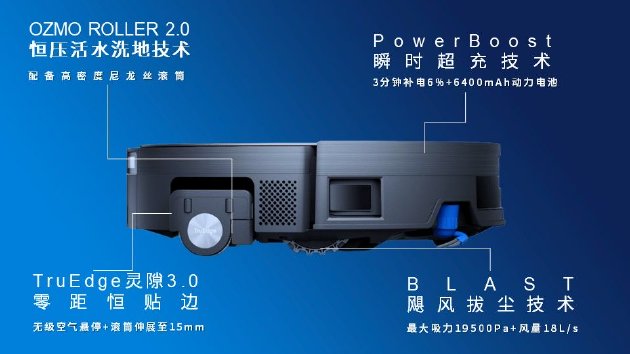
科沃斯:以滚筒活水技术,定义扫地机器人清洁新高度
Xin Lang Cai Jing· 2025-12-03 06:03
Core Insights - The core competition in the sweeping robot industry is centered around "cleaning power," with traditional methods failing to address the issue of "dirty dragging" effectively [1][13] - Ecovacs has introduced a new "roller active water washing" technology, aiming to redefine industry standards through innovative technology rather than merely enhancing base station functionalities [1][13] Technology and Innovation - Ecovacs claims to be the "roller active water washing definers" due to its technological accumulation and forward-looking layout, holding core patents for "constant pressure active water roller washing" and investing over 4 billion yuan in R&D since 2018, with a portfolio of over 2,500 global patents [3][15] - Unlike competitors who simply add rollers, Ecovacs employs a systematic layout and global collaborative thinking, ensuring maximum cleaning effectiveness through detailed designs and advanced technologies [5][17] - The core advantages of Ecovacs' roller technology stem from two key innovations: constant pressure active water technology that maintains cleaning effectiveness even after 3-6 months of use, and cylindrical rollers that enhance cleaning capabilities through higher rotation speeds [6][17] Cleaning Logic and Market Position - Ecovacs follows a unique cleaning logic of "spraying → active water contacting the ground → scraping off dirty water → recycling," which effectively removes stains, contrasting with competitors' methods that do not directly involve clean water on the ground [8][19] - The recognition of roller technology by consumers is evident in sales data, with the T series models driving volume and cost reductions, allowing Ecovacs to enhance the cost-performance ratio of mid-range products without price increases [9][20] - Ecovacs holds over 90% market share in roller products, significantly exceeding the reported 1.5 million units sold, creating a positive feedback loop of sales, feedback, iteration, and repurchase [9][20] Future Outlook - The technological breakthroughs by Ecovacs are pushing the sweeping robot industry from a focus on "base station maintenance-free" to "extreme cleaning power," evolving through a spiral iteration strategy that includes cleaning capability, maintenance-free ability, and AI capabilities [9][20] - Ecovacs plans to continue refining roller technology, optimizing materials and designs, while enhancing AI capabilities for identifying and handling stubborn stains [20] - Roller washing robots and traditional washing machines are not seen as replacements but as complementary products, each serving different user needs in the market [20]


估值百亿、腾讯领投的云鲸智能,要换中国区负责人?
阿尔法工场研究院· 2025-12-03 00:06
以下文章来源于智趣财经 ,作者小趣姐 智趣财经 . 有趣有料的商业故事和商业人物 导语: 资本市场对企业的评估早已不再局限于"增长故事",而是更加聚焦于治理结构、团队稳定性 和可持续盈利能力。 近日,云鲸智能中国区负责人王俊刚突然离职的消息,在业内引发广泛关注。 王俊刚于2024年才加入云鲸,此前他在石头科技从电商总监一路晋升为中国区销售总经理,是扫 地机器人行业公认的销售老兵。他的离开毫无征兆,且正值云鲸冲刺Pre-IPO的关键窗口期,这 难免令市场对其内部稳定性产生疑虑。 成立于2016年的云鲸智能,曾凭借"自动洗拖布"这一创新功能一鸣惊人,迅速跻身行业头部阵 营。到了2025年二季度,其全球出货量达52.42万台,市场份额达到8.5%,首次闯入全球前 五,甚至将昔日霸主iRobot甩在身后。 今年4月,公司刚完成由腾讯领投的1亿美元融资,估值突破百亿元, 并随即宣布启动Pre-IPO 轮融资,看似已然站在了资本市场的起跑线上。 然而,在耀眼的光环之下,实则暗流涌动。裁员风波、产品口碑下滑、价格战愈演愈烈,以及大 疆这位"同门师兄"的强势入场,正将云鲸推向一场前所未有的严峻考验。而核心高管的突然出 走,让 ...
从 AI 机器人到太空资源争夺 2025 搜狐财经论坛揭秘科技产业投资新主线
Feng Huang Wang· 2025-11-28 05:53
Group 1: Economic Trends and Challenges - The Chinese economy is at a critical turning point characterized by "overdraft, contraction, and involution," necessitating comprehensive recovery through technological innovation as a core driver of economic potential [1] - The transition from a "shortage era" to a "surplus stage" emphasizes the importance of stable employment as a foundation for consumption expansion, with the collaborative development of private and state-owned economies providing ample market space and policy support for the tech industry [1] Group 2: Industry Trends and Innovations - The integration of AI and robotics is driving deep collaboration between embodied and disembodied intelligence, leading to widespread penetration of robotic services across various industries [2] - The global competition for space resources is intensifying, with the U.S. having over 10,000 satellites in orbit, while China is advancing in commercial aerospace fields such as remote sensing and navigation [2] - The energy storage industry is transitioning from "wild growth" to a mature and stable phase, facing a "growing pains" period characterized by surging demand and homogenized competition, pushing companies to innovate for core competitiveness [2] Group 3: Globalization and Market Strategies - The "three-dimensional strategy" of localization in product, marketing, and service is crucial for technology products going global, with deep insights into consumer needs in target markets being a core prerequisite for innovation [3] - The adverse internal competition in the domestic restaurant industry is prompting companies to seek breakthroughs overseas, with technology-driven product upgrades and global expansion being effective strategies for traditional industries [3] - The dairy industry is shifting from "quantity-driven" to "quality-driven," expanding into functional nutrition products and health beverages, supported by continuous investment in technology research and development [3] Group 4: Investment Focus and Opportunities - Technology-related sectors are becoming the core focus for institutional investors, with the tech stock market expected to revolve around "overseas computing power" and "domestic substitution," highlighting long-term investment value despite potential short-term fluctuations in the A-share market [4] - The capital drive is shifting from civil engineering to technological innovation, with credit vehicles potentially transitioning from real estate to equity assets, indicating a forthcoming release of investment opportunities through a positive cycle between industries and stock markets [4] - The U.S. biotech sector is experiencing an investment turning point, with ongoing recovery of excess returns in the innovative drug field [4] - Long-term allocation value in gold is being recognized, with recommendations for households to allocate 5% to 30% of their assets in gold or ETFs to mitigate macroeconomic and geopolitical uncertainties [4] Group 5: Future Outlook - The forum highlighted the central role of technology in the resilient growth of the economy, with AI, commercial aerospace, new energy, and domestic substitution expected to be key engines for China's economic breakthrough and high-quality development in the future [4]
云鲸中国区负责人王俊刚离职,扫地机行业巨头竞争再添变数?
Nan Fang Du Shi Bao· 2025-11-27 14:22
Core Viewpoint - The departure of Wang Jun, the head of Yunji's China region, is sudden and may impact the company's market performance and strategic direction as it approaches a Pre-IPO funding round [1][4][9]. Company Overview - Yunji Intelligent, established in October 2016, focuses on home robotics and has made significant technological advancements in areas such as SLAM, AI object recognition, and big data applications [2]. - The company has been recognized as one of China's top 50 technology robotics firms and has appeared on the Hurun Global Unicorn List for four consecutive years [2]. Product Development - Yunji has launched several innovative products, including the NARWAL J1, which redefined consumer perceptions of floor-cleaning robots, and the J4, which features a suction power of 7800Pa [3]. - The company has also expanded into the floor washing machine market with models like the S1 and S1 Max [3]. Market Performance - During the 2024 Double 11 shopping festival, Yunji achieved a sales revenue of over 1.7 billion, marking a 200% year-on-year increase [4]. - As of Q3 2025, Yunji held a 14.7% market share in China's online vacuum cleaner market, ranking fourth behind major competitors [4]. Industry Context - The vacuum cleaner industry is highly competitive, with the top five brands holding 89.2% of the domestic market share, while the penetration rate in Chinese households is only 6.9% [5]. - The global market for vacuum cleaners is projected to grow, with a shipment volume of 20.6 million units in 2024, reflecting an 11.2% year-on-year increase [5]. Competitive Landscape - Major players like Ecovacs and Roborock are intensifying competition, with Ecovacs holding a 25.4% market share in China [6][7]. - New entrants like DJI are leveraging their technology from the drone sector to enhance vacuum cleaner capabilities, although they face challenges in pricing and production [8]. Impact of Leadership Change - Wang Jun's departure is significant as it occurs during a critical phase for Yunji, potentially affecting its market strategy and performance [9][10]. - His experience in the industry and previous role at Roborock may have contributed to Yunji's operations, raising concerns about the company's future direction and leadership succession [10].
云鲸中国区负责人王俊刚已于近期离职|硬氪独家
3 6 Ke· 2025-11-26 01:36
Group 1 - Wang Jun just left his position as the head of the China region for Cloud Whale, and his future plans remain unclear [1][2] - His departure was unexpected, having joined Cloud Whale in 2024 after previously serving as the e-commerce director and later the sales general manager for Stone Technology [1] - Cloud Whale has experienced rapid growth, with sales exceeding 1.7 billion during the 2024 Double 11 shopping festival, marking a 200% year-on-year increase [2] Group 2 - In the third quarter of 2025, Cloud Whale held a 14.7% market share in China's online vacuum cleaner market, ranking fourth behind Ecovacs, Stone, and Xiaomi [2] - The company faces strong competition from established players like Ecovacs and Stone, as well as emerging brands like Chasing Technology, which focuses on high cost-performance products [3] - Cloud Whale is at a critical stage, having initiated Pre-IPO financing, and its market performance will significantly influence future capital market actions [3]
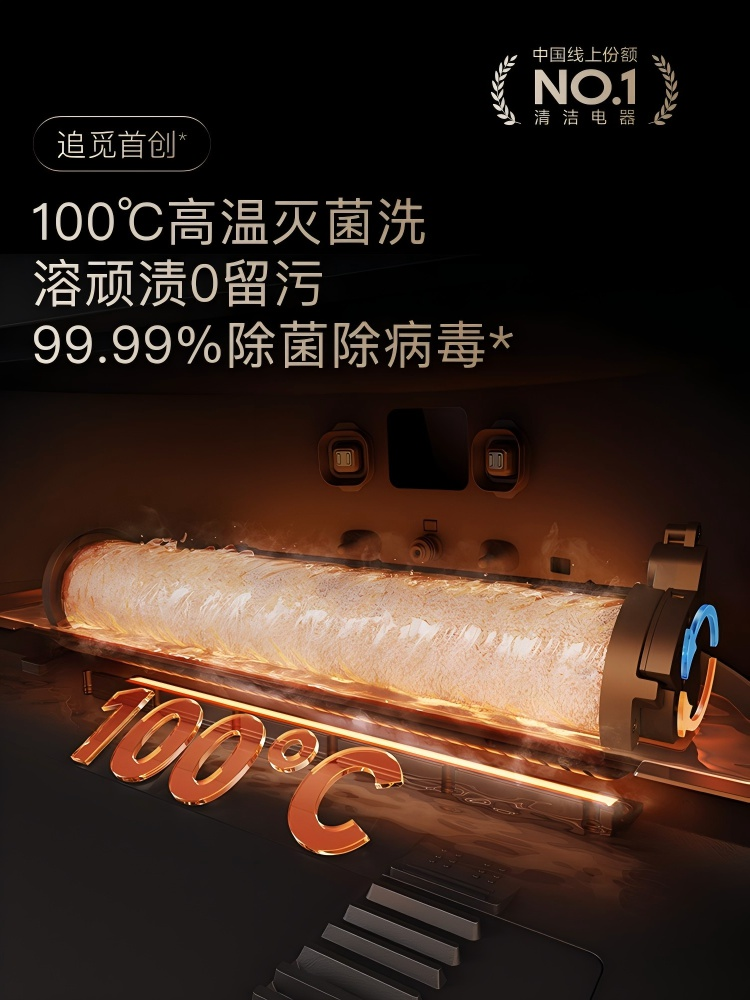
追觅X50 Pro滚筒版推出100℃高温灭菌洗 升级拖布清洁标准
Huan Qiu Wang· 2025-11-21 12:39
追觅此次技术升级源于对用户实际清洁需求的洞察。在现代家庭清洁场景中,厨房油污、调料渍等顽固污 渍难以被普通热水洗净,容易在拖布纤维中积聚,影响后续清洁效果。同时,潮湿拖布易滋生细菌,可能 给家庭健康带来隐患。 针对这些问题,追觅X50 Pro滚筒版给出了针对性解决方案。该产品在基站清洗底盘安装加热器组件,使表 面温度达到100℃灭菌温度,扫地机完成清洁任务返回基站后,即可对拖布进行高温清洁。实际使用中, 100℃高温能快速分解拖布残留油污,通过持续高温沸洗,可有效清除大肠杆菌、金黄色葡萄球菌等常见 有害菌,减少异味与细菌滋生。相较于传统手洗拖布方式,这一技术既提升了清洁效率,也保障了清洁过 程的卫生安全。 【环球网科技综合报道】在扫地机器人行业中,"热水洗拖布"已逐渐成为主流配置,追觅科技通过技术创 新进一步升级清洁标准,其X50 Pro滚筒版搭载100℃高温灭菌洗技术,为拖布深度洁净提供了新方案。 此外,追觅X50 Pro滚筒版配备可拆卸式基站清洗盘,能减少清洗死角,降低日常维护难度,让用户在享受 洁净环境的同时,体验到科技带来的便捷。 作为清洁电器领域的创新企业,追觅通过技术研发持续优化产品体验。追觅方面 ...
大疆“扩疆”,影石、拓竹、追觅攻守不一
Tai Mei Ti A P P· 2025-11-20 11:02
Core Insights - DJI, traditionally low-profile and resistant to market interactions, has recently invited external parties to experience its upcoming panoramic drone, DJI Avata 360, indicating a strategic shift towards more engagement with the market [1][2] - Despite its repeated statements of "no financing, no IPO," DJI's recent activities suggest a proactive approach to counter competition and maintain its market position [2][3] Group 1: DJI's Strategic Moves - DJI has launched several new products this year, including the sweeping robot ROMO and has shown interest in investing in 3D printing companies, indicating a diversification of its business strategy [2][3] - The introduction of the DJI Avata 360 is perceived as a defensive move to showcase its technological advantages amidst slowing growth, aiming to reassure stakeholders of its profitability [13][26] - DJI's market share in consumer drones exceeds 70%, but it faces pressure to innovate and find new mass-market products as growth in the consumer drone market slows [26] Group 2: Competitive Landscape - Competitors like YingShi and TuoZhu are expanding beyond their original markets, indicating a shift in the competitive dynamics of the industry [4][5] - YingShi has entered the drone market with its brand "YingLing Antigravity," directly challenging DJI, while simultaneously expressing respect for DJI's founder, suggesting a complex competitive relationship [6][7][10] - TuoZhu, founded by former DJI engineers, is rapidly gaining traction in the 3D printing sector, with a valuation reportedly reaching 30 billion yuan, posing a significant challenge to DJI's interests [19][21] Group 3: Market Dynamics and Future Outlook - The competition is evolving from product-specific technological advancements to a broader ecosystem-based confrontation, where companies leverage their core competencies across multiple sectors [26] - DJI's entry into the sweeping robot market is expected to disrupt existing players like Chasing, as it applies its advanced drone technology to a new product category [22][23] - The strategic investments and product launches by DJI and its competitors reflect a broader trend of companies seeking to establish dominance in emerging markets while navigating the challenges of innovation and market saturation [26]
东海证券晨会纪要-20251113
Donghai Securities· 2025-11-13 02:27
Group 1: Non-automobile Insurance Industry - The implementation of "reporting and operation integration" for non-automobile insurance aims to guide insurance companies towards reasonable pricing and healthy competition, addressing long-standing issues of irrational competition and high costs [5][6][7] - The new regulations require a phased approach to re-filing, with specific deadlines for different non-automobile insurance products, ensuring a smooth transition to the new policy [6] - The regulations set differentiated rate caps for large and small companies, with larger firms facing stricter constraints, which reflects a commitment to rigorous regulatory oversight [7][8] Group 2: Household Appliances Industry - The domestic sales of robotic vacuum cleaners show a significant impact from the high base last year, with a notable decline in sales volume and revenue in October, prompting some companies to offer short-term discounts [11][12] - Innovative products like the active water washing technology are leading the market, with companies like Ecovacs gaining a competitive edge through early adoption and product upgrades [12][13] - The Southeast Asian market is emerging as a new growth area for robotic vacuum cleaners, with significant sales growth reported, particularly in Vietnam [14][15] Group 3: Yifeng Pharmacy (603939) - Yifeng Pharmacy reported steady profit growth with a revenue of 17.286 billion yuan in the first three quarters of 2025, reflecting a year-on-year increase of 0.39%, and a net profit of 1.225 billion yuan, up 10.27% [17][18] - The company is focusing on high-quality development by slowing down store expansion and optimizing its operational structure, which has led to improved same-store sales [19] - The new retail business continues to grow rapidly, with significant contributions from B2C sales, indicating successful adjustments in online strategies [18][19]