
高新技术

Search documents
安徽金融晒“十四五”成绩单: 境内上市公司数量跻身全国第7
Zheng Quan Shi Bao· 2025-11-13 17:51
Core Insights - Anhui Province has achieved significant financial development during the "14th Five-Year Plan" period, with a social financing scale maintaining an annual increment of over 1 trillion RMB since 2021, and both deposits and loans exceeding 9 trillion RMB [1][2] Financial Services to the Real Economy - Since the "14th Five-Year Plan," Anhui's social financing increment has surpassed 5 trillion RMB, a 57% increase compared to the "13th Five-Year Plan," with 2024 projected to reach 1.18 trillion RMB, ranking 6th nationally [2] - By the end of September, the province's RMB deposit balance was 9.77 trillion RMB, with an annual growth rate of 8.6%, while the loan balance reached 9.25 trillion RMB, growing at 13.1% annually, achieving the "14th Five-Year Plan" targets ahead of schedule [2] - Manufacturing loans reached 1.1 trillion RMB, 2.5 times that of the end of the "13th Five-Year Plan," with long-term loans at 700.3 billion RMB, 4.7 times higher [2] - Technology loans totaled 1.7 trillion RMB, ranking 7th nationally, with loans to tech enterprises increasing 5.6 times since the end of the "13th Five-Year Plan" [2] - Inclusive loans for small and micro enterprises reached 1.5 trillion RMB, 2.5 times higher than at the end of the "13th Five-Year Plan," while agricultural loans increased by 65.8% to 2.67 trillion RMB [2] A-share "Anhui Sector" Growth - The number of listed companies in Anhui has increased by 62 since the "14th Five-Year Plan," totaling 186 by the end of September, nearly a 50% increase from the end of the "13th Five-Year Plan" [3] - Over 70% of listed companies are high-tech enterprises, with 60% in emerging industries and 50% classified as "specialized, refined, distinctive, and innovative" [3] - Anhui has achieved direct financing of 3.4 trillion RMB during the "14th Five-Year Plan," a 30% increase from the previous period, with significant growth in bond issuance [3] Fund Ecosystem Development - Anhui has established a provincial emerging industry guidance fund with a total scale of 200 billion RMB and a state-owned capital fund of 100 billion RMB, creating a collaborative fund ecosystem [4] - The province has launched the first bank-affiliated insurance capital AIC equity investment fund in the country, with a total of 3 AIC funds established, amounting to 2.1 billion RMB [4] Technology Finance Characteristics - Anhui has developed a unique technology finance model, creating a closed-loop ecosystem of "technology-industry-finance" [5] - The province has set up a technology achievement transformation guidance fund with 18 sub-funds, investing in 151 projects, and has introduced various innovative credit products to support technology transfer [6] - By the end of October, 139 technology enterprises were listed in Anhui, accounting for 75% of all listed companies, with a total market value of 2.16 trillion RMB, representing 80% of the total [6]
金山区“十四五”答卷亮眼:转型成果助力现代化建设加速
Guo Ji Jin Rong Bao· 2025-11-13 11:42
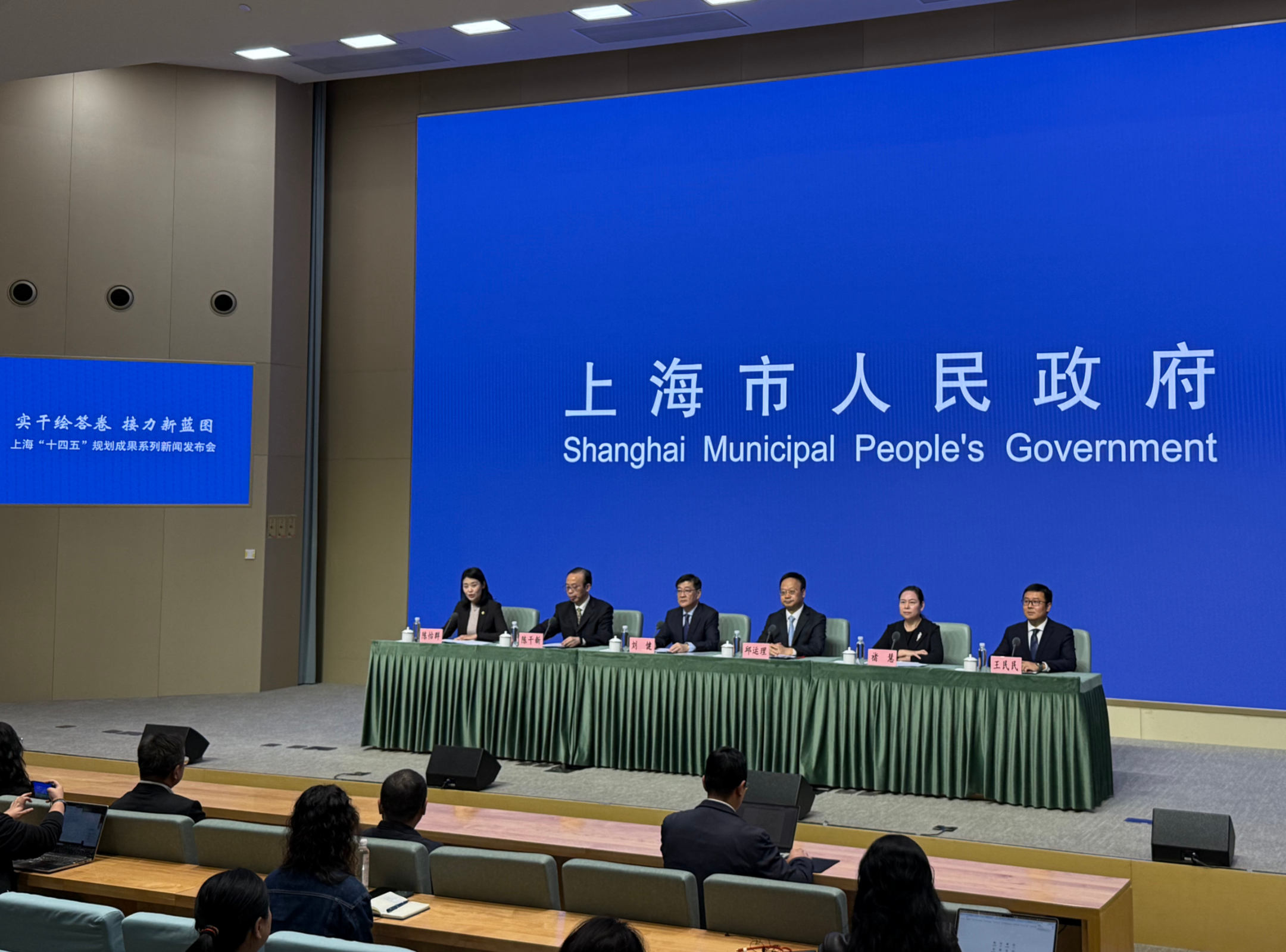
Core Viewpoint - The news highlights the achievements and future plans of Jinshan District in Shanghai during the "14th Five-Year Plan" period, focusing on modernization, industrial transformation, and rural revitalization efforts. Economic Development - Jinshan District aims to break through a GDP of 120 billion yuan in 2024, with a per capita GDP reaching 21,500 USD [3] - The district has maintained stable economic growth while enhancing development quality and resilience [3] Industrial Transformation - Jinshan's industrial structure has improved, with total industrial output surpassing 300 billion yuan, and significant growth in high-tech sectors [4] - The service sector has seen rapid growth, with its share increasing from 31.8% to 40.9% since the end of the "13th Five-Year Plan" [4] Major Projects - The district has attracted over 20 projects with investments exceeding 1 billion yuan, including significant projects like the Shanghai Petrochemical upgrade and the Lexus new energy project [4] Technological Innovation - High-tech enterprises in Jinshan have increased by 39.5%, and specialized enterprises have surged by 375.3% [6] - The number of invention patents per ten thousand people has doubled, and international patent applications have increased nearly elevenfold [6] Rural Revitalization - Jinshan is recognized as a pioneer in rural revitalization, with agricultural productivity rising by 21%, surpassing the city average [7] - The district has established several national-level agricultural technology projects and tourism sites, enhancing its rural landscape [7] Social Welfare and Living Standards - Jinshan has improved its education system, with new vocational colleges and schools established, enhancing educational quality [8] - The district has also focused on health infrastructure, with new hospitals and public health centers being built [8] Urban Development and Governance - Jinshan has made significant strides in urban governance, focusing on safety and environmental improvements, and has been recognized for its ecological initiatives [9][10] - The district is committed to enhancing its transportation network and housing conditions, with substantial investments in public infrastructure [9] Future Outlook - Looking ahead to the "15th Five-Year Plan," Jinshan aims to deepen its transformation strategy, focusing on high-quality and sustainable development [11] - The district plans to enhance its industrial competitiveness and innovation capabilities, positioning itself as a key growth area in Shanghai and the Yangtze River Delta [11]

科技企业减税新政将出
第一财经· 2025-11-12 04:08
Core Viewpoint - The article discusses the upcoming tax reduction policy aimed at encouraging technological innovation in China, particularly through increasing the R&D expense deduction ratio for high-tech enterprises and technology-based SMEs during the "15th Five-Year Plan" period [3][4]. Group 1: R&D Expense Deduction Policy - The R&D expense deduction ratio in China has been progressively increased from 50% in 2017 to 100% in 2023, allowing companies to deduct double their R&D expenses from taxable income [5][6]. - The new policy is expected to raise the deduction ratio for high-tech enterprises and technology-based SMEs from the current 100% to potentially 120% or even higher, incentivizing increased R&D investment [7][8]. - The current international standard for R&D tax incentives shows that countries like the U.S. and Germany offer higher deduction ratios, indicating room for improvement in China's policies [8][9]. Group 2: Importance of Targeting High-Tech Enterprises - High-tech enterprises and technology-based SMEs are crucial for China's innovation system, often facing significant R&D costs and funding shortages [6][10]. - The proposed increase in the deduction ratio is seen as a direct way to reduce tax burdens and enable these companies to allocate more resources to R&D and innovation [6][10]. Group 3: Future Policy Recommendations - Experts suggest that simply increasing the deduction ratio may lead to diminishing returns, and future policies should focus on enhancing the quality of R&D rather than just the quantity [12][13]. - Recommendations include introducing a mechanism for R&D expense increment credits and a patent box system to encourage high-quality patent utilization [12][13]. - There is a call for differentiated deduction ratios based on company size, industry, and R&D intensity, with suggestions for higher ratios for companies with significant R&D investments [13][14]. Group 4: Implementation and Optimization - The article emphasizes the need for simplifying the implementation process of the R&D expense deduction policy to enhance accessibility for companies [14]. - Suggestions include transitioning from prior approval to post-filing management and utilizing big data for monitoring R&D activities, thereby reducing compliance costs [14]. - The importance of establishing clear standards for R&D expense categorization and providing authoritative guidelines is highlighted to ensure consistent application across regions [14][15].

科技企业减税新政将出:研发费用加计扣除比例提高|解读“十五五”
Di Yi Cai Jing· 2025-11-12 03:29
Core Viewpoint - The Chinese government is planning to increase the R&D expense deduction ratio for high-tech enterprises and technology-based SMEs as part of the "14th Five-Year Plan" to encourage innovation and enhance competitiveness in the technology sector [1][2]. Group 1: R&D Expense Deduction Policy - The current R&D expense deduction ratio for high-tech enterprises and technology-based SMEs is 100%, which may be raised to 120% or even higher [1][4]. - The R&D expense deduction policy has evolved since its introduction in 1996, with the ratio increasing from 50% to 75% in 2017, and then to 100% in 2023 [2][3]. - The increase in the deduction ratio is expected to directly reduce the tax burden on these enterprises, allowing them to allocate more resources to R&D and innovation [2][5]. Group 2: International Comparison and Implications - Compared to international standards, China's current 100% deduction is considered moderate, with some countries offering deductions as high as 300% [6][5]. - The proposed increase in the deduction ratio aims to align China's policies with those of developed countries, enhancing the global competitiveness of Chinese technology firms [5][6]. Group 3: Future Policy Recommendations - Experts suggest that future policies should not only focus on increasing the deduction ratio but also on improving the quality of R&D investments [7][8]. - Recommendations include introducing a mechanism for R&D expense incremental credits and considering a tiered deduction system based on R&D intensity and growth rates [8][9]. - There is a call for simplifying the execution process of the R&D expense deduction policy to reduce compliance costs for enterprises [10].
中关村示范区去年总收入近10万亿
Bei Jing Wan Bao· 2025-11-12 02:38
Core Insights - Zhongguancun Demonstration Zone ranked first among 178 national high-tech zones, with total revenue nearing 10 trillion yuan, accounting for approximately one-sixth of the national high-tech zone total revenue [1] - The area has evolved from an "electronic street" to a "multi-park" zone, indicating significant growth and an increasingly vibrant atmosphere for innovation and entrepreneurship [1] - The number of invention patents authorized per 10,000 employees in Zhongguancun reached 174.7 in 2024, which is 1.8 times that of 2020, highlighting a substantial increase in innovation output [1] Innovation and Talent Development - The transformation of innovation results into practical applications remains a challenge, necessitating a shorter conversion chain from technology discovery to industrialization [1] - Zhongguancun boasts a concentration of top-tier talent, with leading universities and research institutions located in the area, which is seen as a core advantage for technological innovation [1] - There is a need for educational institutions to adapt talent cultivation to meet the real demands of technological innovation and industrial transformation, moving away from traditional training systems [1] Future Industry and Education - The future industry is entering a growth phase, requiring a large number of skilled talents to support its development [1] - New educational institutions like Beijing Zhongguancun Academy and Shanghai Chuangzhi Academy have been established to focus on cultivating talents in artificial intelligence, breaking traditional boundaries in teaching and research [1] - By June 2025, Beijing Zhongguancun Academy plans to enroll 600 doctoral students and establish six joint laboratories and research centers, indicating a proactive approach to talent development [1]

2025年10月贸易点评:10月出口同比转负,需要担心吗?
Minsheng Securities· 2025-11-07 07:31
Export Data Analysis - In October, China's export growth rate (in USD) turned negative at -1.1%, a decrease of 9.4 percentage points from the previous month[4] - Import growth rate (in USD) was 1.0%, down 6.4 percentage points from the previous month[4] - The decline in export growth is attributed to base effects and calendar effects, with one less working day in October compared to last year, suggesting a potential adjusted growth of 4.4%[4] Market Outlook - The negative export growth in October is unlikely to persist, supported by global easing cycles and manufacturing recovery, indicating strong external demand resilience[5] - Emerging markets, particularly Africa, showed robust growth, with exports to Africa increasing from 0.2% last year to 1.3% this year[6] - High-tech and electromechanical products maintained positive growth despite overall export declines, indicating a shift towards higher quality exports[6] Import Challenges - The import side faces more significant pressures, with domestic demand-related products showing mixed results; while some commodities like copper and iron ore saw marginal improvements, others like crude oil and steel experienced declining growth rates[6] - The overall decline in import volumes suggests that domestic demand growth remains unstable, necessitating close monitoring in the upcoming quarters[6] Risk Factors - Potential risks include policy measures falling short of expectations, unexpected changes in domestic economic conditions, and unforeseen fluctuations in export dynamics[7]
深圳宝安区全力以赴护航第二十七届高交会顺利举办
Zhong Guo Fa Zhan Wang· 2025-11-07 07:16
Core Points - The 27th China International High-Tech Achievements Fair (CIHTAF) will be held from November 14 to 16, 2025, at the Shenzhen International Convention and Exhibition Center, organized by the Shenzhen Municipal Government [1] - Bao'an District is committed to ensuring the smooth operation of the fair by implementing various service and security measures [1] Group 1: Service and Security Measures - Bao'an District has established a leadership group for service and security, along with 15 specialized teams to manage tasks systematically and ensure the fair's success [2] - Key service areas include uninterrupted and high-quality communication and power supply, diverse and quality dining options, and optimized traffic management around the exhibition venue [2] - Environmental improvements are being made to enhance the urban landscape, focusing on greening, beautification, and safety measures to ensure a secure environment for the event [2] Group 2: Cultural and Tourism Services - A "Convention + Tourism" integrated work plan has been developed to enhance the cultural and tourism experience for attendees, featuring local attractions and scenic spots [3] - Special tourist bus routes will connect major cultural landmarks, providing a seamless experience for exhibitors and visitors [3] - Exclusive cultural and tourism benefits, including discounted tickets for popular local events and attractions, will be offered to enhance the visitor experience [3] Group 3: Industry Focus - Bao'an District aims to showcase over 100 high-quality benchmark enterprises at the fair, highlighting its strengths in intelligent manufacturing and technological capabilities [4] - The district will present an AI-themed exhibition area, demonstrating efficient collaboration and the practical application of AI in urban settings [4] - Continuous optimization of service and support measures will be implemented to ensure the fair's successful completion [4]
【关注】快递服务的增值税相关政策问答
蓝色柳林财税室· 2025-11-07 01:17
Core Viewpoint - The article provides a comprehensive overview of the value-added tax (VAT) policies related to express delivery services, detailing the types of businesses involved, the definition of express services, and the applicable VAT rates for different types of taxpayers [1]. Group 1: Types of Businesses Involved - Express delivery companies are defined as those operating within the country and legally obtaining the necessary permits for express business operations [1]. - The article also mentions that branches and end-point service outlets of these companies, which are registered with postal management departments, are included in this definition [1]. Group 2: Definition of Express Services - Express services encompass activities such as collection, sorting, transportation, and delivery of packages within a promised timeframe, excluding mere transportation services [1]. - Specific services outlined include collection services (accepting packages), sorting services (classifying packages), and delivery services (handing over packages to designated addresses) [1]. Group 3: VAT Declaration for Express Services - Revenue from express services is subject to VAT under the category of "collection and delivery services" [1]. - The article clarifies that "collection and delivery services" fall under modern service logistics auxiliary services, which involve completing the collection, sorting, and delivery of letters and packages within a specified timeframe [1]. Group 4: VAT Rates - The current VAT policy stipulates that express delivery services are classified as logistics auxiliary services, with a VAT rate of 6% for general taxpayers and 3% for small-scale taxpayers [1].

盘中,集体爆发!两大利好,彻底引爆!
券商中国· 2025-11-05 05:26
Core Viewpoint - The Hainan sector has experienced a significant surge, with the index rising over 6% and the Hainan free trade concept increasing by over 3.6%, driven by favorable policies and market dynamics [1][2]. Policy and Economic Context - The "14th Five-Year Plan" emphasizes the implementation of a free trade pilot zone strategy and the high-standard construction of the Hainan Free Trade Port [1][6]. - The new duty-free shopping policy in Hainan, effective from November 1, has shown immediate positive effects, with a 6.1% increase in duty-free shopping amounts on the first day of implementation, totaling 78.549 million yuan [1][6]. Market Performance - As of the latest trading session, the Hainan sector recorded a 6.61% increase, making it the best-performing sector [2][3]. - Several stocks within the Hainan sector, including Jinpan Technology, Kangzhi Pharmaceutical, and Caesar Travel, reached their daily limit or increased by over 10% [1][2]. Future Outlook - The upcoming full closure operation of the Hainan Free Trade Port on December 18 is expected to mark a significant turning point in investment logic, transitioning from a focus on duty-free shopping to high-end manufacturing, modern services, and international trade [7]. - The expansion of the "zero tariff" policy will significantly increase the range of duty-free goods from 1,900 to approximately 6,600 items, covering about 74% of products [4][5]. - Investment themes are shifting towards B2B industrial upgrades and high-value-added services, with a focus on modern logistics, high-tech industries, and "tourism+" services such as healthcare and international education [7].

武汉这场特别的会,传递出什么信号
Chang Jiang Ri Bao· 2025-10-31 00:41
Core Viewpoint - The first work exchange meeting for street (town) party committee secretaries in Wuhan aims to enhance communication and collaboration among grassroots organizations to improve local governance and economic development [2][6]. Group 1: Economic Contributions - Wuhan has 160 streets (towns) that play a crucial role in connecting residents and facilitating local services, impacting daily life and economic activities [2]. - The Jiang'an District's Siwei Street, despite its small area of less than 1 square kilometer, contributes 20% of the district's tax revenue, highlighting the significance of grassroots economic activity [3]. - The Fruit Lake Street in Wuchang District contributes over one-third of its district's tax revenue, showcasing the importance of building economies around local enterprises [4]. Group 2: Challenges and Innovations - Street (town) committee secretaries face complex challenges in balancing various demands while striving for economic growth and community welfare [4]. - The Shanshan Street in Jiangxia District has seen a nearly threefold increase in fixed asset investment and a 50% increase in tax revenue over three years, demonstrating the potential for growth through focused efforts [4]. - The East Lake High-tech Zone's Guandong Street has implemented a "community partner" mechanism to foster innovation and collaborative governance, indicating a shift towards modern governance models [5]. Group 3: Future Initiatives - Wuhan plans to establish a regular exchange mechanism for street (town) party committee secretaries, meeting quarterly to foster a spirit of competition and excellence among grassroots leaders [6]. - The city aims to become a national economic center, a hub for technological innovation, and a center for commerce and logistics, necessitating coordinated efforts from all levels of governance [6].