
天然气

Search documents
九丰能源:公司自主控制多艘LNG、LPG船舶运力
Zheng Quan Ri Bao Wang· 2025-12-24 13:10
Core Viewpoint - Jiufeng Energy (605090) has achieved a significant milestone in its LNG and LPG shipping capacity, with annual turnover capacity exceeding 5 million tons, indicating strong operational efficiency and asset utilization [1] Group 1 - The company currently controls multiple LNG and LPG vessels, enhancing its operational capabilities [1] - The annual turnover capacity of the company's vessels has surpassed 5 million tons, reflecting robust performance [1] - The company is actively providing external shipping services to maximize the utilization of its vessel assets [1]

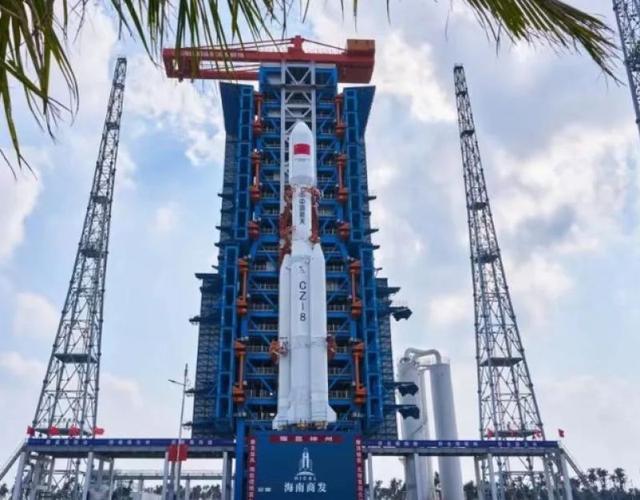
商业航天概念情绪拉满!九丰能源再提海南发射场特燃特气项目进展,股价涨停
Hua Xia Shi Bao· 2025-12-24 12:57
Core Viewpoint - Jiufeng Energy's stock price surged after announcing progress on the Hainan Commercial Aerospace Project, indicating strong market interest in commercial aerospace and specialty gases [2][7]. Group 1: Project Progress - The Hainan Commercial Aerospace Project's first phase is nearly complete, with the second phase's land planning and site selection actively progressing [2]. - Compared to March, significant advancements have been made, including trial production and successful launch verification of liquid hydrogen, liquid oxygen, liquid nitrogen, and helium [2][4]. - The project began implementation in 2023 with a total planned investment of 493 million yuan [4]. Group 2: Market Context - The commercial aerospace sector is experiencing rapid growth, driven by advancements in satellite communication and rocket launch technologies [4][8]. - The commercial aerospace index in the A-share market increased by nearly 24% from November 24 to December 24, reflecting heightened investor interest [8]. Group 3: Financial Performance - Jiufeng Energy's revenue for the first three quarters was 15.608 billion yuan, a year-on-year decrease of 8.45%, with net profit down 19.13% due to declining LNG and LPG market prices [6]. - The company's main revenue sources are natural gas and liquefied petroleum gas, with specialty gases currently contributing less than 1% of total revenue [5]. Group 4: Future Outlook - Jiufeng Energy plans to expand its capacity to support new launch sites and meet the increasing demand for frequent launches in the commercial aerospace sector [4][9]. - The company aims to leverage its strengths in specialty gases to enhance its market position in the commercial aerospace industry [4].

新天然气:第五届董事会第九次会议决议公告
Zheng Quan Ri Bao· 2025-12-24 12:11
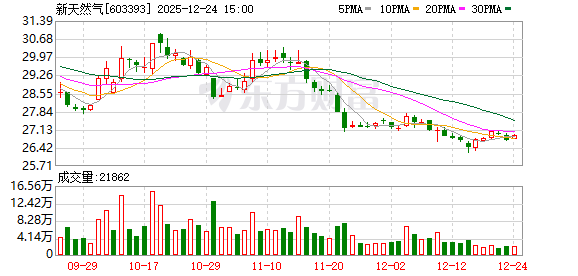
(文章来源:证券日报) 证券日报网讯 12月24日,新天然气发布公告称,公司第五届董事会第九次会议12月24日审议通过《关 于聘任公司高级管理人员的议案》等多项议案。 ...

斩获九连板!胜通能源称如未来股价进一步上涨,可能申请停牌核查
Bei Jing Shang Bao· 2025-12-24 11:15
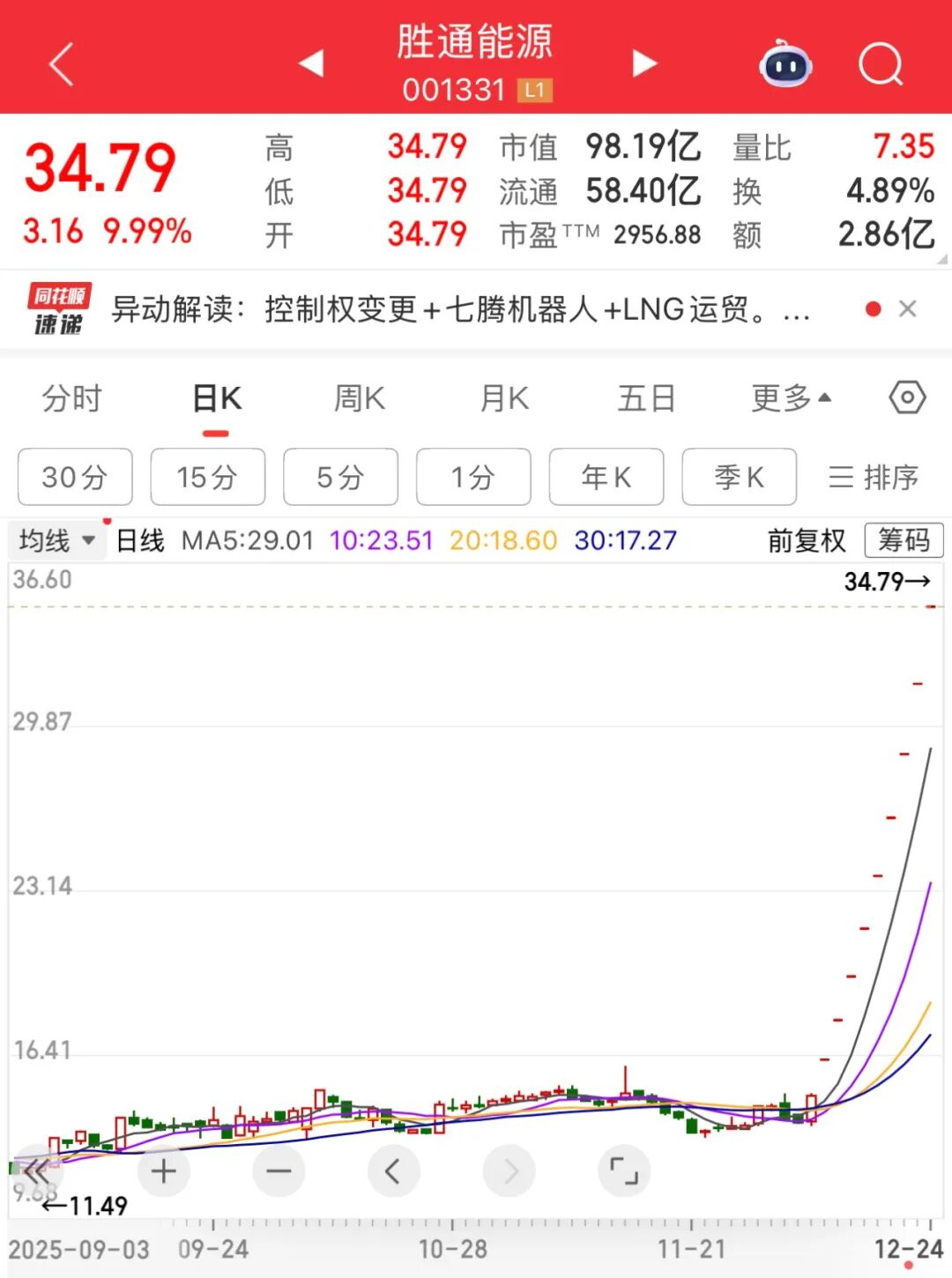
北京商报讯(记者 马换换 李佳雪)12月24日晚间,胜通能源(001331)发布股票交易异常波动暨严重 异常波动公告显示,公司股票12月22日—24日连续3个交易日收盘价格涨幅偏离值累计超过20%,属于 股票异常波动的情况。同时,公司股票12月12日—24日连续9个交易日涨停,累计涨幅达到135.86%, 连续9个交易日内出现4次同向异常波动,属于股票交易严重异常波动的情形。 公告显示,胜通能源控股股东、实际控制人签署了《关于胜通能源股份有限公司之股份转让协议》。公 司不涉及机器人相关业务,公司主营业务仍为液化天然气采购、运输及销售,未发生重大变化,收购方 不存在未来十二个月内的资产重组计划,收购方不存在未来12个月内对上市公司及其子公司的资产和业 务进行出售、合并、与他人合资或合作的计划,或上市公司拟购买或置换资产的重组计划,收购方不存 在未来36个月内通过上市公司借壳上市的计划或安排。 胜通能源表示,目前公司股价已严重偏离公司基本面,未来存在快速下跌的风险。如未来公司股票价格 进一步上涨,公司可能向深交所申请停牌核查。 ...
3倍股,9连板!封单超12万手,公司最新公告:可能申请停牌核查
Mei Ri Jing Ji Xin Wen· 2025-12-24 10:16
12月24日晚,胜通能源(001331.SZ)发布股票交易异常波动暨严重异常波动公告称,如未来公司股票价格进一步上涨,公司可能向深圳证券交易所申请 停牌核查,投资者参与交易可能面临较大风险。敬请广大投资者务必充分了解二级市场交易风险,切实提高风险意识,理性投资并注意投资风险。 12月12日以来,胜通能源股价持续大涨。今天,该股再次涨停,走出连续9个"一字板",股价创历史新高,收报34.79元/股,市值逼近百亿元,截至收盘, 封单超12万手。今年以来,胜通能源股价持续走高,累计涨幅为342.4%。 每日经济新闻综合公开消息 封面图片来源:每日经济新闻 23日晚间,胜通能源发布股票交易严重异常波动公告称,公司不涉及机器人相关业务。 公司表示,公司控股股东、实际控制人签署了《关于胜通能源股份有限公司之股份转让协议》。公司不涉及机器人相关业务,公司主营业务仍为液化天然 气采购、运输及销售,未发生重大变化,收购方不存在未来十二个月内的资产重组计划,收购方不存在未来12个月内对上市公司及其子公司的资产和业务 进行出售、合并、与他人合资或合作的计划,或上市公司拟购买或置换资产的重组计划,收购方不存在未来36个月内通过上市公 ...
新天然气(603393.SH):境外附属公司中能控股完成供股计划,共计发行1.52亿股供股股份 融资约为2.39亿港元
Ge Long Hui A P P· 2025-12-24 09:04
2025年12月23日,中能控股宣布共计发行152,066,800股供股股份,供股价格为1.57港元/股,融资总规 模约为2.39亿港元。公司通过佳鹰公司等合计认购150,884,939股供股股份。本次供股结束后,佳鹰公司 等合计持有中能控股已发行股份总数的52.97%。 根据香港证监会《收购守则》规则26.1条及13条规定,当股东持股比例达到或超过30%时,触发强制性 全面要约责任。基于此,公司拟通过佳鹰公司向中能控股其他股东发起强制性全面要约。本次强制性全 面要约价格为1.57港元/股,预计所需金额最高约为港币3.91亿元,具体需求金额视中能控股其他股东接 受强制性全面要约的情况而定。 格隆汇12月24日丨新天然气(603393.SH)公布,2025年8月14日,公司境外附属公司中能控股启动了资本 重组及供股计划,拟在资本重组的基础上通过香港联交所,按在记录日期每持有2股股份发放1股供股股 份为基准进行供股,融资总规模约为2.39亿港元,以用作喀什北项目阿克莫木气田生产成本及管道运输 费、新生产井建设、现有措施井及地面工程营运开支等。 ...
刚刚,中石油等在雄安成立仪器仪表公司
仪器信息网· 2025-12-24 09:02
据了解, 上海中核维思仪器仪表股份有限公司是一家专注于 气体超声计量技术 的高新技术企 业,核心业务是研发、生产和销售气体超声流量计及相关系统集成服务,主要应用于天然气行 业,覆盖从生产到消费的全流程计量需求。该企业生成的天然气计量设备技术实力极强,是国 内少数能替代进口产品的企业之一。 | 版 权 : 本 文 部 分 素 材 源 自 网 络 , 版 权 归 原 作 者 所 有 , 观 点 代 表 作 者 本 人 , 不 代 表 本 号 立 场 发 文 不 易 , 请 帮 小 编 点 下 "❤️" ↓ 特别提示 微信机制调整,点击顶部"仪器信息网" → 右上方"…" → 设为 ★ 星标,否则很可能无法看到我 们的推送。 近日,昆仑(雄安) 仪器仪表 有限公司成立,法定代表人为何志伟,注册资本2000万人民 币,经营范围含智能仪器仪表制造、智能仪器仪表销售、集成电路制造、集成电路销售、集成 电路设计、电子产品销售、 通信设备 制造、通信设备销售、计量技术服务、信息技术咨询服 务等。股东信息显示,该公司由 中国石油 集团渤海石油装备制造有限公司、中石油昆仑 燃 气 有限公司、上海中核维思仪器仪表股份有限公司共同持 ...
涪陵页岩气田已累计产气超800亿立方米
Yang Shi Xin Wen· 2025-12-24 08:38
Core Insights - The Fuling shale gas field has cumulatively produced over 80 billion cubic meters of gas as of December 23, contributing to clean energy supply for over 200 million residents across more than 70 cities along the Yangtze River Economic Belt [1] Group 1 - The Fuling shale gas field has been operational for over a decade, providing a continuous supply of clean energy [1] - The gas production from the Fuling shale gas field plays a significant role in supporting the energy needs of a large population in the region [1]

3倍股,9连板!封单超12万手
Zhong Guo Zheng Quan Bao· 2025-12-24 08:20
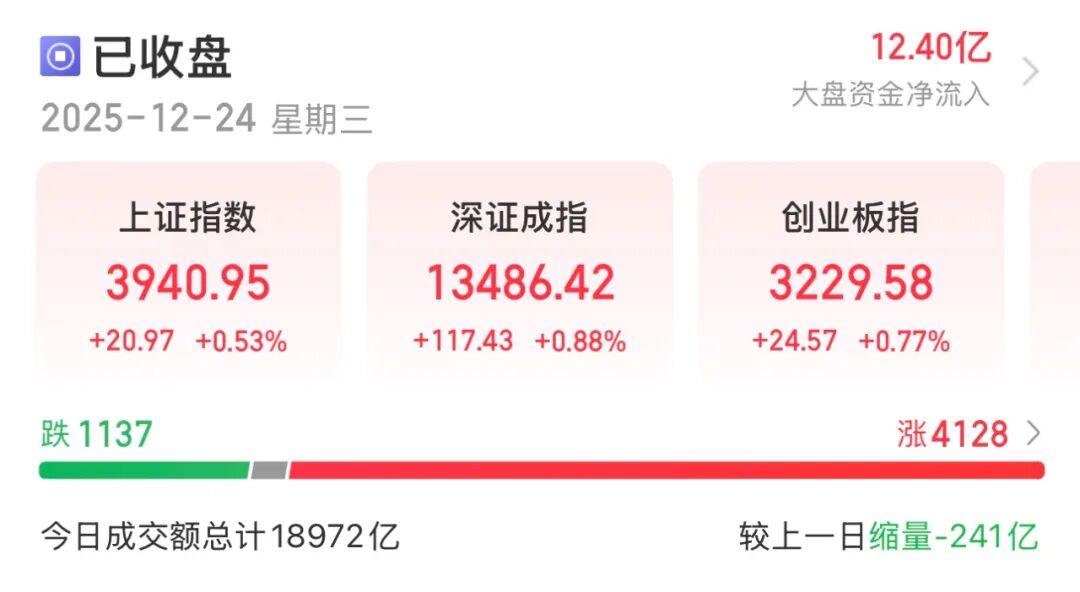
Market Overview - On December 24, A-shares experienced an upward trend with all three major indices rising, and over 4,000 stocks in the market increased in value. The Shanghai Composite Index rose by 0.53%, the Shenzhen Component Index by 0.88%, and the ChiNext Index by 0.77%. The total market turnover was approximately 1.9 trillion yuan [1]. Sector Performance - The power supply and commercial aerospace sectors were notably active, while precious metals and Hainan sectors saw adjustments. The PCB concept leader, Shengtong Energy, hit the daily limit and reached a historical high, while multiple solar energy stocks also surged [3][8]. Financing and Stock Performance - As of December 23, the financing balance in the A-share market reached a historical high of 2.514596 trillion yuan, increasing by 14.859 billion yuan from the previous trading day. The financing balance on the Shanghai Stock Exchange was 1.271202 trillion yuan, while the Shenzhen Stock Exchange reported 1.235507 trillion yuan [3]. Shengtong Energy - Shengtong Energy's stock price has seen a continuous rise since December 12, achieving a nine-day limit-up streak and closing at 34.79 yuan per share, with a market capitalization nearing 10 billion yuan. The stock has increased by 342.4% year-to-date [4][6]. Solar Energy Sector - The solar energy sector showed strong performance, with multiple stocks hitting the daily limit. Notable stocks included Youyan Powder Materials and Hainan Development, which achieved consecutive limit-ups [8][12]. PCB and Electronic Industry - The PCB and CPO concepts experienced significant upward movement, with stocks like Yingtang Zhikong and Shengyi Technology reaching their daily limits. The demand for AI-related PCBs is expected to grow rapidly, driven by advancements in AI infrastructure [13][18].


塞尔维亚与俄罗斯达成一致
中国能源报· 2025-12-24 07:23
Group 1 - Serbia has reached an agreement with Russia to extend the natural gas supply contract until March 31, 2026, ensuring winter energy supply security [3] - Serbian President Vucic emphasized that this arrangement will effectively guarantee the needs of residents and economic operations, alleviating concerns about natural gas shortages [3] - The overall energy security situation in Serbia is stable, and the country is prepared to handle various complex situations [3] Group 2 - In the oil sector, negotiations are ongoing between Russian gas company Gazprom and Hungary's MOL regarding the adjustment of shares in the Serbian oil company [3] - Serbia is open to cooperation with Hungary, viewing the relationship as friendly with a solid foundation for collaboration [3]
