
储能

Search documents
PPT分享 | 2025新型储能产业发展现状及趋势
中关村储能产业技术联盟· 2026-02-01 02:43
Core Viewpoint - The new energy storage industry in China has experienced significant growth, with a total installed capacity of 66.43 GW and energy capacity of 189.48 GWh added in 2025, representing year-on-year increases of 52% and 73% respectively. The industry is expected to continue evolving towards longer-duration energy storage solutions and deeper integration with renewable energy sources [3][41][95]. Group 1: Industry Development Overview - In 2025, the cumulative installed capacity of new energy storage in China reached 213.3 GW, a year-on-year increase of 54% [13]. - The average storage duration for new energy storage systems has gradually increased from 2.11 hours in 2021 to 2.58 hours in 2025, with projections indicating it could reach 3.47 hours by 2030 [95]. - The top ten provinces in China accounted for nearly 90% of the total installed capacity, with Inner Mongolia leading in both energy and power capacity, surpassing California to become the world's top province [3][48]. Group 2: Market Trends and Projections - The growth rate of new energy storage installations is expected to slow down, but the large base will still generate significant absolute increments, with projections suggesting a cumulative installed capacity of over 370 million kW by 2030 [4]. - The market is transitioning from policy-driven growth to market-driven high-quality development, with expected annual compound growth rates of 20.7% to 25.5% from 2026 to 2030 [98]. - The penetration rate of new energy storage in wind and solar power generation has increased significantly, from 0.61% at the end of the 13th Five-Year Plan to 6.88% at the end of the 14th Five-Year Plan [17]. Group 3: Technological Advancements - During the 14th Five-Year Plan period, significant technological breakthroughs have been made in energy storage, including increased capacity of lithium battery cells and advancements in flow battery efficiency [9][10]. - The industry is witnessing a shift towards longer-duration storage solutions, with a notable increase in projects exceeding 4 hours of storage duration [45]. - The average available capacity of new energy storage systems has shown high reliability, with peak discharge capabilities reaching 44.53 million kW in 2025 [24]. Group 4: Project and Market Dynamics - The number of newly operational energy storage projects in 2025 was 5,014, with a total power capacity of 328.0 GW, indicating a shift towards larger-scale projects [39]. - The bidding landscape for new energy storage projects is becoming more rational, with a focus on quality over quantity, as the number of projects remains stable or slightly declines [53]. - The market is diversifying, with energy storage systems now participating in various market categories, including long-term, spot, and ancillary services [21].

储能首个国家级容量电价政策出台,经济性全国跑通可期
GUOTAI HAITONG SECURITIES· 2026-01-31 14:14
Investment Rating - The report recommends an "Overweight" rating for the energy storage sector [2][3]. Core Insights - The introduction of the first national capacity price policy for energy storage is expected to enhance economic viability across the country, leading to significant growth in the domestic energy storage market over the next few years [3][5]. - The capacity price mechanism is crucial for the economic feasibility of energy storage projects, with examples such as Gansu province providing a capacity price of 330 RMB/kW·year, which supports a capital IRR of 11% [5]. - The impact of the capacity price on end-user electricity prices is minimal, maintaining current pricing structures for residential and agricultural users while balancing costs for commercial users [5]. Summary by Sections - **Investment Recommendations**: The report suggests that the establishment of a national capacity price will accelerate the development of a new energy system, with expected high growth in domestic energy storage. Key companies mentioned include Haibo Shichuang, Sunshine Power, and CATL among others [5]. - **Policy Impact**: The national capacity price policy, announced on January 30, aims to create a unified pricing mechanism for energy storage, which previously lacked a national standard. This policy lays a solid foundation for the nationwide promotion of capacity pricing [5]. - **Economic Viability**: The report emphasizes that the capacity price is essential for making energy storage economically viable, with projections indicating that as the share of renewable energy in the grid increases, the utilization and configuration duration of energy storage will improve [5].


南网储能:完善储能价格形成机制,加快构建新型电力系统
中国能源报· 2026-01-31 09:30
Core Viewpoint - The article discusses the recent notification issued by the National Development and Reform Commission and the National Energy Administration regarding the improvement of the capacity pricing mechanism for hydropower storage, which is expected to enhance the development of the energy storage industry and facilitate the construction of a new power system in China [2]. Group 1: Improvement of Pumped Storage Pricing Mechanism - The notification aims to establish a scientific pricing mechanism for the sustainable development of the pumped storage industry, addressing issues such as investment guidance and market price signals [3]. - The principle of "stability for existing projects and activation for new projects" is emphasized, with differentiated policies for existing and new pumped storage plants to ensure stable operations and reasonable returns [4][6]. - For existing projects, the notification allows provincial pricing authorities to continue using previous pricing methods to avoid significant operational fluctuations due to policy changes [4]. Group 2: New Pricing Mechanism for New Projects - For new projects initiated after the previous guidelines, a pricing mechanism combining "unified capacity price + market revenue sharing" is introduced, which aims to optimize resource allocation and encourage investment [6]. - The unified capacity price will be determined every 3-5 years based on average costs, while market revenue sharing will increase the proportion of market income in the revenue structure of pumped storage plants [6][8]. - This transition from policy-driven to market-driven mechanisms is expected to enhance the efficiency of new projects and support the construction of a new power system [6]. Group 3: Independent Capacity Pricing for New Energy Storage - The notification establishes an independent capacity pricing mechanism for grid-side new energy storage, allowing these facilities to have the same capacity status as coal power plants [7]. - The new pricing structure includes "capacity price + energy revenue + ancillary services," which will provide stable income and promote the rapid development of the new energy storage industry [8]. - Different energy storage technologies will compete under unified rules, shifting the focus from cost competition to a comprehensive evaluation of functional value [8]. Group 4: Assessment and Regulation - The policy includes a user price burden assessment system to ensure that the pricing mechanism is sustainable and beneficial for the economy [9][10]. - Strengthened capacity fee assessments will guide the operational performance of power plants, ensuring that revenue flows to projects that effectively provide regulatory functions [10]. - This dual approach aims to balance user price burdens with regulatory oversight, maximizing the effectiveness of the pricing reforms [10]. Conclusion - The comprehensive improvement of the energy storage pricing mechanism establishes a policy framework that balances stability for existing projects with market-driven transformation for new projects, filling the gap in independent capacity pricing for grid-side energy storage [11]. - The notification is expected to attract social capital into efficient energy storage sectors, enhancing the power system's regulatory capabilities and supporting the transition to a green and low-carbon energy structure [11].

国家级零碳园区创建专家指导委员会正式成立
Bei Jing Shang Bao· 2026-01-31 08:34
北京商报讯(记者 和岳)1月30日,2026中关村论坛系列活动—AI+能源发展大会在北京举行。会上, 中关村国联绿色产业服务创新联盟(以下简称"联盟")国家级零碳园区创建专家指导委员会正式成立, 标志着我国零碳园区建设迈入智库领航、生态协同的高质量发展新阶段。 钟发平强调,零碳园区涵盖八大任务、数十项核心技术,是融合能源、产业、技术、金融、政策与人才 培养的系统工程,需绿电供给、储能调节、智慧管控、循环减排等环节高度耦合,并实现从规划到运维 的全链条协同。 先进储能材料国家工程研究中心主任兼首席科学家钟发平主任委员指出,零碳园区的规划与建设,既 有"双碳"国家战略的指引,又有园区企业通过绿电降本、产业升级,落实碳排放总量和强度双控要求的 发展需要,还有应对国际绿色壁垒、护航"产品出海""产业链出海"的迫切需求。 "十五五"期间,我国力争建成约100个国家级零碳园区,将深刻重塑生产方式、能源结构、治理模式与 商业模式,创造巨大社会、环境与经济价值。同时,相关工作也还面临巨大挑战。当前全国园区单位能 耗碳排放约为2.1吨/吨标煤,而国家发改委等部门明确要求未来3-5年内降至0.2—0.3吨/吨标煤,降幅高 达90 ...
科陆电子持续深化储能业务布局 2025年储能项目交付量显著提升
Zheng Quan Ri Bao Zhi Sheng· 2026-01-31 03:41
Core Viewpoint - Midea Group's energy sector focuses on providing low-carbon, efficient, and intelligent energy solutions across the entire energy chain, with Kelu Electronics as a key player benefiting from Midea's resources and capabilities [1] Group 1: Company Performance and Projections - Kelu Electronics forecasts revenue between 6 billion to 6.5 billion yuan for 2025, driven by a significant increase in energy storage project deliveries [1] - The company aims to deepen its energy storage business and expand its customer base, focusing on strategic partnerships with state-owned enterprises in the domestic market and establishing localized teams in overseas markets [1] Group 2: Production and Capacity Expansion - Kelu Electronics' new generation containerized energy storage system, AquaC2.5, is set for large-scale delivery in 2025, marking its first commercial application [2] - The company has an annual production capacity of 10 GWh at its Yichun energy storage base and is constructing a new facility in Indonesia with an initial planned capacity of 3 GWh, expected to be operational by 2026 [2] Group 3: Financial Metrics and Challenges - The gross margin for Kelu Electronics' energy storage business is expected to decline in 2025 due to increased market competition and fluctuations in raw material prices, particularly affecting the domestic projects in the fourth quarter [2] - The overall gross margin for the company has decreased compared to the previous year, attributed to the rising proportion of energy storage business in total revenue [2] Group 4: Research and Development Efforts - Kelu Electronics has increased its R&D investment, with expenses reaching 279 million yuan in the first three quarters of 2025, a year-on-year increase of 7.51% [3] - The company has developed core control units for energy storage systems in-house, showcasing its technical expertise and project experience in the energy storage sector [3] Group 5: Strategic Partnerships and Supply Chain Optimization - By leveraging Midea Group's global supply chain resources and channel management, Kelu Electronics has optimized procurement costs and shortened product delivery cycles [3] - The company has implemented a dual-brand strategy for its industrial storage products, enhancing its service capabilities through Midea's support in manufacturing, R&D, and channel management [3]

人民日报丨国家能源局公布2025年全国能源投资成绩单 迎峰度冬燃料储备充足
国家能源局· 2026-01-31 03:02
Core Viewpoint - The National Energy Administration reported that the total investment in key energy projects exceeded 3.5 trillion yuan for the first time, with a year-on-year growth of nearly 11%, indicating a robust increase in energy investment and a shift towards green energy transition [2][3]. Investment Growth - The investment in key energy projects showed a year-on-year increase of nearly 11%, outpacing the growth rates of infrastructure and manufacturing by 12.9 and 10.1 percentage points respectively [2]. - Five provinces, including Inner Mongolia, Xinjiang, Shandong, Guangdong, and Jiangsu, each completed investments exceeding 200 billion yuan [2]. Renewable Energy Transition - By 2025, renewable energy generation capacity is expected to exceed 60%, with an estimated generation of approximately 4 trillion kilowatt-hours, surpassing the total electricity consumption of the 27 EU countries [2]. - Investment in onshore wind power projects increased by nearly 50% year-on-year, while investments in new energy storage and hydrogen industries doubled compared to the previous year [2]. Hydrogen Energy Development - By the end of 2025, the cumulative production capacity of renewable hydrogen projects in China is expected to exceed 250,000 tons per year, marking a doubling in capacity from the previous year [2]. - Key hydrogen production, storage, and application projects in regions such as Xinjiang and Inner Mongolia have been successfully launched, indicating progress in the hydrogen energy supply chain [2]. Private Sector Investment - Private sector investment in energy projects grew at a rate of 12.9%, exceeding the national average growth rate for key energy projects by approximately 2 percentage points [3]. - Investments from private enterprises are primarily focused on solar power, wind power, and coal mining, with significant growth in onshore wind and distributed photovoltaic sectors [3]. Policy Support and Market Environment - The National Energy Administration plans to enhance policy support and market environment to stimulate energy investment, including the introduction of green electricity direct connection policies [3]. - The government aims to facilitate the implementation of projects in zero-carbon parks and industrial microgrids, ensuring a stable development outlook for renewable energy [3]. Energy Supply Stability - The overall fuel reserves in the country are sufficient, with coal production maintaining high levels, ensuring stable electricity supply during peak winter demand [5]. - As of January 27, the national coal inventory for power plants was 220 million tons, sufficient for 26 days of operation, indicating a solid foundation for coal supply [5]. - Natural gas consumption during the heating season reached 119.52 billion cubic meters, a year-on-year increase of 4.6%, with stable operations in both domestic and imported gas supplies [5].

两部门发布通知要求 建立电网侧独立新型储能容量电价机制
Zheng Quan Ri Bao· 2026-01-30 16:08
Core Viewpoint - The National Development and Reform Commission and the National Energy Administration have issued a notice to establish an independent capacity pricing mechanism for grid-side new energy storage, aiming to enhance the current capacity pricing mechanisms for coal, gas, and pumped storage power generation to adapt to new market conditions [1][2]. Group 1: Capacity Pricing Mechanism - The notice proposes that local governments can provide capacity pricing for grid-side independent new energy storage power stations that contribute to the safe operation of the power system [1]. - The proportion of fixed cost recovery for coal power units will be increased to no less than 50%, equating to 165 yuan per kilowatt annually [1]. - A gas power capacity pricing mechanism will be established based on the pricing method of coal power capacity [1]. Group 2: Pumped Storage - The notice refines the capacity pricing mechanism for pumped storage, maintaining the existing pricing for projects started before the 2021 guidelines, while new projects will adopt a "one province, one price" approach [2]. - Local governments will set a unified capacity price based on average cost recovery principles, allowing power stations to participate in the electricity market and share the revenue with users [2]. Group 3: Grid-Side Independent New Energy Storage - Local governments can establish a capacity pricing mechanism for grid-side independent new energy storage based on local coal power capacity pricing standards, considering discharge duration and peak contribution [2]. - The new energy storage capacity pricing will reflect the actual contribution to peak load support, linking the pricing to continuous discharge hours and the duration of peak load periods [2][3]. - The commercial model for grid-side independent new energy storage focuses on serving the power system without specific beneficiaries, generating revenue through participation in the electricity spot market and ancillary service market [3].
科陆电子发布2025年度业绩预告 持续深化储能业务布局
Zheng Quan Ri Bao Wang· 2026-01-30 13:44
Core Viewpoint - Company Kelu Electronics expects a revenue of 6.0 billion to 6.5 billion yuan for the year 2025, with a projected net loss of 115 million to 170 million yuan [1] Group 1: Company Performance - Kelu Electronics is focusing on the energy storage sector, anticipating a significant increase in project delivery volume in 2025, which will drive revenue growth [1] - The company is enhancing its core competitiveness in the energy storage industry amid a rapidly expanding market demand [1] Group 2: Industry Context - The global energy structure is undergoing a transformation, with energy storage being a key support for new power systems, indicating a broad long-term development potential for the industry [1] - The company is strategically positioning itself in the energy storage market, capitalizing on industry opportunities [2] Group 3: Market Strategy - Kelu Electronics is building a dual-market strategy, focusing on core strategic customers domestically and pursuing differentiated development paths internationally [2] - The company has successfully expanded into new markets such as Greece, Czech Republic, and Poland, enhancing its market influence and brand competitiveness [2]
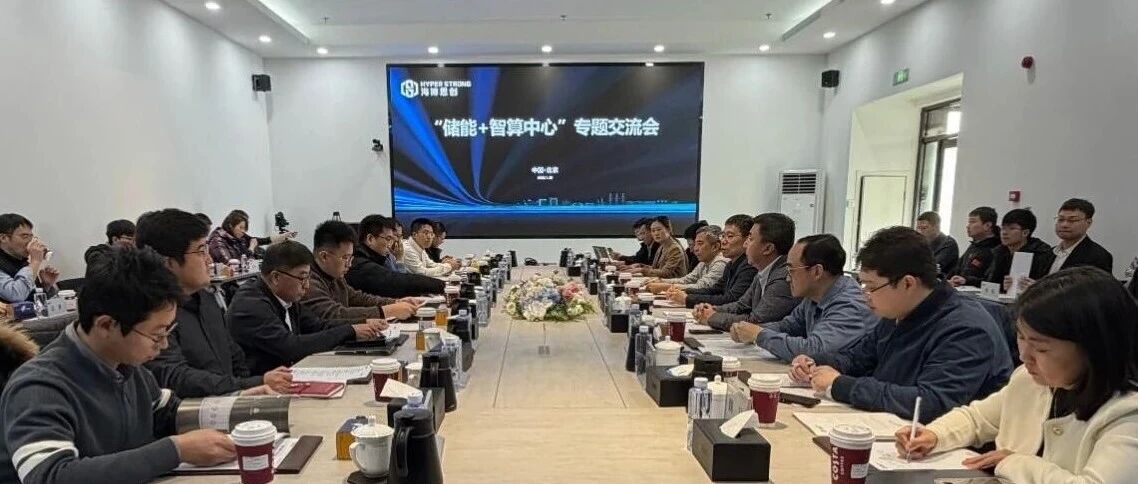
助力智算发展,“储能+智算中心”专题交流会在海博思创房山智造基地举办
海博思创· 2026-01-30 13:34
Core Viewpoint - The article emphasizes the importance of integrating energy storage with intelligent computing centers to promote green energy development and enhance economic efficiency in the industry [1][8]. Group 1: Event Overview - The "Focus on Green Energy, Empower Intelligent Computing Development" seminar was successfully held, organized by the Beijing Economic and Information Technology Bureau, aiming to discuss the application of energy storage in intelligent computing centers [1]. - Key representatives from major companies and research institutions attended the event, including China Mobile, China Unicom, and JD.com, highlighting the collaborative nature of the discussions [3]. Group 2: Company Insights - Haibo Shichuang, founded in 2011, has transformed from a traditional product sales model to a comprehensive service provider in the energy storage sector, focusing on innovative applications of energy storage in computing centers [3]. - The company has already implemented energy storage projects in data centers, demonstrating the feasibility of large-scale promotion [4]. Group 3: Technical Discussions - The seminar featured discussions on the economic viability and safety of energy storage applications, with a focus on reducing reliance on diesel generators through innovative energy storage solutions [5][6]. - Experts highlighted the need for continuous innovation in technology and business models to fully replace diesel generators with energy storage systems [6]. Group 4: Policy and Future Directions - Officials from the Beijing Economic and Information Technology Bureau emphasized the critical role of energy storage in supporting the green and sustainable development of the intelligent computing industry [7]. - The article calls for collaborative efforts to explore scalable solutions for integrating energy storage with intelligent computing centers, aiming to support the high-quality development of the digital economy in Beijing [7][8].
2025年全国重点能源项目投资首破3.5万亿元,新一年投资方向明确
Di Yi Cai Jing· 2026-01-30 13:29
Group 1 - The core viewpoint is that "integrated development of new energy" will become an important direction for future investments, with energy investment accelerating as a new growth point for the domestic economy [1][5] - The National Energy Administration reported that by 2025, the investment in key energy projects nationwide will exceed 3.5 trillion yuan, marking an increase of nearly 11% year-on-year, which is higher than the growth rates of infrastructure and manufacturing [1] - Key regions for energy investment include Inner Mongolia, Xinjiang, Shandong, Guangdong, and Jiangsu, each exceeding 200 billion yuan in completed investments [1] Group 2 - The investment in energy green transition has accelerated, with a solid momentum towards "green and new" investments, including over 430 million kilowatts of new wind and solar power installations by 2025 [2] - The investment in new energy storage and hydrogen industries is expected to double compared to the previous year, with renewable hydrogen production capacity exceeding 250,000 tons per year by the end of 2025 [2] - The investment in coal power and conventional hydropower is also showing good growth, with ongoing projects in the southwestern river basins [2] Group 3 - The cumulative operational capacity of 45 ultra-high voltage transmission channels has reached 340 million kilowatts, with cross-regional electricity trading reaching a historical high of 1.59 trillion kilowatt-hours, a year-on-year increase of 11.6% [3] - Private sector investment in the energy field has maintained rapid growth, with key projects seeing a year-on-year increase of 12.9%, particularly in solar power, wind power, and coal mining [3] Group 4 - The development of new energy faces challenges, including the need for improved real-time balancing and consumption capacity for large-scale fluctuating renewable energy [4] - Future development should focus on integrating new energy with various industries and systems to enhance market competitiveness and development autonomy [4][5] Group 5 - The National Energy Administration plans to deepen the integration of new energy into buildings, transportation, and rural revitalization, creating diverse development scenarios [5] - Initiatives include a three-year action plan to double the capacity of electric vehicle charging facilities by 2027, expected to drive over 200 billion yuan in investment [6] - The goal is to achieve a new installed capacity of 180 million kilowatts for new energy storage by 2027, driving approximately 250 billion yuan in investment [6]