电子气体

Search documents
供需向好下电子气体景气或加速
HTSC· 2026-03-19 07:12
Investment Rating - The industry investment rating is "Overweight" [7] Core Viewpoints - The electronic gas market is expected to grow significantly, with a projected global market size of $6.8 billion in 2026, reflecting an 8% year-on-year increase [1] - The demand for electronic gases is driven by advancements in chip manufacturing technologies, including new storage technologies and advanced packaging [3] - The domestic market share of listed companies in China's electronic gas sector is currently 40%, with expectations for increased localization due to rising self-sufficiency requirements and anti-dumping measures [5] Summary by Sections Global Market Outlook - The global electronic gas market is projected to reach $6.8 billion in 2026, with a year-on-year growth of 8% [1] - The market for electronic specialty gases is expected to grow from $4.64 billion in 2025 to $5.04 billion in 2026, while electronic bulk gases are expected to grow from $1.67 billion to $1.78 billion in the same period [3] Domestic Market Dynamics - China's electronic gas market is expected to grow to 22.2 billion yuan in 2026, representing a 7% year-on-year increase [4] - The expansion of domestic storage and wafer factories is anticipated to support the demand for electronic gases [4] Supply Chain and Localization - The localization rate of electronic specialty gases in China is expected to increase from 9% in 2018 to 25% by 2025 [5] - The ongoing geopolitical tensions in the Middle East are affecting helium supply, leading to increased prices and potential benefits for domestic helium gas companies [2][5] Technological Advancements - The shift towards advanced semiconductor processes is expected to increase the consumption of various electronic gases, enhancing their value in manufacturing [4] - The capital expenditure of storage chip companies is projected to accelerate in 2026, further driving the demand for electronic gases [3]
广钢气体(688548):新项目投产,营收冲新高
市值风云· 2026-02-28 12:00
Investment Rating - The report indicates a positive investment outlook for Guanggang Gas, highlighting its strong performance and growth potential in the electronic gas sector [5][20]. Core Insights - Guanggang Gas has demonstrated consistent double-digit growth in revenue and net profit, with 2025 revenue reaching 2.424 billion yuan, a year-on-year increase of 15.26%, and net profit of 286 million yuan, up 15.39% [5]. - The company is recognized as a leader in the domestic electronic gas market, providing essential gases for semiconductor and display panel manufacturing, with a focus on high-purity requirements [6][20]. - The business model of "on-site gas production" creates a competitive moat, as it establishes long-term contracts with clients, typically lasting 15 years, making it difficult for customers to switch suppliers [6][8]. Performance Summary - In 2025, Guanggang Gas's performance showed a notable acceleration, particularly in the fourth quarter, where revenue reached a historical high of 703 million yuan [10]. - The third quarter saw a significant rebound in net profit, with a year-on-year increase of 82.47%, driven by the commencement of new projects [13][14]. - New projects in Qingdao, Wuhan, and Dongguan began commercial operations in the latter half of 2025, contributing to profit growth [17][18]. Industry Context - As the first domestic company to enter the global helium supply chain, Guanggang Gas is well-positioned to benefit from the ongoing expansion of the semiconductor industry [20]. - The increasing focus on supply chain security due to geopolitical factors is leading semiconductor manufacturers to prefer domestic suppliers like Guanggang Gas over foreign companies [21]. - The growth trajectory of Guanggang Gas is characterized by stability and resilience, making it a valuable player in a market filled with uncertainties [23].

电子气体-半导体需求有望加速扩张-国产替代或重塑供给格局
2026-02-13 02:17
Summary of Conference Call on Electronic Gases Industry Industry Overview - The electronic gases market in China is projected to grow from 9.2 billion RMB in 2016 to 19.5 billion RMB by 2024, driven by global semiconductor expansion and technological advancements [2][4] - The global wafer fab equipment spending is expected to reach 374 billion USD from 2026 to 2028, with China leading at 94 billion USD due to policy support, significantly increasing the demand for high-purity electronic gases, especially specialty gases [2][5] Key Insights and Arguments - The complexity of etching processes is increasing geometrically due to advancements in technology, leading to a significant rise in the consumption of high-purity fluorocarbon specialty gases [2][6][7] - By 2030, the market size for specialty gases in China's semiconductor sector is expected to soar from 7.9 billion RMB in 2024 to 39.4 billion RMB, indicating a long-term upward trend in the industry [2][9] - The overall electronic gases market in China, including other sectors, is projected to reach approximately 42 billion RMB by 2024, with bulk electronic gases market size expected to reach 28.8 billion RMB by 2030 [9][10] Competitive Landscape - The global specialty gases market is dominated by four major international players: Linde Group, Air Liquide, Taiyo Nippon Sanso, and Air Products, which hold over 70% of the market share [9][10] - Domestic companies have made significant progress in replacing mid-to-low-end products but still lag in high-end categories, covering only 20%-30% of the required categories for integrated circuit manufacturing [10][11] Policy Impact - Recent policies from the Ministry of Commerce, including restrictions on the export of key semiconductor materials, have increased compliance costs for cross-border procurement, prompting downstream wafer fabs to accelerate the validation of local suppliers [11][12] - These policies create opportunities for domestic companies with high-purity production capabilities to increase market share [11] Investment Considerations - The long-term outlook for China's electronic specialty gases industry is positive, supported by the expansion of wafer fabs, advanced processes, and the growth of 3D NAND technology [12] - Investors are advised to monitor companies like Guanggang, China Shipbuilding, and Jinghong, which have core competitive advantages [12] - Risks to consider include potential underperformance in wafer fab expansions, raw material supply risks, and the lengthy validation period for domestic replacements [12]
化工ETF(159870)开盘涨1%,染料行业因库存偏低引发补库潮,分散染料预计节前再涨10%
Xin Lang Cai Jing· 2026-02-09 01:50
Group 1 - The polyester industry is experiencing a collaborative production cut that is driving price spread recovery, with the price spread between polyester filament and polyester bottle chips reaching new highs in six months and two years, while PTA is nearing breakeven [1] - The dye industry is witnessing a replenishment wave due to low inventory levels, with disperse dyes expected to rise by another 10% before the holiday, and the price of the brilliant blue dye led by Zhejiang Longsheng has surged to 180,000 yuan/ton, indicating strong price support expectations in the industry [1] - Local two sessions have identified high energy-consuming industries as key targets for carbon emission transformation, with green development policies continuing to strengthen supply-side constraints in the chemical industry [1] Group 2 - The electronic gas industry is characterized by a high degree of foreign monopoly, with four major international giants, including Linde Group and Air Liquide, holding over 70% of the global market share, indicating a deep technological moat [1] - The supply of electronic bulk gases exhibits a 15-year long-cycle binding characteristic, resulting in strong customer stickiness, while the specialty gas sector faces high technical barriers (purity requirements of 5N-6N) and a wide variety of products (over 110 types), leading downstream customers to adopt multi-source supply strategies [1] - The expansion of semiconductor demand is expected to accelerate the domestic substitution process, although significant barriers and technological stratification exist within the industry [1]
东北证券:半导体需求有望加速扩张 国产替代或重塑电子气体供给格局
智通财经网· 2026-02-03 04:11
Core Viewpoint - The electronic gas sector is expected to experience long-term value due to supply-demand resonance, with the market poised for nonlinear expansion, driven by changes in the external environment that compel downstream manufacturers to accelerate supply chain restructuring [1] Demand Side - The global wafer expansion is anticipated due to the increasing demand for AI chips in data centers and edge devices, with significant support from China's "14th Five-Year Plan" and the National Fund Phase II, leading to substantial procurement needs for domestic equipment and materials [2] - The transition from mature nodes to advanced processes in wafer manufacturing is expected to significantly increase the consumption of electronic gases per wafer, resulting in a projected market size of 42 billion yuan for electronic specialty gases and 28.8 billion yuan for electronic bulk gases by 2030 [2] Supply Side - The global electronic gas market is characterized by an oligopolistic structure dominated by companies from Europe, the United States, and Japan, with domestic firms currently covering only 20%-30% of the required varieties for integrated circuit manufacturing [3] - The domestic electronic specialty gas industry is in the early stages of achieving self-sufficiency, with a projected localization rate of only 25% by 2025, influenced by recent trade policies and potential supply chain risks from overseas suppliers [3]

电子气体行业深度报告:电子气体:半导体需求有望加速扩张,国产替代或重塑供给格局
NORTHEAST SECURITIES· 2026-02-02 09:17
Investment Rating - The report rates the industry as "Outperforming the Market" [6] Core Insights - The electronic gas industry is crucial for semiconductor manufacturing, with high product certification barriers. It is divided into bulk gases and specialty gases, with the latter being more technically intensive and having over 110 types used in semiconductor processes [1][3] - Demand for electronic gases is expected to accelerate due to the expansion of wafer manufacturing capacity and technological iterations, particularly driven by the increasing need for AI chips in data centers and edge devices. The Chinese electronic specialty gas market is projected to reach 42 billion yuan by 2030, while the bulk gas market is expected to reach 28.8 billion yuan [2][3] - The supply chain is being reshaped by domestic substitution, with local manufacturers currently covering only 20%-30% of the required types for integrated circuit manufacturing. The domestic production rate for electronic specialty gases is expected to reach 25% by 2025 [3] Summary by Sections 1. Electronic Gases: Key Materials in Wafer Manufacturing - The electronic gas industry has significant entry barriers due to the high purity requirements and complex production processes. The industry is categorized into bulk gases and specialty gases, with specialty gases being high-value and requiring stringent purity controls [1][15] - The purity standards for electronic gases start at 5N (99.999%) and can go up to 6N (99.9999%) or higher, with strict control over impurities [17][46] 2. Demand Side: Capacity Expansion and Technological Iteration - The Chinese semiconductor materials market is projected to grow, with electronic specialty gases accounting for approximately 13% of the wafer manufacturing materials. The market size is expected to increase from 9.2 billion yuan in 2016 to 19.5 billion yuan in 2024 [48][54] - The global wafer manufacturing equipment spending is expected to reach 374 billion USD from 2026 to 2028, with China leading in investment [62][68] 3. Supply Side: Domestic Substitution Reshaping Supply Chain - The global electronic gas market is dominated by a few major players, with local manufacturers still in the early stages of achieving self-sufficiency. The potential for domestic suppliers to accelerate their validation processes is increasing due to external supply chain pressures [3][4] - The report emphasizes the long-term value of the electronic gas sector, driven by demand-side growth and supply-side restructuring [3] 4. Investment Recommendations - The report suggests focusing on leading companies in the electronic bulk gas and specialty gas sectors that have core competitive advantages [3][4]
新兴行业上市公司迎订单“开门红”
Zhong Guo Zheng Quan Bao· 2026-01-11 20:49
Group 1 - The semiconductor equipment orders continue to show strong growth at the beginning of 2026, following a robust trend since the second half of 2025, supported by accelerated project implementation and increased customer delivery speed [1] - Emerging industries, including energy storage, new energy vehicles, wind power, artificial intelligence, and commercial aviation, have recently announced significant orders, indicating a combination of industry cycles, market demand, and corporate strategies [1] - The new semiconductor manufacturing base in Zhengzhou, with a total investment of 1.8 billion yuan, is expected to be completed by 2027, focusing on core equipment for semiconductor back-end testing and IoT safety production equipment [2] Group 2 - The energy storage sector has also seen a notable increase in order volume, with several companies announcing large orders that are expected to significantly boost future performance [2] - Companies like Haiqi Communications have secured multiple large energy storage orders since November 2025, validating their market recognition and laying a solid foundation for future business expansion [2] - Many companies are prioritizing overseas orders as a key growth area for 2026, with firms like Aibisen planning to optimize global layouts and consolidate overseas market advantages [3] Group 3 - The recent surge in orders at the beginning of the year is attributed to a combination of industry cycles, market demand, and corporate strategies, emphasizing the importance of accurately capturing industry recovery points and opportunities [4] - The immediate impact of large orders on cash flow and market confidence is significant, but the quality of performance realization depends on the company's execution capabilities and cost control [4] - High-quality orders can drive technological iteration and capacity optimization, creating a positive cycle from orders to production and further orders [4] Group 4 - The announcement of large orders at the beginning of the year can significantly boost stock prices, but investors should focus on the sustainability of these orders [5] - It is crucial to differentiate between contract amounts and revenue that can be recognized in the current year, paying attention to order gross margins and the company's capacity to meet delivery schedules [5]

反倾销背景下的二氯二氢硅:高科技产业的“隐形关键材料”
材料汇· 2026-01-10 15:49
Core Viewpoint - The Ministry of Commerce announced an anti-dumping investigation into imported dichlorodihydrosilane from Japan, highlighting its strategic importance in China's high-tech industry chain and aiming to create a fair competitive environment for domestic industries [2]. Industry Significance - The anti-dumping investigation is expected to curb unfair trade practices, facilitating technological research and capacity release for domestic companies, thus accelerating the localization process of dichlorodihydrosilane and ensuring supply chain security for high-end industries like semiconductors and photovoltaics [2]. Overview of Dichlorodihydrosilane - Dichlorodihydrosilane, also known as dichlorosilane, is a colorless gas at room temperature and pressure, characterized by high danger and high reactivity. Its hazardous properties include flammability, toxicity, and poor thermal stability, while its high value comes from its use as a silicon source precursor in semiconductor manufacturing [5][6]. Technical Aspects - The production of dichlorodihydrosilane involves various methods, with a focus on achieving high purity to meet the stringent requirements of advanced semiconductor processes. The main methods include disproportionation, reduction, synthesis, and recovery, with disproportionation and recovery being the most widely used due to their advantages [8][9][10]. Applications - Dichlorodihydrosilane is a key material in high-tech industries, particularly in semiconductor manufacturing, where it is used in chemical vapor deposition (CVD) processes and for producing silicon-based precursors. Its applications extend to photovoltaics and the synthesis of special materials [12]. Market Dynamics - The global market for dichlorodihydrosilane is expanding steadily, driven by growth in the semiconductor industry and technological innovations in electronics. The demand is further boosted by developments in renewable energy technologies such as solar photovoltaics and electric vehicles [14][15]. Competitive Landscape - The high-end electronic-grade dichlorodihydrosilane market has been dominated by a few overseas companies, particularly Shinetsu Chemical from Japan, which holds over 50% of the global market share. However, domestic companies like Tangshan Sanfu are making strides in achieving large-scale production and quality validation for their products [17][18][19].



半导体材料:电子气体的竞争格局与市场情况(附企业清单)
材料汇· 2026-01-08 16:01
Core Viewpoint - The article discusses the competitive landscape of the global electronic gases market, highlighting the dominance of companies from Europe, the United States, and Japan in this sector [3]. Group 1: Major Companies in Europe and the United States - Linde Group (Germany/Ireland) is a leading industrial gas company with a projected revenue of $33 billion for the fiscal year 2024, where electronic gases account for approximately $3 billion, or 9% of its total revenue [6]. - Air Liquide (France) anticipates a revenue of €27.058 billion for the fiscal year 2024, with electronic gases contributing around €2.4 billion, also representing 9% of its total revenue [6]. - Air Products and Chemicals (USA) reported a total revenue of $12.6 billion in 2023, focusing on the sale of industrial gases and specialty gases [6]. - Merck KGaA (Germany) has a strong position in high-purity electronic specialty gases, particularly in the semiconductor processing sector [6]. - Entegris (USA) expects a revenue of $3.2 billion in 2024, with its electronic gas revenue scale unspecified [6]. - Messer Group (Germany) has a projected revenue of €4.5 billion in 2024, with electronic gas revenue details not disclosed [6]. - Solvay (Belgium) is a leading producer of advanced materials and specialty chemicals, including electronic chemicals [6]. - REC Silicon (Norway) is a major producer of high-purity polysilicon and silane gases, with a projected revenue of $140 million in 2024 [6]. Group 2: Major Companies in Japan - Taiyo Nippon Sanso is Japan's largest industrial gas and air separation equipment manufacturer, with a projected revenue of ¥1.31 trillion for the fiscal year 2024 [7]. - Resonac (formerly Showa Denko) has electronic gas products including high-purity gases, with an expected revenue of ¥1.39 trillion in 2024 [7]. - Kanto Denka is a major supplier of fluorinated gases, focusing on semiconductor cleaning and etching processes, with an overall revenue of approximately ¥380 billion in 2023 [7]. - Sumitomo Seika offers a wide range of electronic specialty gases, with a projected revenue of ¥150 billion for the fiscal year 2025 [7]. - Iwatani Corporation specializes in rare gases and semiconductor specialty gases, contributing significantly to the electronic gas market [7]. - Central Glass focuses on high-purity fluorinated gases for semiconductor manufacturing [7]. - ADEKA Corporation has a strong position in high-end fluorinated chemicals and electronic functional materials [7]. - Daikin Industries is a major supplier of fluorinated electronic specialty gases, with significant production capacities [7]. Group 3: Major Companies in South Korea - Daesung Industrial Gases is a key supplier of electronic specialty gases, with a projected revenue of approximately 1.48 trillion KRW (around $1.12 billion) for the fiscal year 2024 [8]. - SK Specialty focuses on semiconductor gases, with major products including trifluorine and hexafluorotungsten, serving major clients like Samsung and SK Hynix [8]. - Wonik Materials is a leading manufacturer of electronic specialty gases, with a focus on ammonia and nitrous oxide [8]. - Foosung specializes in fluorinated electronic gases, particularly hexafluorotungsten and trifluorine [8]. - Hyosung TNC has a strong position in the electronic specialty gas market, particularly in trifluorine [8]. Group 4: Major Companies in China - TEAN is the largest domestic electronic specialty gas company, with a revenue of 1.695 billion CNY in 2024, covering over 80 products [9]. - Yingde Gases is a leading independent industrial gas producer, with a revenue of 16.1 billion CNY in 2021 [9]. - Jiangsu Nanda Optoelectronic Materials is a leading manufacturer of phosphine and arsine, with a revenue of 1.506 billion CNY in 2024 [9]. - Wu Hua Chemical Technology Group is a major supplier of fluorinated electronic gases, with significant production capacities [9]. - Guangdong Huate Gas is a comprehensive service provider of electronic bulk gases, with a projected revenue of 1.84 billion CNY in 2024 [9].



开盘超3000只个股下跌
Di Yi Cai Jing Zi Xun· 2026-01-08 02:02
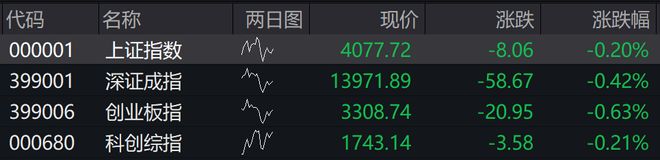
Market Overview - The A-share market opened lower with the Shanghai Composite Index down 0.20%, the Shenzhen Component down 0.42%, and the ChiNext Index down 0.63% [2][3] - Over 3,000 stocks declined in the market, with sectors such as brokerage, insurance, retail, and CPO experiencing significant drops [1] Sector Performance - The electronic gas sector saw a strong opening, with Sanfu Co. and Heyuan Gas hitting the daily limit up, while Jin Hong Gas, Huate Gas, Silane Technology, and Yake Technology also showed notable gains [1] - The brain-computer interface concept remained active, with companies like Prit and Innovation Medical achieving four consecutive trading limit ups [1] Notable Stocks - Zhongke Lanyun opened over 12% higher, projecting a net profit increase of 367%-377% year-on-year for 2025 [3] - Yijing Optoelectronics approached the daily limit down, announcing an expected negative net profit for the year 2025 [5] Hong Kong Market - The Hong Kong stock market opened lower, with the Hang Seng Index down 0.59% and the Hang Seng Tech Index down 0.44% [5][6] - Major stocks such as Tencent Music, Baidu Group, Alibaba, and Zijin Mining experienced significant declines, while China Shenhua, China Telecom, and China Merchants Bank showed strength [5]