酒店业

Search documents
@铲屎官们!航空铁路宠物运输服务上新,携宠出行更舒适
Sou Hu Cai Jing· 2025-07-30 15:30
Core Insights - The pet economy in China is experiencing strong growth in the first half of the year, with an expanding consumer market as pet owners increasingly choose to travel with their pets [1] Group 1: Airline Services - Eight airlines, including China Southern Airlines and China Eastern Airlines, have upgraded their "pet in cabin" services, allowing travelers to fly with their pets in the cabin [3][5] - As of July 1, China Southern Airlines has extended its "pet in cabin" service to over 200 direct flight routes, with pets typically placed under the front seat in economy class [5] - The introduction of "pet transportation" services on high-speed trains has also expanded, covering 25 train stations and 38 train routes since June 20 [5][6] Group 2: Pet-Friendly Accommodations - A new type of hotel featuring "pet companionship" services is rapidly gaining popularity in China, allowing guests to stay with their pets and offering services such as pet companionship during sleep [6][8] - The "cat companionship" service at a hotel in Zhejiang has led to a 15% to 20% increase in occupancy rates compared to the previous two years, indicating strong consumer interest [8][10] - The hotel has become a popular destination for pet lovers who cannot own pets, with weekend bookings nearly full during the summer [8]


转化率超过泳池?充电桩正悄悄改写酒店“必选项”
Guan Cha Zhe Wang· 2025-07-30 09:13
Group 1 - The core viewpoint of the articles highlights the increasing importance of electric vehicle (EV) charging stations in the hotel industry, significantly influencing travelers' booking decisions [1][2][3] - Hilton has equipped over 1,800 hotels globally with EV charging stations, leading to a higher likelihood of room bookings when guests search for this facility [1][2] - The company aims to reduce carbon emissions intensity by 75% for its hotels and 56% for franchised hotels by 2030, with these targets certified by the Science Based Targets initiative (SBTi) [1][2] Group 2 - Hilton has signed an agreement with Tesla to install 20,000 charging stations in North American hotels, aiming to create the largest overnight EV charging network in the hotel industry [2] - Other hotel brands, such as Marriott, Radisson, Hyatt, Accor, Wyndham, and Best Western, are also rapidly deploying EV charging facilities across their properties [2][3] - Approximately 25% of U.S. hotels currently offer EV charging services, with this percentage rising quickly, and properties with charging facilities tend to have higher booking rates and revenue [3]

流量变增量!华强北携手饭店业协会以资源整合撬动百业兴旺
Nan Fang Du Shi Bao· 2025-07-30 04:18
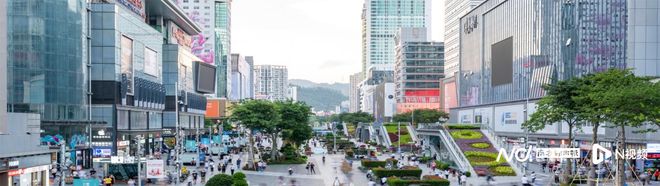
Core Insights - The article discusses the collaboration between the Futian district of Shenzhen and the Shenzhen Hotel Industry Association to address challenges in the restaurant and hotel sectors, focusing on transforming "traffic into growth" through resource integration [1][3][5] Group 1: Industry Challenges and Responses - The restaurant average spending per customer is declining, and hotel revenues are under pressure, prompting proactive measures from local authorities [1] - The Shenzhen Hotel Industry Association, established in 2004, has over 400 member hotel groups and aims to create a comprehensive service system for the industry [1] Group 2: Strategies for Growth - A joint plan was developed to convert event traffic into sustained consumer spending by linking sports events with dining and hotel accommodations [3] - Initiatives include designing exclusive hotel packages for event attendees and organizing themed night markets to extend the consumer engagement chain [3] Group 3: Sustainable Development Initiatives - The focus on green and smart development is emphasized, with efforts to promote green certifications and low-carbon designs among leading hotels in the area [4] - The integration of smart technology in hospitality, such as smart restaurants and unmanned hotels, is being explored to enhance operational efficiency [4] Group 4: Internationalization and Branding - The initiative aims to position Shenzhen as an international consumption center by facilitating partnerships between local brands and international hotel chains [5] - Events like the "Shenzhen Hotel Industry Brand High-Quality Development Conference" are organized to enhance the international image of the region [5] Group 5: Economic Impact - The integration of various sectors is expected to transform single-point traffic into comprehensive industry growth, contributing to Shenzhen's economic ecosystem [5] - The article highlights the potential for creating a new productive force in the "Electronic First Street" of Shenzhen, driving high-quality development goals [5]
华住集团CEO金辉:中国足以孕育世界级酒店集团
Di Yi Cai Jing Zi Xun· 2025-07-30 01:14
Core Viewpoint - The hotel industry is facing a "price war" and a trust crisis among consumers, prompting H World Group to implement a transformative strategy with the upgrade of its "H World Club" and the introduction of the "Price Guarantee" feature, which offers dual protection for consumers [1][3][4]. Group 1: Strategic Actions - H World Group's CEO Jin Hui emphasized the need to return to a customer-centric approach, addressing consumer pain points such as price confusion and "big data killing familiarity" [4][5]. - The "Price Guarantee" feature includes "price drop refunds" and "price comparison compensation," aiming to enhance price transparency and reduce ineffective competition in the hotel industry [5][6]. - The initiative is designed to alleviate consumer anxiety regarding hotel bookings, thereby restoring trust in the brand and the industry [5][8]. Group 2: Market Position and Growth - H World Group has over 280 million members and operates more than 30 hotel and apartment brands, including well-known names like Hanting and Qianxi, catering to diverse accommodation needs [6][12]. - The company has risen to the fourth position in the global hotel group rankings, surpassing InterContinental Hotels Group, and is now the second-largest by room count [12][13]. - The focus remains on deepening its presence in the Chinese market, which is viewed as one of the most promising markets globally, with significant growth potential [10][11]. Group 3: Consumer Trends and Future Outlook - The trend of consumer segmentation and personalized demand is evident, with consumers increasingly valuing service quality and cost-effectiveness [11][19]. - H World Group aims to enhance service quality and operational efficiency while reducing customer acquisition costs through the "Price Guarantee" initiative [8][21]. - The company is committed to leveraging technology and AI to improve the customer experience and create a closed-loop ecosystem for travel and accommodation [8][21].

澳门统计暨普查局:上半年酒店业场所客房平均入住率同比增5.1个百分点至89.1%
智通财经网· 2025-07-29 10:13
上半年酒店业场所住客同比减少1.0%至720.2万人次;中国内地住客(534.9万人次)上升0.8%,国际住 客(58.9万人次)增加8.6%,当中韩国(16.9万人次)、日本(4.8万人次)、马来西亚(4.4万人次) 及印度(4.1万人次)住客分别增加13.3%、16.1%、7.3%及5.2%;中国香港特区住客(87.9万人次)则 减少8.5%。平均留宿时间维持在1.7晚。 今年上半年随团入境旅客有96.3万人次,同比下跌2.3%;国际团客增加12.2%至11.7万人次,当中韩国 团客(5.1万人次)上升19.7%,而中国内地团客则减少6.0%至81.3万人次。上半年通过旅行社购买外游 服务的澳门居民同比上升3.9%至26.7万人次,其中前往中国内地的有19.3万人次。 单月方面,今年6月酒店业场所的客房平均入住率同比上升5.6个百分点至88.4%。住客同比增加4.7%至 119.7万人次,平均留宿时间则维持在1.6晚。另一方面,6月随团入境旅客总数同比下降27.5%至9.9万人 次,主要是由于今年中国内地赴澳门旅游的政策进一步便利化,导致部份广东省旅客更多选择以个人游 方式来澳旅游,令中国内地团客减少所致 ...
点外卖的客人,酒店真怕了?
Hu Xiu· 2025-07-29 06:30
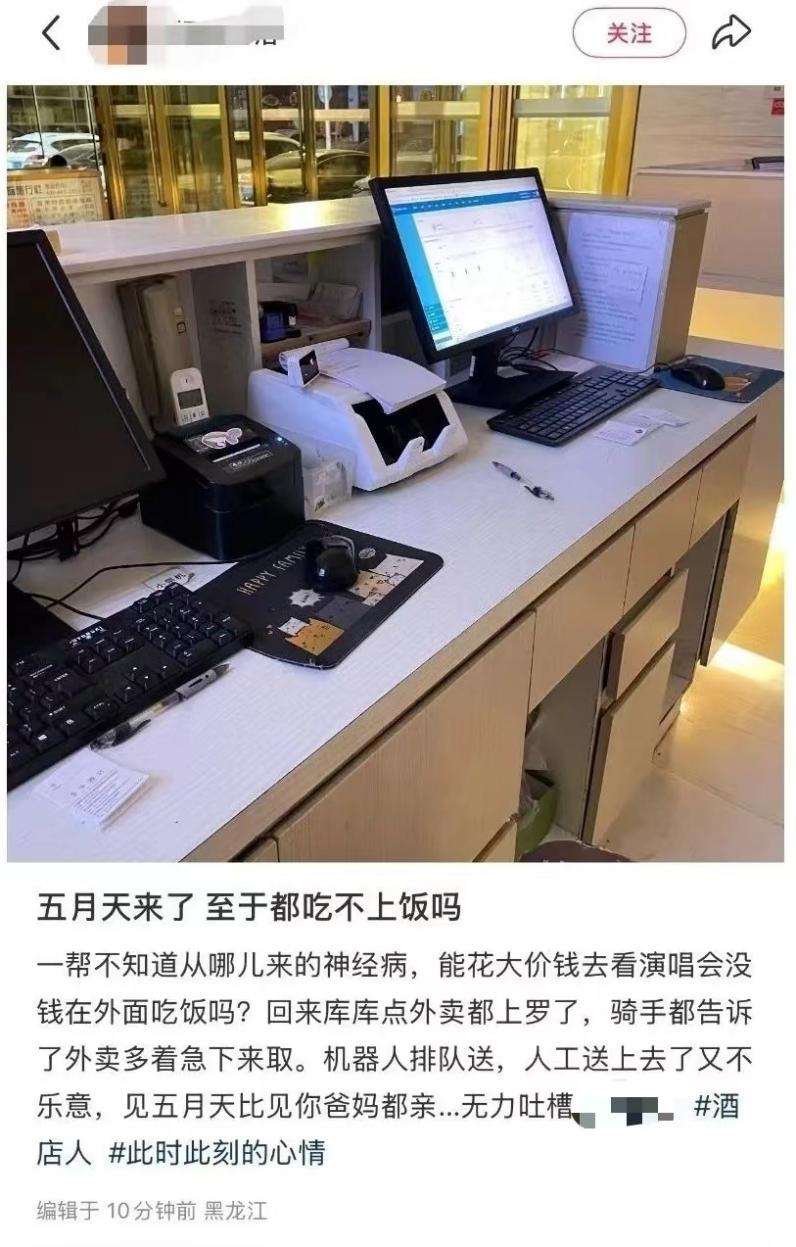
Core Viewpoint - The ongoing conflict between hotels and food delivery services highlights the growing demand for food delivery options among hotel guests, driven by the expanding food delivery market in China [9][10][12]. Group 1: Industry Growth and Trends - The food delivery market in China is projected to reach 1.5 trillion RMB by 2024, a 129% increase from 653.5 billion RMB in 2019, with a daily order volume of approximately 46 million [9]. - The penetration rate of food delivery in the overall restaurant industry has risen to 26%, with food delivery users reaching 592 million, accounting for 53% of internet users in China [9]. - The hotel industry is adapting to this trend, with an increasing number of guests expecting the freedom to order food delivery [10][12]. Group 2: Hotel Industry Dynamics - By the end of 2024, the number of hotel establishments in China is expected to reach 348,700, with a total of 17.64 million rooms, surpassing the peak levels of 2018-2019 [17]. - The number of mid-range hotels has increased from 31,000 in 2019 to 51,000 in 2024, a growth of approximately 64%, capturing nearly 15% of the national hotel market share [18]. - The competitive landscape for mid-range hotels has intensified, with the RevPAR (Revenue per Available Room) for mid-range hotels in 2024 declining by about 10% compared to 2019 [19]. Group 3: Delivery Methods and Challenges - Various delivery methods are employed in hotels, including delivery by external couriers, hotel staff, robots, or storage in delivery cabinets for guests to pick up [26]. - The increasing volume of food deliveries can lead to delays, prompting hotels to develop contingency plans to manage guest expectations [28]. - The integration of robots for food delivery in hotels is becoming common, with companies like Yunji Technology reporting that hotel scenarios contributed 70.1% to 83% of their revenue from 2022 to 2024 [25]. Group 4: Guest Expectations and Service Quality - Guests increasingly view food delivery as a standard service in hotels, leading to dissatisfaction when delivery is not facilitated by the hotel [31]. - The perception of service quality varies, with some guests expecting high-end hotels to provide seamless food delivery, while others express frustration over the lack of such services [38]. - The hotel industry is urged to understand their target customer profiles and adapt their services, including food delivery, to enhance guest experiences [39].
低佣金在中国:从何处来,到何处去
经济观察报· 2025-07-28 09:53
Core Viewpoint - The intermediary industry creates value for both manufacturers and users, rather than merely increasing costs for users, highlighting the importance of commissions in the modern economy [1][18][19]. Industry Overview - The intermediary industry is becoming a unique window to observe China's economic transformation amidst the restructuring of the global economic landscape and deep changes in the domestic consumption market [2]. - Compared to developed countries like the US and Europe, China's intermediary industry has significantly lower commission rates [3][5]. Commission Rate Comparison - In China, real estate agency commission rates typically range from 0.5% to 2.7%, while in developed countries, rates can reach 5% to 6% [4]. - For payment processing, China's debit card transaction fees are around 0.35%, with a maximum charge of 13 yuan per transaction, while credit card fees are about 0.45%. In contrast, fees in developed markets like the US can exceed 1.5% to 3% [4]. Market Dynamics - Despite lower commission rates in China, there are frequent complaints from businesses about high intermediary fees, leading to government interventions to lower rates [5][20]. - The low commission structure in China is influenced by intense market competition, government-imposed price ceilings, a large price-sensitive consumer base, and relatively low labor costs [20]. OTA Industry Analysis - In the OTA sector, foreign giants like Booking and Expedia charge commission rates of 12% to 15%, while China's Ctrip has a rate of approximately 4.4% [8]. - The low commission rates in China do not correlate with the declining revenues of the hotel industry, which are attributed to significant changes in supply and demand dynamics rather than high OTA fees [11][14]. Performance Metrics - Key performance indicators in the hotel industry include RevPAR (Revenue per Available Room) and ADR (Average Daily Rate), both of which have seen declines due to increased hotel supply outpacing demand [12][13]. Future Outlook - The future of the intermediary industry hinges on balancing innovation and low commission rates, with a focus on improving overall efficiency and competitiveness through technological advancements and service upgrades [25]. - The ongoing low-commission strategy may lead to adverse effects on the industry, including price wars and reduced profit margins, necessitating a reevaluation of business models [24].

我,瑞士百万留学,为何回国端盘子?
Hu Xiu· 2025-07-27 04:02
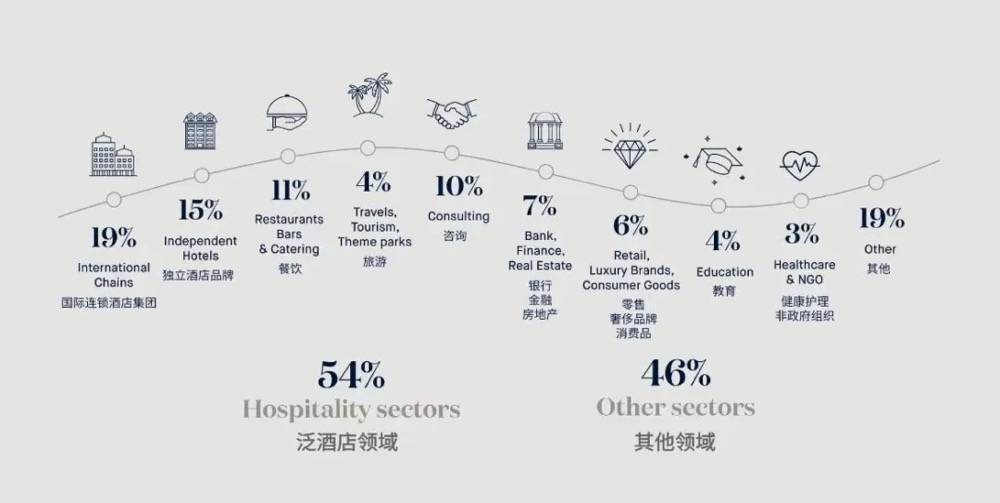
Core Viewpoint - The article discusses the challenges faced by graduates of hotel management programs, particularly those from prestigious institutions like EHL, in securing meaningful employment within the hotel industry, highlighting a disconnect between education and job market realities [2][4][14]. Employment Landscape - Hotel management is characterized as a high-investment, low-return field, with many graduates not entering the hotel industry [2][3]. - At EHL, only 54% of graduates find jobs in the hotel sector, while 46% pursue careers in consulting, finance, and retail [4][6]. - The average starting salary for management trainees in first-tier cities is between 7,000 to 9,000 yuan, significantly lower than the starting salaries in finance and tech sectors [15][16]. Educational Concerns - The curriculum in domestic hotel management programs is criticized for being broad but lacking depth, leading to a superficial understanding of the industry [20][21]. - Many educators in domestic programs may not have substantial industry experience, which affects the quality of education [23][24][25]. - The article contrasts the practical focus of EHL's curriculum with the theoretical and exam-oriented approach of many domestic institutions [26]. Industry Perception - There exists a societal bias against hotel work, often viewed as low-status despite the industry's significant economic contribution [28][33]. - The article points out the double standards in how society appreciates hotel services while simultaneously devaluing the work behind them [29][30]. Career Development - Despite the low starting salaries, the hotel industry offers structured career advancement opportunities, including comprehensive training and evaluation mechanisms [40]. - The article suggests that high-investment education in hotel management can lead to long-term career benefits, particularly in broader service industries [46][48]. Conclusion - The article concludes that while the hotel management profession faces significant challenges, the skills acquired through education can be valuable in various sectors, emphasizing the need for a shift in how the industry and society perceive hotel management roles [43][49].
「天际藏馆 经典启航」厦门航空费尔蒙酒店典藏揭幕天阁酒吧 全面呈现奢华体验
Zhong Guo Shi Pin Wang· 2025-07-26 14:56
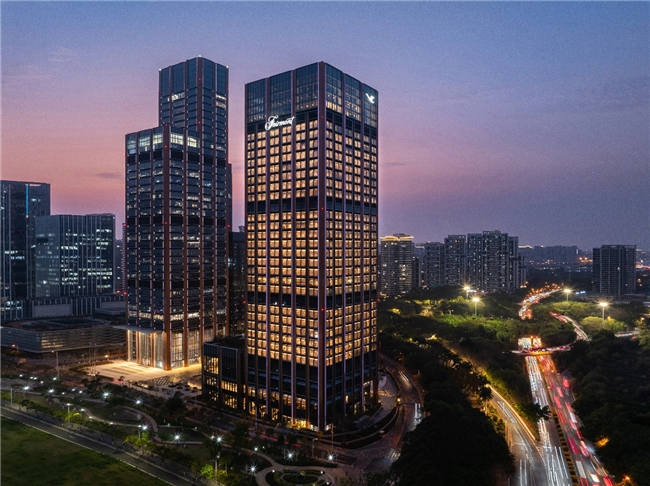
Core Concept - The opening of the Air Loft bar at Xiamen Airlines Fairmont Hotel marks a new luxury experience in Xiamen, integrating Western and Eastern art and culture, and establishing the hotel as a landmark in the financial center of Xiamen [1][11]. Group 1: Event Highlights - The "Air Loft" bar was inaugurated with a theme of "Sky Gallery Classic Launch," featuring over a hundred guests enjoying a multi-dimensional experience that reflects Fairmont's classic moments [1][2]. - The event included a unique "cloud first-class cabin" experience, showcasing the luxurious essence of Fairmont and Xiamen Airlines [1][2]. - Guests were treated to a specially designed cocktail menu inspired by aviation, with a live performance from a jazz band and a DJ, enhancing the event's atmosphere [2][6]. Group 2: Bar Design and Concept - The Air Loft bar is located on the top of the hotel, designed as a "Sky Gallery" at 140 meters high, merging the legendary genes of Fairmont and Xiamen Airlines [4][11]. - The bar's design pays homage to Xiamen Airlines' spirit, featuring aviation-themed decor such as flight path displays and sculptures made from retired aircraft parts [4][11]. - The immersive flying culture experience is complemented by a world travel map wall and aviation art pieces, creating a unique ambiance for guests [4][11]. Group 3: Beverage Offerings - The "Air Loft" bar introduces the "Inaugural Series" cocktail menu, which includes eight aviation-themed cocktails that narrate the journey of a flight [6][8]. - The cocktail offerings are categorized into four narrative segments: "Takeoff," "Cruising," "Turbulence," and "Landing," each representing different phases of a flight experience [6][8]. - Additionally, the bar features a selection of wines and champagnes, enhancing the overall high-end drinking experience [8]. Group 4: Fairmont's Brand Philosophy - Fairmont Hotels and Resorts focus on creating timeless classics, with a portfolio of 92 landmark properties worldwide, including notable locations in major cities [10][12]. - The brand emphasizes the integration of luxury service with local cultural essence, providing memorable experiences for guests [10][12]. - In the Greater China region, Fairmont has established a presence in several cities, including Xiamen, and is planning to open over 30 new hotels globally [10][11].
低佣金在中国:从何处来,到何处去|蔚言大义
Jing Ji Guan Cha Wang· 2025-07-25 16:09
Core Insights - The intermediary industry in China is becoming a unique window to observe the country's economic transformation amid global economic restructuring and deep changes in the domestic consumption market [2] - China's commission rates for intermediaries are significantly lower than those in developed countries, with real estate agency fees ranging from 0.5% to 2.7%, compared to up to 6% in the US [2] - The low commission rates in China are a result of various structural factors, including intense market competition, government-imposed price ceilings, a large price-sensitive consumer base, and relatively low labor costs [10] Intermediary Industry Analysis - In the OTA sector, major foreign players like Booking and Expedia charge commission rates of 12% to 15%, while China's Ctrip has a rate of about 4.4%, indicating that foreign OTA fees are 2 to 3 times higher than those in China [4] - Despite lower OTA commissions, the hotel industry's revenue decline is attributed more to changes in supply and demand dynamics rather than high OTA fees [5][6] - The increase in hotel supply has led to a decline in key performance indicators such as RevPAR and ADR, with Marriott's RevPAR in Greater China dropping from $83.53 in Q4 2019 to $79.52 in Q4 2024 [5][6] Market Dynamics - The shift in hotel revenue sources has moved from maximizing ADR to increasing occupancy rates (OCC), necessitating lower prices and reliance on OTAs for customer acquisition [7] - The perception that OTAs are responsible for profit declines in the hotel industry is partly driven by hotels seeking to negotiate lower commissions and new entrants in the OTA market trying to gain support [8] - The concept of "friction-free capitalism" proposed by Bill Gates has not materialized as expected, with the number of intermediaries increasing rather than decreasing [9] Future Outlook - The low commission model may attract more users and market share in the short term, particularly benefiting price-sensitive consumers and small businesses, but it poses risks for long-term industry innovation and health [13] - Continuous low commission strategies can lead to detrimental price wars, reducing profit margins and resulting in an "involution" state where resources are heavily invested without corresponding returns [13] - The intermediary industry must find a balance between innovation and low fees, focusing on technological advancements, service upgrades, and process optimizations to enhance overall efficiency and competitiveness [13]