
高原特色农业

Search documents
云南首次成功选育蒲公英新品种
Xin Lang Cai Jing· 2026-01-24 09:18
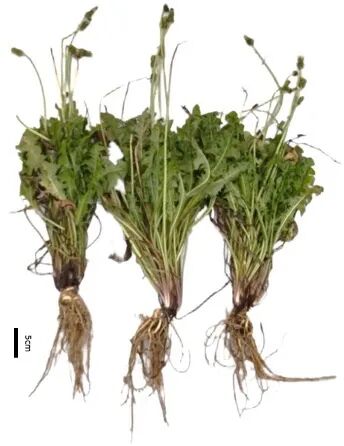
Core Viewpoint - The successful cultivation of two new dandelion varieties, "Dianhongpu 232-1" and "Dianhongpu 232-2," marks a significant breakthrough in the breeding of highland medicinal plants in Yunnan, showcasing both medicinal and ornamental value [1][7]. Summary by Sections New Varieties - "Dianhongpu 232-1" has a height of 38-60 cm, significantly taller than common dandelions, with leaves that have a purple base and prominent reddish-purple characteristics during flowering [4]. - "Dianhongpu 232-2" has an impressive chicoric acid content of 3.10%, which is 6.9 times higher than the Chinese Pharmacopoeia standard of 0.45%, enhancing its medicinal quality [4]. Nutritional Composition - "Dianhongpu 232-1" contains an average chicoric acid content of 0.57%, exceeding the Chinese Pharmacopoeia standard, and is rich in β-carotene, vitamin C, calcium, potassium, and iron [4]. - "Dianhongpu 232-2" offers a comprehensive nutritional profile, with 100 grams of fresh leaves containing 2.08 mg of β-carotene, 1.94 mg of vitamin C, 382 mg of calcium, and 102 mg of iron [4]. Adaptability and Cultivation - Both varieties can thrive at altitudes between 1000 meters and 2500 meters, with "Dianhongpu 232-1" being able to withstand temperatures as low as -40°C [4]. - The research team has developed standardized cultivation techniques, allowing for spring sowing and autumn harvesting, with multiple harvests each year [9]. Economic Impact - The introduction of these new varieties is expected to provide farmers with new economic crop options and contribute to the development of highland characteristic agriculture in Yunnan [9]. - The successful breeding of these dandelion varieties exemplifies the utilization of local biodiversity and the development of unique plant resources, which can be further used in products like dandelion tea, health foods, and medicinal materials [7].

2025年云南省GDP超3.2万亿元 比上年增长4.1%
Zhong Guo Xin Wen Wang· 2026-01-22 02:39
Economic Overview - In 2025, Yunnan Province achieved a GDP of 32,765.78 billion yuan, representing a 4.1% increase year-on-year at constant prices [1] - The primary industry contributed 4,320.77 billion yuan with a growth of 3.1%, the secondary industry contributed 10,500.61 billion yuan with a growth of 2.9%, and the tertiary industry contributed 17,944.4 billion yuan with a growth of 5.1% [1] Agricultural Sector - The total output value of agriculture, forestry, animal husbandry, and fishery reached 7,035.18 billion yuan, with a year-on-year growth of 3.1%, showing an increase in growth rate compared to previous quarters [1] Industrial Sector - The added value of large-scale industries in Yunnan grew by 4.5% year-on-year, with mining increasing by 7.1%, manufacturing by 4.6%, and the production and supply of electricity, heat, gas, and water by 3.6% [1] - High-end manufacturing showed strong growth, with equipment manufacturing and high-tech manufacturing increasing by 17.7% and 17.6% respectively, significantly outpacing the overall industrial growth [2] Energy Sector - Yunnan's industrial power generation reached 4,596.05 billion kWh, a 4.2% increase year-on-year, with clean energy accounting for 87.6% of the total, up by 1.3 percentage points from 2024 [2] Investment Trends - Fixed asset investment in Yunnan decreased by 7% overall, but energy industry investment grew by 9.4%, contributing positively to total investment growth [2] - Green energy investments were a key support for stabilizing investments, with wind power investment increasing by 54.3% and electricity supply investment by 45% [3] Service Sector - The scale of service industry revenue reached 3,524.48 billion yuan, growing by 7.3% year-on-year, with a slight acceleration compared to previous months [3] - The total retail sales of consumer goods amounted to 12,786.21 billion yuan, reflecting a year-on-year growth of 2.4% [3] Employment and Income - The average urban unemployment rate was 5.2%, indicating overall stability in the employment situation [3] - The per capita disposable income of residents reached 31,311 yuan, marking a 4.6% increase from the previous year [3]
云南普洱:咖通世界 茶蕴古今
Zhong Guo Jing Ji Wang· 2026-01-19 03:17
Core Insights - The total investment of 500 million yuan in the Yimei Garden (Yunnan) Creative Tea Drink Ecological Industrial Park project aims to create a comprehensive ecological industrial platform integrating planting demonstration, technology research and development, refined processing, cultural experience, and creative business incubation [1] - The first complete cost insurance for coffee planting in Yunnan Province has been implemented in Menglian Dai, Lahu, and Wa Autonomous County, providing financial support for the high-quality development of the coffee industry [1] - The city of Pu'er is focusing on cultivating two pillar industries, tea and coffee, promoting a lifestyle that harmonizes both, and enhancing the multiple benefits of industrial development [1] Tea Industry Developments - Pu'er is committed to the "Three Teas Coordination" strategy, aiming to ensure that all citizens can enjoy Pu'er tea [2] - The city has 271 certified organic tea enterprises and 454 certificates, with a certified area of 619,900 acres, maintaining the top position among prefecture-level cities in China for organic tea certification [2] - The establishment of a blockchain traceability platform for Pu'er tea quality and the implementation of ten standards for Pu'er tea products are part of the efforts to strengthen tea technology [2] Coffee Industry Developments - Pu'er is enhancing the coffee industry by focusing on quality, scene, and brand, improving the entire coffee supply chain [2] - A coffee germplasm resource bank and breeding base have been established, and 365,800 acres of low-yield coffee gardens have been upgraded [2] - The city has created 34 boutique coffee estates and is promoting Pu'er coffee to 27 countries and regions globally through various exhibitions [2] Strategic Goals - The Pu'er Municipal Party Secretary emphasized the commitment to advancing the high-quality development of the tea and coffee industries through efforts in base construction, industrial upgrading, market expansion, and integrated development [3]
决胜“十四五” 迈上新台阶丨宾川县:热区兴业 鲜果出海
Xin Lang Cai Jing· 2026-01-18 23:36
Group 1 - The core achievement of Binchuan County during the "14th Five-Year Plan" period includes reaching a fruit and vegetable planting area of 715,700 acres and an annual output value exceeding 11.809 billion yuan, alongside a cumulative foreign trade import and export total of approximately 6.72 billion yuan [2] - Binchuan aims to become a world-class fruit-producing region, leveraging its unique agricultural conditions characterized by abundant sunlight and significant temperature differences to produce high-quality fruits [2] - The county has established itself as a national-level export food safety demonstration zone and a provincial-level foreign trade transformation and upgrading base, fostering the development of geographical indication trademarks and securing international quality certifications for its products [2] Group 2 - During the "14th Five-Year Plan," Binchuan has implemented reforms to facilitate fruit and vegetable foreign trade exports, creating a collaborative mechanism between local government and customs to address challenges faced by export enterprises [3] - Financial products such as "Fruit e-loan," "Agricultural e-loan," and "Golden Fruit Loan" have injected a total of 16.73 billion yuan in loans to support enterprise growth, with 69 foreign trade export companies cultivated, including 11 leading enterprises with annual exports exceeding 100 million yuan [3] - The county has developed a robust logistics and supply chain infrastructure, including over 1,500 cold storage facilities and more than 60 intelligent fruit sorting and packaging production lines, ensuring a high product quality safety detection rate [3] Group 3 - In the upcoming "15th Five-Year Plan," Binchuan will focus on enhancing foreign trade export facilitation reforms, reducing customs clearance times, and supporting leading enterprises in establishing a dual warehouse network for domestic and overseas operations [4] - The county plans to actively engage in cross-border e-commerce and leverage opportunities presented by the RCEP to deepen agricultural technology cooperation and trade with ASEAN countries [4]
玉溪高原特色农业提质增效
Xin Lang Cai Jing· 2026-01-10 20:33
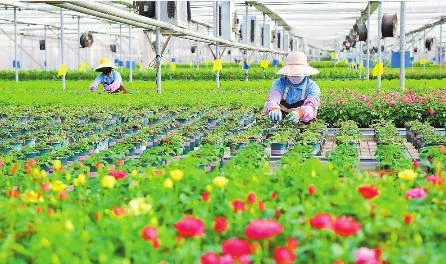
Core Viewpoint - Yuxi City is enhancing its agricultural industry through a dual approach of upgrading existing operations and expanding new ones, focusing on ecological, facility, shared, and efficient agriculture to elevate highland characteristic agriculture and support continuous income growth for the community [2] Group 1: Agricultural Development Strategy - Yuxi City has established a "1+7+N" agricultural industry development system [2] - The city is concentrating on ecological agriculture, facility agriculture, shared agriculture, and efficient agriculture [2] Group 2: Industry Statistics - There are currently 11,600 agricultural enterprises in Yuxi City [2] - The city has cultivated 439 leading agricultural enterprises [2] - The area of facility agriculture has reached 650,400 acres [2]
厚植高原沃土 激活产业动能——云南推进高原特色农业强省新篇
Zhong Guo Zheng Quan Bao· 2025-12-29 22:08
Core Viewpoint - Yunnan's unique highland geography, diverse climate, and rich biodiversity have fostered a distinctive agricultural industry, focusing on high-quality development through technological innovation and financial support, aiming for a transformation from scale expansion to quality and efficiency in key agricultural sectors like flowers, medicinal herbs, and coffee [1][2][6]. Agricultural Industry Development - Yunnan's agricultural strategy emphasizes the development of 14 key highland specialty agricultural industries, with a projected total output value exceeding 2.7 trillion yuan in 2024 [1]. - The province is a leading producer of fresh-cut flowers, tea, and rubber, with significant contributions to the economy and rural income [1][2]. Technological Innovation - Technological innovation is identified as the core engine driving the high-quality development of highland specialty agriculture, with a focus on seed innovation and the integration of research and industry [7][8]. - Yunnan has made significant advancements in breeding new varieties, particularly in flowers and medicinal herbs, with over 1,280 new flower varieties applied for and 800 authorized [7]. Financial Support and Investment - Yunnan has established a diversified financial service system to support agricultural development, with a total of 4.398 trillion yuan allocated to agricultural and rural development over five years [11]. - The province has set aside 135.172 billion yuan for highland specialty agriculture, with significant investments in key projects and financial support for farmers and enterprises [11][12]. Industry Structure and Collaboration - The agricultural sector in Yunnan comprises 173,000 agricultural enterprises and 69,800 farmer cooperatives, creating a development pattern led by large enterprises and supported by cooperatives [13]. - Collaborative platforms between enterprises, research institutions, and farmers have been established to ensure seamless integration of research outcomes into market demands [8][9]. Future Goals - Yunnan aims to strengthen its position as a highland specialty agricultural powerhouse by enhancing resource advantages, promoting technological innovation, and improving financial services [14].
厚植高原沃土 激活产业动能
Zhong Guo Zheng Quan Bao· 2025-12-29 21:13
Core Viewpoint - Yunnan is leveraging its unique geographical and climatic advantages to develop highland特色 agriculture, focusing on quality and efficiency, with an aim to transform its agricultural sector into a significant economic pillar by 2024, targeting a total output value of over 2.7 trillion yuan across 14 key agricultural industries [1][2]. Industry Development - Yunnan's agricultural strategy emphasizes "specialization" and "precision," with a focus on innovative mechanisms to enhance agricultural productivity, particularly in flower, medicinal herbs, and coffee sectors [2][3]. - The province has established 39 GAP bases for medicinal herbs, aiming for a planting area of over 10 million mu and an annual output of 150,000 tons by 2027, with a projected industry value of over 200 billion yuan [3]. - The flower industry is a key highlight, with Yunnan becoming a major flower production area, achieving a planting area of 1.95 million mu and an industry value exceeding 140 billion yuan in 2024 [2]. Technological Innovation - Technological innovation is central to the high-quality development of Yunnan's特色 agriculture, with a focus on breeding innovation and the integration of research and industry [4][6]. - The province has seen significant advancements in coffee processing, with an 80% deep processing rate and a projected industry value of over 80 billion yuan by 2024 [4]. - Yunnan's agricultural research institutions are actively involved in breeding new varieties, with over 1,280 new flower varieties applied for and 800 authorized, leading the nation in this area [6]. Financial Support - Yunnan has established a diversified financial service system to support agricultural development, with a total of 439.89 billion yuan allocated for agricultural and rural development over five years [9][10]. - The province has set up a unified credit service platform to facilitate financing for agricultural enterprises, enhancing efficiency in loan applications [10]. - A 30 billion yuan equity investment fund has been established to support key agricultural industries, attracting external capital and expertise to strengthen the agricultural value chain [11]. Market Expansion - Yunnan's agricultural enterprises have reached 173,000, with a focus on brand development to enhance market presence both domestically and internationally [12]. - Companies like Betaini are expanding into Southeast Asian markets, leveraging Yunnan's resource advantages to create competitive economic benefits [12].

跃升“十四五”科技成就|创新花开彩云之南
Ke Ji Ri Bao· 2025-12-08 10:03
Group 1: Green Industry Development - Yunnan's green aluminum innovation industry park has a modern layout with over 80% green electricity usage, supporting a full industrial chain from raw materials to recycling [2] - The green aluminum project by Yunnan Hongtai New Materials Co., Ltd. has a capacity of 203 million tons, contributing to Yunnan's position as the leading producer of electrolytic aluminum in China, with a projected output of 5.54 million tons in 2024 [2][3] - Yunnan's traditional industries, including energy and non-ferrous metals, are being reinforced by technological innovation, with green aluminum, silicon photovoltaic, and new energy batteries emerging as new growth engines [2] Group 2: Bio-Economy Growth - Yunnan is recognized as a "kingdom of plants and animals," with over 85% of key species effectively protected, contributing to its bio-economy [4][5] - The bio-pharmaceutical industry in Yunnan has seen revenue growth from 275.1 billion yuan in 2021 to 323.169 billion yuan in 2024, with an annual growth rate exceeding 6.5% [5] - Yunnan's research teams are leading in non-human primate gene editing and stem cell research, providing essential support for life sciences and drug development [5] Group 3: High-Altitude Agriculture Advancement - Yunnan is focusing on seed innovation and deep processing technologies to develop a modern agricultural system, with significant achievements in various crops [6][7] - The province has established a seed industry laboratory and achieved breakthroughs in rice, sugarcane, and potato varieties, enhancing agricultural productivity [6][7] - Yunnan's agricultural technology contribution rate has increased from 60% in 2020 to 62%, with future goals to become a leader in flower and traditional Chinese medicine industries [8]
脱贫人口如何稳定增收——来自云南省昭通市的调查
Jing Ji Ri Bao· 2025-11-30 22:38
Core Viewpoint - The article discusses how Zhaotong City in Yunnan Province is working to consolidate poverty alleviation achievements and promote rural revitalization, focusing on increasing the income of its large population of former poverty-stricken residents. Group 1: Poverty Alleviation and Income Growth - Zhaotong City has 1.8507 million former poverty-stricken residents, the highest among all prefecture-level cities in China, and has maintained stable support policies during the transition period to prevent large-scale poverty return [1] - The average annual growth rate of per capita disposable income for rural residents in Zhaotong City is approximately 8.5%, which is higher than the national and provincial averages [1] - The city has ranked first in poverty alleviation achievement assessments in Yunnan Province for four consecutive years [1] Group 2: Agricultural Development - Zhaotong City emphasizes highland characteristic agriculture as the foundation for development and a source of wealth, particularly focusing on apple cultivation [2] - The city has developed nearly 1 million acres of apple planting area, becoming the largest quality apple base in southern China, with a projected apple production of 1.3 million tons and a comprehensive output value of 15 billion yuan in 2024 [3] - The city has also developed the Tianma industry, with 115,700 acres of cultivation and a comprehensive output value of 9.391 billion yuan expected by the end of 2024 [3] Group 3: Financial Support for Agriculture - Zhaoyang Rural Commercial Bank provides financial services to support agricultural development through various loan products aimed at enhancing the income of farmers engaged in specialty crops [4][5] - The bank has increased its loan support for agricultural cooperatives, enabling them to expand operations and improve income for local farmers [5] Group 4: Employment Stability - Zhaotong City has 2.6 million laborers who have migrated for work, with over 1.31 million employed outside the province, emphasizing the importance of stable employment for income growth [6] - The city has established a comprehensive service system for labor output, entrepreneurship, and local employment, ensuring organized labor transfer and job security [6] - Local initiatives have successfully attracted returning workers to create job opportunities in the region, with significant employment generated in textile and bamboo processing industries [7][8] Group 5: Post-Migration Support - Zhaotong City has implemented a comprehensive support system for relocated populations, focusing on community governance, industry cultivation, and employment assistance [10] - The city has developed a classification management mechanism to monitor and support vulnerable groups among the relocated population, ensuring their access to essential services [11] - Employment opportunities have been created through local projects, with significant participation from relocated laborers, enhancing their income stability [12][13]
兴特色农业 助村美人和
Jing Ji Ri Bao· 2025-10-14 01:27
Core Insights - The agricultural development in Jiuzhaigou County is leveraging unique natural resources to enhance local economic growth and improve the livelihoods of residents [1][4] - The county has seen a significant increase in agricultural output, with a reported 4.4% growth in agricultural production value in the first half of the year [4] Group 1: Agricultural Production - The first batch of Qingcui plums in Jiuzhaigou County has matured, with a sales revenue of over 8 million yuan last year and a projected 10% increase in production this year [1] - The establishment of the "Peach Blossom Water Industry Park" has led to the successful cultivation of white peaches, generating over 500,000 yuan in sales from 30,000 pounds of peaches this year [2] - The Jiuzhaigou County grape modern agricultural park has an annual output value of over 30 million yuan from wine production [3] Group 2: Employment and Economic Impact - The development of specialty agriculture has created over 1,300 job opportunities through local cooperatives [2] - Local villagers are benefiting from land leasing to agricultural parks, receiving fixed rental income and employment opportunities, improving their financial situation [3] - The collective investment from local villages into agricultural parks has resulted in annual dividends of approximately 120,000 yuan for the villages [3] Group 3: Infrastructure Development - Improved transportation infrastructure, including the construction of village roads, has facilitated the efficient movement of agricultural products, addressing previous challenges of "growing but not selling" [4] - The upcoming completion of the Jiuzhai-Mianyang Expressway is expected to enhance access to the region, further supporting the growth of specialty agriculture [4]