人工智能芯片制造

Search documents
港交所:今年新上市公司已达百家
Xin Hua Wang· 2025-12-11 15:21
Group 1 - The core point of the article is that the Hong Kong Stock Exchange has seen a significant increase in new listings, with over 100 companies listed this year, indicating strong capital-raising capabilities and international investor confidence in China and Hong Kong [1] Group 2 - In the first 11 months of 2023, there were 93 new listings on the Hong Kong Stock Exchange, a 52% increase from 61 in the same period last year [1] - The total amount raised through initial public offerings (IPOs) reached 259.4 billion HKD, up 228% from 79.1 billion HKD in the previous year [1] - The overall capital raised amounted to 575 billion HKD, a 240% increase compared to 169 billion HKD in the same period last year [1] Group 3 - The director of the Hong Kong Research Institute noted that the active IPO market reflects the robust capital-raising function of Hong Kong, suggesting that international capital is optimistic about China and Hong Kong [1] - There is a notable trend of increased listings from mainland companies, particularly in high-tech sectors such as artificial intelligence and biotechnology [1] - These sectors are considered strategic emerging industries in mainland China, and their ability to quickly raise funds in Hong Kong indicates a significant revaluation of Chinese tech stocks by international investors [1]
CoreWeave拟发行20亿美元可转换债券 股价应声下跌
Xin Lang Cai Jing· 2025-12-08 14:24
Core View - CoreWeave announced plans to raise $2 billion through the issuance of convertible bonds, leading to a decline in its stock price [1][2] Group 1: Convertible Bond Details - The company plans to issue convertible bonds maturing in 2031, with a coupon rate between 1.5% and 2% [1][2] - The bonds will be offered through a private placement, with an option to increase the issuance by an additional $300 million [1][2] - The conversion premium for these bonds is set in the range of 25% to 30% [1][2] Group 2: Market Reaction - In pre-market trading, CoreWeave's stock price dropped by 7%, reaching $82.10 [1][2] Group 3: Use of Proceeds - Part of the raised funds will be used for derivative trading to mitigate potential equity dilution risks from the convertible bonds, while the remaining funds will support the company's ongoing operations [1][2] Group 4: Company Background - CoreWeave completed its initial public offering in March this year, attracting investors betting on increased spending in the AI sector [1][2] - The company is a close partner of NVIDIA, a leading AI chip manufacturer, and counts OpenAI and Microsoft among its clients [1][2]
世界首家,5万亿美元公司诞生
财联社· 2025-10-29 13:45
Core Insights - Nvidia's stock price surged, reaching a market capitalization of $5.14 trillion, making it the first publicly traded company to surpass the $5 trillion mark [1][3] - The company achieved this milestone in just 113 days, compared to 410 days for the previous $1 trillion increments from $3 trillion to $4 trillion [3] - Nvidia's market cap now exceeds the total market capitalization of countries like the UK, France, and Germany, and is approaching India's total market value of $5.3 trillion [3] Financial Performance - Nvidia's stock has rebounded over 135% since its low in April, with a total market value increase of $2.9 trillion [3] - The company's stock has risen by 54% year-to-date [3] Future Outlook - CEO Jensen Huang stated that the new Blackwell and updated Rubin chips are driving unprecedented sales growth [3] - Huang dismissed concerns about a potential AI market bubble, projecting that the latest generation of chips could generate up to $500 billion in revenue over the next few quarters [3] - Goldman Sachs' latest report indicates that this revenue target significantly exceeds Wall Street's expectations, being 12% higher than the consensus of $447 billion and 10% above Goldman Sachs' own forecast of $453 billion [3]



美股AI浪潮已至泡沫前夜?华尔街复制90年代剧本,欲“金蝉脱壳”
Jin Shi Shu Ju· 2025-10-24 13:29
Group 1 - The core viewpoint is that investors are navigating the current AI stock boom while trying to avoid excessive risks, drawing parallels to the internet bubble of the late 1990s [1][2] - Amundi's Francesco Sandrini highlights irrational exuberance in the market, particularly in trading risk options for large AI stocks, but expects the tech enthusiasm to continue [1] - Investors are looking for growth opportunities in sectors like software, robotics, and Asian tech markets, while also diversifying within the AI space [1] Group 2 - Goshawk's Simon Edelsten expresses skepticism about the sustainability of the AI boom, predicting a chaotic outcome as companies invest heavily in an undeveloped market [2] - Historical analysis suggests that hedge funds successfully navigated the internet bubble by selling high-priced stocks and reinvesting in lesser-known opportunities, achieving a quarterly market outperformance of about 4.5% from 1998 to 2000 [3] - Edelsten believes that IT consulting firms and Japanese robotics companies will benefit from the revenue generated by AI giants, indicating a typical evolution in market trends [3] Group 3 - Fidelity International's Becky Qin identifies uranium as a new investment target due to the high energy consumption of AI data centers [4] - Concerns are raised about potential overcapacity in data center construction, reminiscent of the telecom "fiber bubble" [4] - Despite strong earnings from top AI stocks, some investors see signs of a bubble and favor Chinese stocks as a hedge [5] Group 4 - Janus Henderson's Oliver Blackbourn is using European and healthcare assets to hedge against potential downturns in US tech stocks, emphasizing the unpredictability of the AI boom's duration [5] - The sentiment reflects a broader concern that the current market environment may resemble the pre-bubble conditions of 1999 [5]

英伟达(NVDA.US)近60%运营利润率领跑“七巨头” 特斯拉仅8.76%垫底
贝塔投资智库· 2025-08-08 03:59
Group 1 - Nvidia (NVDA.US) has the highest operating efficiency among the "Big Seven" in the US stock market, with an operating profit margin of 59.86% over the past four quarters [2] - Tesla (TSLA) ranks last with a profit margin of 8.76%, attributed to protests related to CEO Elon Musk's brief political involvement and strong competition from Chinese EV manufacturer BYD [2][5] - Meta (META.US) ranks second with a 44.42% rolling 12-month operating profit margin, while Microsoft (MSFT) ranks third among tech giants [2] Group 2 - BestBrokers analyzed financial data from 1,189 companies with a market capitalization over $10 billion across 39 major industries [5] - The research highlights that Nvidia's high profit margin reflects its leadership in the AI and gaming GPU markets, emphasizing the importance of sustainable growth through cost control and strategic positioning in high-margin markets [5] - The average operating profit margins for various industries include port operations (38.5%), financial investments (32.4%), tobacco (31.2%), and railway operations (30.1%) [7] Group 3 - In the automotive sector, luxury brand Ferrari leads with an operating profit margin of 28.7%, nearly double that of Toyota's 15.4%, both significantly above the industry average of 4.8% [7] - Ferrari's limited production strategy of 13,752 vehicles in 2024 contrasts sharply with Toyota's approach of achieving strong profit margins through production efficiency and supply chain management [7] - Electric startup Rivian (RIVN.US) faces severe challenges, with an operating profit margin of -70.3% due to ongoing investments in R&D and manufacturing difficulties [7]


24小时环球政经要闻全览 | 6月30日
Ge Long Hui· 2025-06-30 00:01
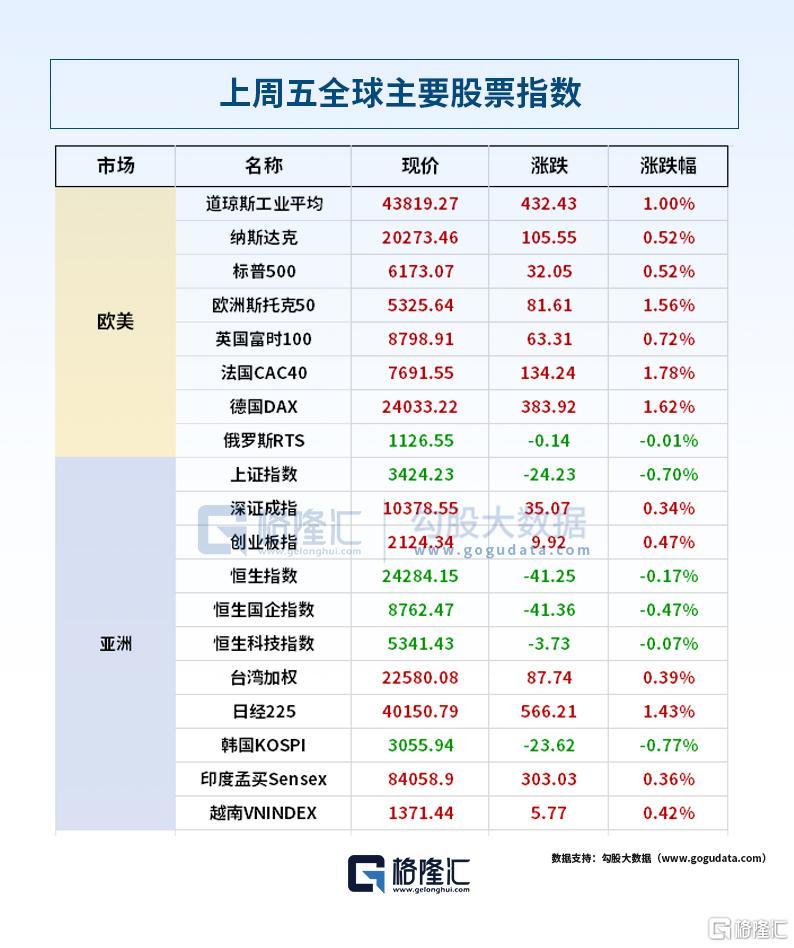
Market Overview - Major US indices showed positive performance with the Dow Jones Industrial Average rising by 432.43 points, or 1.00%, to close at 43819.27 [2] - European markets also experienced gains, with the Euro Stoxx 50 increasing by 81.61 points, or 1.56%, and the German DAX up by 383.92 points, or 1.62% [2] - In Asia, the Nikkei 225 rose by 566.21 points, or 1.43%, while the Shanghai Composite Index fell by 24.23 points, or 0.70% [2] Trade and Tariff Developments - President Trump stated that there is no need to extend the July 9 trade deadline, emphasizing that countries must reach agreements with the US before this date to avoid higher tariffs [3][4] - The US Treasury Secretary indicated that negotiations with 10 to 12 of the 18 key trading partners could be completed before Labor Day [4] Japan's Demographic Challenges - Japan's new birth rate is projected to fall below 700,000 in 2024, with a birth rate of 1.2 or lower, marking a historical low [5] - The National Institute of Population and Social Security Research forecasts that Japan's population could decline from 120 million to 87 million by 2070 [6] US Legislative Developments - The Congressional Budget Office reported that the Senate version of the "Big and Beautiful" bill will increase US debt by $3.3 trillion over the next decade [7] - The bill has faced challenges in passing through Congress, requiring modifications to secure votes [7] Financial Technology Initiatives in Hong Kong - The Hong Kong government aims to promote the use of stablecoins in various applications to address issues in cross-border payments [8] - The new regulations for stablecoins will take effect on August 1, with a focus on creating a favorable market environment [8] Nvidia Stock Sales - Nvidia insiders have sold over $1 billion in stock over the past year, with approximately $500 million in sales occurring in the last month [11] - Despite concerns over restrictions on AI chip sales, Nvidia's stock has risen by over 17% this year and 44% in the past three months [12] - Recent filings indicate that Nvidia sold about $15 million in stock as part of a larger plan to sell up to 6 million shares by year-end [12]