
四座电动飞机

Search documents
信心满怀,描画“活力之城”新图景
Xin Lang Cai Jing· 2026-01-23 18:53
Core Viewpoint - The Beijing Two Sessions are crucial for summarizing past achievements and planning for the next five years, aiming to inject strong confidence and momentum into Beijing's high-quality development [1] Group 1: Economic Development - In 2025, Beijing's regional GDP surpassed 50 trillion yuan, highlighting the city's focus on improving industrial quality and structure while fostering economic growth [2] - The city is recognized for its innovative achievements, including the world's first multi-functional intelligent platform and various groundbreaking technologies in aviation and imaging [2] Group 2: Innovation and Governance - The upcoming Beijing Two Sessions will provide insights into the innovative logic behind last year's successful economic and social development, as well as the direction for high-quality growth this year [3] - The sessions will serve as a platform for gathering public opinion and wisdom, ensuring that the development of new productive forces is supported by public finance and a robust legal environment [3][4] Group 3: Strategic Planning - Beijing is accelerating the construction of an international technology innovation center, aiming to develop new productive forces that align with its capital positioning and innovation advantages [4] - The focus will be on enhancing basic research, cultivating high-tech industries, and integrating technological and industrial innovation to transform scientific potential into economic momentum [5]
北京向“五万亿之城”稳步迈进
Bei Jing Wan Bao· 2025-12-22 07:13
Group 1: Economic Performance - Beijing's economy is steadily progressing towards becoming a "five trillion city," with stable growth and a focus on high-end industrial structure [1] - From January to November, the total industrial output value of large-scale industries in Beijing exceeded 2.5 trillion yuan, with a year-on-year growth of 5.2% [2] - The added value of large-scale industries increased by 6.6% year-on-year, surpassing the national average growth rate by 0.6 percentage points [2] Group 2: Industrial Innovation - Beijing is witnessing a surge in "global firsts," including the world's first diabetes peripheral neuropathy patch and various advanced AI and drone technologies [2][3] - The production of new energy vehicles reached 624,000 units, a year-on-year increase of 150%, contributing to the overall growth of the automotive sector [3] - Key products such as integrated circuits and 5G smartphones saw production increases of 17.4% and 34.3% respectively [3] Group 3: Consumer and Cultural Integration - The integration of culture, commerce, and tourism is driving consumer spending, with service consumption growth reaching 4.8% in the first eleven months [5] - Major events, including concerts and esports competitions, have attracted millions of attendees, showcasing the city's vibrant cultural scene [6] - The development of new consumer spaces, such as parks and cultural exhibitions, has enhanced local engagement and spending [5][6] Group 4: Investment Trends - Fixed asset investment in Beijing grew by 5.8% from January to November, reflecting a focus on key infrastructure projects and high-tech industries [7] - High-tech industry investment surged by 43.2%, indicating a strong commitment to expanding production capabilities [7] Group 5: Public Services and Quality of Life - Beijing is enhancing public services, including the construction of new healthcare facilities and the improvement of elderly care services [8] - The city has implemented smart traffic management systems, improving urban governance and efficiency [9] - Educational infrastructure is being expanded, with the addition of new school capacities to address local needs [9]
收官之年 收获满满
Xin Lang Cai Jing· 2025-12-21 22:46
Economic Overview - Beijing's economy is steadily progressing towards becoming a "five trillion city," with a stable operation and positive growth trends [2] - The city's industrial structure is continuously upgrading towards high-end sectors, with notable growth in new energy vehicles, integrated circuits, 5G smartphones, and lithium-ion batteries [2][4] Industrial Growth - From January to November, the total industrial output value of Beijing exceeded 2.5 trillion yuan, with a year-on-year growth of 5.2% [4] - The production of new energy vehicles reached 624,000 units, marking a year-on-year increase of 150% [5] - Key products such as integrated circuits and 5G smartphones saw production increases of 17.4% and 34.3% respectively [5] Technological Innovation - Beijing is witnessing a surge in "global firsts" in technology, including the world's first diabetes peripheral neuropathy patch and various advanced AI and drone technologies [3][4] - The city has a total of 201 AI model registrations, accounting for 30% of the national total, indicating its leadership in the AI sector [5] Cultural and Tourism Integration - The integration of culture, commerce, tourism, and sports is driving significant consumer engagement, with service consumption growth of 4.8% in the first eleven months [8] - Major events, such as the KPL finals and numerous concerts, have attracted millions of attendees, showcasing the city's vibrant cultural scene [7][8] Investment Trends - Fixed asset investment in Beijing grew by 5.8% from January to November, reflecting a focus on key projects and infrastructure improvements [8][9] - High-tech industry investments surged by 43.2%, indicating a strong commitment to expanding production capabilities [9] Social Welfare and Infrastructure - The city is enhancing its social welfare systems, including new pediatric medical facilities and elderly care services, to meet the needs of its residents [10][11] - Educational infrastructure is also being improved, with new school projects underway to address the demand for student placements [11]

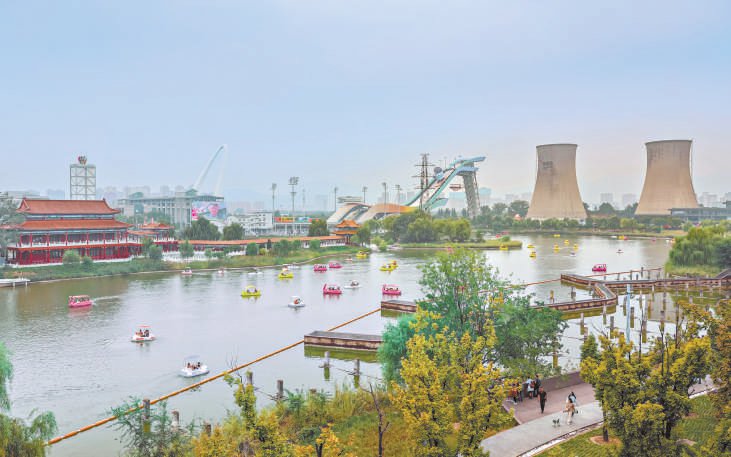
挥别2025,北京正稳步迈进“五万亿之城”!
Bei Jing Ri Bao Ke Hu Duan· 2025-12-21 22:38
Economic Overview - Beijing's economy is steadily progressing towards becoming a "five trillion yuan city," with stable operations and positive growth trends [2] - The city's industrial structure is continuously upgrading towards high-end sectors, with notable growth in new energy vehicles, integrated circuits, 5G smartphones, and lithium-ion batteries [4][6] Industrial Growth - From January to November, the total output value of industrial enterprises above designated size exceeded 2.5 trillion yuan, with a year-on-year growth of 5.2% [7] - The production of complete vehicles reached 1.335 million units, a year-on-year increase of 27.6%, with new energy vehicles accounting for 624,000 units, a growth of 150% [9] - Key products such as integrated circuits and 5G smartphones saw production increases of 17.4% and 34.3% respectively, while wind turbine generators and lithium-ion batteries experienced growth rates of 37% and 100% [9] Technological Innovation - Beijing is witnessing a surge in "global firsts" in technology, including the world's first diabetes peripheral neuropathy patch and a general embodied intelligence platform for humanoid robots [6] - The city has a total of 201 AI model registrations, accounting for 30% of the national total, with significant daily usage across various institutions [9] Cultural and Tourism Integration - The integration of culture, commerce, and tourism is driving significant consumer engagement, with events like the WTT China Grand Slam and various concerts attracting millions [10][12] - The service consumption growth rate related to cultural and tourism integration reached 4.8% in the first eleven months, reflecting a recovery in consumer confidence [16] Infrastructure and Urban Development - Significant investments in infrastructure are underway, including the construction of smart logistics centers and urban transportation improvements, with fixed asset investment growth at 5.8% [19][24] - The city is enhancing its public services, including healthcare and education, with new facilities and schools being established to meet the needs of residents [21][25]



中国经济“向新力”|低空“飞”出经济“新高度”
Ren Min Wang· 2025-12-08 01:17
Core Viewpoint - The low-altitude economy in China is transitioning from pilot projects to large-scale applications, with a projected market size of 1.5 trillion yuan by 2025 and over 2 trillion yuan by 2030, indicating strong growth momentum in the industry [1] Group 1: Market Potential and Growth - The low-altitude economy encompasses various low-altitude flight activities, including manned and unmanned aerial vehicles, which are expected to drive commercial activities and public services [1] - China holds approximately 70% of the global market share in consumer drones, with 969 companies registered in the civil unmanned aerial vehicle product information system and over 478 million related aircraft [1] - The value chain of the drone industry in China shows that upstream segments account for 70% of the output value, while design, testing, and operational services each account for 15% [2] Group 2: Technological and Industrial Foundations - China's competitive edge in new energy industries provides supply chain advantages for low-altitude aircraft manufacturing, including technology accumulation in batteries, materials, and control systems [2] - The successful delivery of the first 100 light sport aircraft by a company in just two years demonstrates the market's recognition of low-altitude economic products [2] - By 2035, the value of China's drone logistics is expected to exceed 1 trillion yuan, with an annual growth rate of around 20% [2] Group 3: Policy and Regulatory Environment - The establishment of the National Development and Reform Commission's low-altitude economic development department in 2024 aims to address multi-head management issues and provide institutional support for the industry [3] - Shenzhen has introduced the first legislative framework for low-altitude economic development, establishing a classified airspace management mechanism to ensure sustainable industry growth [3] - The government is enhancing pilot programs and systematic layouts to tackle challenges in commercial models and infrastructure, promoting collaborative development in the aviation industry [3] Group 4: Transition from Policy to Market-Driven Growth - The low-altitude economy is shifting from being policy-driven to market-driven, unlocking broader value spaces as infrastructure and management bottlenecks are gradually resolved [4] - The continuous validation of scenarios is enhancing the economic viability of the low-altitude sector, indicating a strengthening of its "blood production capacity" [4]
重庆打造低空经济发展强市,关注低空经济产业进展
Changjiang Securities· 2025-12-02 09:59
Investment Rating - The industry investment rating is "Positive" and maintained [7] Core Viewpoints - The report highlights that Chongqing aims to become a strong city for low-altitude economic development, supported by a new policy document that includes 17 measures across three areas to foster innovation and growth in the low-altitude economy [2][4][9] - The low-altitude economy is expected to drive the entire industry chain, with upstream focusing on raw materials and core components, midstream on drones and supporting equipment, and downstream on aviation management and information technology [2][9] - The market size of China's low-altitude economy is projected to reach 1.5 trillion yuan by 2025 and exceed 2 trillion yuan by 2030, indicating significant growth potential [9] Summary by Sections Policy Measures - The policy measures include four demand-side initiatives to create low-altitude demonstration scenarios, seven supply-side initiatives to support industrial innovation, and six measures to enhance the low-altitude security system [9] - This policy follows previous initiatives aimed at managing low-altitude airspace and identifying application scenarios, indicating a comprehensive approach to developing the low-altitude economy in Chongqing [9] Industry Development - The report notes that multiple regions in China are forming low-altitude industry clusters, with significant progress in areas like Xinjiang, the Guangdong-Hong Kong-Macau Greater Bay Area, and the Yangtze River Delta [9] - The low-altitude economy is transitioning from pilot demonstrations to large-scale implementation, with emerging business models in drone logistics, passenger travel, and low-altitude tourism [9] Market Outlook - The low-altitude economy is recognized as a strategic emerging industry in China, with rapid development and a shift from equipment technology catch-up to leading positions in certain areas [9] - The report suggests focusing on the entire low-altitude economy supply chain, particularly in aviation information technology and air traffic management sectors [9]
今年中国低空经济市场规模预计达1.5万亿元
Chang Jiang Shang Bao· 2025-11-24 06:07
Core Insights - The low-altitude economy in China is experiencing rapid development, transitioning from a technology catch-up phase to a leading position in certain areas [1] - The 2025 China Aviation Industry Conference highlighted significant achievements in the low-altitude industry and aims to promote collaboration and development [1] Industry Growth - The scale of China's low-altitude economy is expanding, with the civil aviation product output value expected to exceed 160 billion yuan in 2024, marking a 23.6% year-on-year increase [1] - The market size of the low-altitude economy is projected to reach 1.5 trillion yuan by 2025 and potentially exceed 2 trillion yuan by 2030, indicating strong growth momentum [1] Technological and Market Developments - There are currently 969 registered companies in the civil unmanned aerial vehicle sector, with 3,191 products and over 4.78 million aircraft [1] - The low-altitude logistics sector is growing rapidly, with over 140 new low-altitude logistics routes opened in 2024 and an order volume of 48 billion in the instant delivery industry [2] Regional and Infrastructure Initiatives - Cities like Shenzhen, Chengdu, and Nanchang are forming low-altitude industry clusters, fostering new business models in areas such as drone logistics and low-altitude tourism [2] - The government is enhancing infrastructure and airspace management to support the low-altitude economy as a key driver for regional development and industrial upgrades [2] Challenges and Strategic Responses - Key technological challenges remain, with varying R&D standards among companies and high costs limiting market competitiveness [2] - The government is promoting a comprehensive approach to address challenges in commercial models and infrastructure, transitioning from pilot demonstrations to large-scale implementation [2][3] Future Directions - The Ministry of Industry and Information Technology plans to deepen the cluster development of the aviation industry, focusing on specialized enterprises and enhancing supply chain capabilities [3] - As infrastructure and management bottlenecks are resolved, the low-altitude economy is shifting from being policy-driven to market-driven, providing sustained momentum for industrial upgrades [3]
视频丨今年我国低空经济市场规模预计将达1.5万亿元
Yang Shi Xin Wen Ke Hu Duan· 2025-11-24 00:35
Core Viewpoint - The low-altitude economy in China is experiencing rapid growth, with projections indicating a market size of 1.5 trillion yuan by 2025 and over 2 trillion yuan by 2030, marking a significant transition from catching up to leading in certain areas [1][6]. Group 1: Market Growth and Projections - The low-altitude economy is expected to reach a market size of 1.5 trillion yuan by 2025 and is projected to exceed 2 trillion yuan by 2030, indicating strong growth trends [1]. - The civil aviation product output is anticipated to surpass 160 billion yuan in 2024, reflecting a year-on-year growth of 23.6% [3]. Group 2: Industry Development and Infrastructure - There are currently 969 registered companies in the civil unmanned aerial vehicle sector, with 3,191 products recorded and over 478,000 units [4]. - Significant advancements in low-altitude logistics are noted, with over 140 new low-altitude logistics routes established in 2024 and an order volume of 48 billion in the instant delivery sector [6]. Group 3: Regional Development and New Business Models - Cities like Shenzhen, Chengdu, and Nanchang are developing low-altitude industry clusters, fostering new business models in areas such as drone logistics, manned travel, and low-altitude tourism [8]. - The low-altitude economy is seen as a crucial driver for regional coordinated development and industrial upgrades, supported by improved airspace management and infrastructure [8]. Group 4: Challenges and Strategic Initiatives - The low-altitude economy faces challenges including infrastructure layout, airspace resource utilization, innovation in business models, and talent acquisition [9][13]. - The government is enhancing pilot projects and systematic layouts to address challenges in infrastructure and business models, aiming for a transition from "point demonstration" to "scale landing" [15]. - The focus is on deepening the cluster development of the aviation industry, fostering specialized enterprises, and enhancing supply chain capabilities and digital production levels [17].

低空经济市场规模2030年有望突破2万亿元
Zhong Guo Zheng Quan Bao· 2025-11-23 20:06
Group 1 - The low-altitude economy in China is expected to reach a market size of 1.5 trillion yuan by 2025 and is projected to exceed 2 trillion yuan by 2030, indicating strong growth momentum in the industry [1] - Currently, there are 969 companies registered in the civil unmanned aerial vehicle product information system in China, with 3,191 types of products and over 4.78 million aircraft [1] - Major cities like Shenzhen, Chengdu, and Nanchang have formed clusters in the low-altitude industry, developing new business models in areas such as drone logistics, manned travel, and low-altitude tourism [1] Group 2 - The global aviation industry is undergoing profound changes, with the integration of new energy and next-generation information technology accelerating opportunities and challenges [2] - There is a call for deepening the agglomeration development of the aviation industry, focusing on key model research to cultivate specialized enterprises and build professional aviation equipment manufacturing bases [2] - Enhancing regional collaboration, improving supply chain capabilities, and advancing digital production levels are essential for building national advanced manufacturing clusters, such as large aircraft [2]
我国低空经济规模将达1.5万亿元
Bei Jing Shang Bao· 2025-11-23 15:32
Core Insights - The 2025 China (Jiangxi) Aviation Industry Conference highlighted the robust growth of the low-altitude economy in China, with projections indicating a market size of 1.5 trillion yuan by 2025 and a potential to exceed 2 trillion yuan by 2030 [1] Industry Growth - The rapid expansion of the industry is attributed to significant breakthroughs in low-altitude equipment manufacturing [1] - Currently, there are 969 companies registered in the civil unmanned aerial vehicle product information system, with 3,191 types of products and over 478,000 units registered [1] - The world's first four-seat electric aircraft has received a type certificate from the Civil Aviation Administration of China [1]