
低空装备

Search documents
未来产业十大赛道公布
21世纪经济报道· 2026-03-27 04:28
Core Viewpoint - The article emphasizes the importance of "localized and differentiated development" in the context of future industries, highlighting the need for strategic planning and resource allocation to achieve high-quality growth in emerging sectors [2][5][6]. Summary by Sections Future Industry Development - The Ministry of Industry and Information Technology (MIIT) is focusing on the overall development of future industries, with a clear emphasis on strategic planning and the establishment of a technology foresight mechanism to guide local development based on regional resources [5][6]. - The government has outlined key areas for future industries, including quantum technology, biomanufacturing, hydrogen energy, and nuclear fusion, as part of the 14th Five-Year Plan [3][9]. Key Tracks for Future Industries - The 2026 Future Industry Forum announced ten key tracks for future industries: humanoid robots/embodied intelligence, biomanufacturing, brain-computer interfaces, cell and gene therapy, low-altitude equipment, nuclear fusion energy, autonomous agents, high-level autonomous driving, satellite internet, and quantum computing [10][11]. - Predictions indicate that several of these tracks will reach trillion-yuan market scales, with humanoid robots expected to see a global market demand of trillions by 2035, and biomanufacturing projected to create $30 trillion in economic value by 2050 [10][11]. Local Government Initiatives - Local governments are actively responding to national policies, with 19 provinces and cities issuing nearly 30 policy documents related to future industries, establishing over 60 provincial pilot zones focusing on key areas like artificial intelligence and quantum technology [5][6]. - The MIIT plans to enhance technological supply and support for future industries through major national projects and financial backing, while also exploring regulatory frameworks that accommodate the unique characteristics of future industries [7][10]. Market Growth and Trends - The article notes that the cell and gene therapy market is expected to grow at a rate of 20%, while the nuclear fusion industry has seen investments surge from $1.9 billion in 2021 to $9.766 billion, reflecting a compound annual growth rate of over 50% [11]. - The autonomous driving sector is on the verge of commercialization, with significant advancements in technology and successful case studies emerging in both the U.S. and China [11].


张瑜:十大增量信息——“十五五”规划纲要学习心得
一瑜中的· 2026-03-16 07:35
Economic Goals - The outline states that by 2035, the per capita GDP is expected to double compared to 2020, reaching a level comparable to that of medium-developed countries, with an average annual growth rate of 4.17% over the next decade [3][16]. Major Goals - The "15th Five-Year Plan" outlines 20 major goals, including maintaining GDP growth within a reasonable range, increasing the proportion of nursing beds in elderly care institutions, and improving the enrollment rate of children under three years old [4][17]. Major Projects - A total of 109 major projects will be implemented during the "15th Five-Year Plan," focusing on enhancing industrial capabilities, fostering new industries, and advancing cutting-edge technology [5][19]. Integration of Technology and Industry - The outline emphasizes the deep integration of technological innovation and industrial innovation, including the establishment of a corporate R&D reserve fund and support for high-quality tech companies to go public [6][22]. Digital China Development - The outline includes significant new content on advancing digital China, emphasizing the strengthening of computing power facilities and promoting the iteration and innovation of models and algorithms [7][24][25]. Family-Friendly Society - A new chapter focuses on building a family-friendly society, highlighting the importance of policies that support childbirth and childcare, including flexible work arrangements for parents of young children [8][27]. Infrastructure Development - The plan prioritizes new infrastructure, renewable energy, and urban renewal, with specific targets for the construction and renovation of urban utility networks [9][29][30]. Emerging Industries - The outline mentions various emerging industries, including new energy, advanced manufacturing, and biotechnology, with a focus on building industry clusters that leverage regional strengths [10][32].

申万宏源策略十五五规划解读:新增“新型基础设施建设+新产业赛道”十五五将带来哪些投资机会
Shenwan Hongyuan Securities· 2026-03-15 08:44
Core Insights - The report outlines the investment opportunities arising from the "New Infrastructure Construction + New Industry Tracks" as part of the 14th Five-Year Plan, emphasizing a shift towards green and low-carbon development [1][2] - The 14th Five-Year Plan maintains a five-part framework, with a focus on economic development, innovation, social welfare, security, and green low-carbon initiatives, addressing current development pain points [1][3] - The report highlights the introduction of new independent chapters in the 14th Five-Year Plan, clarifying policy direction and enhancing strategic priorities, particularly in modern industry and digitalization [1][2] Investment Opportunities - The new infrastructure construction focuses on five key areas: integrated computing networks, satellite internet, information communication networks, data infrastructure, and low-altitude infrastructure [1][3] - The new industry tracks include ten core areas such as integrated circuits, embodied intelligence, biomanufacturing, new batteries, commercial aerospace, domestic large aircraft, low-altitude equipment, green hydrogen, brain-computer interfaces, and high-end medical devices [1][3] - Specific tasks for each track are outlined, such as enhancing advanced manufacturing capabilities in integrated circuits and accelerating the development of key technologies in biomanufacturing [1][3][7] Policy Adjustments - The report notes a significant shift in policy focus from energy consumption control to direct carbon emission management, with new measures for carbon footprint accounting and product carbon emission limits [2][3] - The financial sector is transitioning from supply-side reforms to a "Financial Power Strategy," emphasizing the need for deeper investment and financing reforms to support the real economy [2][3] - The report emphasizes the importance of high-level opening-up strategies, with a focus on expanding service industry openness and promoting the internationalization of the Renminbi [3][2] Traditional Infrastructure - The traditional infrastructure section retains focus on transportation, energy, and water networks, with specific policy adjustments to enhance the national comprehensive transportation network and new energy systems [1][3] - Key projects include the construction of major clean energy bases and the expansion of natural gas pipelines to support energy transition goals [1][3][8] Technological Advancements - The report highlights the need for breakthroughs in high-end materials, basic components, software, and industrial machinery to strengthen the industrial supply chain [4][7] - Emphasis is placed on advancing artificial intelligence, quantum technology, and biotechnology as part of the frontier technology initiatives [12][14]
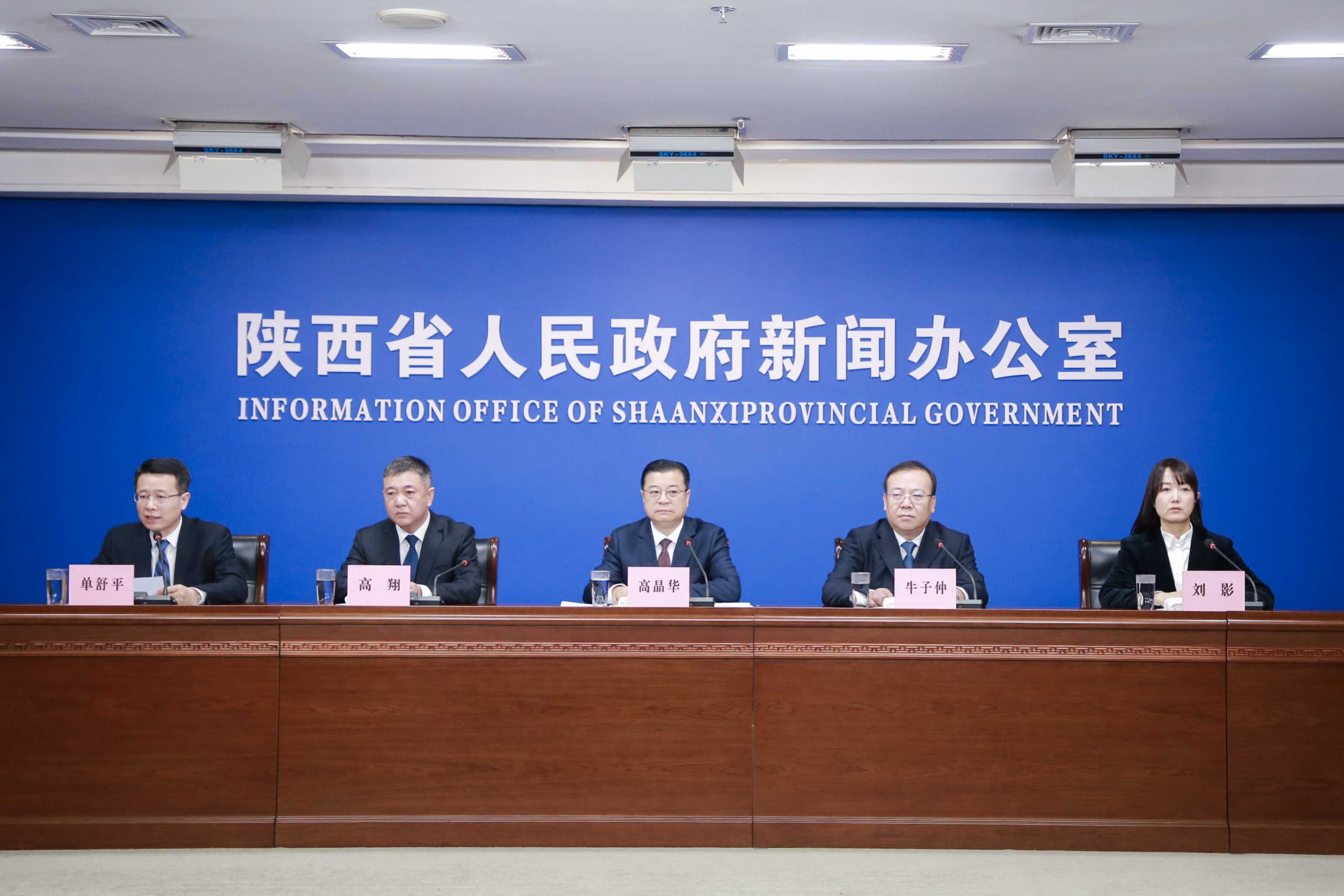
陕西省人民政府新闻办公室举办新闻发布会介绍陕西省市场监管系统推进质量强省建设情况
Shan Xi Ri Bao· 2026-02-13 02:06
Core Viewpoint - The Shaanxi Provincial Government is advancing the "Quality Strong Province" initiative, focusing on enhancing quality across enterprises, industries, and regions, with significant achievements reported in 2025 [8][15]. Group 1: Quality Enhancement Initiatives - The initiative emphasizes "Three Strengths and One Foundation" (Quality Strong Enterprises, Quality Strong Chains, Quality Strong Counties, and Quality Infrastructure) to create a comprehensive quality improvement framework [8][9]. - In 2025, 122 enterprises were guided to adopt quality management standards, with 73 upgrading to digital quality management [9]. - The province organized over 20 "Excellent Quality Activities," reaching more than 2,000 enterprises, and provided assistance to over 11,000 enterprises through quality support actions [9]. Group 2: Industry Upgrades - A total of 25 quality improvement projects were implemented, involving 91 chain-leading enterprises and 1,337 chain-member enterprises [10]. - The province is focusing on key industries such as selenium-rich products, commercial aerospace, and low-altitude economy, participating in national quality enhancement actions [10]. - The establishment of quality technical innovation alliances has led to the resolution of 162 quality bottlenecks in the industrial chain [10]. Group 3: Regional Development - The province is promoting quality strong county initiatives, with 26 counties included in the national quality strong county cultivation database [11][12]. - Each county is encouraged to pursue differentiated quality development paths based on local characteristics, such as smart manufacturing and green ecological industries [12]. - The quality competitiveness of these counties has improved, with notable achievements in agricultural and industrial sectors [23][24]. Group 4: Quality Infrastructure - The province is enhancing quality infrastructure through technical support, technology empowerment, integrated services, talent cultivation, and external cooperation [13]. - A total of 1,224 local standards were reviewed, and 149 new standards were implemented, establishing a robust standard verification network [13]. - The "Qin Quality Enjoy" platform has been launched to streamline quality service access for enterprises, attracting 1,337 quality service institutions and serving over 11,000 enterprises [27][28]. Group 5: Regulatory Innovations - The market supervision system is innovating regulatory mechanisms to ensure product quality safety, conducting comprehensive inspections on 6,780 enterprises and 9,769 batches of products [14]. - A total of 1.68 million cases were investigated for counterfeit and inferior products, with fines totaling 140 million yuan [14]. - The implementation of a "source coding" system for key industrial products has enhanced traceability and accountability in product quality [14].
陕西质量强链赋能低空经济 多举措推动低空装备产业发展
Xin Lang Cai Jing· 2026-02-04 10:16
Core Viewpoint - The Shaanxi Provincial Market Supervision Administration is focusing on promoting high-quality development of strategic emerging industries, particularly in low-altitude equipment and semiconductor sectors, by addressing quality bottlenecks in the industry [1][2]. Group 1: Industry Development Initiatives - Shaanxi is establishing an advanced standard system, reliable inspection capabilities, and a unified certification mechanism to ensure high-quality development of low-altitude equipment [1][2]. - The provincial market supervision system has identified quality pain points, technical bottlenecks, and collaboration issues within the industry chain, facilitating cross-regional cooperation with five provinces [2][3]. - A quality innovation consortium for the low-altitude equipment industry chain has been formed, involving key universities, research institutions, and leading enterprises to tackle technical challenges [3][4]. Group 2: Standardization and Inspection - Shaanxi is exploring the conversion of military standards to civilian standards and has established a standardization technical committee for low-altitude equipment, identifying over 500 projects for service transformation [4]. - The province has completed the first batch of 356 CMA inspection projects, laying the groundwork for the transition of inspection capabilities from aviation equipment to low-altitude equipment [5]. - A low-altitude equipment inspection database has been created, providing a visualized decision-making basis for resource allocation and collaborative innovation [5]. Group 3: Future Directions - The provincial market supervision system plans to focus on market demand, key quality technology breakthroughs, and utilize AI for lifecycle inspection systems to enhance quality across the industry chain [5].
向新而行|中国制造 更加“亮丽”
Yang Shi Wang· 2026-01-28 02:07
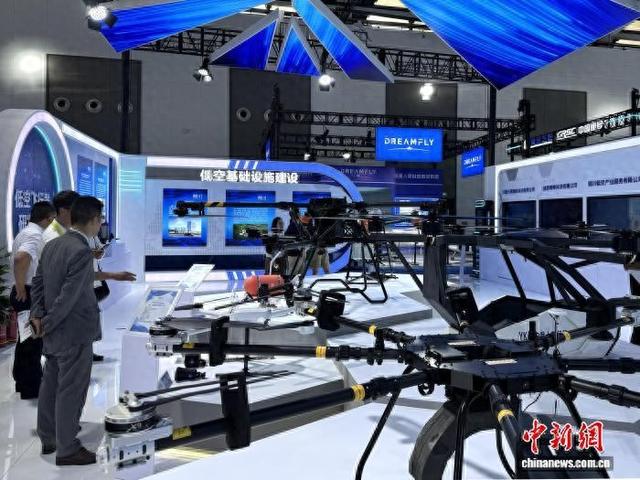
Group 1 - The core viewpoint of the article highlights the accelerated development of emerging industries in China, including new energy vehicles, photovoltaics, low-altitude equipment, and marine engineering equipment, enhancing the country's manufacturing reputation [2] - The Chinese government emphasizes the need for high-end, intelligent, and green development in the manufacturing sector, as stated by President Xi Jinping [2] - By 2025, the export scale of the "new three items" is expected to approach 1.3 trillion yuan, showcasing the growing prominence of Chinese manufacturing on the global stage [2]
“十四五”低空装备产业产值年均增超10%,产品总数超529万架
Sou Hu Cai Jing· 2026-01-04 01:40
Core Insights - The low-altitude equipment industry in China is experiencing significant growth, with an annual output value growth rate exceeding 10% during the 14th Five-Year Plan period [1][3] - By December 30, 2025, there will be 1,081 registered companies in the low-altitude equipment sector, with 3,623 types of products and a total of over 5.29 million units [1] Group 1: Industry Growth - The low-altitude equipment industry is expanding rapidly, with a consistent annual growth rate of over 10% [1] - As of the end of 2025, there are expected to be 1,081 registered companies and over 5.29 million low-altitude equipment units [1] Group 2: Product Development and Applications - Substantial breakthroughs have been made in the research and application of products, with over 70 domestic equipment types achieving airworthiness certification during the 14th Five-Year Plan [3] - In the drone sector, 18 civil drones have received airworthiness approval, while nearly 30 ton-class drones and around 70 electric vertical takeoff and landing aircraft are in development [3] - The application scenarios for low-altitude equipment are expanding from traditional aviation operations and flight training to agriculture, logistics, and emergency rescue [3] Group 3: Market Trends and Future Outlook - The number of agricultural drones in China has surpassed 200,000, with an annual operational area exceeding 40 million acres [3] - Looking ahead to the 15th Five-Year Plan, the industry aims to accelerate technological innovation and improve industrial standards while promoting innovative applications of low-altitude equipment [3]

工信部将因地制宜推动低空装备应用示范
Zhong Guo Jing Ji Wang· 2025-12-01 14:40
Core Insights - The 2025 Low Altitude Equipment Industry Innovation Development Conference was held in Ordos, Inner Mongolia, focusing on the systematic and intelligent development of the low altitude equipment industry [1] - The conference aimed to create a platform for policy release, industry collaboration, technological innovation, and application promotion, fostering consensus and gathering strength for the development of the low altitude equipment industry [1] Group 1: Industry Development - The Deputy Director of the Equipment Industry Department of the Ministry of Industry and Information Technology, Lei Ying, noted that the integration of new energy and next-generation information technology with the low altitude equipment industry presents new opportunities [1] - The low altitude equipment industry in China is showing a positive trend and significant potential for growth [1] - The Ministry of Industry and Information Technology plans to promote intelligent, green, and integrated development, enrich the product spectrum of low altitude equipment, and build a high-level industrial supply chain [1] Group 2: Financial Support and Collaboration - A financing matchmaking event was held concurrently to address the needs for industry chain collaboration and project implementation, with participation from multiple financial investment institutions [1] - The event aimed to provide financing support for outstanding projects, helping Ordos to build a comprehensive low altitude economy ecosystem and form a new engine for industrial development [1] Group 3: Research Outcomes - Five significant research outcomes were released at the conference, including development paths and trends for low altitude intelligent networking systems and power battery technology roadmaps [2] - These outcomes were compiled by various institutions, including Beihang University and the China Electronics Standardization Institute, and will provide systematic support for the national low altitude industry [2] - The release of these research results marks an important step in technological innovation and application promotion within China's low altitude equipment industry [2]
工信部:我国低空装备产业展现出巨大潜力
Bei Ke Cai Jing· 2025-11-28 13:41
Core Insights - The low-altitude equipment industry in China is experiencing significant growth and potential due to the integration of new energy and information technologies [1][2] - The Ministry of Industry and Information Technology (MIIT) plans to enhance top-level design focusing on intelligence, greenness, and integration to support the development of the low-altitude economy [1] - The 20th Central Committee of the Communist Party has emphasized the acceleration of low-altitude economic development as part of the national strategy [1] Industry Developments - The 2025 Low Altitude Equipment Industry Innovation Development Conference highlighted the importance of establishing a high-level industrial supply chain and promoting application demonstrations tailored to local conditions [1] - Discussions at the conference included the construction of a low-altitude intelligent network standard system and the exploration of paths for commercializing low-altitude applications [1][2] - The Inner Mongolia Autonomous Region is positioning low-altitude economy as a key area for industrial transformation, implementing policies to develop a comprehensive low-altitude industry [2]
业内人士热议低空装备产业创新 因地制宜推动应用示范
Shang Hai Zheng Quan Bao· 2025-11-28 13:29
Core Insights - The 2025 Low Altitude Equipment Industry Innovation Development Conference was held in Ordos, Inner Mongolia, focusing on the systematic and intelligent development of the low-altitude equipment industry [1] - The conference aimed to create a platform for policy release, industry collaboration, technological innovation, and application promotion, fostering consensus and gathering strength for the development of the low-altitude equipment industry [1] Group 1 - The conference was organized by the Equipment Industry Development Center of the Ministry of Industry and Information Technology, with support from the Ordos Municipal Government and the Inner Mongolia Autonomous Region's Industrial and Information Technology Department [1] - The theme of the conference was "Intelligent Leadership in Low Altitude, Shaping the Future of Equipment," highlighting the integration of new energy and information technology with the low-altitude equipment industry [1] - The Deputy Director of the Equipment Industry Development Center emphasized the need for top-level design, focusing on intelligence, greenness, and integration to enhance the product spectrum and build a high-level industrial supply chain [1] Group 2 - A keynote report was delivered by the former Deputy Director of the Civil Aviation Administration of China, discussing high-level safety guarantees for the quality development of the low-altitude industry [2] - The Ordos Municipal Government released the "Ordos Low Altitude Economic Application Scenario White Paper," outlining local support policies to create a favorable environment for low-altitude industry development [2] - A strategic cooperation agreement was signed between the Equipment Industry Development Center and the Ordos Municipal Government to deepen collaboration in low-altitude industry development [2] Group 3 - The conference included a financing matchmaking event for low-altitude economic projects, with participation from multiple financial investment institutions to support excellent projects [3] - The event featured a closed-loop model of "industry promotion—enterprise response—project roadshow—capital docking" to facilitate precise matching between supply and demand [3] - Five research outcomes were released, including development paths and trends for low-altitude intelligent networking systems and standard systems for low-altitude equipment [2]