军工航天

Search documents
宏观金融类:文字早评-20260330
Wu Kuang Qi Huo· 2026-03-30 02:43
Report Summary 1. Report Industry Investment Rating There is no information about the report industry investment rating in the provided content. 2. Core Views of the Report - The ongoing Middle - East conflict, especially the Iran - US conflict, has significantly affected global risk preferences. It has led to inflation concerns, changes in the Fed's interest - rate expectations, and fluctuations in various financial and commodity markets [2][4]. - Different industries are affected differently by the conflict. Energy - related industries are generally strong, while sectors related to liquidity and global macroeconomics, such as precious metals and non - ferrous metals, are under pressure. The black sector may face relatively lower pressure due to the retreat of funds from the long - non - ferrous and short - black strategy [36][43]. 3. Summary by Industry Macro - Financial - **Stock Index** - **Market Information**: Tensions in the Middle East, including attacks on US - related military and industrial enterprises and an aluminum company, and corporate cooperation news. 150 securities companies had significant year - on - year growth in revenue and net profit in 2025 [2]. - **Strategy**: The US - Iran conflict affects global risk preferences. Inflation concerns lead to changes in Fed's interest - rate expectations. It is recommended to pay attention to the war situation and control risks [4]. - **Treasury Bonds** - **Market Information**: Bond contract prices had slight changes. Industrial enterprise profits increased in January - February. There are expectations of a Fed rate hike. The central bank conducted net reverse - repurchase operations [5]. - **Strategy**: Economic data improved at the beginning of the year, but the sustainability of economic recovery is uncertain. Inflation pressure may put the bond market under pressure. The bond market is expected to be volatile and weak in the short term [6][7]. - **Precious Metals** - **Market Information**: Gold and silver prices had different trends. There are political events in the US and the Middle East, and the energy market is under threat [8]. - **Strategy**: Geopolitical conflicts are the core focus. Inflation expectations are sticky, and the short - term trend of precious metals is under pressure. It is recommended to wait and see, with reference price ranges for Shanghai gold and silver [9]. Non - Ferrous Metals - **Copper** - **Market Information**: Copper prices fluctuated due to the Middle - East situation. LME and domestic inventories had different changes, and the basis and spreads also changed [11]. - **Strategy**: The Middle - East situation suppresses copper prices, but inventory reduction and raw material supply changes may support prices. Copper prices are expected to decline in a volatile manner [12]. - **Aluminum** - **Market Information**: Aluminum prices rose due to energy cost increases. Inventory and basis had changes [13]. - **Strategy**: Aluminum prices are supported by energy costs and supply disruptions but are also affected by sentiment. It is expected to rise in the short term [14]. - **Zinc** - **Market Information**: Zinc prices rose slightly. Inventory and basis data changed. Downstream enterprises replenished stocks after price declines [15]. - **Strategy**: Zinc prices may stop falling in the short term, but the follow - up purchasing sustainability is limited. Zinc prices are in a downward trend and may continue to decline after consolidation [15]. - **Lead** - **Market Information**: Lead prices rose slightly. Inventory and basis data changed. Social inventory decreased [16]. - **Strategy**: The spot market is supported in the short term, but the high Shanghai - London ratio may lead to more imports. There is a possibility of further price decline [17]. - **Nickel** - **Market Information**: Nickel prices rose slightly. Spot premiums and raw material prices were stable [18]. - **Strategy**: In the short term, nickel prices may weaken, but in the medium term, there is strong support at the bottom. It is recommended to operate within a range [19]. - **Tin** - **Market Information**: Tin prices rose. Supply and demand had different trends, and inventory decreased [20]. - **Strategy**: Supply is still constrained, and demand is in a weak recovery. Tin prices are expected to be weak, with reference price ranges [21]. - **Lithium Carbonate** - **Market Information**: Lithium carbonate prices rose. There were changes in inventory and raw material prices [22]. - **Strategy**: The market contradiction is in the resource end. The supply may be under pressure in the long term, and demand is expected to be strong. Pay attention to market changes, with a reference price range [23]. - **Alumina** - **Market Information**: Alumina prices rose slightly. There were changes in inventory and raw material prices [24]. - **Strategy**: The ore price is expected to rise, but the long - term oversupply pattern remains. It is recommended to wait and see, with a reference price range [25]. - **Stainless Steel** - **Market Information**: Stainless steel prices fell slightly. Inventory increased, and raw material prices were stable [26]. - **Strategy**: Supply is stable, and terminal consumption is slightly better than expected. The market is expected to be strong in the short term, with a reference price range [27]. - **Cast Aluminum Alloy** - **Market Information**: Cast aluminum alloy prices rose. Inventory and trading volume changed [28]. - **Strategy**: Cost and demand are expected to improve, and prices are expected to rise in a volatile manner [29]. Black Building Materials - **Steel** - **Market Information**: Steel prices were slightly lower. Inventory and trading volume changed [31]. - **Strategy**: The steel market is in a "weak balance" state. The real - estate demand support is limited, and it is necessary to pay attention to demand release and raw material price changes [31]. - **Iron Ore** - **Market Information**: Iron ore prices fell slightly. Inventory and basis data changed [32]. - **Strategy**: Supply is increasing, and demand is recovering. The price is expected to be volatile at a high level, and risk control is needed [33]. - **Coking Coal and Coke** - **Market Information**: Coking coal and coke prices fell slightly. There were changes in spot and futures prices and basis [34]. - **Strategy**: The short - term fundamentals do not support a significant price rebound. It is recommended to operate short - term or wait and see, and be optimistic about coking coal prices in the medium - long term [36]. - **Glass and Soda Ash** - **Market Information**: Glass prices fell, and soda ash prices also fell. Inventory and trading volume changed [38][40]. - **Strategy**: Glass is expected to be in a narrow - range shock. Soda ash is in a game between supply and demand, with reference price ranges [39][40]. - **Manganese Silicon and Ferrosilicon** - **Market Information**: Manganese silicon and ferrosilicon prices rose. There were changes in spot and futures prices and basis [41]. - **Strategy**: The black sector may be supported. The future market is affected by the overall market sentiment and cost factors. Pay attention to manganese ore and "dual - carbon" policies [43][44]. - **Industrial Silicon and Polysilicon** - **Market Information**: Industrial silicon prices fell, and polysilicon prices rose slightly. There were changes in inventory and basis [45][47]. - **Strategy**: Industrial silicon is expected to be in a shock state. Polysilicon is in a negative - feedback adjustment, and it is recommended to wait and see [46][48]. Energy and Chemicals - **Rubber** - **Market Information**: The butadiene market is strong, and natural rubber has different views from bulls and bears. There are changes in tire enterprise operating rates and inventory [50][51]. - **Strategy**: The market fluctuates greatly. It is recommended to trade short - term, take profit on butadiene rubber call options, and hold the hedging position [52]. - **Crude Oil** - **Market Information**: Crude oil and related product prices rose [53]. - **Strategy**: Configure short - position strategies for crude oil, do long - short spreads for different oil types, and short - sell high - sulfur fuel oil cracking spreads and INE - Brent spreads [54]. - **Methanol** - **Market Information**: Methanol prices rose, and MTO profits changed [55]. - **Strategy**: Take profit at high prices and widen MTO profits at low prices [56]. - **Urea** - **Market Information**: Urea prices had slight changes, and the basis was reported [57]. - **Strategy**: Short - sell urea. There may be short - term demand support when the substitution valuation reaches the extreme [58]. - **Pure Benzene and Styrene** - **Market Information**: There were changes in prices, basis, and inventory of pure benzene and styrene [59]. - **Strategy**: The non - integrated profit of styrene is high, and it is recommended to wait and see [60]. - **PVC** - **Market Information**: PVC prices fell. There were changes in cost, inventory, and operating rates [61]. - **Strategy**: The short - term price may rise, but pay attention to risks [62]. - **Ethylene Glycol** - **Market Information**: Ethylene glycol prices rose. There were changes in supply, demand, and inventory [63]. - **Strategy**: The load is expected to decline, and inventory is expected to decrease. Pay attention to risks after a large increase [65]. - **PTA** - **Market Information**: PTA prices rose. There were changes in load, inventory, and processing fees [66]. - **Strategy**: It is difficult to enter a de - stocking cycle, and pay attention to risks after a large increase [67]. - **Para - Xylene** - **Market Information**: PX prices rose. There were changes in load, inventory, and valuation [68]. - **Strategy**: The load is expected to decline, and inventory is expected to decrease. Pay attention to risks after a large increase [69]. - **Polyethylene (PE)** - **Market Information**: PE prices rose. There were changes in inventory and operating rates [70]. - **Strategy**: Short - sell the LL2605 - LL2609 contract spread when the shipping volume through the Strait of Hormuz increases [71]. - **Polypropylene (PP)** - **Market Information**: PP prices rose. There were changes in inventory and operating rates [72]. - **Strategy**: The short - term is affected by geopolitical conflicts, and the long - term is affected by production and demand mismatches [73]. Agricultural Products - **Hogs** - **Market Information**: Hog prices had different trends in different regions. Some areas had price increases, and some had decreases [75]. - **Strategy**: The supply - side improvement is limited. Consider short - selling on rebounds, and pay attention to profit - taking when the position is large [76]. - **Eggs** - **Market Information**: Egg prices had different trends in different regions. Some areas had price increases, and some had decreases [77]. - **Strategy**: The supply is sufficient, but small - sized eggs are in short supply. Short - sell on rebounds for the near - term and hold short positions for the far - term [78]. - **Soybean and Rapeseed Meal** - **Market Information**: There are news about Trump's visit to China, soybean export data, and production forecasts [79]. - **Strategy**: The price fluctuation is large, and it is recommended to wait and see in the short term [80]. - **Oils and Fats** - **Market Information**: There are policies and data related to biofuels, palm oil production, and inventory [81]. - **Strategy**: The price is expected to rise in the medium - term due to the Iran - US event [82]. - **Sugar** - **Market Information**: There are forecasts of sugar production and export in different countries, and import data in China [83]. - **Strategy**: Due to the unstable international oil price, it is recommended to wait and see [84]. - **Cotton** - **Market Information**: There are news about Trump's visit to China, cotton import data, and production forecasts [85]. - **Strategy**: Trump's visit is short - term positive for US cotton. It is recommended to buy on dips in the medium - term, but pay attention to the risk of a global financial crisis [86].
伊朗:已打击中东地区两家与美国军工航天工业有关的企业
财联社· 2026-03-29 11:27
Group 1 - The article reports that the Iranian Islamic Revolutionary Guard Corps launched missiles and drones targeting two companies in the Middle East associated with the US military-industrial complex [1]


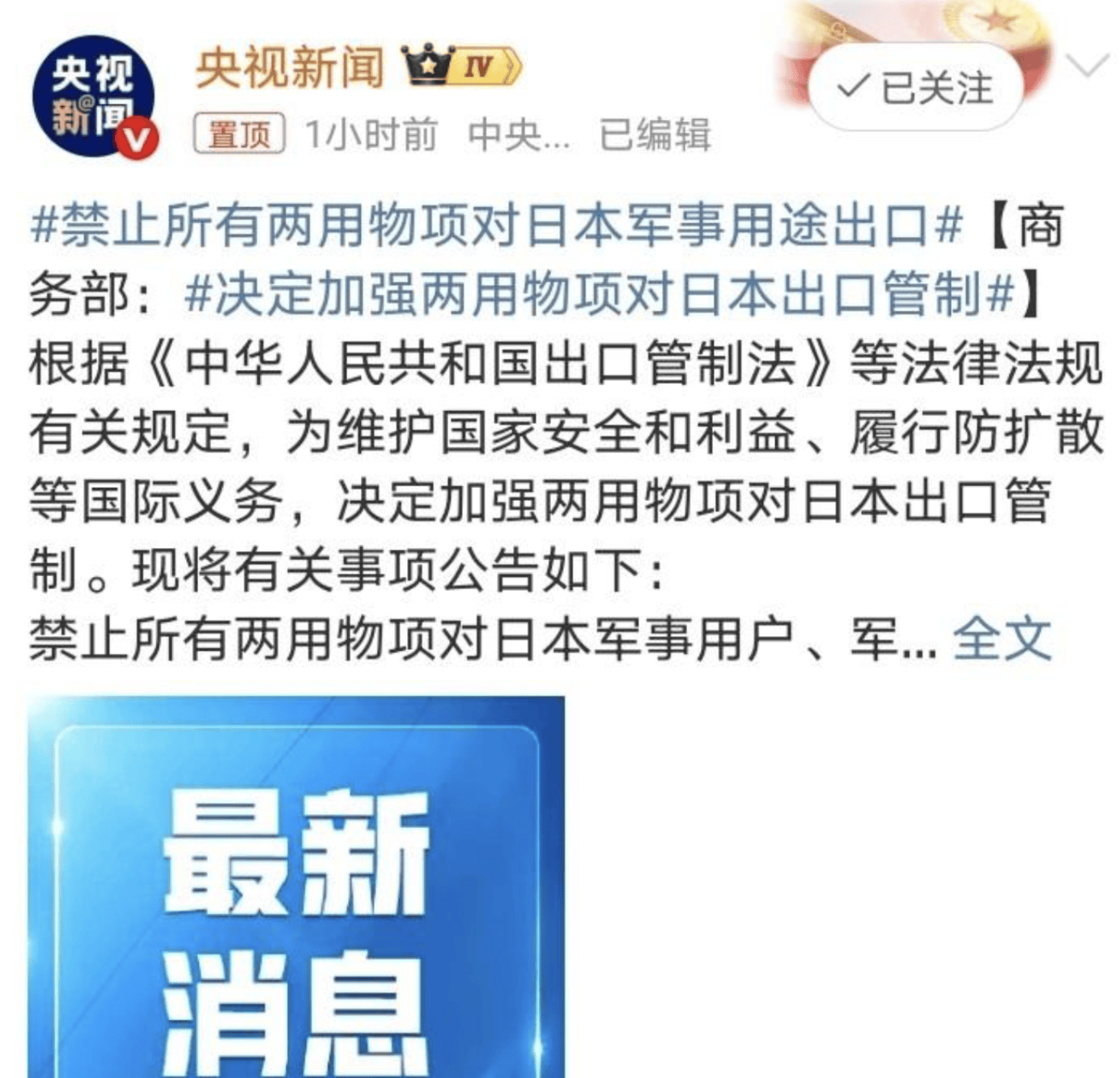
不能再向日本供货了?中国一纸禁令,戳破了日本制造业最后的体面
Sou Hu Cai Jing· 2026-01-10 06:46
Core Viewpoint - The recent export ban by China on dual-use items to Japan marks a significant shift in Sino-Japanese trade relations, indicating China's serious stance on the matter [1][20]. Group 1: Impact on Japanese Manufacturing - Japanese manufacturers are facing a crisis as they can no longer source over 1,000 dual-use items from China, which includes essential materials and components critical for various industries [10][12]. - The ban affects a wide range of products, from basic materials like steel and aluminum to advanced technologies such as industrial robots and integrated circuit chips [10][12]. - Japan's reliance on China is highlighted by the fact that over half of the import value for 1,406 categories comes from China, significantly higher than the U.S. dependency [12]. Group 2: Immediate Consequences - The ban's immediate effects are already visible, with Japan's aerospace agency postponing a rocket launch due to the lack of necessary components [14]. - The automotive industry may face severe disruptions, particularly in high-performance electric motor production, which could lead to production line shutdowns [16]. - The semiconductor industry is also at risk, as the shortage of chip materials could result in gradual factory closures [16]. Group 3: Long-term Implications - In the long term, Japan may need to diversify its supply chains, but this process will require significant time and investment, with no immediate alternatives available [18]. - The structural challenges Japan faces, such as labor shortages and high production costs, raise doubts about its ability to rebuild a comprehensive industrial system comparable to China's [18]. - The export ban serves as a demonstration of China's growing influence in key manufacturing sectors, potentially redefining the economic positions of both countries in the coming decades [20].
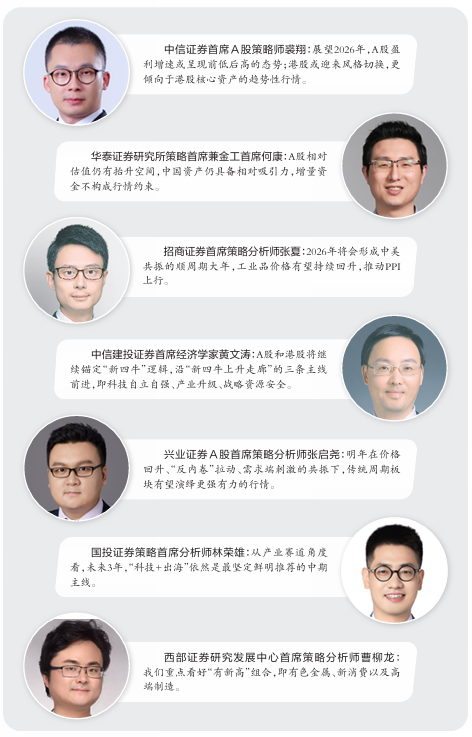
七位券商首席研判2026年市场:A股、港股大概率继续上行 “科技+出海”仍是主线
Zhong Guo Ji Jin Bao· 2025-12-21 06:10
Core Viewpoint - The Chinese stock market is expected to experience a structural bull market in 2026, driven by factors such as policy support, domestic demand stabilization, and industrial upgrades [4][8][11]. Group 1: Market Performance in 2025 - The A-share market showed a volatile upward trend in 2025, with significant contributions from the technology sector and companies expanding overseas [4][5]. - Key sectors that exceeded expectations included Chinese companies going global and the commercialization of AI, with notable growth in overseas AI demand [4][5]. - The overall market sentiment was influenced by improved liquidity and a shift in policy, leading to a bullish outlook for the A-share market [5][6]. Group 2: Outlook for 2026 - A-share earnings growth is anticipated to show a pattern of low-to-high progression, while the Hong Kong market may see a style shift towards core assets [8][11]. - The "New Four Bulls" logic is expected to drive the market, focusing on capital inflows, technological innovation, institutional reforms, and consumption upgrades [8][11]. - The overall economic growth is projected to remain within a reasonable range, with a gradual reduction in the negative impact of real estate on the economy [11][12]. Group 3: Investment Opportunities - The primary investment themes for 2026 include "Technology + Going Global," with a focus on AI applications and companies expanding overseas [12][13]. - Key sectors to watch include high-end manufacturing, new energy, and industries benefiting from global market growth, such as machinery and electronics [13][14]. - The market is expected to transition from a liquidity-driven bull market to one driven by earnings improvement, with a more balanced sector performance anticipated [19][20]. Group 4: Market Dynamics and Trends - The market is likely to see a convergence of performance across sectors, moving from a phase of significant differentiation to a more balanced approach [18][19]. - The focus will shift towards sectors with high growth potential, as the market transitions from a "淘汰赛" (elimination race) to a "竞速赛" (speed race) [18][19]. - The structural characteristics of the market will continue to be influenced by technological advancements and policy support, with a gradual reduction in the impact of traditional sectors [19][20].
重磅利好!保险、券商联袂拉升
Zheng Quan Shi Bao Wang· 2025-12-05 09:44
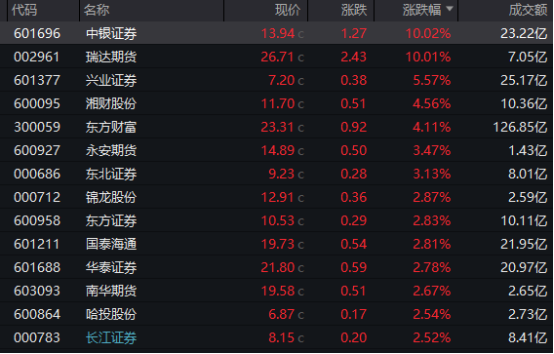
Market Overview - A-shares experienced a strong rally on the afternoon of the 5th, with the Shanghai Composite Index surpassing 3900 points, and the ChiNext Index rising over 1% [1] - The total trading volume in the Shanghai and Shenzhen markets reached 1.739 trillion yuan, an increase of 177.3 billion yuan compared to the previous day [1] Financial Sector Performance - The financial sector, particularly insurance and brokerage stocks, saw significant gains, with China Ping An rising nearly 6% and China Life increasing by nearly 5% [2][5] - Brokerage stocks also performed well, with Zhongyin Securities and Ruida Futures hitting the daily limit, and other firms like Industrial Securities and Dongfang Wealth rising over 4% [2][3] Insurance Sector Insights - The National Financial Regulatory Administration announced adjustments to risk factors for insurance companies, reducing the risk factor for certain long-term holdings in the CSI 300 Index from 0.3 to 0.27 [5][6] - This regulatory change is expected to encourage insurance companies to increase their equity investments, potentially bringing in over 1.2 trillion yuan in equity investment funds [6] Aerospace and Defense Sector - The aerospace and defense sector saw strong performance, with stocks like Aerospace Power and Aerospace Technology hitting the daily limit [7] - The successful launch of the Zhuque-3 rocket and the establishment of a dedicated regulatory body for commercial aerospace are expected to drive growth in this sector [9] Rare Earth Sector Activity - The rare earth sector experienced a notable surge, with stocks like Ningbo Yunsheng and Jinli Permanent Magnet hitting the daily limit [10] - The issuance of general export licenses for certain rare earth companies is anticipated to streamline export processes and boost demand in the industry [11][12]