
动力电池制造

Search documents
全球汽车电动化发展喜忧参半!LG能源为何抢先收购NextStar?
Zhong Guo Qi Che Bao Wang· 2026-02-09 03:12
Core Viewpoint - LG Energy Solution (LGES) has announced the acquisition of a 49% stake in NextStar Energy, a Canadian battery joint venture with Stellantis, achieving full ownership of the company, which is significant in the context of global electrification trends and regional disparities in development [2][3]. Group 1: Acquisition Details - NextStar Energy was established in March 2022 in Windsor, Ontario, with LGES and Stellantis holding 51% and 49% stakes respectively, aimed at building Canada's first large-scale electric vehicle battery manufacturing plant [3]. - The project has seen over CAD 5 billion invested and currently employs over 1,300 people, with plans to increase to 2,500 employees upon reaching full capacity [3]. - Following the acquisition, Stellantis will no longer hold any stake in NextStar but will continue to be a key customer, purchasing battery products from the company [3][4]. Group 2: Strategic Implications - The acquisition is viewed as a strategic move for LGES to strengthen its position in the North American market and diversify its customer base beyond Stellantis, which has been the primary client [9][11]. - LGES aims to leverage its expertise in lithium-ion battery technology and global operational experience to expand into other sectors, including energy storage systems (ESS) [3][4]. - The acquisition allows LGES to benefit from Canadian government subsidies and tax incentives, enhancing its competitive edge in the North American market [10]. Group 3: Market Context - Stellantis's decision to divest from NextStar is attributed to a strategic shift in its electric vehicle strategy, influenced by a slowdown in the global electric vehicle market and a need to focus on core automotive manufacturing [7][8]. - The exit from battery manufacturing reflects Stellantis's realignment of its business priorities, allowing LGES to capitalize on the opportunity to acquire full control of NextStar [8][9]. - The acquisition is expected to intensify competition in the battery market, pushing the industry towards localization, diversification, and collaboration [12].

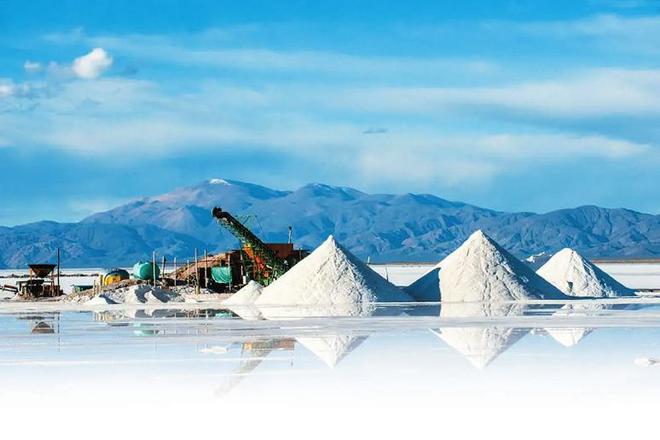
持续创新高 碳酸锂涨价形成传导机制
Huan Qiu Wang Zi Xun· 2026-01-29 10:34
Core Viewpoint - The price of lithium carbonate has surged to a nearly two-year high, driven by strong demand from the electric vehicle sector and supply constraints in the lithium market [2][3][4]. Group 1: Price Trends and Market Dynamics - As of January 14, lithium carbonate futures reached 168,000 yuan/ton, while the average price in the spot market hit 166,000 yuan/ton, marking a significant increase from the June 2025 low of 58,000 yuan/ton, nearly doubling in price [2]. - The demand for lithium carbonate is expected to continue rising due to the growth of the electric vehicle industry, with production and sales of new energy vehicles in China reaching 16.62 million and 16.49 million units respectively in 2025, reflecting year-on-year growth of 29% and 28.2% [2][3]. Group 2: Supply Constraints - Supply shortages are exacerbated by several lithium companies facing production challenges, such as Ganfeng Lithium's Cauchari-Olaroz project and Tianqi Lithium's Sichuan expansion, which are currently ramping up production [3][4]. - Regulatory changes, including the new Mineral Resources Law and stricter oversight of lithium mining, have led to expectations of reduced short-term lithium resource supply, contributing to the price increase [4][5]. Group 3: Price Transmission in the Supply Chain - The price increase in lithium carbonate has triggered a ripple effect throughout the lithium battery supply chain, impacting the prices of hexafluorophosphate lithium, electrolyte, and battery materials [6]. - Major battery manufacturers have begun raising prices, with Dejia Energy increasing battery product prices by 15% in December 2025, indicating a broader trend of price adjustments across the industry [6][7]. Group 4: Industry Restructuring and Innovation - The rising prices are prompting a restructuring of the industry, with leading companies leveraging scale advantages and long-term contracts to stabilize costs and enhance competitive positioning [7][11]. - Companies are also accelerating the development of solid-state batteries and sodium-ion batteries as alternatives to lithium-ion technology, although these alternatives still face challenges in energy density compared to lithium-ion batteries [8][11]. Group 5: Future Price Outlook - Short-term forecasts suggest that lithium carbonate prices may remain high, potentially reaching 180,000 to 200,000 yuan/ton, driven by strong demand and supply constraints [9][10]. - However, there are contrasting views on the sustainability of high prices, with some experts predicting a return to more balanced supply and demand dynamics by 2026, which could lead to price declines [9][10].
零跑合资动力电池项目开工 总投资75亿元
起点锂电· 2025-12-01 10:22
Core Viewpoint - The article highlights the upcoming 2025 Lithium Battery Industry Annual Conference and the Lithium Battery Golden Tripod Award Ceremony, emphasizing the event's significance in showcasing new technologies and fostering industry collaboration [2]. Event Details - The event will take place on December 18-19, 2025, at the Venus Royal Hotel in Shenzhen, with an expected attendance of over 1,200 participants and 30,000 online viewers [2]. - The event is organized by various entities including Qidian Lithium Battery, Qidian Solid-State Battery, and Qidian Research Institute [2]. Sponsorship and Participation - The first batch of sponsors and speakers includes notable companies such as Hicharge Energy, Rongjie Energy, and Ganfeng Lithium, among others [2]. - The event aims to facilitate discussions on new cycles, technologies, and ecosystems within the lithium battery industry [2]. Project Launch - On November 28, 2024, the Wuyi Zhongling New Energy Power Battery Intelligent Manufacturing Base project commenced, with an expected annual output value exceeding 10 billion yuan upon reaching full production in June 2026 [3]. - The project is a joint venture between Zhongxin Innovation and Leap Motor, with a total investment of 7.5 billion yuan, including 115.65 million yuan allocated for environmental protection [3]. Company Performance - Leap Motor reported a strong delivery performance in November 2024, with a total delivery of 70,327 vehicles, marking a year-on-year increase of over 75% [3]. - The company achieved a revenue of 19.45 billion yuan in Q3 2024, reflecting a 97.3% increase compared to the same period last year, with a gross margin of 14.5% [3].


2000亿无锡能源新贵,戈壁滩上造绿氨
2 1 Shi Ji Jing Ji Bao Dao· 2025-11-19 06:06
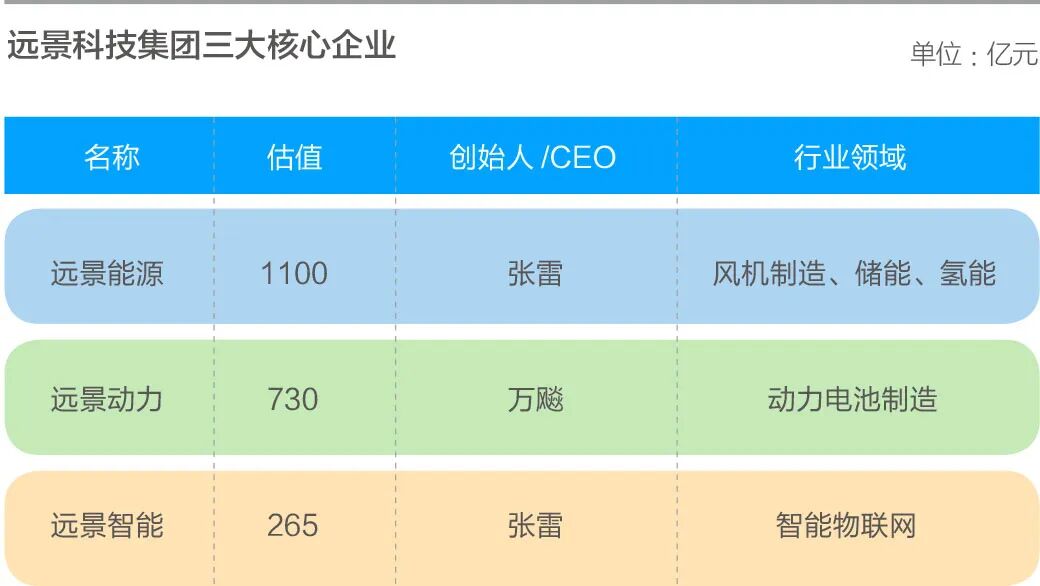
Core Viewpoint - The article highlights the development of a green ammonia project in Inner Mongolia by Envision Group, emphasizing its potential to revolutionize energy production and reduce carbon emissions through the use of renewable energy sources [1][6]. Group 1: Company Overview - Envision Energy, founded by Zhang Lei, has a valuation of 1.1 billion, focusing on wind turbine manufacturing, energy storage, and hydrogen energy [1]. - Envision Power, led by Wan Sui, is valued at 730 million and specializes in power battery manufacturing [1]. - Envision Intelligent, also founded by Zhang Lei, has a valuation of 265 million and operates in the smart IoT sector [1]. Group 2: Project Details - The green hydrogen and ammonia project in Chifeng aims to produce 152,000 tons of green ammonia annually, which could reduce over 9 million tons of carbon emissions, equivalent to the annual emissions of 15 million fuel vehicles [7]. - The project is expected to achieve a scale of 20 GW, generating an annual electricity output of 60 billion kWh, comparable to Portugal's total electricity consumption [8][9]. Group 3: Technological Innovations - Envision has developed an AI power system to optimize energy management, allowing for efficient adjustments based on weather conditions and energy availability [18]. - The project utilizes self-developed wind turbines and energy storage systems to produce green hydrogen through electrolysis [5][17]. Group 4: Market Strategy - Envision has secured long-term green ammonia purchase agreements with major companies like Marubeni Corporation and DHL, targeting applications in shipping fuel, hydrogen derivatives, and fertilizers [19]. - The company is also investing in key equipment manufacturing to accelerate the commercialization of green ammonia [19]. Group 5: Future Aspirations - Zhang Lei envisions that significant reductions in energy costs could enable ambitious projects like large-scale seawater desalination and low-cost interstellar transportation [22].
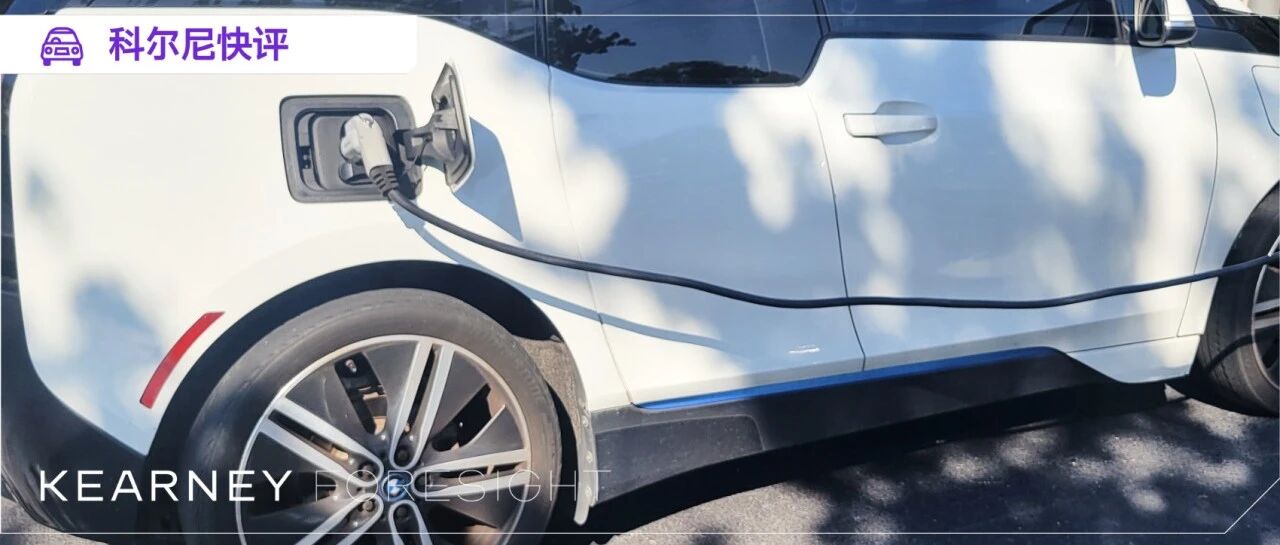
动力电池制造商如何应对成本压力
科尔尼管理咨询· 2025-11-11 09:40
Core Insights - The automotive industry is facing significant challenges due to economic pressures, geopolitical uncertainties, and inflation-driven cost increases, leading to a projected 23% decrease in electric vehicle production for 2024 [2] - Manufacturers are under pressure to reduce material costs and maximize capital expenditure utilization to remain competitive and maintain profitability [19] Cost Reduction Strategies - Direct materials account for approximately 64% of total production costs, driven primarily by the prices and supply of key components such as lithium, nickel, and cobalt [4] - Capital expenditure for battery cell production ranges from $70 million to $110 million per GWh, while combined production of cells and battery packs can reach $95 million to $150 million per GWh, necessitating high utilization rates of production lines [3][7] Production Capacity and Investment - Building a battery production facility with a capacity of 20 GWh requires an investment of $2 billion to $3 billion, highlighting the importance of depreciation and amortization in the cost structure [7] - Battery manufacturers are advised to avoid rapid capacity cuts and instead focus on improving profitability at existing production sites without relying on new customers or higher output [3] Optimization of Material Costs - Tailored approaches are necessary to achieve maximum savings in material costs throughout the battery project lifecycle, with significant savings possible through early-stage adjustments [10][12] - In the development phase, specific component design modifications can yield additional savings, although potential savings may decrease as the project progresses [13] Capital Expenditure Management - Effective capital expenditure management is crucial for battery manufacturers, with strategies including prioritizing projects, leasing equipment, and extending asset life through maintenance and upgrades [14] - Long-term strategies should focus on structural changes to ensure flexibility in adapting to market conditions and technological advancements [14] Innovative Processes - The battery market is highly innovative, with promising cost-saving processes such as low-solvent coating and dry coating, which reduce costs and environmental impact [15] - Optimizing cell formation and aging processes can also lead to significant reductions in capital expenditure [15] Understanding Production Processes - A deep understanding of the manufacturing process is essential for successfully applying cost reduction methods, as different electrode materials and battery types have unique requirements [16][17] - Customization of formation protocols is increasingly necessary to optimize the electrochemical performance of various battery designs [17]
综述|共同谱写中国—中东欧国家经贸合作新篇章
Xin Hua Wang· 2025-05-25 08:49
Group 1 - The fourth China-Central and Eastern European Countries (CEEC) Expo was held in Ningbo, Zhejiang Province, focusing on pragmatic cooperation in trade and investment [1][2] - Since 2012, trade between China and CEEC countries has grown at an annual rate of 8.8%, with imports from CEEC countries increasing by 7.4%, both surpassing China's overall trade growth [2] - In 2024, the bilateral trade volume is expected to reach $142.3 billion, marking a historical high with a year-on-year growth of 6.3% [2] Group 2 - The China-CEEC Expo serves as a significant platform for CEEC countries to access the vast Chinese market, with 126 agricultural products from 14 CEEC countries gaining access to China [2] - Infrastructure projects and cooperation in green and digital industries are highlighted as key areas of collaboration between China and CEEC countries [2][3] - The cooperation between Slovenia's Koper Port and Ningbo Port exemplifies the enhanced connectivity facilitating logistics and market access between China and CEEC countries [3] Group 3 - Chinese companies are increasingly collaborating with CEEC countries in green innovation sectors such as electric vehicles and battery manufacturing [3] - The changing international landscape and economic uncertainties present opportunities for China and CEEC countries to strengthen their partnership [3] - CEEC political and business leaders express a strong desire to deepen economic cooperation with China, emphasizing the need for long-term trust and collaboration [4]