医美行业

Search documents
网红万元神药竟是三无产品,涉事美莱医学美容医院多次被罚
21世纪经济报道· 2026-03-15 13:11
Core Viewpoint - Exosomes have gained significant popularity in the beauty and anti-aging market, but their efficacy and safety remain unverified in the medical and academic fields, leading to consumer complaints and potential health risks [1][3][12]. Regulatory Environment - As of June 2025, the National Medical Products Administration proposed to regulate exosomes as drugs due to their active components, but no exosome-based products have received approval for market sale in China [3][12]. - Despite the lack of regulatory approval, exosome products are being marketed and sold in the medical beauty sector at high prices, often using misleading claims [3][12]. Market Practices - A product named "Qingcheng," marketed as a "second-class medical device," is being sold despite the absence of any approved medical devices containing exosomes in China [3][6]. - Companies are reportedly using false licenses to circumvent regulations, with one company admitting to using a collagen license to market their exosome product [3][6]. Company Operations - Companies like Yuan Chuang Gene Technology and Jie Bo Sai Er Biotech openly admit to using unapproved exosome products for treating diseases, labeling them as "technical services" to bypass regulatory scrutiny [6][10]. - The exosome products being sold are often of the lowest quality, with companies acknowledging the significant regulatory risks associated with their use [6][10]. Consumer Risks - Reports indicate that consumers have experienced severe adverse effects, including infections and acne, after using exosome treatments [1][12]. - Medical professionals emphasize the necessity of rigorous clinical testing before any medical product is used on humans, warning of potential permanent damage from unregulated products [12]. Industry Overview - There are over 180,000 medical beauty-related enterprises in China, with Shandong, Guangdong, and Beijing leading in the number of companies [16]. - A small percentage of these companies have faced legal issues, with 2.06% involved in lawsuits and 1.91% experiencing operational anomalies [17].


以规范税收优惠促公平谋发展(财经观)
Ren Min Ri Bao· 2026-02-01 22:20
Group 1 - The medical beauty industry will no longer enjoy VAT exemption as profit-oriented medical institutions are excluded from the definition of "medical institutions" under the new VAT law and its implementation regulations [1] - The removal of VAT exemption for profit-oriented beauty medical institutions reflects the spirit of the Central Economic Work Conference's emphasis on "standardizing tax incentives" [1] - The adjustment aims to avoid unfair competition in the medical beauty sector, which has shifted towards high-end consumption and does not align with the basic medical security attributes [1] Group 2 - The cancellation of export tax rebates for solar and battery products is expected to pose short-term challenges but will ultimately improve the domestic industrial landscape and enhance international competitiveness [2] - The focus on "standardization" aims to redirect tax incentive resources from broad-based approaches to targeted investments in key areas such as domestic demand, technological innovation, and public welfare [2] Group 3 - Tax incentives related to housing purchases, such as VAT exemptions for the sale of homes held for two years or more, are being extended to stimulate market activity and release potential housing demand [3] - The reform of tax incentives is a foundational task that requires a comprehensive evaluation mechanism to assess the effectiveness of existing policies and ensure dynamic management [3]
爱美客:控股子公司REGEN仲裁迎新进展 临时措施决定被撤销
Zhong Guo Zheng Quan Bao· 2026-01-30 14:08
Core Viewpoint - The arbitration case involving REGEN, a subsidiary of Aimeike, has seen a significant development with the Shenzhen International Arbitration Court revoking a previous emergency measure that restricted REGEN's operations regarding the AestheFill product in China [1][2] Group 1: Arbitration Developments - On January 29, REGEN received a decision from the Shenzhen International Arbitration Court that revoked the emergency measures imposed on September 10, 2025, which had restricted REGEN from selling AestheFill products in China and recognized Dato Company as the exclusive distributor [1] - The emergency measures had previously mandated that REGEN could not deny Dato Company's exclusive distribution rights and was required to continue supplying products as per the agreement [1] Group 2: REGEN's Counterclaims - REGEN's counterclaims in the arbitration include requests to terminate Dato Company's exclusive agency rights for AestheFill products in mainland China, to annul the related distribution agreements, and to seek compensation for reasonable expenses incurred during the arbitration process [2] - REGEN asserts that Dato Company has committed serious breaches of contract, justifying the termination of the exclusive agency rights and the annulment of the agreements [2] Group 3: Ongoing Legal Proceedings - The arbitration case is still under review, and the impact on Aimeike's current and future profits remains uncertain, contingent on the final arbitration or enforcement results [2] - REGEN has engaged a professional legal team to actively address the arbitration case and will closely monitor its progress [2]

爱美客(300896):注射用A型肉毒毒素获批点评:肉毒产品顺利获批,增量斜率开始上扬
EBSCN· 2026-01-09 05:35
Investment Rating - The report maintains a "Buy" rating for the company [1] Core Views - The company has successfully obtained approval for its injectable type A botulinum toxin product, which is expected to drive revenue growth due to its established distribution channels and brand strength [5] - The domestic market for botulinum toxin is anticipated to have significant growth potential, as the demand is currently lower than that for hyaluronic acid, with projections indicating a compound annual growth rate (CAGR) of 27.6% from 2026 to 2030 [6] - The approval process for botulinum toxin products is stringent, which is expected to maintain a favorable competitive landscape for the company [7] - The company is projected to achieve net profits of 1.39 billion, 1.53 billion, and 1.70 billion yuan for the years 2025 to 2027, respectively, with corresponding earnings per share (EPS) of 4.58, 5.06, and 5.63 yuan [7] Financial Performance - The company’s revenue is forecasted to reach 2.43 billion yuan in 2025, with a significant decline of 19.81% compared to the previous year, followed by a recovery in subsequent years [9] - The net profit for 2025 is estimated at 1.39 billion yuan, reflecting a decrease of 29.15% from 2024 [9] - The company’s gross margin is expected to remain high, around 93.9% in 2025, indicating strong profitability [11] Market Position - The company holds a 25.4% stake in Huons BP, ensuring stable product supply and enhancing its competitive position in the market [5] - The report highlights the company as a leading player in the aesthetic medicine sector, benefiting from significant research and technological advantages [7]
爱美客:公司暂没有有脑机接口相关业务布局
Mei Ri Jing Ji Xin Wen· 2026-01-08 10:45
Group 1 - The company, Aimeike (300896.SZ), currently has no business layout related to brain-computer interfaces [1]
江苏吴中退市背后 审计“看门人”该担何责?
Mei Ri Jing Ji Xin Wen· 2025-12-29 15:36
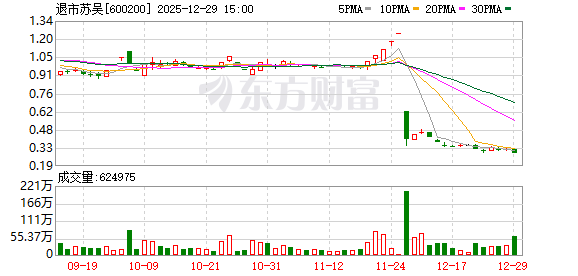
Core Viewpoint - Jiangsu Wuzhong, once a prominent listed company, is set to delist from the A-share market due to a series of violations by its controlling shareholders, the Qian siblings, marking the end of its 26-year journey in the stock market [2] Group 1: Company Overview - Jiangsu Wuzhong was established in 1994 and listed on the Shanghai Stock Exchange in 1999, known as "China's first stock in public education" [2] - The company's market value fluctuated significantly, peaking at nearly 10 billion yuan after a recovery driven by a transformation into the medical beauty sector [2] - As of December 29, 2025, the company's stock price fell to 0.29 yuan, with a market value of only 206 million yuan, leading to its delisting on December 31, 2025 [2] Group 2: Regulatory and Audit Issues - Regulatory scrutiny on Jiangsu Wuzhong has been ongoing, with multiple warnings issued regarding its annual reports and fundraising plans [4] - The auditing firms, Zhonghui CPA and Zhongxing Caiguanghua CPA, provided unqualified audit opinions for several years, failing to identify significant financial fraud [3][4] - Following a regulatory investigation, Zhongxing Caiguanghua issued an audit report in April 2023 stating it could not express an opinion on the financial statements due to the ongoing investigation [5] Group 3: Financial Performance and Market Response - Jiangsu Wuzhong's stock price experienced a significant increase, rising from a low of 5.43 yuan to a high of 13.88 yuan, reflecting a more than 150% increase during the period from April 2022 to January 2025 [6] - Over 90 research reports from 18 brokerage firms recommended "buy" or "hold" ratings during the company's medical beauty transformation, contributing to the stock price surge [6] Group 4: Implications for Brokerage Firms - The involvement of brokerage firms in Jiangsu Wuzhong's financing activities raises questions about their due diligence and responsibility in light of the company's financial misconduct [7][8] - Legal experts suggest that if brokerage firms failed to identify financial fraud during the fundraising process, they could face administrative penalties and potential liability to investors [8]
医美宰客还有多少套路
Xin Lang Cai Jing· 2025-12-28 18:23
Core Viewpoint - The article highlights the deceptive practices in the medical beauty industry, particularly the use of "scripted marketing" tactics to manipulate consumers into purchasing high-priced services, ultimately leading to consumer dissatisfaction and potential regulatory scrutiny [1][2]. Group 1: Deceptive Marketing Practices - Medical beauty institutions often employ "scripted marketing" strategies to create a tailored experience for consumers, making them more susceptible to purchasing high-priced projects [1]. - The role of "beauty promoters" (美托) is emphasized, as they are trained to lure consumers into beauty salons and subsequently upsell expensive treatments, often leading to consumer exploitation [2]. - The article describes a specific case where a consumer spent nearly 90,000 yuan over six months with minimal results, illustrating the emotional and financial toll on consumers [2]. Group 2: Regulatory Response - In May 2023, the State Administration for Market Regulation and 11 other departments issued guidelines to strengthen oversight of the medical beauty industry, specifically targeting "beauty promoters" and commercial bribery [2]. - Despite regulatory efforts, the continued presence of "beauty promoters" indicates a need for enhanced regulatory measures to fully understand and address the industry's deceptive practices [2]. Group 3: Industry Implications - The article raises concerns about the long-term sustainability of the medical beauty industry if deceptive practices continue, as consumer trust is eroded when the truth behind these marketing tactics is revealed [2][3]. - The notion of "beautiful economy" is discussed, cautioning against the prevalence of "beauty traps" that could undermine the industry's reputation and future growth [3].
毕马威进博会发布医美行业报告 数字化与新模式引领未来
Zheng Quan Ri Bao Wang· 2025-11-08 03:29
Core Insights - The report by KPMG highlights the rapid growth and structural changes in China's medical aesthetics market, emphasizing its potential as a global focal point due to its large market size, evolving technology, and increasing consumer demand [1][2] - The medical aesthetics industry in China is characterized by a swift increase in demand, a growing number of tech-savvy young consumers, and is reshaping the future of the global medical aesthetics market [1] Market Overview - The report indicates that the medical aesthetics industry in China is one of the most promising markets globally, driven by significant market growth and technological advancements [1] - The industry is transitioning towards a more mature, regulated, and intelligent development phase due to rapid business expansion, improved policy environments, and structural changes in consumer demographics [2] Future Trends - Digitalization and new service models are leading the future development of the industry, with a shift from concentrated service models in first-tier cities to a more decentralized digital model that covers small cities and rural areas [1] - Despite the strong growth momentum, the industry faces challenges such as safety compliance, talent shortages, and consumer outflow [1]
多重风险加身 *ST苏吴连涨后提示“累积巨大交易风险”
Zheng Quan Shi Bao Wang· 2025-08-27 11:32
Core Viewpoint - *ST Suwu has issued a warning regarding significant trading risks and potential forced delisting due to multiple ongoing issues, including financial fraud and substantial losses in its operations [1][2][5]. Group 1: Trading Risks - The company has experienced a significant stock price increase recently, which has raised concerns about trading risks, described as "obvious signs of a hot potato" [1][5]. - Since being investigated, *ST Suwu has issued over 40 warnings about the risk of forced delisting due to major violations [5]. Group 2: Financial Misconduct - The company has been found guilty of financial fraud over several years, which has led to the issuance of an administrative penalty notice by the China Securities Regulatory Commission [2][4]. - The company is at risk of being delisted as it has violated the Shanghai Stock Exchange's regulations regarding major misconduct [2]. Group 3: Performance Decline - *ST Suwu has projected a significant loss for the first half of 2025, estimating a net profit loss of approximately 60 million to 40 million yuan [3]. - The company's medical aesthetics business has faced severe setbacks, including the termination of exclusive distribution rights for a key product, AestheFill, leading to halted sales [3]. Group 4: Financial Health - The company reported a non-operating fund occupation of 769 million yuan, which has escalated to 1.693 billion yuan, representing 96.09% of its net assets [4]. - The controlling shareholder's shares are currently frozen, indicating potential financial instability and lack of resolution for the fund occupation issue [4].
索赔16亿,“童颜针”夺权升级
中国基金报· 2025-08-12 02:51
Core Viewpoint - ST Suwu has announced arbitration against Regen Biotech, Inc. for a claim of 1.6 billion yuan due to a breach of contract regarding the exclusive distribution rights of the "AestheFill" product, which has led to significant financial distress for the company [2][4][7]. Group 1: Company Situation - ST Suwu's stock price has fallen to 1.07 yuan per share, just above the "1 yuan delisting" threshold, following a series of financial and operational challenges [4][11]. - The company is facing severe penalties from the China Securities Regulatory Commission (CSRC) for concealing the actual controlling shareholder and financial fraud, with a potential fine of 15 million yuan and a 10-year market ban for the controlling shareholder [14]. - ST Suwu and its subsidiary have invested over 400 million yuan in the clinical registration and market expansion of the "AestheFill" product, which has now put them in a precarious survival situation [9]. Group 2: Legal and Financial Implications - The arbitration request has been accepted by the Shenzhen International Arbitration Court, with ST Suwu reserving the right to adjust the claim amount based on the case's progress [7]. - The company has publicly accused Aimeike of "capital bullying" and harming the interests of over 80,000 small investors and thousands of employees [7][9]. - Despite the potential for a successful arbitration, analysts suggest that the lengthy process may not provide immediate relief for ST Suwu, which is already on the brink of delisting [14]. Group 3: Market Context - Aimeike's acquisition of Regen Biotech has raised concerns about its commitment to the Chinese market, as it has allegedly delayed supply to ST Suwu's core business [9]. - The "AestheFill" product, known as "童颜针," is a high-margin regenerative aesthetic injection that has been crucial for ST Suwu's financial turnaround [17]. - Aimeike has experienced a significant decline in revenue growth, with its stock price dropping from a peak of 596 yuan to below 200 yuan, indicating a challenging market environment for high-end aesthetic products [17][18].