坚果炒货

Search documents
(新春走基层)浙西小镇炒出“硬核”年味
Xin Lang Cai Jing· 2026-02-16 06:47
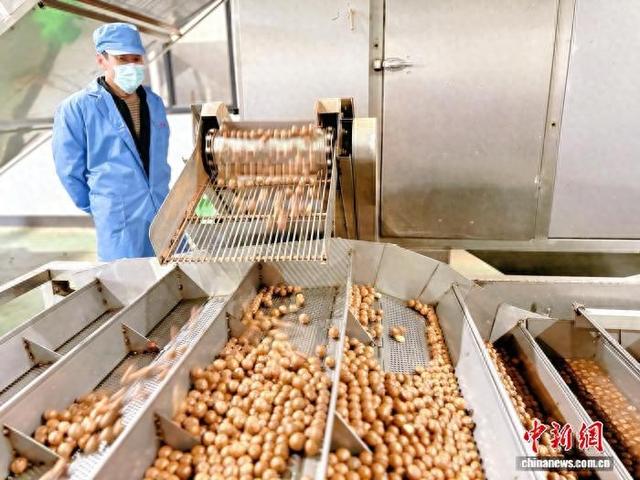
Core Insights - The nut processing industry in Longgang Town, Lin'an District, Zhejiang Province, has seen significant growth, with over 200 companies operating in the area, contributing to a diverse consumption landscape beyond traditional holiday gift boxes [1][2] - The town has been recognized as "China's Nut Processing Food City" since 2010, with its processing and sales scale accounting for over one-third of the national market share [2] - The industry has evolved from raw material sales to processing and exporting, with local companies now sourcing domestic nuts and exporting processed products back to countries like Australia [2][4] Industry Development - The nut processing sector has transitioned from relying on manual experience to utilizing advanced technology, such as X-ray machines for precise sorting and automated production lines for various processing steps [2][4] - The local nut industry has expanded its product offerings, importing nuts from countries like Australia and South Africa while also enhancing the quality of domestic nuts [2] - The growth in the industry has attracted international clients from South Africa and the United States, who come to purchase nut processing equipment from Longgang [4] Business Performance - Local businesses, such as those run by entrepreneurs like Lü Yajuan, are experiencing positive revenue growth, with expectations of a 5% to 10% increase in 2025 compared to 2024 [1] - The busy operational period leading up to the Spring Festival highlights the industry's capacity to meet high demand, with multiple trucks dispatched daily during peak times [1]

小镇“炒”出大产业
Xin Lang Cai Jing· 2026-02-12 21:36
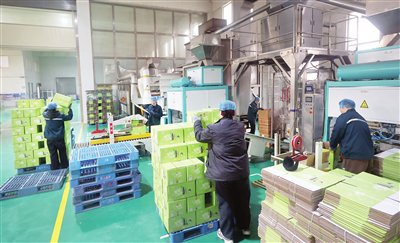
Core Insights - The article highlights the transformation of Wangkou Town in Tianjin's Jinghai District into a major hub for the nut and snack industry, achieving an annual output value exceeding 10 billion yuan and capturing 30% of the national market share [3][8]. Group 1: Industry Growth and Development - Wangkou Town is recognized as the largest fried snack base in northern China, with bustling production and market activities during the peak season [3]. - The local industry has evolved from small-scale operations to large, standardized enterprises, driven by automation and quality control [4][8]. - The town hosts over 300 related enterprises, with an annual throughput of nearly 600,000 tons of snacks, contributing to a market share of approximately 30% nationally [8]. Group 2: Company Innovations and Practices - Tianjin Yuecheng Food Co., Ltd. has invested over 50 million yuan in automating and modernizing its production lines, resulting in significant cost reductions and enhanced product quality [4]. - Tianjin Dongxusheng Nut Food Co., Ltd. has introduced innovative products like "light" popcorn, which combines traditional flavors with healthier ingredients, achieving a daily production capacity of over 30 tons [6]. - Local companies are collaborating with universities to develop innovative products, such as low-sugar options that address traditional health concerns associated with fried snacks [6]. Group 3: Collaborative Ecosystem - The establishment of a brand store in Wangkou Town facilitates a one-stop shopping experience for consumers, showcasing products from over 10 local companies [7]. - The "Wangkou Fried Snack Festival" has generated a cumulative intended transaction volume of 900 million yuan, enhancing the regional brand value to over 2 billion yuan [7]. - The town has formed direct supply bases with regions like Xinjiang and Gansu, reducing procurement costs by approximately 15% and creating a comprehensive supply chain ecosystem [7]. Group 4: Future Prospects - Wangkou Town aims to embrace digital transformation, with the number of e-commerce units increasing to 116 and 331 registered brands, including the regional public brand "Wangkou Fried Snacks" [8]. - Plans for the fourth "Wangkou Fried Snack Festival" include collaboration with the China Food Industry Association to enhance brand visibility and expand market reach [8].
手剥松子卖出278元/500克!长沙高端炒货走俏年货市场
Xin Lang Cai Jing· 2026-02-11 17:43
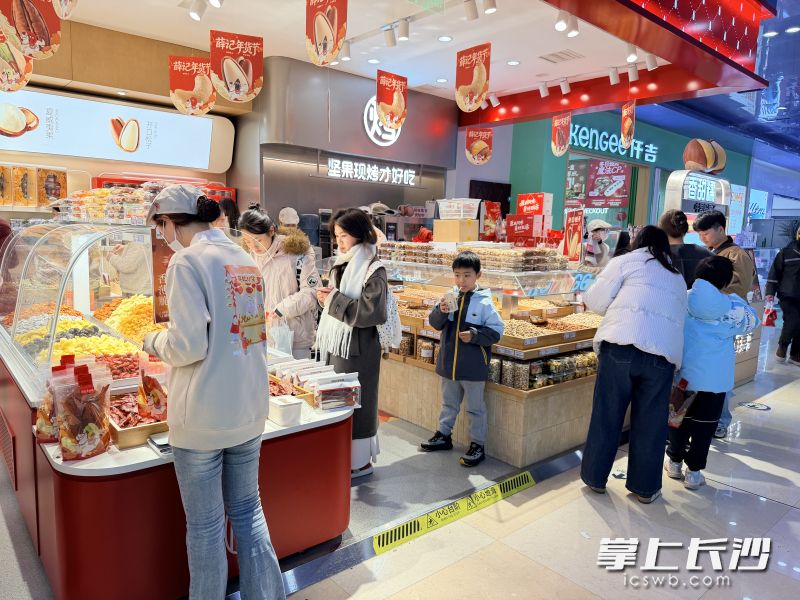
Core Insights - The high-end snack market, particularly for nuts, is experiencing significant price increases, with some products reaching over 200 yuan per 500 grams, reflecting a shift towards premium offerings during the Chinese New Year season [1][3][5] - Consumer enthusiasm remains strong despite rising prices, indicating a trend towards high-end and gift-oriented purchases in the snack market [1][9] Market Trends - The demand for high-quality nuts such as pistachios, macadamia nuts, and imported cashews has surged, with prices ranging from 87.8 yuan to 188 yuan per 500 grams [5][7] - New Year gift boxes priced between 200 to over 300 yuan are particularly popular, catering to the gifting culture during the festive season [5][11] Consumer Behavior - Consumers are increasingly prioritizing product quality, taste, and packaging aesthetics over price when purchasing snacks for the New Year [9][11] - High-end snacks are becoming a preferred choice for gifting, as they are seen as practical and suitable for all ages, further driving sales in this segment [9][11] Market Segmentation - The snack market is showing a clear segmentation, with brand stores focusing on quality and gift packaging, while traditional stores offer more affordable options for everyday consumption [9][11] - Consumers exhibit a rational mindset, choosing products based on their intended use, with a preference for high-quality items for gifting and cost-effective options for personal consumption [11]
开心果涨价巴西松子降价!昆明年货市场坚果炒货“几家欢喜几家愁”
Sou Hu Cai Jing· 2026-02-10 06:55
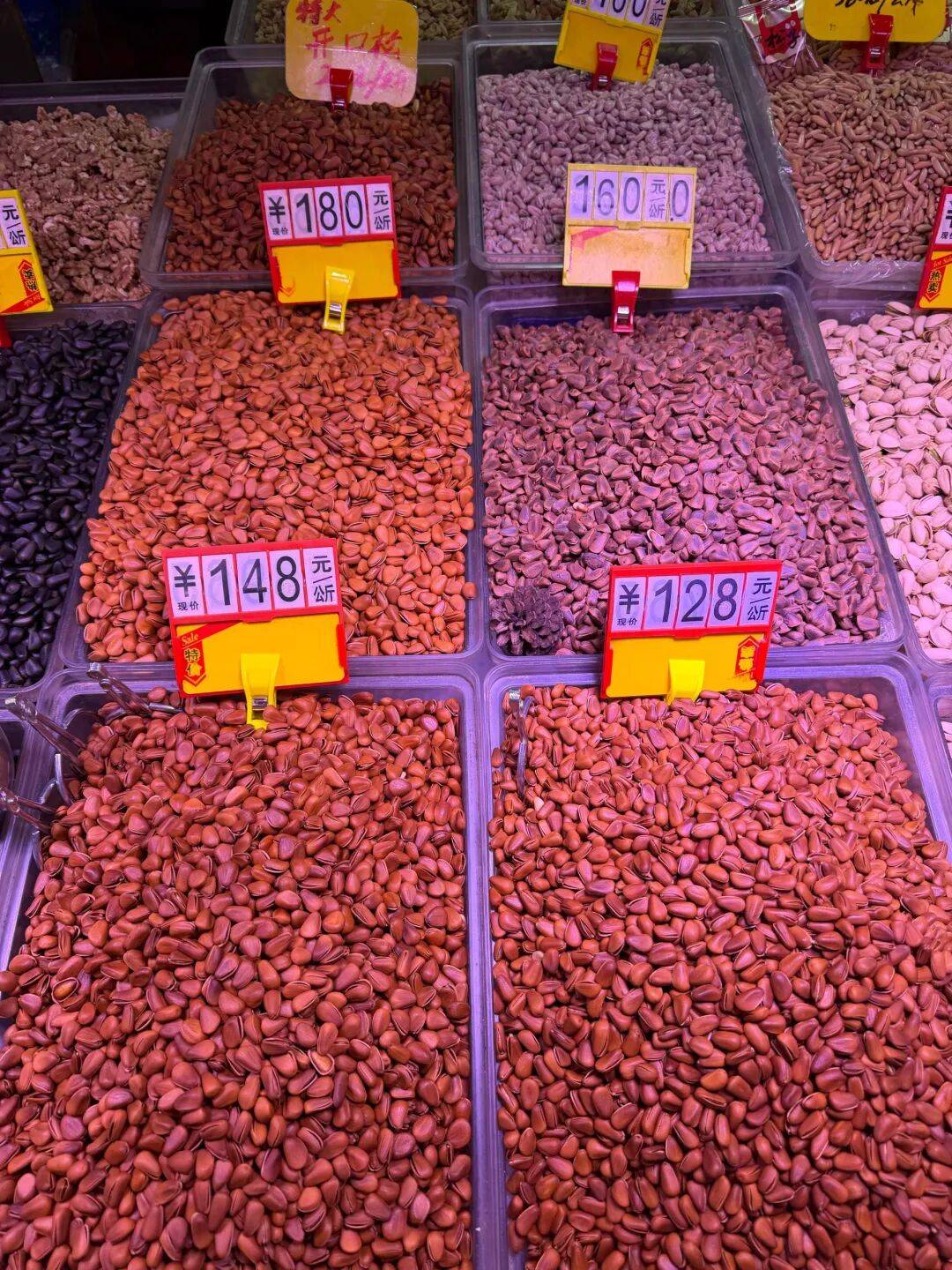
Core Insights - The upcoming Spring Festival has led to a peak season for nut sales, with prices for high-end nuts like pistachios and pine nuts increasing slightly, while overall market sales have significantly declined [1][3][5] - The price of Brazilian pine nuts, referred to as the "Hermès of pine nuts," has seen a substantial drop [2][7] Price Trends - Pistachios are priced between 138-158 yuan per kilogram, up from 120 yuan last year, while pine nuts range from 120-200 yuan per kilogram, compared to a minimum of 110 yuan last year [3][5] - The price of Brazilian pine nuts has decreased from 450 yuan per kilogram last year to 350 yuan this year, although it remains relatively high [7] - The price of macadamia nuts has also decreased, with some retailers offering them at 50-60 yuan per kilogram, down from 70-80 yuan [9] Sales Performance - Sales of nuts have dropped significantly, with some merchants reporting a 2/3 reduction in sales compared to the previous year, and inventory levels are only half of what they were last year [7] - Despite the introduction of various gift boxes priced between 69-468 yuan, sales have not met expectations, with some retailers anticipating promotional activities to boost consumption [10][12] - Consumers are showing a preference for mid-range gift boxes priced between 168-199 yuan, indicating a shift in purchasing behavior [13]
薛记炒货被戏称“薛记珠宝”,为啥年轻人还排队买?
Sou Hu Cai Jing· 2026-02-09 02:45
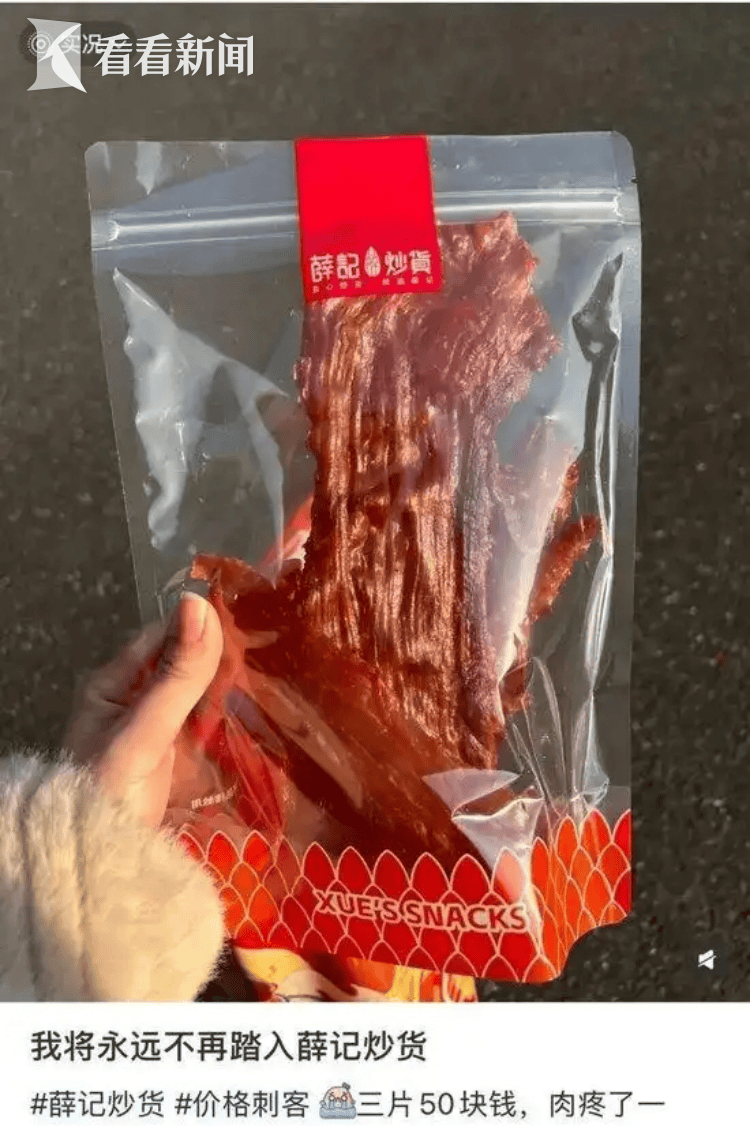
Core Viewpoint - The rising prices of high-end snack brands like "Xueji Fried Goods" have sparked discussions on social media, with consumers expressing shock at the costs, leading to comparisons with luxury goods and questioning the sustainability of such pricing strategies [1][3][4] Company Summary - "Xueji Fried Goods" has gained attention for its high prices, with products like pork jerky costing 50 yuan for three pieces and sunflower seeds priced at 23.8 yuan per jin, significantly higher than the average pork price of about 10 yuan per jin [1][3] - The brand emphasizes quality and cost, citing high rental costs in prime locations (50 to 80 yuan per square meter) and significant investments in store decoration and raw materials [3] - The company has adjusted its strategic positioning for 2024 to focus on "quality and cost-effectiveness," aiming to balance its high-end image with broader consumer acceptance [4] Industry Summary - The nut and snack market is becoming increasingly significant in the Chinese New Year gift market, with nuts accounting for 42.3% of the market share in 2024, indicating a growing consumer preference [3] - The overall market size for nuts and snacks in China has surpassed 300 billion yuan in 2024, with expectations for continued growth in the coming years [3] - There is a noticeable consumer divide, with some expressing dissatisfaction over prices while others are willing to pay for the experience and quality, reflecting a complex consumer mindset in the leisure consumption sector [4]
昆明高端炒货售价每公斤微涨10—20元,销量整体下滑
Sou Hu Cai Jing· 2026-02-05 05:07
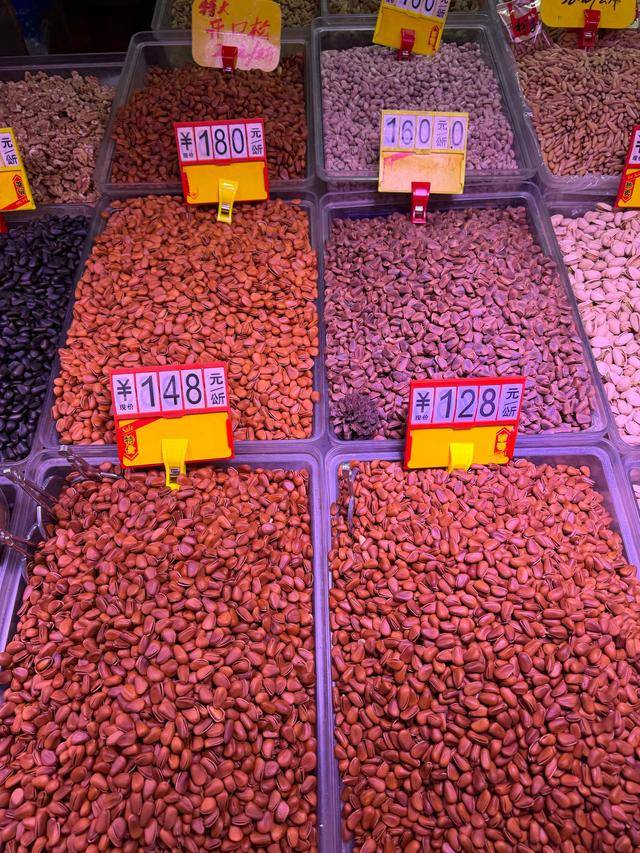
Core Insights - The nut market is entering a consumption peak as the Spring Festival approaches, with high-end nut prices rising over 20% compared to last year, leading to retail prices exceeding 200 yuan per jin [1][4] - Despite the price increases, overall sales in the nut market have significantly declined compared to last year [1][7] Price Trends - High-end nuts like pistachios and pine nuts have seen retail price increases of 10-20 yuan, with pistachios priced between 138-158 yuan per kilogram, up from 120 yuan last year [4][6] - The price of Brazilian pine nuts has dropped significantly, from 450 yuan per kilogram last year to 350 yuan this year, indicating a contrasting trend in the market [10][12] Market Dynamics - Some retailers are maintaining original prices despite rising costs, as they fear that increasing prices will further reduce sales [7][9] - The overall sales volume of nuts has decreased by two-thirds compared to the same period last year, leading to reduced stocking by retailers [9][20] Consumer Behavior - The nut gift box market is thriving, with prices ranging from 69 to 468 yuan, featuring a variety of nuts and appealing packaging [14][16] - Consumers are showing a preference for mid-range gift boxes priced between 168-199 yuan, indicating a focus on value for money [18][20] Market Outlook - The nut and snack market in China is projected to exceed 300 billion yuan in 2024, with expectations to reach 428.3 billion yuan by 2029, indicating significant growth potential [20]
958克坚果大礼盒坚果仅33克,是把消费者当猴耍
Xin Jing Bao· 2026-02-04 08:40
Group 1 - The core issue revolves around misleading marketing practices by nut brands, where the actual nut content in gift boxes is significantly lower than advertised, leading to consumer deception [1][2] - Some brands are mixing low-cost products like snacks and beverages with nuts to create a perception of value, which raises ethical concerns about consumer rights and transparency [2][3] - The prevalence of these practices among leading brands highlights a lack of regulatory oversight in the industry, suggesting a need for stricter enforcement of consumer protection laws [2][3] Group 2 - The approach taken by brands may yield short-term sales growth but risks long-term damage to brand reputation and consumer trust [3] - As the Spring Festival approaches, consumer focus on the appearance and weight of gift boxes may overshadow the actual content, allowing brands to exploit this oversight [3] - Regulatory bodies are urged to remain vigilant to prevent such deceptive practices and ensure a fair market environment for consumers [3]
商场B1层,来了新“刺客”?
3 6 Ke· 2026-02-02 07:23
Core Insights - The article highlights the phenomenon of "snack assassins," referring to snack shops like Xueji Fried Goods and Qiwang Peanuts, where consumers often experience unexpectedly high bills for seemingly small purchases [1][2][6] Pricing and Consumer Experience - Consumers frequently report spending hundreds of yuan on small quantities of snacks, leading to a perception of being "stung" by high prices [1][2] - Xueji Fried Goods and Qiwang Peanuts are known for their high pricing, with products like Hawaiian nuts priced at 185 yuan and hand-peeled pine nuts at 218 yuan for 500g, significantly higher than competitors [4][6] Business Model and Costs - The high prices are attributed to various costs, including store rent, decoration, and employee salaries, particularly in prime shopping mall locations [8][10][12] - Xueji Fried Goods has over 1,200 stores, while Qiwang Peanuts has more than 800, with a significant percentage located in B1 and B2 levels of shopping malls [8][9] Market Trends and Challenges - Despite the expansion of store numbers, the growth rate of new openings is slowing down, indicating a potential decline in product appeal [15] - The differentiation based on "freshly roasted" products is being questioned, as only a limited range of items are actually roasted on-site, leading to consumer skepticism [17][18]
瓜子价格贵过猪肉,高端炒货价格猛涨至200元/斤
Xin Lang Cai Jing· 2026-01-31 14:19
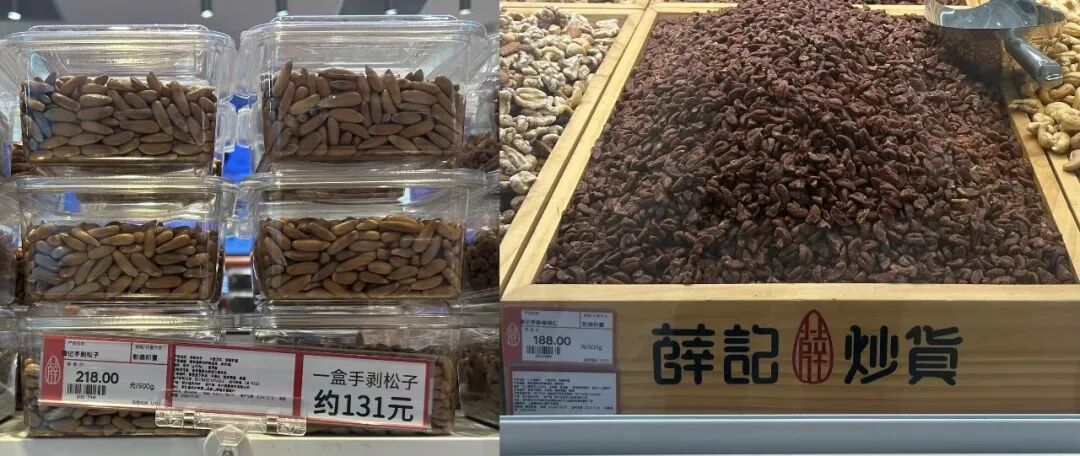
Core Viewpoint - The high-end snack market, particularly for nuts and seeds, is experiencing significant price increases, with some products reaching luxury price points, driven by consumer demand and market dynamics [1] Group 1: Market Trends - The price of basic snacks like sunflower seeds and peanuts has reached 23.8 yuan per jin, while premium nuts such as pistachios and freshly roasted cashews are nearing 100 yuan per jin, with hand-peeled pine nuts priced at an astonishing 218 yuan per jin [1] - The average price of pork is around 10 yuan per jin, highlighting the stark contrast in pricing between traditional food items and high-end snacks [1] Group 2: Factors Influencing Prices - Consumer upgrades and the entry of high-end snack brands into shopping malls have led to increased costs, which are being passed on to consumers through higher prices [1] - Upgrades in raw materials and production processes are also contributing to the price hikes, with brands like Xueji controlling the quantity of seeds to ensure quality [1] Group 3: Market Potential - According to iMedia Consulting, over 80% of consumers spend between 20 to 100 yuan monthly on nuts and snacks, with a significant portion purchasing these products at least once a month [1] - The market size for China's nut and snack industry surpassed 300 billion yuan in 2024 and is projected to grow to 428.3 billion yuan by 2029, indicating a market increment of over 100 billion yuan in five years [1]
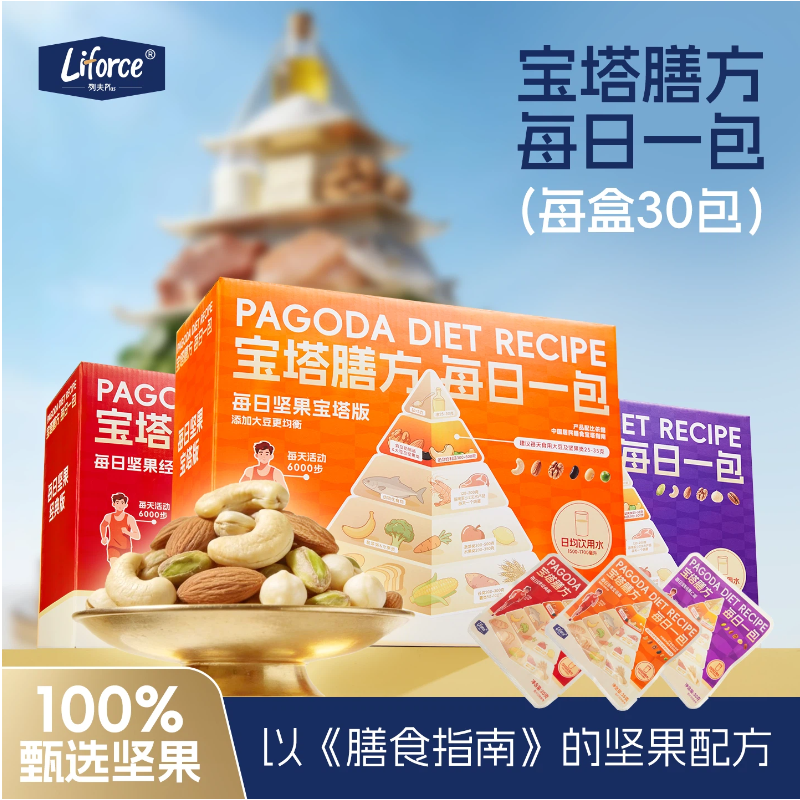
列夫推出“宝塔膳方”每日坚果系列,这次又何不同?
Zhong Guo Shi Pin Wang· 2026-01-07 06:01
Core Insights - The launch of "Baota Shanfang" marks a milestone in the domestic nutrition food sector, introducing the first "National Dietary Standard Food" category based on the "Chinese Residents Balanced Diet Pyramid (2022)" [3][4] - The brand aims to transform national dietary recommendations into precise and convenient daily nutrition solutions, moving consumer health choices from "experience-based" to "standardized intake" [3][4] Product Overview - "Baota Shanfang" offers three main products: Baota Version, Classic Version, and Pure Nut Version, each designed to meet specific dietary needs and preferences [3][8] - The Baota Version provides a scientifically balanced mix of three types of cooked soybeans and three selected nuts in a 25g package, aligning with the dietary guideline's recommendation of 25-35g of soy and nuts daily [4][8] - The Classic Version combines nuts and dried fruits in a "4+3 golden ratio" to enhance taste and nutritional balance, targeting young professionals and health-conscious consumers [8] - The Pure Nut Version consists of six types of pure nuts, catering to consumers seeking pure nutrition and low-carb diets [8] Market Positioning - "Baota Shanfang" is positioned as a functional nutrition food brand, emphasizing scientific nutritional strategies rather than merely being a snack product [5][6] - The brand's unique packaging design, featuring individual small packs within a gift box, enhances freshness and portability while reinforcing its value as a family health reserve [5][6] Industry Impact - The introduction of "Baota Shanfang" is seen as a new benchmark in the competitive nut market, driven by authoritative nutritional standards, creating a trust barrier that competitors may find hard to replicate [6] - The brand aims to elevate consumer awareness of the importance of clear and scientific nutritional standards, promoting a shift towards standardized nutrition in daily life [6][7]