
葵花子

Search documents
怎样吃瓜子更健康?吃到这种瓜子立马吐出来
Xin Lang Cai Jing· 2026-02-21 07:58
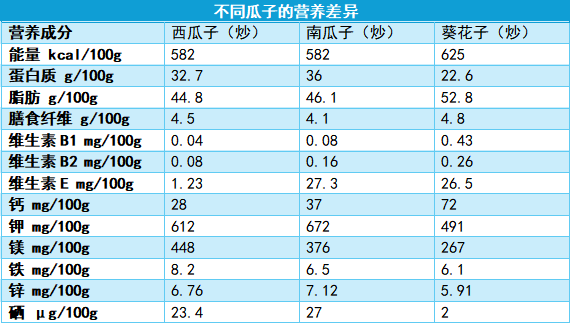
Core Insights - The article discusses the cultural significance and nutritional benefits of various types of seeds, particularly sunflower seeds, watermelon seeds, and pumpkin seeds, which are popular snacks during the New Year celebrations in China. Nutritional Comparison - Watermelon seeds contain 8.2mg of iron per 100g, which is 1.3 times that of sunflower seeds, and have a potassium content of 612mg per 100g, placing them in the upper-middle range among nuts [3] - Pumpkin seeds have the highest protein content at 36g per 100g, which is 1.6 times that of sunflower seeds and 1.1 times that of watermelon seeds. They also boast the highest potassium content at 672mg per 100g, nearly 1.4 times that of sunflower seeds [3] - Sunflower seeds are rich in vitamin E, with a content of 26.46mg per 100g, which is 21.5 times that of watermelon seeds. They also have a notable vitamin B1 content of 0.43mg per 100g, significantly higher than that of the other two types [4] Nutritional Data Summary - The energy content for watermelon seeds is 582 kcal/100g, while pumpkin seeds have 582 kcal/100g and sunflower seeds have 625 kcal/100g. Protein content is highest in pumpkin seeds (36g), followed by watermelon seeds (32.7g) and sunflower seeds (22.6g) [5] - The fat content is highest in sunflower seeds at 52.8g, followed by pumpkin seeds at 46.1g and watermelon seeds at 44.8g. Dietary fiber is relatively similar across the three types, with sunflower seeds at 4.8g, watermelon seeds at 4.5g, and pumpkin seeds at 4.1g [5] Consumption Guidelines - The recommended intake of nuts, including seeds, is 50-70 grams per week, averaging about 10 grams per day, which is equivalent to 1.5-2 handfuls of seeds in their shells [8] - It is advised to choose original flavor seeds over flavored varieties, as the latter may mask any off-flavors that indicate spoilage, and they often contain high levels of sugar and salt, which are not heart-healthy [10] - Consumers should immediately discard any seeds that taste bitter or rancid, as these may indicate spoilage and potential health risks [10]

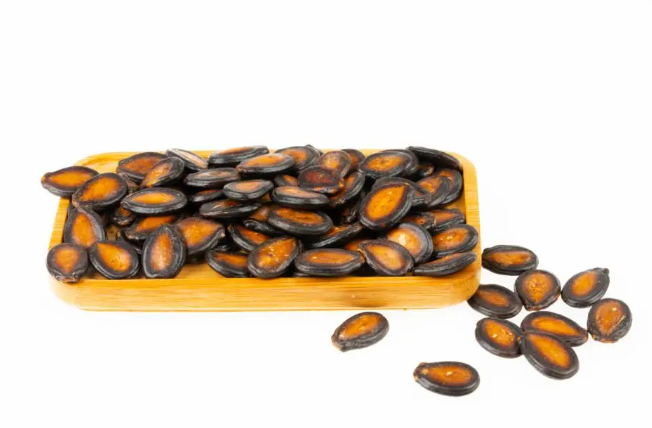
这种瓜子有毒还致癌,吃到了立马吐出来!
Xin Lang Cai Jing· 2026-02-20 23:48
Core Viewpoint - The article discusses the cultural significance and nutritional benefits of various types of melon seeds, particularly during the New Year celebrations, emphasizing their role as a popular snack and their health advantages. Group 1: Types of Melon Seeds - Melon seeds encompass a variety of types, including sunflower seeds, watermelon seeds, and pumpkin seeds, each with distinct nutritional profiles [3][4]. - Watermelon seeds, primarily from the gourd variety, are noted for their high iron content of 8.2 mg/100g, which is 1.3 times that of sunflower seeds, and potassium content of 612 mg/100g, placing them in the upper range among nuts [5]. - Pumpkin seeds have the highest protein content at 36 mg/100g, which is 1.6 times that of sunflower seeds, and the highest potassium content at 672 mg/100g, along with significant amounts of zinc and selenium [6]. - Sunflower seeds are rich in vitamin E at 26.46 mg/100g, which is 21.5 times that of watermelon seeds, and have a notable vitamin B1 content of 0.43 mg/100g, significantly higher than the other two types [7]. Group 2: Nutritional Comparison - A detailed comparison of nutritional values per 100g shows: - Watermelon seeds: 582 kcal, 32.7g protein, 44.8g fat, 4.5g dietary fiber, 612mg potassium [8]. - Pumpkin seeds: 582 kcal, 36g protein, 46.1g fat, 4.1g dietary fiber, 672mg potassium [8]. - Sunflower seeds: 579 kcal, 22.6g protein, 52.8g fat, 4.8g dietary fiber, 491mg potassium [8]. Group 3: Consumption Guidelines - The article advises limiting nut consumption to 50-70 grams per week, translating to about 10 grams daily, which is equivalent to 1.5-2 handfuls of seeds [13]. - It recommends choosing original flavor seeds over flavored varieties to avoid hidden risks of mold and high sugar or salt content, which can negatively impact cardiovascular health [14]. - Consumers are urged to discard any seeds that taste bitter or rancid immediately, as these may indicate spoilage and potential health risks [15].
保护血管、延缓衰老!春节大家都爱吃,它的好处真不少!但吃的时候注意5点
Xin Lang Cai Jing· 2026-02-16 03:39
Core Insights - The article emphasizes the popularity and health benefits of sunflower seeds, watermelon seeds, and pumpkin seeds during the Spring Festival, highlighting their nutritional values and potential health effects. Group 1: Nutritional Benefits of Different Seeds - Watermelon seeds are rich in iron (8.2mg/100g) and potassium (612mg/100g), offering benefits such as antioxidant properties and improved vascular health [1] - Pumpkin seeds have the highest protein content (36g/100g) and potassium (672mg/100g), along with significant amounts of zinc (7.12mg/100g) and selenium (27μg/100g), which are crucial for immune function and metabolism [2] - Sunflower seeds contain high levels of vitamin E (26.46mg/100g) and vitamin B1 (0.43mg/100g), contributing to antioxidant effects and overall health [3] Group 2: Health Effects and Recommendations - Consuming sunflower seeds can enhance mood by triggering dopamine release, leading to feelings of happiness [4] - The presence of tryptophan in sunflower seeds aids in serotonin production, promoting positive emotions [5] - Sunflower seeds can help regulate emotions and alleviate symptoms of depression and anxiety [6] Group 3: Consumption Guidelines - The recommended daily intake of sunflower seeds is about 25 grams (approximately one small handful) [10] - It is advised to consume seeds without their shells to protect dental health and avoid digestive issues [14] - Choosing original flavor seeds without added seasonings maximizes nutritional benefits [15] Group 4: Additional Tips - If experiencing discomfort from consuming seeds, a herbal tea made from Mai Dong and Huang Ju Hua can help alleviate symptoms [17] - Seeds can also be incorporated into dishes, such as shrimp balls, for added flavor and nutrition [19]
小镇“炒”出大产业
Xin Lang Cai Jing· 2026-02-12 21:36
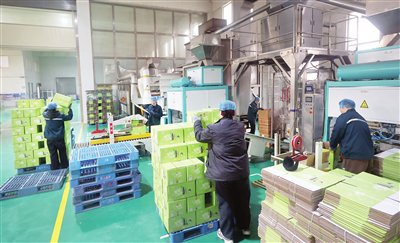
Core Insights - The article highlights the transformation of Wangkou Town in Tianjin's Jinghai District into a major hub for the nut and snack industry, achieving an annual output value exceeding 10 billion yuan and capturing 30% of the national market share [3][8]. Group 1: Industry Growth and Development - Wangkou Town is recognized as the largest fried snack base in northern China, with bustling production and market activities during the peak season [3]. - The local industry has evolved from small-scale operations to large, standardized enterprises, driven by automation and quality control [4][8]. - The town hosts over 300 related enterprises, with an annual throughput of nearly 600,000 tons of snacks, contributing to a market share of approximately 30% nationally [8]. Group 2: Company Innovations and Practices - Tianjin Yuecheng Food Co., Ltd. has invested over 50 million yuan in automating and modernizing its production lines, resulting in significant cost reductions and enhanced product quality [4]. - Tianjin Dongxusheng Nut Food Co., Ltd. has introduced innovative products like "light" popcorn, which combines traditional flavors with healthier ingredients, achieving a daily production capacity of over 30 tons [6]. - Local companies are collaborating with universities to develop innovative products, such as low-sugar options that address traditional health concerns associated with fried snacks [6]. Group 3: Collaborative Ecosystem - The establishment of a brand store in Wangkou Town facilitates a one-stop shopping experience for consumers, showcasing products from over 10 local companies [7]. - The "Wangkou Fried Snack Festival" has generated a cumulative intended transaction volume of 900 million yuan, enhancing the regional brand value to over 2 billion yuan [7]. - The town has formed direct supply bases with regions like Xinjiang and Gansu, reducing procurement costs by approximately 15% and creating a comprehensive supply chain ecosystem [7]. Group 4: Future Prospects - Wangkou Town aims to embrace digital transformation, with the number of e-commerce units increasing to 116 and 331 registered brands, including the regional public brand "Wangkou Fried Snacks" [8]. - Plans for the fourth "Wangkou Fried Snack Festival" include collaboration with the China Food Industry Association to enhance brand visibility and expand market reach [8].
洽洽食品2月3日获融资买入3048.86万元,融资余额3.75亿元
Xin Lang Cai Jing· 2026-02-04 01:24
Core Viewpoint - Qiaqia Food experienced a decline in stock price by 1.54% on February 3, with a trading volume of 301 million yuan, indicating potential investor concerns about the company's performance and market position [1]. Financing Summary - On February 3, Qiaqia Food had a financing buy-in amount of 30.49 million yuan and a financing repayment of 22.88 million yuan, resulting in a net financing buy of 7.60 million yuan [1]. - The total financing and securities balance for Qiaqia Food reached 376 million yuan, with the financing balance accounting for 3.14% of the circulating market value, which is below the 40th percentile level over the past year, indicating a low financing position [1]. - In terms of securities lending, Qiaqia Food repaid 28,500 shares and sold 1,200 shares on February 3, with a selling amount of 28,300 yuan, while the securities lending balance was 707,700 yuan, also below the 20th percentile level over the past year [1]. Company Performance - As of September 30, Qiaqia Food had 54,300 shareholders, a decrease of 5.84% from the previous period, while the average circulating shares per person increased by 6.20% to 9,297 shares [2]. - For the period from January to September 2025, Qiaqia Food reported a revenue of 4.50 billion yuan, a year-on-year decrease of 5.38%, and a net profit attributable to shareholders of 168 million yuan, down 73.17% year-on-year [2]. - Since its A-share listing, Qiaqia Food has distributed a total of 4.69 billion yuan in dividends, with 1.65 billion yuan distributed over the past three years [2]. Shareholder Composition - As of September 30, 2025, the third-largest circulating shareholder of Qiaqia Food was Hong Kong Central Clearing Limited, holding 3.98 million shares, a decrease of 15.99 million shares from the previous period [2]. - New shareholders include E Fund Yuxin Bond A and Ping An Low Carbon Economy Mixed A, holding 3.97 million shares and 3.70 million shares respectively [2]. - The Southern CSI 1000 ETF and Ping An Value Enjoy Mixed A also appeared among the top ten circulating shareholders, with slight changes in their holdings [2].

洽洽食品跌2.00%,成交额1.44亿元,主力资金净流出335.77万元
Xin Lang Cai Jing· 2026-02-03 03:22
Core Viewpoint - Qiaqia Foods has experienced a decline in stock price and significant decreases in revenue and net profit for the year 2025, indicating potential challenges in its financial performance and market position [2][3]. Group 1: Stock Performance - On February 3, Qiaqia Foods' stock fell by 2.00%, trading at 23.48 yuan per share with a total market capitalization of 11.877 billion yuan [1]. - The stock has increased by 8.60% year-to-date, with a 3.71% rise over the last five trading days, 4.82% over the last twenty days, and 6.15% over the last sixty days [1]. Group 2: Financial Performance - For the period from January to September 2025, Qiaqia Foods reported a revenue of 4.501 billion yuan, a year-on-year decrease of 5.38%, and a net profit attributable to shareholders of 168 million yuan, down 73.17% year-on-year [2]. - Cumulatively, since its A-share listing, Qiaqia Foods has distributed a total of 4.693 billion yuan in dividends, with 1.654 billion yuan distributed over the last three years [3]. Group 3: Shareholder Structure - As of September 30, 2025, the number of shareholders for Qiaqia Foods was 54,300, a decrease of 5.84% from the previous period, with an average of 9,297 circulating shares per shareholder, an increase of 6.20% [2]. - The top ten circulating shareholders include Hong Kong Central Clearing Limited as the third-largest shareholder, holding 3.9811 million shares, a decrease of 15.9915 million shares from the previous period [3].
洽洽食品股价连续5天下跌累计跌幅5.03%,富国基金旗下1只基金持7.86万股,浮亏损失9.43万元
Xin Lang Cai Jing· 2026-01-27 07:20
Group 1 - The core viewpoint of the news is that Qiaqia Food has experienced a decline in stock price, with a 5-day cumulative drop of 5.03%, currently trading at 22.64 CNY per share and a market capitalization of 11.453 billion CNY [1] - Qiaqia Food Co., Ltd. is located in Hefei, Anhui Province, and was established on August 9, 2001, with its listing date on March 2, 2011. The company specializes in the production and sale of nut snacks and baked leisure foods [1] - The main business revenue composition of Qiaqia Food includes sunflower seeds at 64.38%, nuts at 22.32%, other products at 11.05%, and additional items at 2.24% [1] Group 2 - From the perspective of major fund holdings, one fund under the Fuguo Fund has a significant position in Qiaqia Food, specifically the Fuguo New Trend Flexible Allocation Mixed A (005517), which holds 78,600 shares, accounting for 2.15% of the fund's net value [2] - The Fuguo New Trend Flexible Allocation Mixed A fund has incurred a floating loss of approximately 32,200 CNY today, with a total floating loss of 94,300 CNY during the 5-day decline [2] - The fund was established on March 12, 2018, with a latest scale of 64.8607 million CNY, and has achieved a year-to-date return of 8.41% and a one-year return of 34.73% [2]
洽洽食品涨2.01%,成交额5995.14万元,主力资金净流入230.00万元
Xin Lang Zheng Quan· 2026-01-19 02:04
Group 1 - The core viewpoint of the news is that Qiaqia Food's stock has shown a positive trend in recent trading sessions, with a year-to-date increase of 7.96% and a market capitalization of 11.807 billion yuan [1] - As of January 19, Qiaqia Food's stock price reached 23.34 yuan per share, with a trading volume of 59.95 million yuan and a turnover rate of 0.51% [1] - The company's main business involves the production and sale of nut snacks and baked leisure foods, with revenue composition being 64.38% from sunflower seeds, 22.32% from nuts, and 11.05% from other products [1] Group 2 - As of September 30, Qiaqia Food reported a total revenue of 4.501 billion yuan for the first nine months of 2025, a year-on-year decrease of 5.38%, and a net profit attributable to shareholders of 168 million yuan, down 73.17% year-on-year [2] - The number of shareholders decreased by 5.84% to 54,300, while the average circulating shares per person increased by 6.20% to 9,297 shares [2] - Qiaqia Food has distributed a total of 4.693 billion yuan in dividends since its A-share listing, with 1.654 billion yuan distributed in the last three years [2]
从“喊叫水”到“赛江南”,这里的日子大不一样了
Ren Min Ri Bao· 2026-01-12 08:52
Core Viewpoint - The article highlights the transformation of the Hanjiao Water Town, emphasizing the significance of water resources, particularly from the Yellow River, in improving the living conditions and agricultural practices of the local community [1][3]. Group 1: Historical Context - Hanjiao Water Town was established in 2004 when it was transferred from Tongxin County to Ningxia, primarily due to water resource allocation [1]. - The area has a historical narrative of drought and scarcity, with local legends recounting the struggles of past inhabitants to find water [1][2]. Group 2: Current Living Conditions - The current residents of Hanjiao Water Town have access to various agricultural job opportunities, thanks to the irrigation from the Yellow River [3]. - The community has seen significant improvements in living standards, with new housing and infrastructure developments, reflecting a shift from poverty to prosperity [2][3][4]. Group 3: Agricultural Practices - The introduction of water from the Yellow River has transformed agricultural practices, moving from traditional rain-fed methods to more modern irrigation techniques [3]. - There are challenges associated with the new irrigation methods, as some residents struggle to adapt to changes in farming practices [3]. Group 4: Cultural and Social Changes - The community has developed a culture of water conservation, with new practices in place for rainwater collection and usage [4]. - The overall sentiment in the community has shifted towards optimism and satisfaction with their improved living conditions, indicating a positive social change [3][4].
洽洽食品涨2.00%,成交额9935.84万元,主力资金净流入663.10万元
Xin Lang Cai Jing· 2026-01-12 05:44
Group 1 - The core viewpoint of the news is that Qiaqia Food has experienced fluctuations in stock price and financial performance, with a notable decrease in revenue and net profit for the year-to-date period [1][2]. - As of January 12, Qiaqia Food's stock price increased by 2.00%, reaching 22.95 CNY per share, with a total market capitalization of 11.609 billion CNY [1]. - The company has seen a year-to-date stock price increase of 6.15%, with a 3.10% rise over the last five trading days and an 8.61% increase over the last 20 days [1]. Group 2 - For the period from January to September 2025, Qiaqia Food reported a revenue of 4.501 billion CNY, a year-on-year decrease of 5.38%, and a net profit attributable to shareholders of 168 million CNY, down 73.17% year-on-year [2]. - The company has distributed a total of 4.693 billion CNY in dividends since its A-share listing, with 1.654 billion CNY distributed over the past three years [3]. - As of September 30, 2025, the number of shareholders decreased by 5.84% to 54,300, while the average number of tradable shares per person increased by 6.20% to 9,297 shares [2].